
1. Kupu Whakataki
This manual provides detailed instructions for the installation, operation, and maintenance of your Alpine SWS-12D4 12-inch Dual-Voice-Coil 4-Ohm Subwoofer. Please read this manual thoroughly before attempting installation or operation to ensure proper use and optimal performance. Retain this manual for future reference.

Figure 1: Alpine SWS-12D4 12-inch Subwoofer. This image shows a side view of the subwoofer, highlighting its cone and the robust magnet structure.
2. Nga korero haumaru
Kia mau tonu nga whakaritenga haumaru e whai ake nei i te wa e whakauru ana me te mahi:
- E taunakitia ana te whakaurunga ngaio: For optimal performance and safety, professional installation by an authorized Alpine dealer is highly recommended.
- Momotu Hiko: Before starting any installation, disconnect the negative terminal of your vehicle's battery to prevent electrical shorts and damage.
- Waea waea: Ensure all wiring is correctly connected and insulated to prevent short circuits and potential fire hazards. Use appropriate gauge wire for power and speaker connections.
- Whakapiki: Whakamaua te pūoro raro kia kore ai e huri hei pere ina tū ohorere, ina tukinga rānei.
- Whakahau: Me whakarite kia pai te hau huri noa i te subwoofer me amphe whakamahana hei aukati i te werawera.
- Taumata Rōrahi: Ko te noho roa ki nga taumata oro nui ka raru te rongo. Whakaritea te rōrahi ki te taumata hāneanea.
- Puranga Wai: Do not expose the subwoofer to moisture or liquids.
3. Tatūnga me te Tāuta
3.1 Ngā Whakaritenga mō te Āpitihanga
The Alpine SWS-12D4 subwoofer is designed to perform optimally in a sealed or ported enclosure. Refer to the subwoofer's technical specifications or Alpine's official website for recommended enclosure volumes and port dimensions. An improperly sized enclosure can negatively impact sound quality and subwoofer longevity.
3.2 Te Whakamau i te Pūoro Iti
The SWS-12D4 is designed for flush mounting. Ensure the mounting surface is rigid and capable of supporting the subwoofer's weight. Cut a circular opening in the enclosure baffle that matches the subwoofer's cutout diameter. Secure the subwoofer using appropriate screws, ensuring an airtight seal between the subwoofer frame and the enclosure.
3.3 Wiring Configurations
The SWS-12D4 features a Dual-Voice-Coil (DVC) design with two 4-ohm voice coils. This allows for flexible wiring options to match your ampngā whakaritenga ārai a te kaiwhakaora. Ko ngā whirihoranga noa ko:
- Waea Whakarara (2 Ohms): Honoa ngā pito pai o ngā porowhita reo e rua, me ngā pito kino o ngā porowhita reo e rua. Kātahi ka honoa te pito pai kua whakakotahitia ki te ampte whakaputanga pai o te lifier me te hono kino ki te amplifier's negative output. This results in a 2-ohm load.
- Waea Rangatū (8 Ohms): Honoa te pito pai o tētahi porowhita reo ki te pito kino o tētahi atu porowhita reo. Kātahi ka honoa te pito pai e toe ana ki te ampte putanga pai a lifier me te toenga torae tauranga ki te amplifier's negative output. This results in an 8-ohm load.
Manatoko i nga wa katoa i to amplifier's stable impedance range before wiring. Incorrect impedance can damage your ampwhakakorikori, subwoofer ranei.
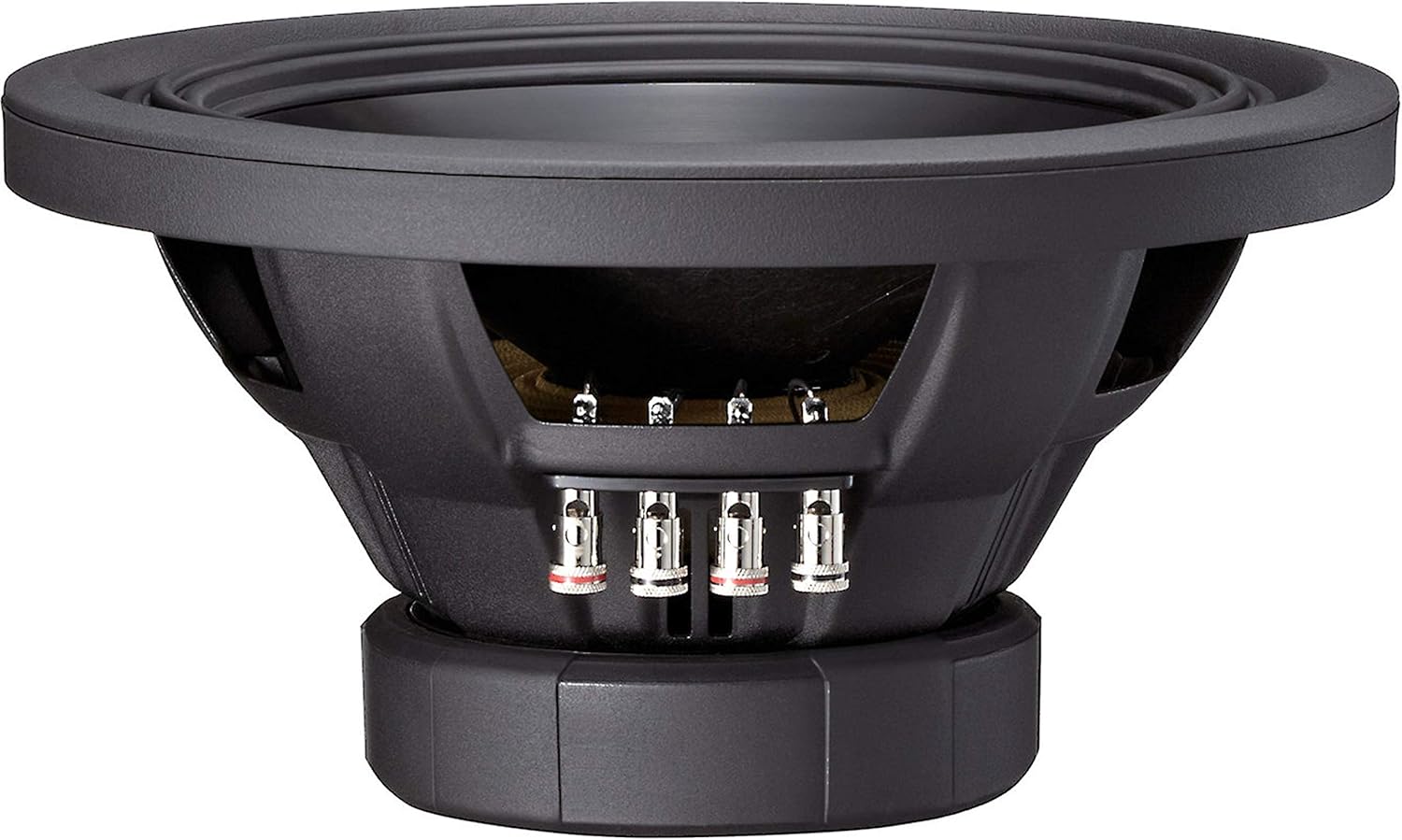
Whakaahua 2: Whakamuri view of the Alpine SWS-12D4 subwoofer. This image displays the dual voice coil terminals, essential for understanding wiring configurations.
4. Te whakahaere i te Subwoofer
4.1 Te Whakaoho Tuatahi me te Whakaoho-ā-roto
After installation, perform an initial power-up at a low volume. Gradually increase the volume to ensure all connections are secure and the subwoofer is functioning correctly. A break-in period of several hours at moderate listening levels is recommended to allow the subwoofer's suspension components to loosen and achieve optimal performance.
4.2 AmpTautuhinga Lifier
Tika amplifier settings are crucial for sound quality and subwoofer longevity. Adjust the following on your ampKaiwhakaora:
- Whiwhi: Whakaritea te ampte whakanui i te kaha o te rama kia rite ki te rōrahi putangatage of your head unit. Do not use the gain control as a volume knob; it should be set to prevent clipping.
- Tātari Tuku-iti (LPF): Set the LPF to filter out high frequencies, typically between 60 Hz and 100 Hz, allowing only bass frequencies to reach the subwoofer.
- Tātari Subsonic: If available, set the subsonic filter to protect the subwoofer from playing frequencies below its resonant frequency, which can cause damage.
- Whakarei i te Bass: Use bass boost sparingly, if at all. Excessive bass boost can lead to clipping and damage the subwoofer.

Whakaahua 3: Runga view of the Alpine SWS-12D4 subwoofer. This image shows the cone and surround, which are critical for sound reproduction and require careful handling.
5. Tiaki
The Alpine SWS-12D4 subwoofer requires minimal maintenance. Follow these guidelines to ensure its longevity:
- Te horoi: Periodically wipe the subwoofer cone and surround with a soft, dry cloth to remove dust and debris. Avoid using harsh chemicals or excessive moisture.
- Tirotiro: Regularly inspect the speaker terminals and wiring for corrosion or loose connections. Ensure the mounting screws are tight.
- Tiaki Taiao: Tiakina te subwoofer mai i te wera nui, te ra tika, me te makuku.
6. Te Raru
Mena ka pa ki a koe nga raru o to subwoofer, tirohia nga raru me nga otinga e whai ake nei:
| Raruraru | Take pea | Rongoā |
|---|---|---|
| Kore Oro |
|
|
| Oro Kopikopiko |
|
|
| Putanga Pango ngoikore |
|
|
If problems persist, contact an authorized Alpine service center or your dealer for assistance.
7. Whakatakotoranga
| Āhuahira | Whakaahuatanga |
|---|---|
| Tau tauira | SWS-12D4 |
| Momo Kaikorero | Subwoofer |
| Taimana Tuarua | 12 Inihi |
| Whirihoranga Kōrere Reo | Dual Voice Coil (DVC) |
| Impedance Ingoa | 4 Ohms per voice coil (can be wired to 2 Ohms or 8 Ohms total) |
| Te Whakahaere Mana Mana | 1500 Watts |
| Momo Whakaeke | Maunga Huruhuru |
| Taumaha Tūemi | 14 Pauna |
| Kaihanga | Alpine |
| GTIN / UPC | 793276011848 |
8. Pūtāhui me te Tautoko
8.1 Nga Korero Whakaputanga
Alpine products are designed and manufactured to the highest quality standards. This product is covered by a limited warranty. For specific warranty terms and conditions, please refer to the warranty card included with your product or visit the official Alpine webpae. Puritia to riirii hoko hei tohu mo te hoko mo nga kereme whakamana.
8.2 Tautoko Kiritaki
If you require technical assistance, have questions about your product, or need to arrange for service, please contact Alpine customer support. Contact information can typically be found on the Alpine webpae, i roto ranei i nga tuhinga e whakaratohia ana me to hua.
Āpiha Ā-Alpine Webpae: www.alpine-usa.com