
1. Kupu Whakataki
This manual provides comprehensive instructions for the installation, operation, and maintenance of your Lorex LNR1141TC4 4-Channel 1TB Network Video Recorder (NVR) system with four 1080p HD cameras. This system is designed to provide high-definition surveillance for your property, offering real-time recording and remote access capabilities.
Please read this manual thoroughly before setting up and operating your system to ensure proper functionality and to maximize its features.
2. Ihirangi mokete
Me manatoko kei roto i tō kete ngā wāhanga katoa kua whakarārangihia i raro nei. Mena kei te ngaro, kei te pakaru rānei ētahi taonga, whakapā atu ki te tautoko a Lorex.
- 1 x NVR with Pre-Installed 1TB HDD
- 1 x taura HDMI
- 1 x Pūurutau Mana mo te NVR
- 1 x Tihihiore
- 1 x Ite Itene
- Kaiarahi Tiimata Tere
- 4 x IP Bullet Cameras (1080p HD)
- 4 x Mounting Kits for Cameras
- 4 x 60ft (18m) Cat5e Ethernet Cables
3. Ka mutu te punahaview
The Lorex LNR1141TC4 system consists of a Network Video Recorder (NVR) and four 1080p HD IP cameras. The NVR manages video recording, storage, and network connectivity, while the cameras capture high-definition video footage.
3.1 NVR and Camera Components

Whakaahua 3.1: Lorex LNR1141TC4 NVR system with four 1080p HD bullet cameras. This image displays the main components of the surveillance system, including the central NVR unit and the four included bullet-style IP cameras.
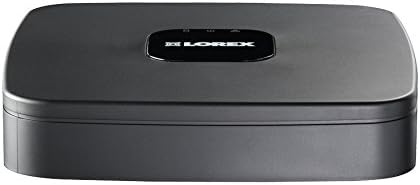
Whakaahua 3.2: Runga view of the Lorex LNR1141TC4 NVR. The NVR unit features a sleek black design with the Lorex logo prominently displayed on the top surface.

Whakaahua 3.3: Rear panel of the Lorex LNR1141TC4 NVR. This view shows the various input and output ports, including HDMI, VGA, USB, Ethernet, and the four Power over Ethernet (PoE) ports for camera connections.

Whakaahua 3.4: Close-up of a Lorex 1080p HD bullet camera lens. This image highlights the camera's lens, infrared LEDs for night vision, and light sensor.
4. Tatūnga
Follow these steps to set up your Lorex LNR1141TC4 NVR system.
4.1 Te hono i te NVR
- Honoa he Aroturuki: Connect the NVR to a monitor using the supplied HDMI cable or a VGA cable (not included).
- Honoa te Kiore: Plug the USB mouse into one of the USB ports on the NVR's rear panel.
- Hononga Whatunga (Whiringa engari e taunakitia ana): Connect the NVR to your router using the supplied Ethernet cable for remote access and system updates.
- Whakahiko: Honoa te urutau hiko NVR ki te NVR, kātahi ki te putanga hiko. Ka whakakā aunoa te NVR.
4.2 Te Hononga i ngā Kāmera
The Lorex LNR1141TC4 NVR features Power over Ethernet (PoE) ports, simplifying camera installation.
- Whakamau Kāmera: Securely mount each camera in your desired location using the provided mounting kits. Ensure the camera's field of view kapi i te waahi e hiahia ana koe ki te aro turuki.
- Honoa Taura Itarangi: Connect one end of the supplied 60ft Cat5e Ethernet cable to the camera's Ethernet port and the other end to one of the PoE ports on the NVR's rear panel. The NVR will automatically detect and power the cameras.
- Whakaritea Koki Kamera: Once connected, adjust each camera's angle to optimize surveillance coverage.
5. Mahi
This section covers the basic operation of your Lorex NVR system.
5.1 Ruānuku Tatūnga Tuatahi
Upon first power-up, the NVR will guide you through an initial setup wizard to configure basic settings such as language, date/time, network settings, and password creation. Follow the on-screen prompts.
5.2 Te tuhi
- Te tuhi Tonu: The NVR is configured for continuous recording by default, utilizing the pre-installed 1TB hard drive.
- Hopu Tono: You can customize recording schedules for each camera through the NVR's menu. This allows you to set specific times for recording.
- Horoi Motini: Configure motion detection zones and sensitivity to trigger recording only when movement is detected. This helps conserve storage space.
- High Definition 1080p: The system records in 1080p resolution at 30/25 frames per second (fps) per channel, ensuring clear and detailed footage.
5.3 Whakahoki
Uru rekoata footage through the NVR's playback menu. You can search by date, time, and event type (e.g., motion detection). The system supports selectable area digital zoom during live view and playback for detailed examination.
5.4 Remote Access (FLIR Cloud)
The FLIR Cloud connectivity solution enables remote viewing of your surveillance system.
- Tikiake App: Download the free Lorex FLIR Cloud app on your iOS or Android smartphone or tablet.
- Karapa QR Code: Use the app to scan the QR code located on your NVR or in the quick start guide.
- Tūhono: Follow the app's instructions to connect to your NVR. This allows you to view live feeds, playback recordings, and receive push notifications for motion events and instant email alerts with snapshot attachments from anywhere with an internet connection.
6. Tiaki
Regular maintenance ensures the longevity and optimal performance of your surveillance system.
- Te horoi: Me horoi i ia wa nga arotahi kamera ki te ngohengohe, damp cloth to remove dust and smudges. Ensure the NVR's ventilation openings are clear of obstructions.
- Hauora Puku Maama: The NVR's hard drive is crucial for recording. Monitor its health through the NVR's system settings. Consider backing up important footage auau.
- Whakahōu Firmware: Check the Lorex website for any available firmware updates for your NVR to ensure you have the latest features and security enhancements.
7. Te Raru
This section addresses common issues you might encounter with your Lorex LNR1141TC4 system.
- Kāore he Putanga Ataata i runga i te Aroturuki:
- Me whakarite kei te hono pai te taura HDMI/VGA ki te NVR me te mata.
- Verify the monitor is set to the correct input source.
- Whakamātauria tētahi atu taura HDMI/VGA, tētahi atu mata rānei.
- Kāore e Whakaatuhia ana ngā Kāmera:
- Check that the Ethernet cables are securely connected to both the cameras and the NVR's PoE ports.
- Me mohio kei te kaha te NVR.
- If a camera is still not detected, try connecting it to a different PoE port on the NVR.
- A power cycle of the NVR (unplug and replug) can sometimes resolve camera detection issues.
- Uru Mamao Kaore i te Mahi:
- Verify the NVR is connected to your router and has internet access.
- Ensure your smartphone/tablet has a stable internet connection.
- Double-check the QR code scan and account login details in the FLIR Cloud app.
- Nga take hopu:
- Check the hard drive status in the NVR's system settings.
- Ensure recording schedules are correctly configured.
- Verify that motion detection settings are appropriate if using motion-triggered recording.
8. Whakatakotoranga
| Āhuahira | Taipitopito |
|---|---|
| Tau tauira | LNR1141TC4 |
| Whakataunga Hopu Ataata | 1080p HD |
| Te maha o nga hongere | 4 |
| Te Rokiroki Mahara | 1 TB (HDD kua oti te whakauru i mua) |
| Hangarau Hononga | Wired (Ethernet, PoE for cameras) |
| Āhuahira Motuhake | Motion Sensor, Remote Access (FLIR Cloud) |
| Auau anga | 30/25 fps per channel |
| Aratau tuhi | Continuous, Scheduled, Motion |
| Puna Mana | Hiko Hiko |
| Ngā Ahu o te NVR (R x W x T) | 8.1 x 8.1 x 1.8 inihi (20.6 x 20.6 x 4.6 cm) |
| NVR Item Weight | 1.1 pauna (0.5 kg) |
| Pūrere Hototahi | Cameras, Personal Computers, Smartphones, Tablets |
9. Pūtāhui me te Tautoko
For warranty information and technical support, please refer to the documentation included with your product or visit the official Lorex website. Lorex provides resources and customer service to assist with any questions or issues you may encounter.
Rauemi ipurangi: www.lorex.com/support