
Hitachi RMC322HBD 2.0 Ton 3 Star Split AC User Manual
Model: RMC322HBD
1. Kupu Whakataki
This manual provides essential information for the safe and efficient operation, installation, and maintenance of your Hitachi RMC322HBD 2.0 Ton 3 Star Split Air Conditioner. Please read this manual thoroughly before using the appliance and retain it for future reference. Proper use and maintenance will ensure optimal performance and extend the lifespan of your unit.
2. Nga Tohutohu Haumaru Nui
Always follow basic safety precautions to reduce the risk of fire, electric shock, or injury. This appliance is not intended for use by persons (including children) with reduced physical, sensory, or mental capabilities, or lack of experience and knowledge, unless they have been given supervision or instruction concerning use of the appliance by a person responsible for their safety.
- Me whakarite kia ōrite te pūhiko ki ngā whakaritenga o te waeine.
- Kaua e whakahaere i te hauhautanga me ngā ringaringa mākū.
- Kaua e kuhu maihao maihao, taonga ranei ki roto i te urunga hau.
- Me whakarite te papa whenua kia kore ai e ru te hiko.
- Puritia te waahi huri noa i te waahanga o waho ki nga aukati.
- Kaua e ngana ki te whakatika i a koe ano. Whakapa atu ki nga kaimahi ratonga whai tohu.
- Turn off the power supply before cleaning or performing maintenance.
3. Waenga Hua
The Hitachi RMC322HBD Split AC system consists of two main units: an indoor unit and an outdoor unit, along with a remote control and installation accessories.
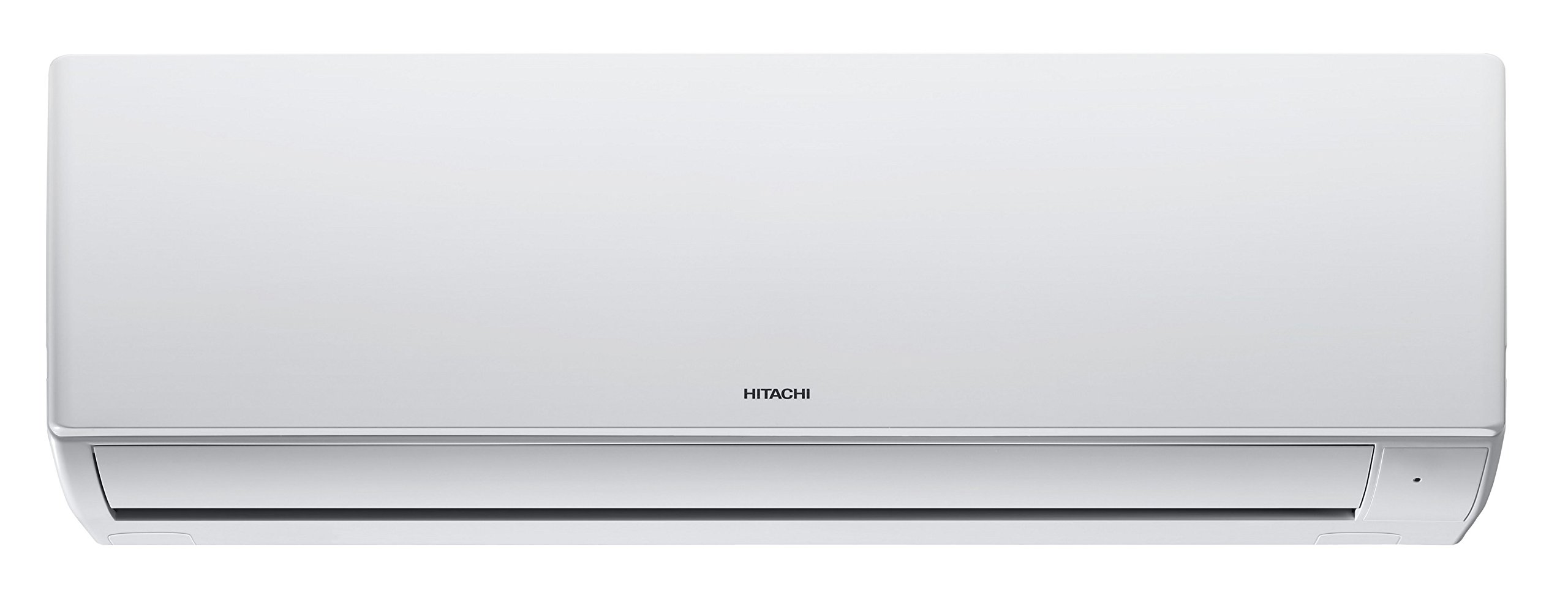
Whakaahua 3.1: Mua view of the Hitachi RMC322HBD indoor unit. This unit is typically mounted inside the room and is responsible for circulating cooled air.

Whakaahua 3.2: Te taha view of the Hitachi RMC322HBD indoor unit, showing its compact design suitable for various room aesthetics.
- Wae o Roto: Houses the evaporator coil, fan, air filter, and control electronics. It is designed for wall mounting.
- Wae Waho: Contains the compressor, condenser coil, and expansion valve. It is installed outside the building.
- Mana Mamao: Used to operate the AC unit from a distance, allowing adjustment of settings such as temperature, mode, and fan speed.
- Kete whakauru: Includes necessary pipes, wires, and mounting brackets for installation.
4. Aratohu Whakauru
Installation of this split air conditioner requires specialized skills and tools. It is strongly recommended that installation be performed by a qualified and certified technician to ensure proper functioning, safety, and warranty validity.
4.1 Kōwhiringa Pae
- Wae o Roto: Choose a location that allows for even air distribution, away from direct sunlight or heat sources. Ensure sufficient space around the unit for maintenance.
- Wae Waho: Select a well-ventilated area, free from obstructions, and away from direct sunlight or strong winds. Ensure the unit is placed on a stable, level surface.
4.2 Te Whakaeke i te Waenga o Roto
The indoor unit should be securely mounted on a wall using the provided mounting plate. Ensure the wall is strong enough to support the unit's weight. Proper drainage for condensate water must be established.
4.3 Te Whakamau i te Wāhanga o Waho
The outdoor unit should be installed on a rigid base to minimize vibration and noise. Ensure there is adequate clearance for airflow around the unit. Connect the refrigerant pipes and electrical wiring between the indoor and outdoor units.
4.4 Hononga Hiko
All electrical work must comply with local codes and regulations. Connect the unit to a dedicated power circuit with appropriate voltage (230 Volts) and a circuit breaker. Ensure all connections are secure and properly insulated.
4.5 Whakawai
The indoor unit produces condensate water during operation. Ensure the drain hose is properly installed with a downward slope to allow for continuous drainage, preventing water leakage.
5. Operating Your AC
Your Hitachi RMC322HBD AC unit is controlled via a wireless remote control. Familiarize yourself with the remote's functions for optimal use.
5.1 Nga Mahi Mana Mamao
Ko te mana mamao ka taea e koe te:
- Hiko Whakaka/Weto: Ka whakahohe, ka whakakore ranei i te waeine.
- Kōwhiringa Aratau: Choose between Cooling, Fan, Dry, or Auto modes.
- Te Whakarerekenga Pawera: Set your desired room temperature.
- Tere Kiri: Whakaritea te tere o te powhiri (Takare, Waenga, Teitei, Aunoa).
- Mahi Piu: Control the direction of the air deflector (Wide angle deflector).
- Matawā: Tautuhia te wae kia whakakā, whakaweto aunoa.
- Nga waahanga motuhake: Activate specific functions like Anti Bacterial Filter or Sleep mode.
5.2 Mahi Taketake
- Point the remote control towards the indoor unit.
- Press the 'ON/OFF' button to start the unit.
- Select your desired operating mode using the 'MODE' button.
- Adjust the temperature using the 'TEMP UP/DOWN' buttons.
- Whakaritehia te tere o te paera ina hiahiatia.
5.3 Nga waahanga motuhake
- Anti Bacterial Filter: Helps to remove bacteria and allergens from the air, improving indoor air quality.
- Wave Blade Design: Contributes to efficient airflow and quiet operation.
- Wide Angle Deflector: Allows for broader air distribution across the room.
- Tātari Maama Tohu: Notifies you when the air filter requires cleaning, ensuring consistent performance.
6. Tiaki me te Tiaki
Regular maintenance is crucial for the efficient and long-lasting operation of your AC unit. Always disconnect power before performing any maintenance.
6.1 Te Whakapai i te Matarere
The air filters should be cleaned regularly, typically every two weeks or when the 'Filter Clean Indicator' illuminates. Dirty filters can reduce cooling efficiency and airflow.
- Whakatuwherahia te papa o mua o te waahanga o roto.
- Tangohia nga whiriwhiringa hau.
- Horoihia nga whiriwhiringa ki te miihini horoi horoi ranei ki te wai maama me te horoi ngawari.
- Allow the filters to dry completely in a shaded area before reinstalling.
- Katia te papa o mua.
6.2 Indoor Unit Cleaning
Wipe the indoor unit's surface with a soft, dry cloth. For stubborn stains, use a damp kakahu ki te hopi horoi kore, ka horoia kia maroke. Kaua e whakamahi i nga matū kino, i nga horoi horoi ranei.
6.3 Te Tiaki i te Wāhanga o Waho
Periodically check the outdoor unit for any obstructions (leaves, debris) around the condenser coils and clear them. Ensure the area around the unit remains clear for proper airflow. Professional cleaning of the outdoor unit's coils is recommended annually.
6.4 Te tiaki i te waa
- I mua i te raumati: Have a professional technician inspect the refrigerant levels and overall system performance.
- I mua i te takurua: If the unit will not be used for an extended period, clean all components thoroughly and cover the outdoor unit to protect it from harsh weather.
7. Te Raru
Before contacting customer support, refer to the following table for common issues and their potential solutions.
| Raruraru | Take pea | Rongoā |
|---|---|---|
| Kaore e timata te waeine | Kāore he pūtake hiko; He iti ngā pākahiko mana mamao; Kua motu te kaiwawao ara iahiko. | Tirohia te hononga hiko; Whakakapihia nga pākahiko; Tautuhi ano i te wehenga ara iahiko. |
| He iti rawa te whakamahana | Dirty air filters; Obstruction in air intake/outlet; Doors/windows open; Temperature setting too high; Low refrigerant. | Clean filters; Remove obstructions; Close openings; Lower temperature; Contact service for refrigerant check. |
| Nga haruru ke | Nga waahanga wewete; Waeine kaore i te taumata; Nga oro whakahaere noa (hei tauira, te rere whakamatao). | Check for loose parts; Ensure unit is level; If unusual, contact service. |
| Te rerenga wai mai i te waahanga o roto | Clogged drain hose; Improper installation; Unit not level. | Maamaa ngongo wairere; Whakapā atu ki te kaitāuta mo te tirotiro. |
Mena kei te haere tonu te raru i muri i te whakamatau i enei otinga, tena koa whakapā atu ki nga kaimahi ratonga whai mana.
8. Whakatakotoranga Hangarau
| Whakatakotoranga | Uara |
|---|---|
| Waitohu | Hitachi |
| Ingoa Tauira | RMC322HBD |
| Te kaha | 2 Toni |
| Te Mana Matao | 6445 Watts |
| Whakatauranga Ataata | 3 Star (BEE Star Rating) |
| Tauwehenga Pungao o te Kaupeka (SEER) | 3.51 |
| Whakamaoho | R22 |
| Taumata Haruru | 40 Decibels |
| Momo Tāuta | Ritua Pūnaha |
| Rauemi Matua | Te parahi |
| Voltage | 230 Volts |
| Puna Mana | Hiko Hiko |
| Taumaha Tūemi | 13000 Grams (Indoor Unit) |
| Momo Kaiwhakahaere | Mana Mamao |
| Te Rahi o te Papa | 180 Puawai Tapawha |
| Nga waahanga motuhake | Anti Bacterial Filter, Wave blade design, Wide angle deflector, Filter clean indicator, Tropical compressor, Backlight remocon |
9. Nga Korero Whakaputanga
Your Hitachi RMC322HBD Split AC comes with a limited warranty to cover manufacturing defects. The warranty details are as follows:
- 1 tau i runga i te hua.
- 1 tau on the condenser.
- 5 tau i runga i te compressor.
Please retain your purchase receipt as proof of purchase for warranty claims. The warranty does not cover damages resulting from improper installation, misuse, lack of maintenance, or unauthorized repairs. For detailed terms and conditions, refer to the warranty card included with your product.
10. Tautoko Kiritaki
For any inquiries, technical assistance, or service requests regarding your Hitachi RMC322HBD Split AC, please contact Hitachi customer support. Ensure you have your model number (RMC322HBD) and purchase details ready when contacting support.
You can typically find contact information for Hitachi customer service on their official webpae, i roto ranei i nga tuhinga e whakaratohia ana me to hua.