
Kupu Whakataki
This manual provides detailed instructions for the proper use and care of your Vivitar DVR917HD 4K Action Camera. Please read this manual thoroughly before operating the device to ensure safe and effective use. The Vivitar DVR917HD is designed to capture high-quality video and photos in various environments, including underwater, thanks to its durable waterproof casing and versatile mounting options.
Nga waahanga hua
- Whakaaturanga LCD Tae 2-inihi: For precise image capture, video playback, and photo viewing.
- 4K Hopu Ataata: Capture stunning video at 4640 x 3480 resolution, along with 1080p and 720p options.
- 16 Megapixel CMOS Sensor: For high-resolution still photographs.
- Take Wai-Atete: Enables use in wet conditions and underwater adventures.
- Wi-Fi-roto: Allows direct streaming of content to compatible smartphones or tablets.
- Mata Matawhānui-Koki: Designed for capturing expansive scenes.
- Atanga Maha: Supports microSD, microSDHC, HDMI, and USB 2.0.
- Hoahoa Kiato: Dimensions of 2.6 inches x 2.5 inches x 1.5 inches and a weight of 0.5 pounds.
Ihirangi mokete
Manatokohia ko nga mea katoa kei raro nei kei roto i to kete:
- Vivitar DVR917HD 4K Action Camera
- Whare Parewai
- Mana Mamao Ahokore
- Pouaka AC
- Tauira USB
- Tauera HDMI
- Helmet Mounting Kit
- Maunga Paihikara

Image: The Vivitar DVR917HD camera shown with its full set of accessories, including the waterproof case, remote, various mounts, and cables.
Tatūnga
1. Te whakauru i te Kaari MicroSD
- Locate the microSD card slot on the side of the camera.
- Gently insert a compatible microSD or microSDHC card (Class 4 or higher recommended) into the slot until it clicks into place. Ensure the card is oriented correctly.
2. Te Whakataki i te Pūhiko
- Connect the camera to the AC power adapter using the provided USB cable.
- Monohia te urutau hiko AC ki te putanga pakitara.
- The charging indicator light will illuminate. Charging is complete when the light changes color or turns off.
3. Using the Waterproof Housing
- Open the latch on the waterproof housing.
- Carefully place the camera inside the housing, ensuring it fits snugly.
- Close the latch securely. Before first use in water, perform a leak test without the camera inside.
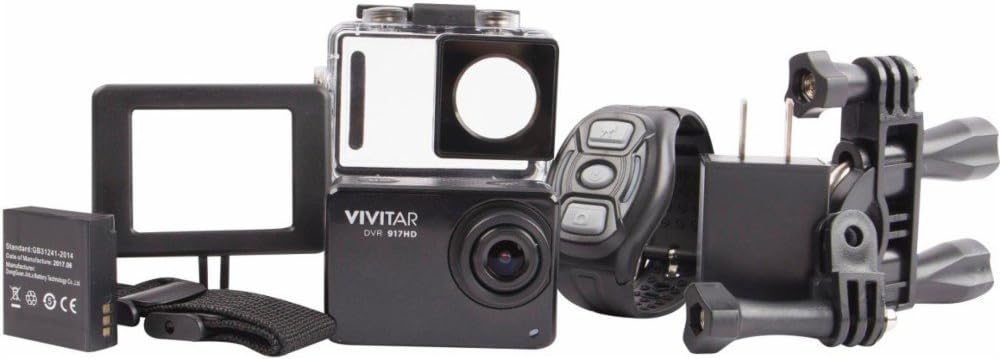
Image: The Vivitar DVR917HD camera positioned within its clear waterproof housing, with the back cover open.
4. Attaching Mounts
The camera comes with a helmet mounting kit and a bicycle mount. Follow the instructions provided with each mount to securely attach the camera for your desired activity.

Image: The Vivitar DVR917HD camera enclosed in its waterproof case, securely attached to a mounting accessory.

Image: A person wearing a ski helmet with the Vivitar DVR917HD action camera visibly mounted on the top, against a snowy mountain backdrop.
Nga Tohutohu Whakahaere
1. Te Whakakaha/Weto
- To power on, press and hold the Power/Mode button (usually labeled 'MODE') until the screen illuminates.
- To power off, press and hold the Power/Mode button again until the screen turns off.

Whakaahua: He tata view of the Vivitar DVR917HD action camera, highlighting its front lens and top control buttons.
2. Hopu Ataata
- Ensure the camera is in video recording mode. Use the Mode button to cycle through modes if necessary.
- Press the 'OK' button to start recording. A red indicator light or on-screen icon will typically show recording is active.
- Press the 'OK' button again to stop recording.
3. Tango Whakaahua
- Switch the camera to photo mode using the Mode button.
- Whakatakotoria tō whakaahua mā te whakamahi i te mata LCD 2-inihi.
- Press the 'OK' button to capture a photo.

Image: The Vivitar DVR917HD camera's rear screen displaying a live view from a first-person perspective of someone riding a bicycle.
4. Hononga Wi-Fi
- Enable Wi-Fi on the camera through the settings menu.
- On your smartphone or tablet, search for the camera's Wi-Fi network and connect to it.
- Open the Vivitar app (if available) or a compatible action camera app to stream content or control the camera remotely.
5. Te Whakamahi i te Mana Mamao Ahokore
The included wireless remote control allows for convenient operation of the camera from a distance. Refer to the remote control's specific instructions for pairing and function details.
Te tiaki
Cleaning the Camera and Housing
- Use a soft, lint-free cloth to clean the camera body and lens. Avoid abrasive materials.
- For the waterproof housing, rinse with fresh water after use in saltwater and allow to air dry. Ensure the O-ring seal is free of debris.
Tiaki Pūhiko
- Me utu katoa te pākahiko i mua i ia whakamahinga.
- Kaua e tukuna te pākahiko ki te wera nui.
- Mena ka roa te wā e rongoa ana te kāmera, tangohia te pākahiko.
Rokiroki
Store the camera in a cool, dry place away from direct sunlight and excessive humidity. Keep it protected from dust and impacts.
Raparongoā
- Kaore te kamera i te hiko: Me whakarite kua utaina te pākahiko me te whakauru tika.
- Nga take tuhi: Check if a microSD card is inserted and has sufficient free space. Ensure the card is not corrupted.
- He pai te kounga oro: The waterproof housing can significantly muffle sound. For better audio, use the camera outside the housing in dry conditions.
- Ngā raruraru hononga Wi-Fi: Ensure Wi-Fi is enabled on the camera and your smart device. Try restarting both devices.
- Camera freezing: Tango me te whakauru ano i te pākahiko hei tautuhi i te kamera.
Whakatakotoranga
| Āhuahira | Whakatakotoranga |
|---|---|
| Ingoa Tauira | DVR917HD |
| Tauira Tuemi | 3216565590 |
| Whakataunga Tonu Whaihua | 16 MP |
| Whakataunga Hopu Ataata | 4K, 1080p, 720p |
| Hōputu Hopu Ataata | MP4 |
| Hangarau Pūoko Whakaahua | CMOS |
| Rahi Mata | 2 Inihi |
| Hangarau Hononga | Wi-Fi |
| Momo Mahara Kohiko | Micro SD |
| Āhuahira Motuhake | parewai |
| Momo Arotahi | Koki Whanui |
| Momo Arotahi | Arotahi Aunoa |
| Mana Whakaaturanga | Aunoa |
| Taumaha Tūemi | 717 g |
| Ahu | 2.6 x 2.5 x 1.5 inihi (tata) |
Nga korero Whakaputanga
For detailed warranty information regarding your Vivitar DVR917HD 4K Action Camera, please refer to the warranty card included in your product packaging or visit the official Vivitar webpae. Ka rereke pea nga tikanga me nga tikanga mo te rohe me te ra hoko.
Tautoko Kiritaki
If you require further assistance, have questions not covered in this manual, or need technical support, please contact Vivitar customer service. Contact details can typically be found on the Vivitar official webpae, i runga ranei i to putunga hua.