
Kupu Whakataki
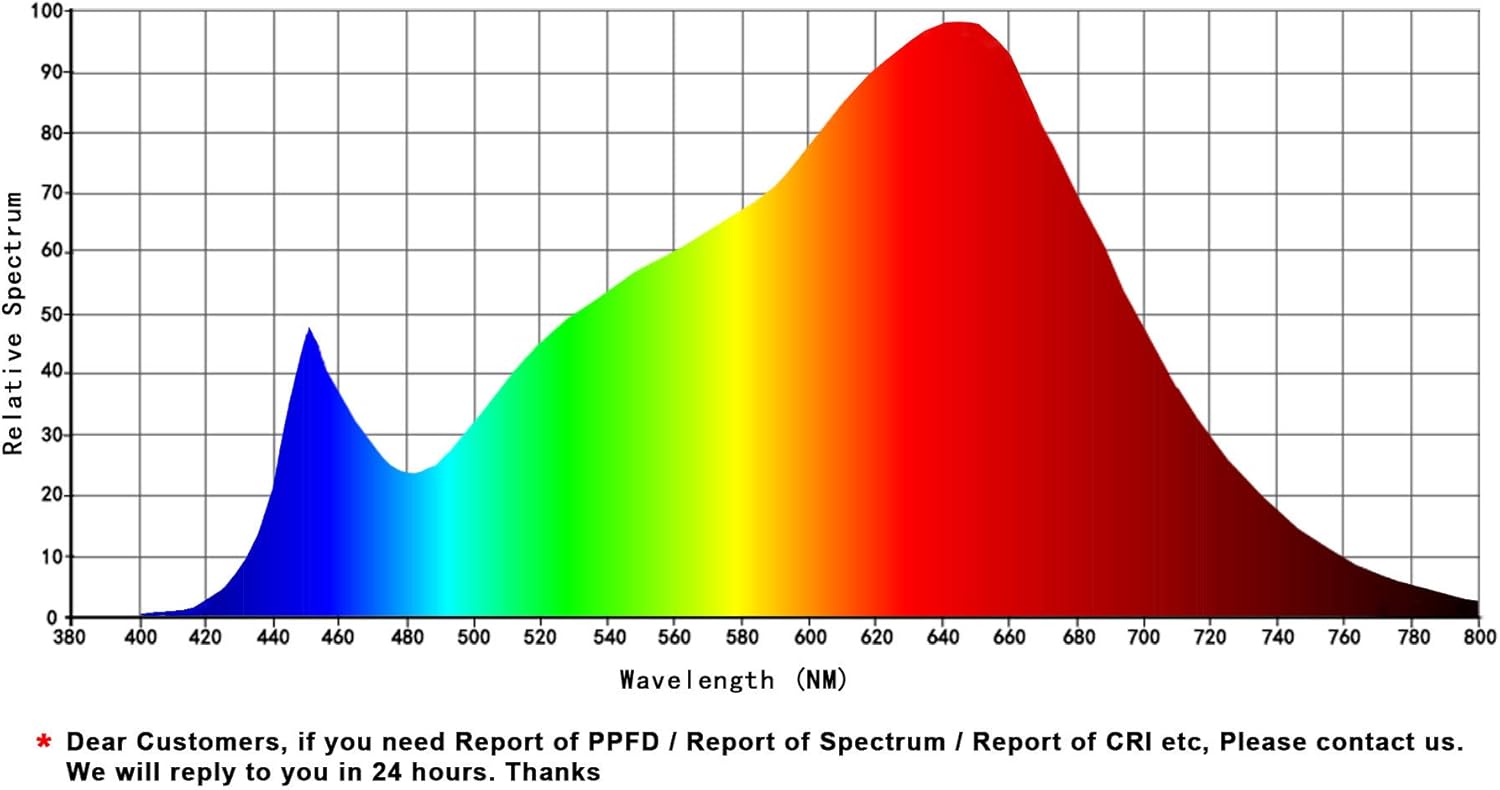
This manual provides essential information for the safe and effective use of the LCFOCUS 3W Full Spectrum LED Chip. This high-power LED chip is designed for various lighting applications, particularly for plant growth, offering a full spectrum wavelength range of 400-800nm. Please read these instructions carefully before installation and operation.
Nga korero haumaru
- Haumaru Hiko: High power COB LEDs require constant current LED drivers. Ensure the power supply matches the recommended current and voltage specifications (700mA, 3.2V-3.6V DC). Incorrect power supply can damage the LED chip.
- Whakahaere Wea: These LEDs generate heat. A heat sink system is mandatory to maintain the working temperature below 60°C (140°F). Failure to do so will significantly reduce the lifespan of the LED.
- Polarity: Observe correct polarity when connecting the LED chip. Refer to the positive (anode +) and negative (cathode -) signs on the LEDs. Incorrect polarity will prevent the LED from lighting up and may cause damage.
- Parenga kanohi: Avoid direct exposure to the intense light emitted by the LED chip, especially the full spectrum light, as it can be harmful to the eyes.
- Te whakahaere: Handle LED chips with care to avoid electrostatic discharge, which can damage the components.
Nga waahanga hua
- Full Spectrum Wavelength: 400-800nm, ideal for plant growth.
- High Color Rendering Index (CRI): 90, providing natural light rendition.
- Power: 3 Watt, Warm White (2800-3200K) output.
- High Luminous Efficacy: 84 µmol/(m²·s) PPFD at 10cm height, 4890 LX at 10cm height, 180-200LM luminous flux.
- Wide Emitting Angle: 140 degrees for broad light distribution.
- Durable Construction: Features 45mil chips, double golden wire (99.99%), and a copper holder for enhanced reliability and lifespan.
- Long Lifespan: Up to 50,000 hours with proper heat management.
Whakatakotoranga
| Tawhā | Uara |
|---|---|
| Te nui | 10 pieces / Pack |
| Waitohu | LCFOCUS |
| Mana | 3 Waata |
| Ingoa Tauira | Full Spectrum-3 |
| Tae Tuku | Ma whakamahana (2800-3200K) |
| Te roangaru | 400-800NM |
| Recommended Current (IF) | 700mA |
| Whakamua Voltage (VF) | 3.2-3.6VDC |
| PPFD (Height: 10cm) | 84 µmol/(m²·s) |
| LX (Height: 10cm) | 4890 lx |
| Rerewharewha (Φ) | 180-200LM |
| CRI | 90 |
| Emitting Angle | 140 tohu |
| Hangahanga | Double Golden Wire (99.99%), Copper Holder |
| Te ora | 50,000 Hours (with proper heat sink) |
| Te Waahi Mahi | Iti iho i te 60 ° C (140 ° F) |
| Rauemi | Te parahi |
| Taumaha Tūemi | 0.2 ounces (per 10 pcs) |
| Nama Wahi | LC-3FS3-P45 |
| UPC | 768894084604 |
Absolute Maximum Ratings (TA=25°C)
| Tawhā | Tohu | Whakatauranga Morahi | Waeine |
|---|---|---|---|
| Tonu Whakamua Naianei | IF | 700 | mA |
| Peak Forward Current (1/10 Duty Cycle, 0.1MS Pulse Width) | IFp | 1000 | mA |
| Whakamuri Voltage | VR | 5 | V |
| Te Whakamau Kaha | PD | 3 | W |
| Tukunga Hiko | ESD | 1000 | V |
| Te Awhe Maama Mahi | TOPR | -25°C ki te +85°C | |
| Te Awhe Paawera Rokiroki | TSTG | -35°C ki te +105°C | |
| Lead Soldering Temperature (3MM from TNE Base of the Epoxy Bulb) | TSOL | 360°C |
Electrical / Optical Characteristics (TA=25°C)
| Tawhā | Tohu | Min. | Pato. | Max. | Waeine | Tikanga Whakamatau |
|---|---|---|---|---|---|---|
| Whakamua Voltage | VF | 3.2 | 3.4 | 3.6 | V | IF=700mA |
| Rerewharewha | Φ | 180 | 190 | 200 | Lm | IF=700mA |
| Taururuku Chromaticity | X | 0.43 | IF=700mA | |||
| Y | 0.40 | IF=700mA | ||||
| Te roangaru | WL | 400 | 800 | nm | IF=700mA | |
| Kei te Huri Atu Te Ra | IR | 0 | 10 | µA | VR=5V | |
| Color-Rendering Index | CRI | 90 | ||||
| Viewing Koki | 2θ1/2 | 140 | Dge | IF=700mA | ||
| Recommend Forward Current | IF(REC) | 700 | mA |

Tatūnga
- Whakaritea nga Waahanga: Gather your LCFOCUS 3W Full Spectrum LED chips, a suitable constant current LED driver (recommended 700mA output), a heat sink, thermal paste or adhesive, and appropriate wiring.
- Apply Thermal Management: Apply a thin, even layer of thermal paste or adhesive to the back of the LED chip and firmly attach it to a heat sink. Ensure good contact for efficient heat dissipation. This step is critical for the longevity of the LED.
- Tāutuhia te Polarity: Locate the positive (anode +) and negative (cathode -) markings on the LED chip. These are typically indicated on the chip's base.
- Hononga Waea: Connect the positive terminal of the LED chip to the positive output of the constant current LED driver. Connect the negative terminal of the LED chip to the negative output of the LED driver. Ensure all connections are secure and insulated.
- Multiple Chips (Series/Parallel): If connecting multiple chips, ensure your LED driver can handle the total forward voltage and current. For series connections, sum the forward voltages. For parallel connections, sum the currents. Always use a constant current driver.


Nga Tohutohu Whakahaere
Once the LED chip is properly installed with a heat sink and connected to a constant current LED driver, it is ready for operation.
- Whakahiko: Turn on the power supply to the LED driver. The LED chip should illuminate immediately.
- Aroturuki Pawera: Periodically check the temperature of the heat sink. If it feels excessively hot to the touch, ensure proper ventilation and that the heat sink is adequately sized for the application. The working temperature should not exceed 60°C (140°F).
- Putanga Maama: The full spectrum light is designed to support plant photosynthesis. Adjust the distance from the plants based on their specific light requirements and the intensity desired.

Te tiaki
- Te horoi: Ensure the LED chip and heat sink are free from dust and debris. A clean surface allows for optimal light output and heat dissipation. Use a soft, dry cloth for cleaning. Do not use abrasive cleaners or solvents.
- Heat Sink Inspection: Regularly inspect the heat sink for any obstructions to airflow. Ensure it remains securely attached to the LED chip.
- Taki Waea: Periodically check all wiring connections for signs of wear, corrosion, or looseness. Ensure insulation remains intact.
Raparongoā
- LED Not Lighting Up:
- Check power supply: Ensure the constant current LED driver is receiving power and is functioning correctly.
- Check polarity: Verify that the positive and negative terminals of the LED chip are connected correctly to the driver.
- Check connections: Ensure all wires are securely connected and there are no breaks in the circuit.
- Check LED driver specifications: Confirm the driver's output current and voltage match the LED chip's requirements.
- LED Dim or Flickering:
- Insufficient current: The LED driver may not be supplying enough current.
- Overheating: Check the heat sink. If the LED is overheating, it may reduce output or flicker as a protective measure.
- Faulty connection: Inspect wiring for intermittent contact.
- Roa Ora Poto:
- Overheating: The most common cause. Ensure the heat sink is adequate and working temperature is maintained below 60°C.
- Te kaha o te kaha / Neketage: Using an incorrect power supply can severely shorten the LED's life.
Pūtāhui me te Tautoko
LCFOCUS products are manufactured to high-quality standards. For specific warranty details, please refer to the purchase documentation or contact your retailer. For technical support or inquiries, please reach out to LCFOCUS customer service through the official channels provided at the point of purchase.