
1. Kupu Whakataki
This manual provides comprehensive instructions for the CEYOMUR CY60 Trail Camera. This device is designed for capturing high-resolution photos and videos of wildlife, offering features such as 4K video recording, 36MP photo resolution, infrared night vision, and IP66 waterproof rating. Please read this manual thoroughly before operating the camera to ensure proper usage and optimal performance.
2. Ihirangi mokete
Manatokohia ko nga mea katoa kei raro nei kei roto i to kete:
- 1 x CEYOMUR CY60 Trail Camera
- 1 x Tauira USB
- 1 x Whakamaunga Here
- 1 x Paepae Whakanui Ka taea te whakarite
- 1 x Pukapuka Kaiwhakamahi

Image: Contents of the CEYOMUR CY60 Trail Camera package, showing the camera, USB cable, mounting strap, and user manual.
3. Kāmera Neke Atuview
Familiarize yourself with the main components of your CEYOMUR CY60 Trail Camera.

Whakaahua: Mua view of the CEYOMUR CY60 Trail Camera, highlighting the lens, PIR sensors, and infrared LEDs.

Image: The CEYOMUR CY60 Trail Camera with its front casing open, revealing the internal LCD screen, control buttons, and SD card slot.
4. Tatūnga
4.1 Tāuta Pūhiko
The camera requires 8 AA batteries (not included). For optimal performance and extended battery life, especially in cold conditions, it is recommended to use high-quality alkaline or rechargeable AA batteries.
- Open the camera's casing.
- Kimihia te wāhi pākahiko i raro i te kāmera.
- Whakauruhia nga pākahiko AA e 8, kia tika te polarity (+/-) e tohuhia ana ki roto i te waahanga.
- Katia kia mau te wahanga pākahiko.
4.2 SD Card Tāutatanga
A Micro SD card (up to 32GB, not included) is required to store photos and videos. Ensure the card is formatted before first use.
- With the camera casing open, locate the SD card slot on the side.
- Whakauruhia te kāri Micro SD ki roto i te mokowā kia pāwhiri rā anō ki tōna tūranga.
- Hei tango, pēhia mārire te kāri kia pūwhera rā anō ki waho.
Whakaahua: He tata view of the CEYOMUR CY60 Trail Camera's side, indicating the SD card slot and the external power port for convenient access.
4.3 Whakauru i te Kamera
The camera can be mounted using the included strap or the adjustable mounting bracket.
- Whakamaunga here: Thread the mounting strap through the slots on the back of the camera and secure it around a tree or pole.
- Whakapuru Taiapa: Attach the adjustable mounting bracket to a wall or flat surface using screws (not included). Then, secure the camera to the bracket.

Image: The CEYOMUR CY60 Trail Camera securely mounted to a tree trunk using the provided strap, demonstrating its outdoor placement.

Image: The CEYOMUR CY60 Trail Camera camouflaged against a tree, illustrating its discreet design for wildlife observation.
5. Nga Tohutohu Whakahaere
5.1 Te Whakakā me ngā Tautuhinga Taketake
- Whakatuwheratia te kāmera casing.
- Slide the power switch from OFF to SETUP. The LCD screen will turn on.
- Use the navigation buttons (UP, DOWN, LEFT, RIGHT, OK) to access the menu.
- Navigate to "Date/Time" to set the current date and time. This is crucial for accurate timestampkei runga i o rekoata.
- Format the SD card through the menu option to ensure compatibility and clear any previous data.
5.2 Aratau Mahi
The camera offers three primary operating modes:
- Aratau Whakaahua: Captures still images when triggered.
- Aratau Ataata: Records video clips when triggered.
- Aratau Whakaahua + Ataata: Ka hopu i tētahi whakaahua kore e nekeneke, ā, ka whai muri ko tētahi riipene ataata ina whakahohea.
Select your desired mode from the camera's menu settings.
5.3 PIR Sensor and Trigger Settings
The Passive Infrared (PIR) sensor detects motion and triggers the camera. The CY60 features a 120° detection angle with a central 60° sensor and two side 30° sensors.
- PIR mataata: Adjust sensitivity (Low, Medium, High) based on the environment to prevent false triggers or missed events.
- Mahinga PIR: Set the delay between consecutive triggers to avoid capturing too many redundant images/videos of the same event.
- Tere Keu: The camera boasts an ultra-fast 0.2-second trigger speed to capture fast-moving subjects.

Image: A visual representation of the CEYOMUR CY60 Trail Camera's 120-degree detection angle, showing the coverage area of its PIR sensors.

Image: A cheetah in mid-leap, overlaid with a target reticle, illustrating the camera's ultra-fast 0.2-second trigger speed for capturing dynamic wildlife moments.
5.4 Matakite Po
The camera utilizes 36 low-glow 850nm infrared LEDs for night vision, providing clear black and white images and videos in low-light conditions without disturbing wildlife.

Image: A split image demonstrating the camera's capability, showing a red panda in full color during the day and the same scene in clear black and white using infrared night vision.
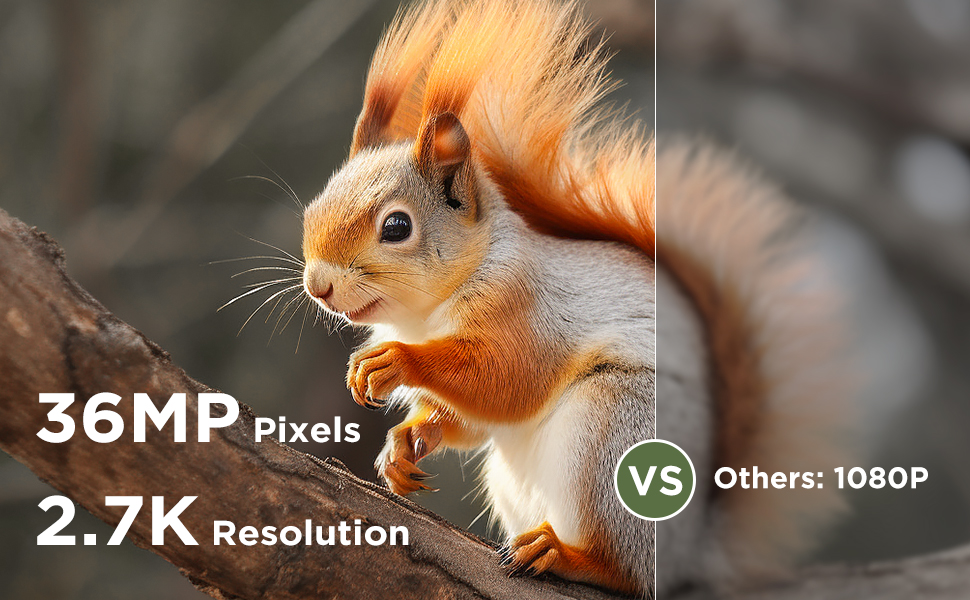
Image: A comparison illustrating the effectiveness of 940nm No Glow infrared LEDs for discreet night vision, showing two fawns undisturbed in their natural habitat.
5.5 Viewi roto i te Media
Ka taea e koe view captured photos and videos directly on the camera's LCD screen or by connecting the camera to a computer using the provided USB cable. Alternatively, remove the SD card and insert it into a compatible card reader.
6. Tiaki
6.1 Te horoi
To maintain optimal performance, regularly clean the camera lens and the PIR sensors with a soft, dry cloth. Avoid using abrasive cleaners or solvents.
If condensation appears on the lens, open the camera casing to allow it to air dry in a dry environment.
6.2 Atete Wai
The CEYOMUR CY60 is rated IP66 waterproof, providing protection against dust and strong jets of water. Ensure the casing is securely closed and the rubber seal is free of debris to maintain its water resistance.
6.3 Battery and SD Card Management
Replace batteries when the low battery indicator appears on the screen. Regularly check the SD card for available space and transfer important fileki te rorohiko hei ārai i te ngaronga raraunga.
7. Te Raru
- Kaore te kamera i te hiko:
Ensure batteries are inserted correctly with the right polarity and are fully charged. Check if the power switch is in the 'SETUP' or 'ON' position.
- Kāore he whakaahua/ataata i hopukina:
Verify that the SD card is properly inserted and has sufficient free space. Check PIR sensitivity settings; increase if necessary. Ensure the camera is in the correct operating mode (Photo, Video, or Photo+Video). Confirm that the PIR interval is not set too long.
- Te tirohanga pō kino:
Ensure the camera lens and IR LEDs are clean and unobstructed. Check battery levels, as low power can affect IR performance.
- Ora pūhiko poto:
Using high-quality alkaline or rechargeable batteries is recommended. Frequent video recording, especially at night, consumes more power. Reduce PIR sensitivity or interval if excessive triggers occur.
- Condensation on lens:
Whakatuwheratia te kāmera casing and allow it to dry in a warm, dry environment. Ensure the rubber seal is clean and the casing is securely closed to prevent moisture ingress.
8. Whakatakotoranga
| Āhuahira | Whakatakotoranga |
|---|---|
| Tau tauira | CY60 |
| Whakataunga Whakaahua | 36MP (Upgraded from 30MP) |
| Whakatau Ataata | 4K (2160p) 30fps |
| Koki Rapu | 120 degrees (60° central PIR + two 30° side PIRs) |
| Tere Trigger | 0.2 hēkona |
| Matakitenga Po | 36 x 850nm Low-Glow IR LEDs |
| Ātete wai | IP66 |
| Puna Mana | 8 x AA Batteries (6V DC) |
| Rokiroki | Kaari Micro SD ki te 32GB |
| Ahu (L x W x H) | 14.7 x 10.4 x 8 cm |
| Rauemi | rapa |
| Hononga | Wired IR, USB |
9. Pūtāhui me te Tautoko
The CEYOMUR CY60 Trail Camera comes with a 1 tau te whakamana a te kaiwhakanao.
For technical support, troubleshooting assistance, or warranty claims, please contact CEYOMUR customer service. Refer to the contact information provided on the product packaging or the official CEYOMUR webpae.