
1. Kupu Whakataki
The Surfola SD310 Dual Dash Camera is designed to record video footage from both the front and rear of your vehicle, providing comprehensive coverage for your journeys. This manual provides detailed instructions for the proper installation, operation, and maintenance of your dash camera.
2. Ihirangi mokete
Tena koa tirohia nga ihirangi o te kete kia mohio kei te noho katoa nga taonga:
- Surfola SD310 Front Camera
- Kāmera Whakamuri
- Kaitohu Motoka
- Maunga momi
- Crowbar (for cable management)
- Pukapuka Kaiwhakamahi
- Pin & USB Cable

Image: All components included in the Surfola SD310 Dual Dash Camera package, laid out on a grey surface.
3. Hua Neke Atuview
The Surfola SD310 features a compact design with a 3-inch IPS screen. It offers dual-channel recording with a 1440P front camera and 720P rear camera, providing a wide 170-degree view for the front camera. Key features include Super Night Vision, Wide Dynamic Range (WDR), Loop Recording, Parking Mode, and Emergency Lock.
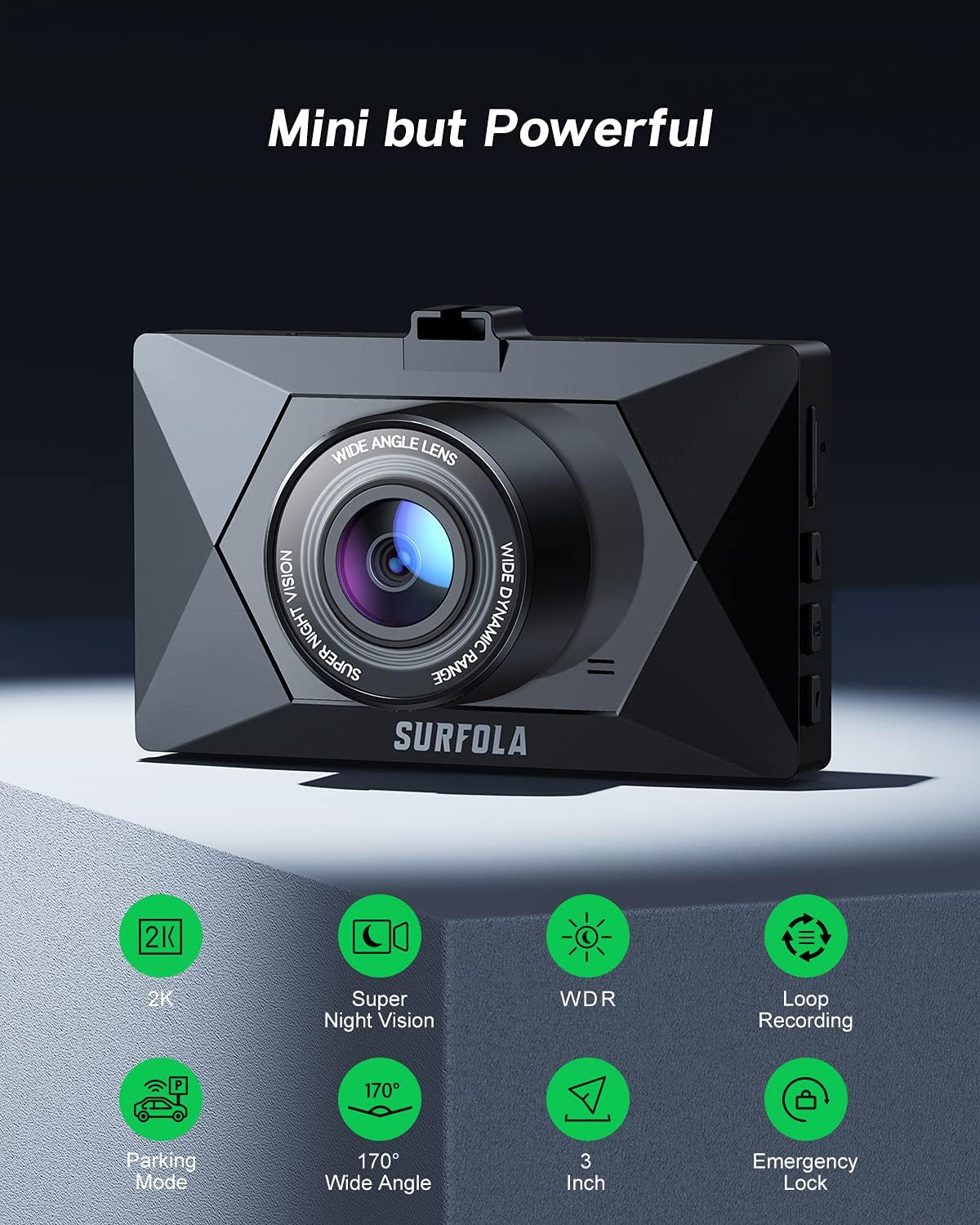
Whakaahua: Mua view of the Surfola SD310 dash camera, highlighting its compact size and various features such as 2K resolution, Super Night Vision, WDR, Loop Recording, Parking Mode, 170-degree Wide Angle, 3-inch screen, and Emergency Lock.
4. Tatūnga me te Tāuta
Follow these steps for proper installation of your dash camera:
- Whakapaia te Kaari SD Micro: Insert a high-speed Micro SD card (Class 10 or higher, up to 128GB, not included) into the dash camera's SD card slot. Ensure the card is formatted within the camera settings before first use.
- Tāutahia te Kāmera o Mua: Attach the suction mount to the front camera and then firmly press the suction cup onto a clean, dry area of your windshield, preferably behind the rearview whakaata, kia kore ai e arai i a koe view.
- Hono Hono: Plug the car charger into your vehicle's cigarette lighter socket and connect the other end to the dash camera's power input. Route the cable neatly along the windshield and dashboard using the provided crowbar to tuck it under trim panels.
- Tāutahia te Kāmera Whakamuri (Whiringa): If using the rear camera, connect it to the main unit and mount it on the rear windshield. Route the cable carefully to avoid interference with vehicle operations.
- Whakaritea Koki Kamera: Power on the camera and adjust the lens angle to capture the desired view of the road ahead. Ensure the horizon is level and important details are visible.

Image: Visual guide demonstrating the easy installation of the dash camera, showing how to insert the SD card and attach the suction mount to the windshield.
5. Nga Tohutohu Whakahaere
The Surfola SD310 dash camera is designed for straightforward operation. Here are the basic functions:
- Hiko Whakaka/Weto: The camera will automatically power on and begin recording when your vehicle starts (receiving power from the car charger). It will power off automatically when the vehicle is turned off. You can also manually power it on/off by pressing and holding the power button.
- Huringa Tuhipoka: The camera supports various recording modes, including continuous loop recording, parking monitoring, and emergency recording triggered by the G-sensor.
- Tahua Whakaterenga: Use the physical buttons on the side of the camera to navigate through the menu options displayed on the 3-inch IPS screen.
- Purei: Access recorded videos and photos through the playback menu on the device.
Video: A demonstration of the Surfola SD310's daytime video quality, showing clear footage from the front camera while driving on a road.
6. Nga waahanga matua
6.1 Dual Recording
The SD310 offers simultaneous recording from both the front (1440P) and rear (720P) cameras, capturing a broader perspective of events around your vehicle.

Image: Illustration showing the dual recording capability of the dash camera, with a primary view of the road ahead and a smaller inset image representing the rear view.
6.2 Super Night Vision
Equipped with advanced sensors, the dash camera provides enhanced visibility and clear recordings even in low-light conditions, helping to capture details like license plates and road signs at night.
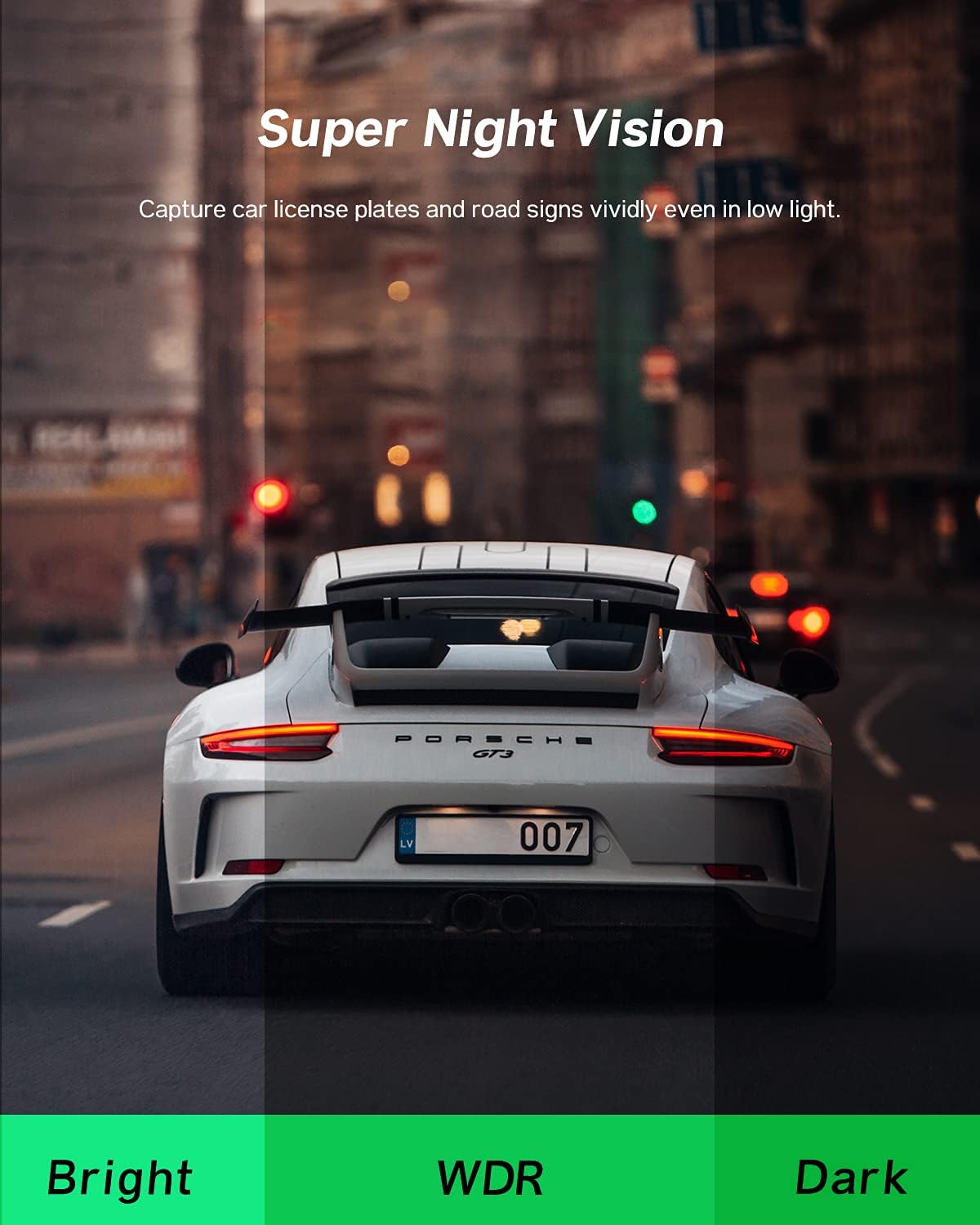
Image: A comparison showing the effectiveness of Super Night Vision, with sections labeled 'Bright', 'WDR', and 'Dark' to illustrate improved clarity in varying light conditions.
6.3 Aratau Waka 24-Hāora
When enabled, the parking mode feature monitors your vehicle for impacts or motion even when parked. If an event is detected, the camera will automatically record and save the footage, providing security for your parked car.

Image: Graphic illustrating the 24-hour parking mode feature, with a clock icon indicating continuous monitoring and a car silhouette.
6.4 Emergency Lock (G-Sensor)
The built-in G-sensor detects sudden movements or collisions. In such an event, the current video segment is automatically locked and protected from being overwritten by loop recording, ensuring critical footagka tiakina e.
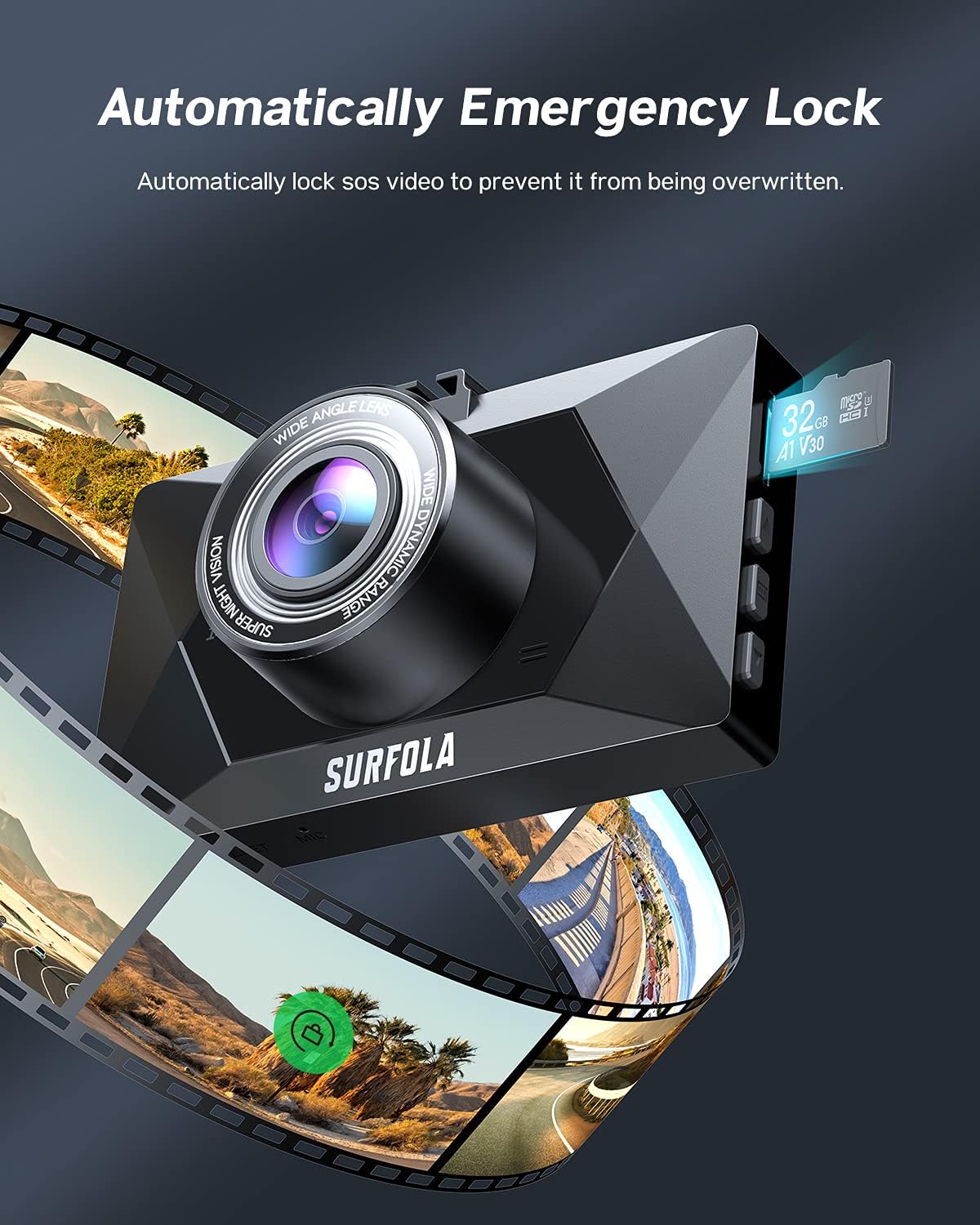
Image: The dash camera with a visual representation of video frames surrounding it, indicating the automatic locking of footage during an emergency event.
6.5 170° Arotahi Whānui
The front camera features a 170-degree ultra-wide-angle lens, capable of monitoring up to three lanes of traffic without significant distortion, providing a comprehensive view o te huarahi.
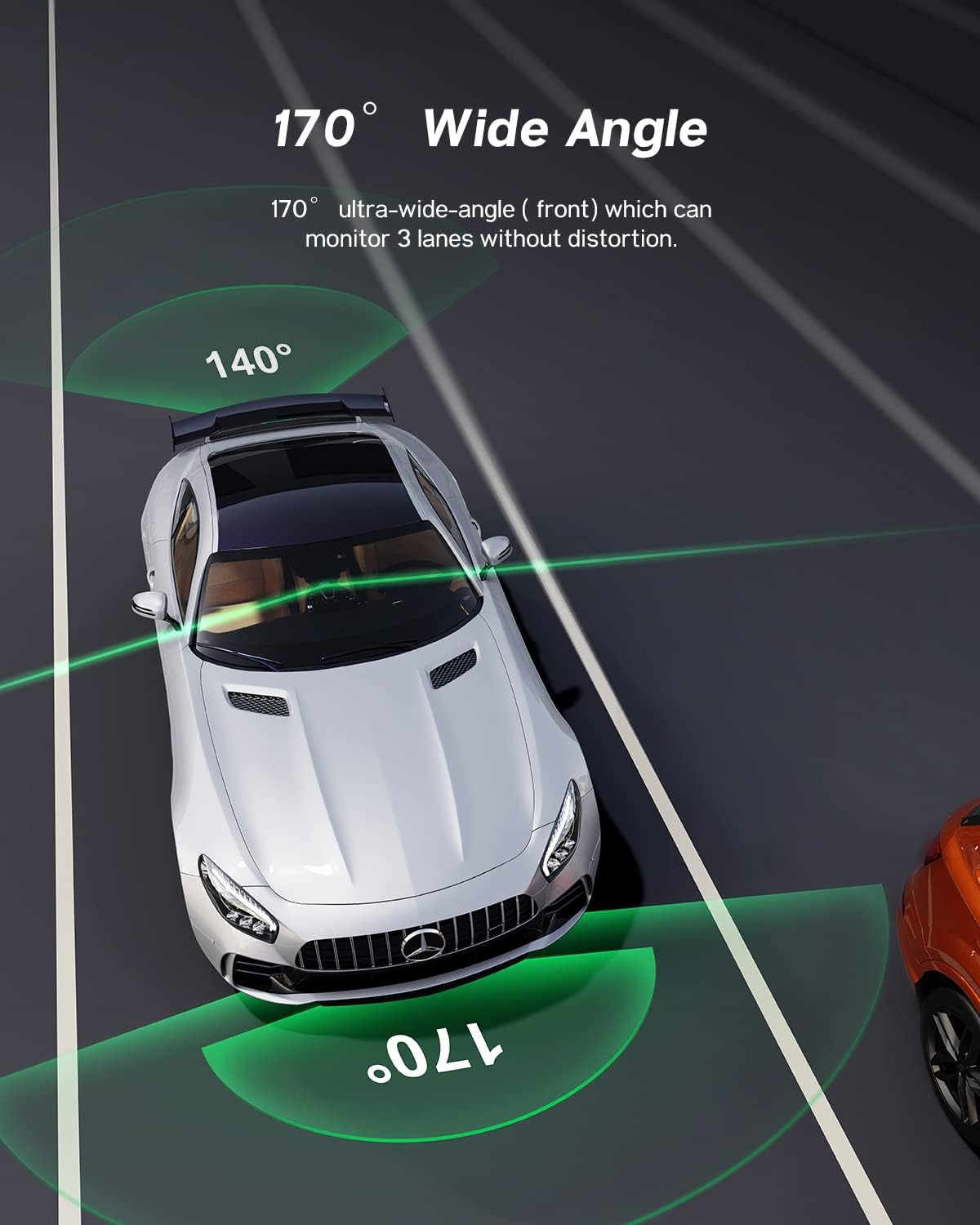
Whakaahua: He runga view of a car on a multi-lane road, with green arcs illustrating the 170-degree and 140-degree wide-angle coverage provided by the dash camera.
7. Whakatakotoranga
| Āhuahira | Whakatakotoranga |
|---|---|
| Hunga Hua | 3.5 x 2.17 x 1.16 inihi |
| Taumaha Tūemi | 15.8 hekere |
| Hangarau Hononga | USB |
| Whakataunga Hopu Ataata | Front: 1440P, Rear: 720P |
| Momo Whakaeke | Maunga momi |
| Tikanga Mana | Touch (IPS Screen) |
| Rahi Mata | 3 Inihi |
| Momo Mahara Kohiko | SD (Micro SD, Class 10 or higher, up to 128GB) |
| Turanga Wāhanga Aunoa | Mua |
8. Tiaki
To ensure optimal performance and longevity of your Surfola SD310 Dash Camera, follow these maintenance guidelines:
- Te Whakahōputu Auau: Format the Micro SD card regularly (e.g., once a month) to prevent data corruption and ensure smooth recording. Back up any important files i mua i te whakahōputu.
- Horoia te Arotahi: Gently clean the camera lenses with a soft, lint-free cloth to remove dust or smudges that could affect video quality.
- Whakaeke Haumaru: Periodically check that the suction mount is securely attached to the windshield to prevent the camera from falling.
- Mana Pawera: Avoid exposing the camera to extreme temperatures for extended periods, as this can affect battery life and internal components.
- Whakaha Uepu: Ensure all cables are properly routed and secured to prevent them from interfering with driving or becoming damaged.
9. Te Raru
If you encounter issues with your Surfola SD310 Dash Camera, refer to the following common troubleshooting steps:
- Kaore te kamera i te hiko: Ensure the car charger is properly connected to both the camera and the vehicle's power outlet. Check if the vehicle's power outlet is functioning.
- Camera repeatedly asks to format the memory card: This often indicates an issue with the SD card. Try formatting the card within the camera's settings. If the issue persists, replace the SD card with a new, high-quality Class 10 (or higher) Micro SD card.
- Te kounga ataata kino: Clean the camera lenses. Ensure the protective film has been removed from the lens. Check the video resolution settings in the camera menu.
- Camera falls from mounting cup: Ensure the windshield surface is clean and dry before attaching the suction cup. Press firmly to create a strong seal. If the suction cup is old or damaged, it may need replacement.
- Patene kore whakautu: Try resetting the camera using the reset button (if available) or by disconnecting and reconnecting the power.
- Loop recording not working: Ensure loop recording is enabled in the settings and that there is sufficient space on the SD card. Locked files from emergency recordings will not be overwritten.
10. Pūtāhui me te Tautoko
For warranty information and customer support, please refer to the documentation included with your product or visit the official Surfola webpae. Puritia to riirii hoko hei tohu mo te hoko mo nga kereme whakamana.