
1. Kupu Whakataki
The Apitor Robot E STEM Kit is an educational construction set designed to introduce children aged 6-12 to fundamental principles of science, technology, engineering, and mathematics. This kit allows for the construction of 14 different mechanical models using 218 pieces and a motor, fostering hands-on learning and problem-solving skills. The models demonstrate various physics concepts, including gravity, levers, and gear mechanisms.

Image 1.1: The Apitor Robot E STEM Kit, certified as an educational product by STEM.ORG.

Image 1.2: A collection of various mechanical models that can be constructed using the Apitor Robot E STEM Kit.
2. Nga korero haumaru
Please read and understand all safety instructions before assembly and operation.
- Pūmate Koowao: This kit contains small parts and is not suitable for children under 3 years of age. Keep all components away from infants and young children who may place inedible objects in their mouths.
- Haumaru Pūhiko: The kit requires AA batteries (not included). Ensure batteries are inserted with correct polarity. Do not mix old and new batteries, or different types of batteries. Remove batteries if the kit will not be used for an extended period.
- Tirohanga Pakeke: Adult supervision is recommended during assembly and play, especially for younger users, to ensure proper construction and safe handling of components.
- Haumaru Rawa: All building blocks are made from high-quality ABS material. Do not attempt to modify or ingest any parts.
3. He aha kei roto i te Pouaka
The Apitor Robot E STEM Kit includes the following components:
- 218 Nga Pihanga Whare
- 1 Motor Unit
- Learning Materials Manual
- Detailed Step-by-Step Picture Instructions
- Sorting Tray for components
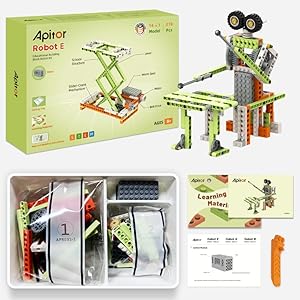
Whakaahua 3.1: He taipitopito view of the Apitor Robot E STEM Kit contents, showing the box, sorted pieces, motor, and instruction manuals.
4. Tatūnga me te Runanga
The Apitor Robot E kit allows for the construction of 14 distinct mechanical models. Follow the provided instructions carefully for each model.
4.1. Required Materials (Not Included)
- AA Batteries (quantity may vary per model, typically 2-4)
4.2. Tukanga Huihuinga
- Wewete Waenga: Carefully remove all pieces from the packaging. Utilize the included sorting tray to organize smaller components.
- Ngā Tohutohu Whakawhitiwhiti: Refer to the detailed step-by-step picture instructions provided in the manual. Each model has its own specific assembly guide.
- Tohutohu Mamati: For additional building models and interactive guides, download the "Apitor Kit" app. The app provides instructions for all 14 models.
- Tāuta Pūhiko: Install the required AA batteries into the motor unit, ensuring correct polarity (+/-).
- Hononga Mōta: Integrate the motor unit into your chosen model as indicated in the instructions.

Image 4.1: A child using a tablet to view digital building instructions from the Apitor Kit app.

Image 4.2: Children engaging with the kit, illustrating the application of gravity and lever principles in mechanical models.
5. Nga Tohutohu Whakahaere
Once a model is successfully assembled and batteries are installed, it is ready for operation. The specific operation will depend on the model built.
- Whakahiko: Locate the power switch on the motor unit or the assembled model (if applicable) and switch it to the "ON" position.
- Mātakitaki i te Nekehanga: Watch how the gears, levers, and other mechanical components interact to create movement.
- Whakamātautau: The kit encourages experimentation. Users can observe how changes in design or component placement affect the model's function.
- Rauemi Ako: Refer to the included Learning Materials manual for explanations of the scientific principles demonstrated by each model.
Video 5.1: Demonstration of various Apitor STEM kit models in motion, showcasing their mechanical functions.

Image 5.1: An illustration detailing 17 different types of mechanical knowledge that can be explored with the kit, such as levers, gears, and pulleys.
6. Tiaki
Proper maintenance ensures the longevity and functionality of your Apitor Robot E STEM Kit.
- Te horoi: Wipe components with a dry, soft cloth. Avoid using water or chemical cleaners, as these can damage the plastic or electronic components.
- Rokiroki: Store all pieces in a cool, dry place away from direct sunlight. Use the provided sorting tray or a similar container to keep pieces organized and prevent loss.
- Tango Pūhiko: Always remove batteries from the motor unit when the kit is not in use for extended periods to prevent leakage and damage.
- Tirotiro: Periodically inspect all pieces for wear or damage. Replace any broken or severely worn parts if possible.
7. Te Raru
If you encounter issues with your Apitor Robot E STEM Kit, refer to the following common troubleshooting steps:
| Raruraru | Take pea | Rongoā |
|---|---|---|
| Model does not move or motor is unresponsive. |
|
|
| Kāore ngā wahi e hono tetahi ki tetahi. |
|
|
| Kāore te tauira i te pumau, ka pakaru rānei. |
|
|
8. Whakatakotoranga
| Āhuahira | Taipitopito |
|---|---|
| Tau tauira | APR031 |
| Hunga Hua | 10.43 x 7.48 x 2.36 inihi |
| Taumaha Tūemi | 1.17 pauna |
| Te Tau Manakohia | 6 - 12 tau |
| Te maha o nga wahi | 218 |
| Puna Mana | Nga Pikohiko AA (kaore i whakauruhia) |
| Rauemi | He kirihou ABS kounga teitei |
9. Pūtāhui me te Tautoko
For warranty information, product support, or to report missing/damaged parts, please contact Apitor customer service directly. Refer to the packaging or the official Apitor webpae mo nga korero whakapiri.
Kaihanga: Apitor