
Kupu Whakataki
This manual provides instructions for the safe and effective use of your Thule Foldable Loading Ramp. This removable ramp is designed to assist in loading and unloading bicycles onto compatible Thule bike racks, reducing the effort required for heavier bikes such as electric bikes and mountain bikes.
Nga korero haumaru
Read all instructions carefully before use. Failure to follow these instructions may result in injury or damage to the product or property.
- Me whakarite te ramp is securely attached to the bike rack before attempting to load or unload a bicycle.
- Do not exceed the maximum load capacity of 88 pounds (40 kg) for the ramp.
- Always maintain a firm grip on the bicycle while rolling it up or down the ramp.
- Ensure the ground surface is stable and level when using the ramp.
- Puritia ō ringaringa me ō waewae kia matara atu i ngā wāhanga e nekeneke ana i te wā e mahi ana.
- Whakaorangia te ramp in a safe place when not in use to prevent tripping hazards.
Ihirangi mokete
Manatokona kei te noho nga waahanga katoa:
- 1 x Thule Foldable Loading Ramp (Tauira 933410)
Tatūnga
The Thule Foldable Loading Ramp is designed for quick deployment and storage.
- Unfolding the Ramp:
Grasp the folded ramp firmly. Release any securing latches or clips (if present) that hold the ramp in its folded position. Carefully extend the ramp sections until they are fully open and locked into place. Ensure all joints are secure before use.

Image: The Thule Foldable Loading Ramp shown in its compact, folded configuration. This view illustrates the ramp's design for convenient storage when not in use.
- Attaching to Bike Rack:
Ko te ramp is compatible with Thule Verse, EasyFold XT, and Epos models. Consult your bike rack's manual for specific attachment points. Typically, the ramp slides into a designated slot on the bike rack. Ensure the ramp is firmly seated and stable before placing any weight on it.
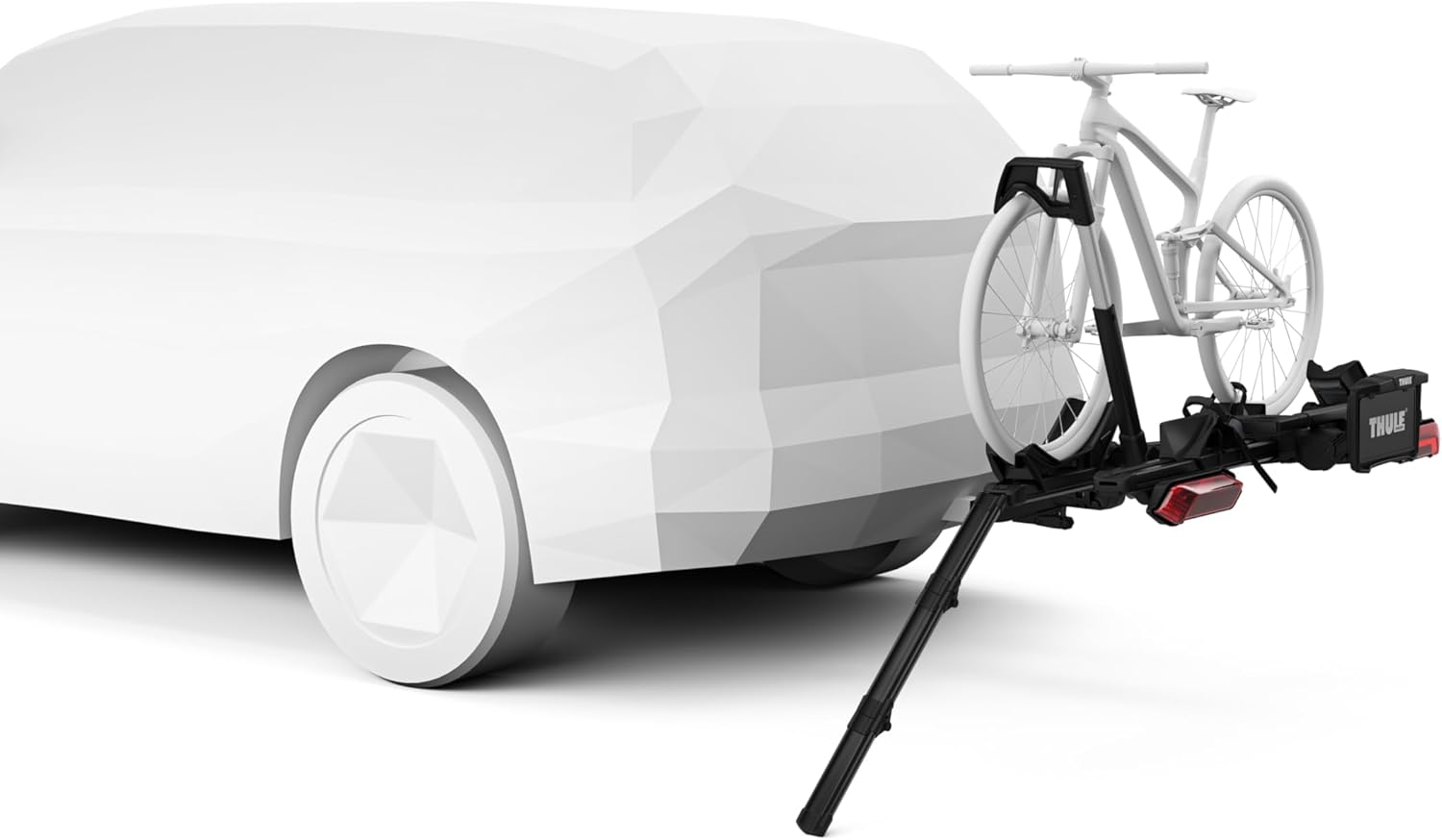
Image: The Thule Foldable Loading Ramp connected to a Thule bike rack, extending to the ground. A bicycle is positioned on the ramp, demonstrating the loading process onto the vehicle-mounted rack.
Nga Tohutohu Whakahaere
Follow these steps to safely load and unload your bicycle using the ramp.
- Te tuuraa i te Ramp:
Once attached to the bike rack, ensure the end of the ramp rests securely on a stable, level surface. The long 53-inch ramp length is designed to provide a gentle incline, even for taller vehicles.
- Loading a Bicycle:
Me te ramp securely in place, carefully guide the bicycle's wheels onto the ramp. Maintain a firm grip on the handlebars and seat. Slowly roll the bicycle up the ramp onto the bike rack. Avoid sudden movements. Once the bicycle is on the rack, secure it according to your bike rack's instructions.
- Unloading a Bicycle:
Me whakarite te ramp is securely attached to the bike rack and resting on a stable surface. Release the bicycle from the bike rack's securing mechanisms. Carefully guide the bicycle down the ramp, controlling its speed. Maintain a firm grip on the handlebars and seat until the bicycle is fully off the ramp and on the ground.
- Kōpaki mō te Rokiroki:
After use, detach the ramp from the bike rack. Fold the ramp sections back into their compact form, securing any latches or clips. The foldable design allows for convenient storage when not in use.

Image: The Thule Foldable Loading Ramp shown in its compact, folded state, ready for storage. This demonstrates its space-saving design.
Te tiaki
Proper maintenance ensures the longevity and safe operation of your loading ramp.
- Te horoi: Horoia te ramp with mild soap and water. Rinse thoroughly and dry completely before storage. Avoid abrasive cleaners or solvents.
- Tirotiro: Tirohia te ramp for any signs of damage, wear, or corrosion, especially at joints and attachment points. Do not use the ramp if it appears damaged.
- Rokiroki: Store the folded ramp in a dry, protected area away from extreme temperatures and direct sunlight.
Raparongoā
Nga take noa me o raatau otinga.
| Raruraru | Take pea | Rongoā |
|---|---|---|
| Ramp feels unstable when attached. | Improper attachment to bike rack or uneven ground. | Me whakarite te ramp is fully inserted and locked into the bike rack's designated slot. Verify the ground surface is level and stable. |
| Difficulty folding/unfolding the ramp. | Joints may be stiff or obstructed. | Check for any debris obstructing the joints. Apply a small amount of silicone lubricant to hinges if necessary. Do not force the ramp. |
| Bicycle slips on the ramp. | Ramp surface is wet or dirty; excessive speed during loading/unloading. | Horoia te ramp surface to ensure good traction. Exercise caution and control speed when rolling the bicycle. |
Whakatakotoranga
| Āhuahira | Taipitopito |
|---|---|
| Tau tauira | 933410 |
| Waitohu | Thule |
| Rauemi | Konumohe |
| Tae | Pango |
| Taumaha Tūemi | 3 Pauna (1.36 kg) |
| Rahi Hua (L x W x H) | 53" x 53" x 53" (134.6 cm x 134.6 cm x 134.6 cm) - Note: This dimension seems to be for the package or an error in source data, actual ramp length is 53". |
| Raukaha Uta | 88 Pauna (40 kg) |
| Ka taea te kopa | Ae |
| Compatible Bike Racks | Thule Verse, EasyFold XT, Epos models |
Pūtāhui
The Thule Foldable Loading Ramp kua hipokina e a He Rarangi Momo Ora. This warranty covers defects in materials and workmanship. For full details regarding warranty terms, conditions, and claim procedures, please refer to the official Thule webpaetukutuku, whakapā atu rānei ki te ratonga kiritaki a Thule.
Tautoko
For technical assistance, spare parts, or further information, please contact Thule customer support:
- Webpae: www.thule.com
- Mōhiohio Whakapā: Refer to the "Contact Us" section on the official Thule webpae tukutuku mō ngā nama waea me te tautoko īmēra e pā ana ki tō rohe.