
1. Kupu Whakataki
This manual provides detailed instructions for the DROK 200735_JPN DC-DC Step-Up/Step-Down Converter Module. This versatile module is designed to provide stable power output with adjustable voltage and current, suitable for a wide range of applications including laboratory testing, industrial control, and DIY projects. Please read this manual thoroughly before operation to ensure safe and correct usage.
2. Nga Hua o te Hua
- Whānuitanga o te Tāuru/Taputanga: Supports DC 6-36V input and adjustable DC 0.5-36V output with 0-4.5A adjustable output current. Maximum output power is 40W.
- Enhanced Cooling System: Features a dedicated 5V fan port for optional 30mm fan installation (fan not included) to improve heat dissipation.
- Multi-functional Interface: Equipped with a built-in buzzer for key operation feedback and warning alerts, ensuring quick recognition of operations and potential issues.
- Parenga Matawhānui: Includes anti-reverse connection, anti-reverse flow, under-voltage, over-voltage, over-current, over-temperature, and over-power protection for safe and reliable operation.
- LVP Protection: Vol Rawatage Protection (LVP) activates when input voltage is insufficient. Increase input voltage until the product operates normally.
- Mana Pamahana Maamaa: The fan port supports smart temperature control, activating only when current is high and temperature rises.
3. Hunga Hua me te Neke atuview
The following image illustrates the physical dimensions and key components of the converter module.
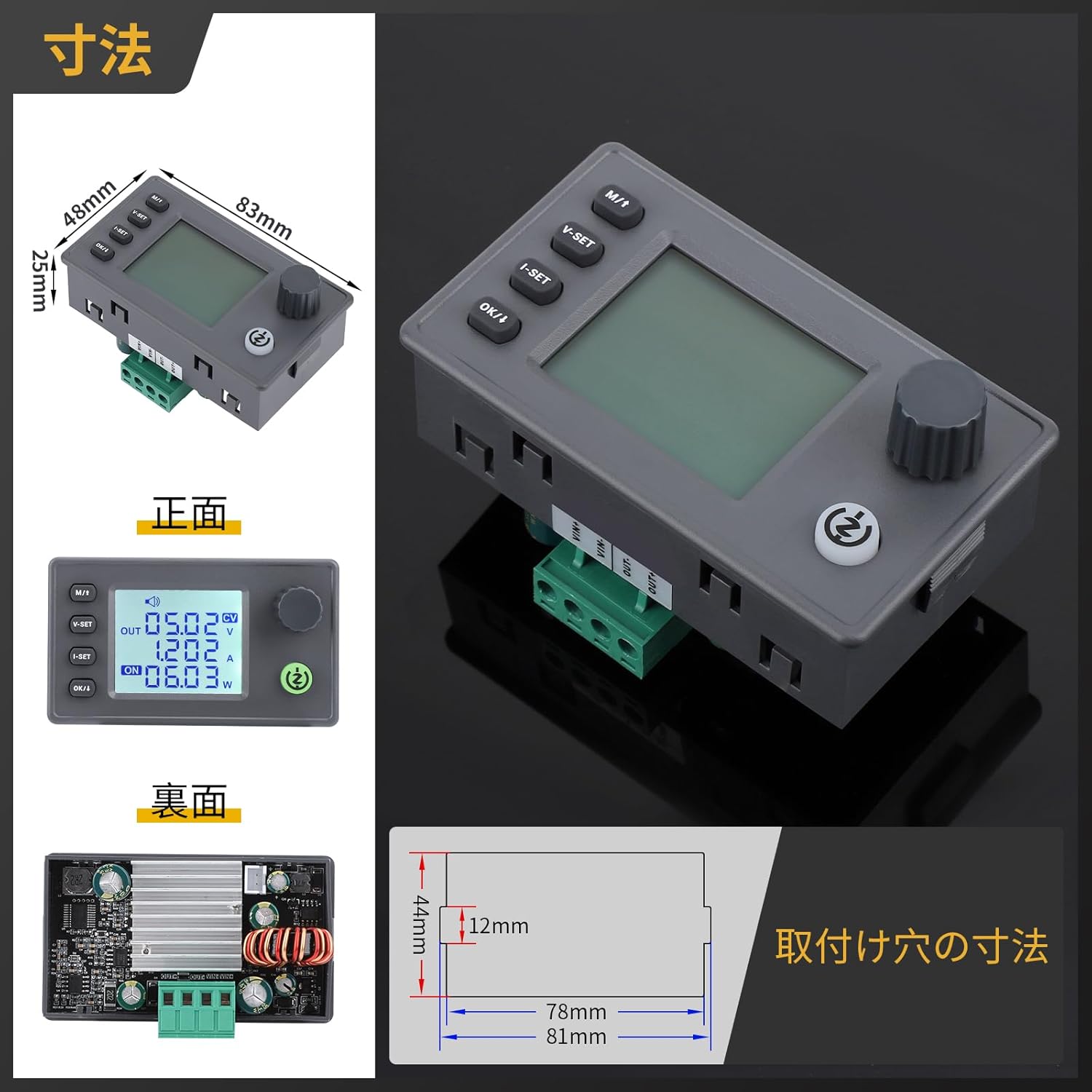
Whakaahua: Mua, muri, me te taha views with dimensions (83mm x 48mm x 29.4mm) and mounting hole details.
4. Whakatakotoranga Hangarau
Detailed technical parameters of the DROK 200735_JPN module are provided below.
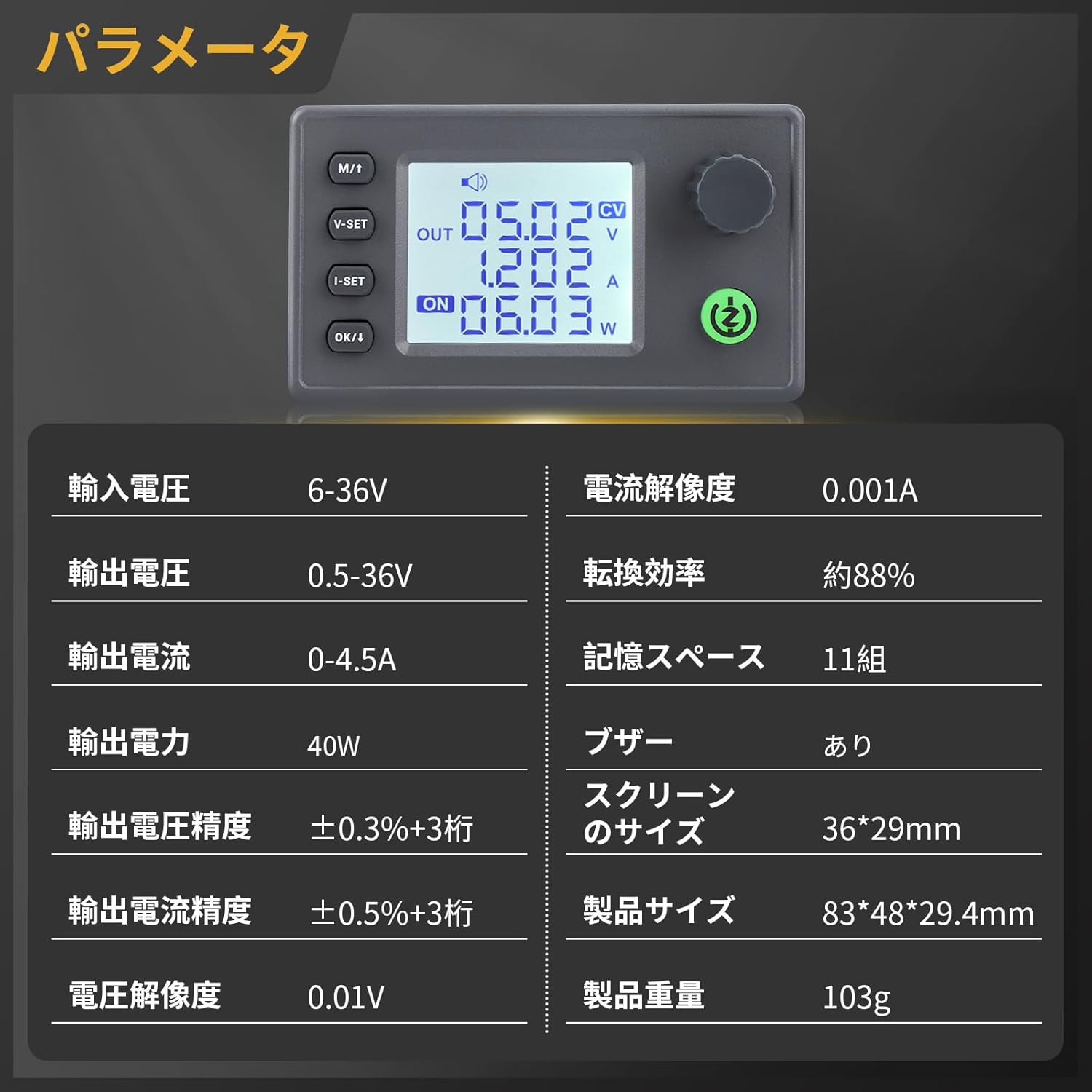
Image: Table of technical parameters including input/output voltage, current, power, and display size.
| Tawhā | Uara |
|---|---|
| Whakauru Voltage Awhe | DC 6-36V |
| Putanga Voltage Awhe | DC 0.5-36V |
| Putanga Awhe o naianei | 0-4.5A |
| Te Mana Putanga | 40W |
| Voltage Whakataunga | 0.01V |
| Whakatau o naianei | 0.001A |
| Voltage Whakaaturanga Tika | ±0.3% + 3 mati |
| Current Display Accuracy | ±0.5% + 3 mati |
| Te Huringa Huringa | Whakatata 88% |
| Memory Spaces | 11 roopu |
| Pūorooro | Kei roto |
| Rahi Mata | 36 x 29 mm |
| Rahi Hua | 83 x 48 x 29.4 mm |
| Taumaha Hua | 103g |
5. Tatūnga me nga Hononga
Before operating the module, ensure proper connections for input and output. The module features plug-in terminals for easy installation and replacement.

Whakaahua: Roto view showing the buzzer, 5V fan port, and plug-in terminals for easy connection.
- Mana Whakauru: Connect your DC 6-36V power source to the input terminals (IN+ and IN-). Ensure correct polarity.
- Uta Putanga: Connect your load to the output terminals (OUT+ and OUT-).
- Optional Fan: If additional cooling is required, connect a 30mm 5V fan (max 150mA) to the dedicated fan port. The fan is temperature-controlled and will activate automatically when needed.
6. Nga Tohutohu Whakahaere
The module features an LCD display and intuitive buttons for setting voltage, current, and monitoring parameters.

Whakaahua: Taipitopito view o te whakaaturanga LCD e whakaatu ana i te nui o te whakaurutage, putanga putangatage, output current, power, energy, time, and temperature.

Image: Explanation of button functions for voltage setting, current setting, display switching, and output control.
6.1. Nga Mahi Patene
- M/1 Button:
Short press: Switch between input voltage me te putanga voltage whakaatu.
Long press: Enter or exit the setting menu. - Pātene V-SET:
Short press: Adjust voltage tautuhinga. - Pātene I-SET:
Short press: Adjust current setting. - OK/↓ Button:
Short press: Switch display of output power (W), capacity (Ah), energy (Wh), time (h), and temperature (°C).
Long press: Toggle output ON/OFF. - Kaiwaehere Rotary:
Short press: Enable/disable lock function.
Long press: Enter setting menu (similar to M/1 long press).
Rotate left: Decrease numerical value.
Rotate right: Increase numerical value.
6.2. Whakaritea Voltage me o nāianei
Use the V-SET and I-SET buttons in conjunction with the rotary encoder to set the desired output voltage and current. The LCD will display the current settings. The device will maintain the default values even after restarting.
Video: How to adjust voltage me o naianei
This video demonstrates the process of adjusting the output voltage and current settings on a similar DC power supply module.
6.3. Data Logging and Control
The module can be programmed and controlled via computer software, allowing for data logging and analysis. This feature enables users to record and save data to Excel sheets for convenient analysis.
Video: Step-up/down converter automatic step-up/down board
This video showcases the functionality of an automatic step-up/down converter board, including its display and control features, which are similar to the DROK module.
7. Safety Precautions and Protection Features
The DROK converter module is equipped with multiple protection functions to ensure safe operation. Always adhere to these guidelines to prevent damage to the device or connected equipment.
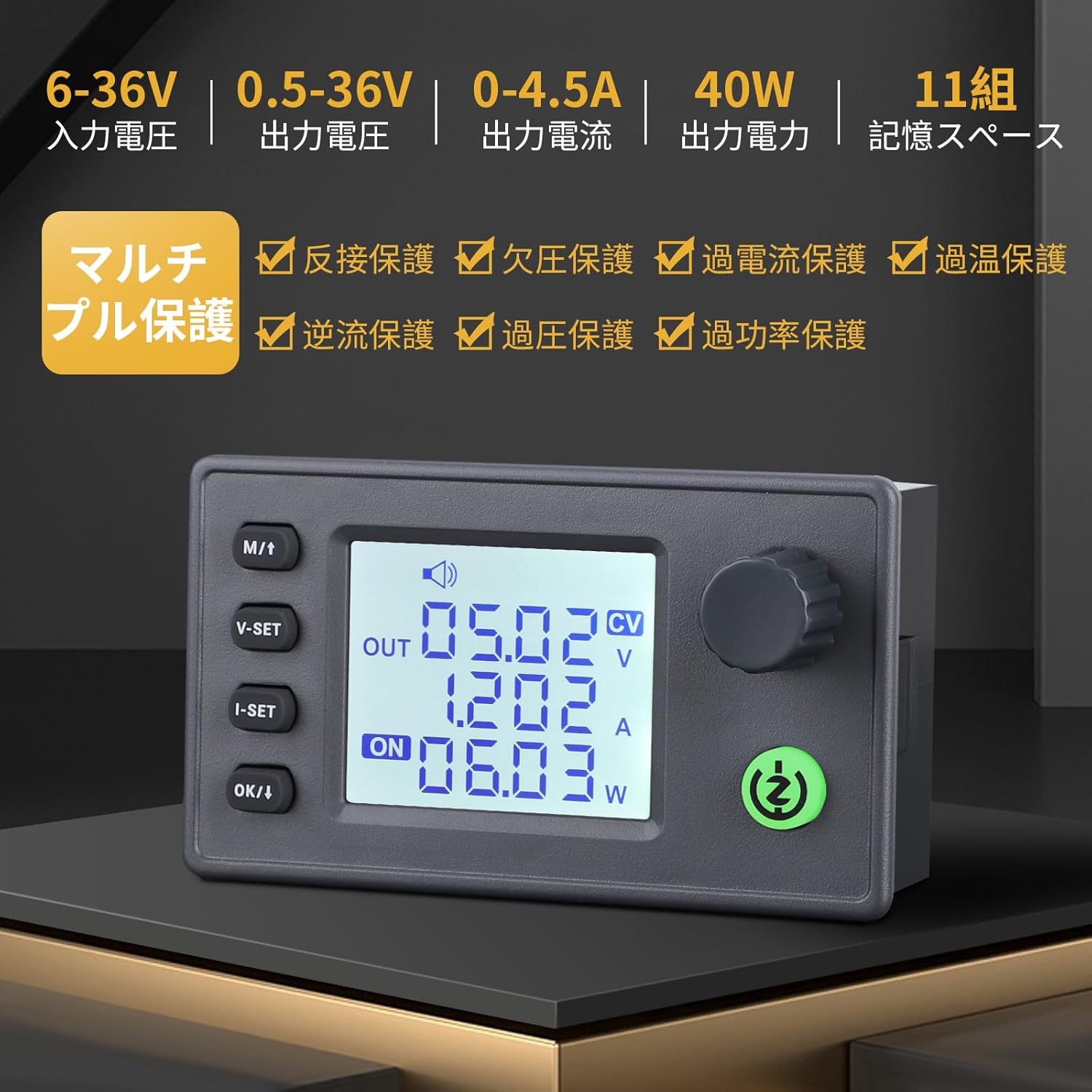
Whakaahua: Ka mutuview of the multi-protection features including reverse connection, under-voltage, over-current, over-temperature, anti-reverse flow, over-voltage, and over-power protection.
- Te Parenga Hononga Ārai-Whakamuri: Prevents damage if input polarity is reversed.
- Anti-Reverse Flow Protection: Protects the input power source from current flowing back from the output.
- I-raro o te VoltagTe Tiakitanga (LVP): Automatically cuts off output if the input voltage drops below a safe threshold. Increase input voltage to resolve.
- Neke Atu i te Voltage Parenga (OVP): Shuts down output if the output voltage exceeds the set limit.
- Te Parenga o te Au-Nui (OCP): Disables output if the output current surpasses the set limit.
- Te Parenga i te Pāmahana Nui (OTP): Activates if the module's internal temperature becomes too high, reducing power or shutting down to prevent damage.
- Parenga Mana-Nui (OPP): Limits output power to prevent exceeding the module's maximum capacity.
Always ensure that the input voltage and current are within the specified ranges to avoid triggering protection mechanisms or damaging the module.
8. Te Raru
- No Output/Low Output Voltage: Check input power supply for sufficient voltage and current. Verify output connections and load. Ensure LVP is not active (increase input voltage if necessary).
- Te wera rawa o te kōwae: Ensure adequate ventilation. Consider installing a 30mm 5V fan to the dedicated port if operating at higher loads or in warm environments.
- Whakaatu Take: Check power connections. If the display is unresponsive, try power cycling the module.
- Protection Activated: If any protection (OVP, OCP, OTP, OPP) is triggered, identify and resolve the underlying cause (e.g., reduce load, check for short circuits, ensure proper cooling) before resuming operation.
9. Tiaki
To ensure the longevity and optimal performance of your DROK converter module:
- Kia noho ma te kōwae me te kore o te puehu me te para.
- Avoid exposing the module to moisture or extreme temperatures.
- Regularly check connections for tightness and signs of wear.
- Do not attempt to disassemble or modify the module, as this may void the warranty and cause damage.
10. Pūtāhui me te Tautoko
For warranty information, technical support, or any questions regarding your DROK 200735_JPN DC-DC Step-Up/Step-Down Converter Module, please refer to the seller's contact information or visit the official DROK webpae. Puritia to riirii hoko hei tohu mo te hoko mo nga kereme whakamana.