
1. Hua Neke Atuview
The Fuers H.265+ 8-Channel Security DVR Recorder (Model A1008CH) is a versatile surveillance solution designed for home and business security. This DVR supports various camera types including HD-CVBS, TVI, CVI, XVI, AHD, and IP analog cameras, allowing for flexible system expansion. It features H.265+ video compression for efficient storage and comes with a pre-installed 1TB hard drive for 24/7 recording.
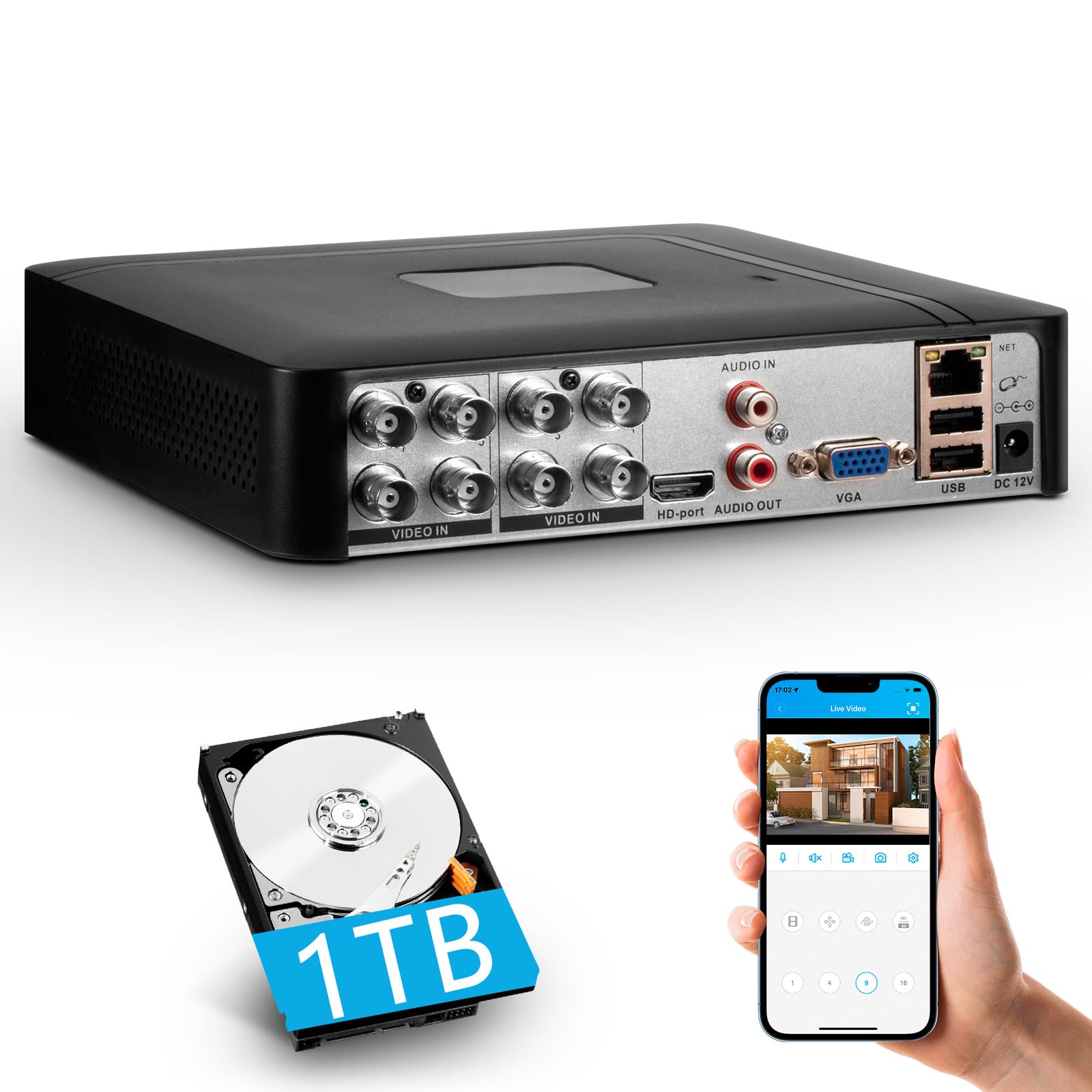
Image 1.1: Fuers H.265+ 8-Channel Security DVR Recorder.
Āhuatanga matua:
- Pūnaha Hongere-8: Supports up to 8 cameras simultaneously, compatible with HD-TVI, CVBS, CVI, XVI, AHD, and IP cameras.
- Kōpeketanga Ataata H.265+: Offers extended recording time and saves up to 50% storage space compared to H.265 systems.
- Pre-installed 1TB HDD: Security-grade hard drive for continuous surveillance recording. Expandable up to 14TB via SATA port.
- Uru Mamao: View and manage your system remotely using the free iCSee App (iOS/Android) or VMS Client (Windows/Mac).
- Rapu Motini Maramarama: Receive mobile push notifications for detected motion types, including person and face detection.
- Tatūnga Mono & Purei: Easy connection with simultaneous VGA/HDMI output.
2. Tatūnga me te Tāuta
2.1 He aha kei roto i te Pouaka
I mua i to tiimata, me whakarite kei te noho nga waahanga katoa:
- 1x A1008 8CH DVR
- 1x 1TB HDD (Pre-installed on DVR)
- 1x DVR Power Adapter
- 1x Kiore USB
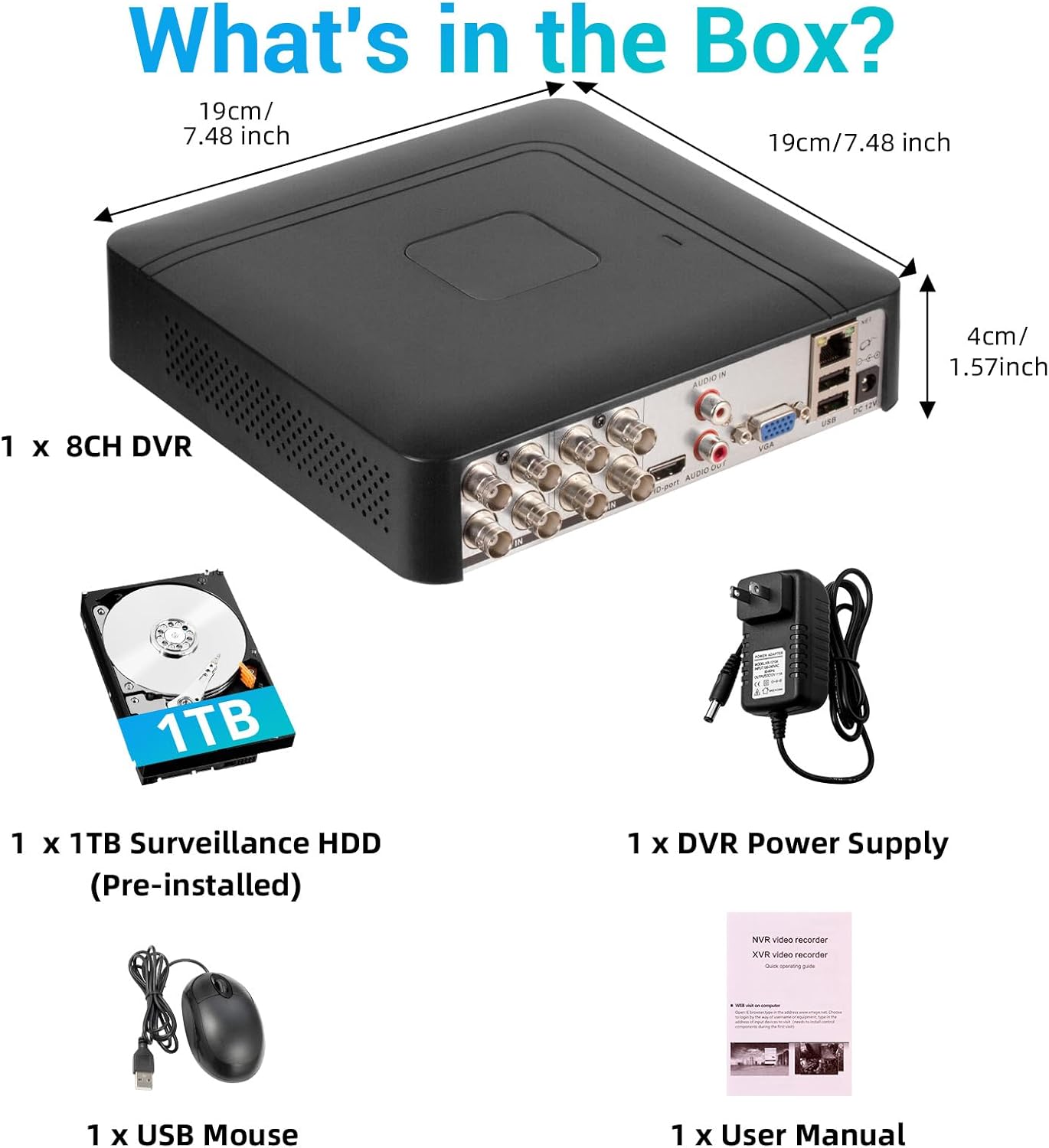
Whakaahua 2.1: Ngā ihirangi o te kete hua.
2.2 Hard Drive Installation (if not pre-installed or for upgrade)
The DVR comes with a pre-installed 1TB HDD. If you need to replace or upgrade the hard drive (up to 14TB), follow these steps:
- Unscrew the bottom cover of the DVR unit.
- Whakatuwheratia te casing.
- Connect the SATA data cable and power cable from the DVR to the new hard drive.
- Secure the hard drive within the casing using the provided screws.
- Close the DVR casing and secure it with screws.

Image 2.2: Hard drive installation and expansion options.
2.3 Connecting the DVR System
Whāia ēnei mahi hei hono i tō pūnaha DVR:
- Tūhono Kāmera: Connect your security cameras to the 'VIDEO IN' ports on the back of the DVR using BNC cables.
- Tūhono Aroturuki: Honoa he mata tirotiro ki te DVR mā te whakamahi i te tauranga HDMI, VGA rānei.
- Honoa te Kiore USB: Monohia te kiore USB kei roto i tētahi o ngā tauranga USB o te DVR.
- Connect Network (Optional for Remote Access): Mo te mamao viewing and notifications, connect an Ethernet cable from your router to the 'NET' port on the DVR.
- Whakahiko: Connect the DVR power adapter to the 'DC 12V' port and then plug it into a power outlet.

Image 2.3: Connecting cameras and network to the DVR.
2.4 Initial Setup and Channel Type Selection
Upon first power-on, the system may prompt for initial setup. You may need to select the appropriate channel type for your cameras.
- Right-click on the screen to access the Main Menu.
- Whakatere ki Pūnaha > Mamati > Momo Hoera.
- Select the configuration that matches your camera setup:
- First row: Supports 8 XVI, CVBS, AHD, TVI, CVI coaxial cameras.
- Second row: Supports 8 XVI, CVBS, AHD, TVI, CVI coaxial + 4 IP cameras.
- Third row: Supports 16 1080P IP cameras.
- Fourth row: Supports 16 5MP IP cameras.
- Pāwhiri OK to apply changes. The system may restart.

Image 2.4: DVR Channel Type selection screen.
3. Nga Tohutohu Whakahaere
3.1 Ora View me te tuhi
Once the DVR is powered on and cameras are connected, you should see the live feed on your connected monitor. The system is configured for 24/7 recording to the pre-installed 1TB hard drive.

Image 3.1: Live view of multiple camera feeds.
3.2 Remote Access via Mobile App
To access your DVR remotely, download the free iCSee App (for iOS/Android) or VMS Client (for Windows/Mac).
- Download the iCSee App from your device's app store.
- Whakatuwheratia te taupānga, ka rēhita he pūkete mēnā kāore anō kia whai pūkete koe.
- In the DVR's main menu, navigate to Nga korero > Putanga to find the DVR's QR code.
- Use the iCSee app to scan the QR code to add your device.
- Kia tāpirihia, ka taea e koe view ngā whāngai ora, ngā rekoata purei anō, me te whiwhi matohi mai i hea me te hononga ipurangi.

Image 3.2: Steps for remote access via mobile app.
3.3 Playback Recorded Footage
Ki te review ataata kua tuhia:
- Right-click on the screen to access the Main Menu.
- Tīpakohia Tuhia > Whakahoki.
- Choose the desired channel(s) and date/time range for playback.
- Pāwhiri Tīmata Whakahoki ki view te footage.

Image 3.3: Playback interface with timeline.
3.4 Motion Detection Alerts
The DVR supports intelligent motion detection, including person and face detection. When motion is detected, you can receive instant mobile push notifications.
- Configure motion detection settings in the DVR's Whakaoho tahua.
- Ensure your mobile app is properly linked and notifications are enabled.

Image 3.4: Human and face detection in action.
4. Tiaki
4.1 Whakahaere Puku Maama
The pre-installed 1TB hard drive provides ample storage. Due to H.265+ compression, storage is optimized. If more storage is needed, you can replace the internal HDD with a larger one (up to 14TB). Regularly check the hard drive status in the DVR's system settings to ensure optimal performance.
4.2 Tiakitanga Whanui
- Keep the DVR in a cool, dry, and well-ventilated area.
- Avoid exposing the unit to direct sunlight, extreme temperatures, or moisture.
- Clean the exterior of the DVR with a soft, dry cloth. Do not use liquid cleaners.
- Me whakarite kia mau nga hononga taura katoa.
5. Te Raru
5.1 Kaore he Putanga Ataata i runga i te Aroturuki
- Check if the DVR is powered on and the power adapter is securely connected.
- Verify the HDMI or VGA cable connection between the DVR and the monitor.
- Ensure the monitor is set to the correct input source (HDMI/VGA).
5.2 Kāore e Whakaaturia ana ngā Kāmera
- Check all camera power and video cable connections.
- Verify that the camera type (AHD, TVI, CVI, etc.) is compatible with the DVR.
- Ensure the correct channel type is selected in the DVR settings (refer to Section 2.4).
- Test cameras individually if possible to isolate the issue.
5.3 Kāore te Uru Mamao e Mahi Ana
- Confirm the DVR is connected to the internet via an Ethernet cable.
- Tirohia te hononga ipurangi o to pouara.
- Ensure the iCSee app is updated to the latest version.
- Verify that the DVR was added correctly to the app by scanning the QR code.
- For some networks, you might need to adjust router settings (e.g., port forwarding), consult your network administrator or ISP.
6. Whakatakotoranga
| Āhuahira | Taipitopito |
|---|---|
| Waitohu | Puhipuhi |
| Tau tauira | A1008CH |
| Te maha o nga hongere | 8 |
| Hangarau Hononga | HDMI, USB, VGA |
| Pūrere Hototahi | Desktop, Tablet, Camera, Smartphone |
| Hunga Hua | 7.48"L x 7.48"W x 1.57"H |
| Te Rokiroki Mahara | 1 TB (Kua tāutahia i mua) |
| Hard-Drive Size | 1 TB (Expandable up to 14 TB) |
| Ataata Mamati Hōputu Pāpāho | H.265 + |
| Whakauru Ataata | AHD, CVI, HDMI, HDTVI, IP Input, VGA |
| UPC | 765142240850 |
7. Pūtāhui me te Tautoko
7.1 Hua Whakatau
This Fuers DVR Recorder is covered by a standard manufacturer's warranty. Please refer to the warranty card included with your product or visit the official Fuers webpae mo nga tikanga me nga tikanga whakamana. Puritia to riirii hoko hei tohu mo te hoko mo nga kereme whakamana.
7.2 Tautoko Hangarau
For technical assistance, troubleshooting, or any questions regarding your Fuers DVR, please contact Fuers customer support. Contact information can typically be found on the product packaging, the official Fuers webpae, ma to kaihokohoko ranei.
Rauemi ipurangi:
- Tirohia te Fuers Store on Amazon mō ngā mōhiohio hua me ngā whakahōutanga.