
1. Kupu Whakataki
This manual provides essential information for the installation, operation, and maintenance of your Hikvision IDS-7208HQHI-M1/XT 8-Channel 5MP Turbo HD DVR. Please read this manual thoroughly before using the product to ensure correct and safe operation. Keep this manual for future reference.
The Hikvision IDS-7208HQHI-M1/XT is an advanced 8-channel Digital Video Recorder designed for high-definition surveillance systems. It supports various video input formats, including Turbo HD, AHD, CVI, CVBS, and IP cameras, offering versatile compatibility. Key features include 5MP recording capability, H.265+ video compression for efficient storage, AcuSense technology for intelligent motion detection, and remote access via the Hik-Connect app.
2. Ihirangi mokete
Me tirotiro kei te wātea ngā taonga katoa, ā, kei te pai te āhua i te wā e wetewete ana. Mēnā kua ngaro, kua pakaru rānei ētahi taonga, whakapā atu ki tō kaiwhakarato tonu.
- DVR main unit
- Pūurutau Hiko
- Kiore USB
3. Nga Hua o te Hua
The Hikvision IDS-7208HQHI-M1/XT DVR offers a range of features designed for effective surveillance:
- 8-Channel DVR with 5MP HD Support: Supports multiple analog HD camera formats and up to 8 channels of real-time video monitoring and recording.
- Two-Way Audio Support: Enables audio communication through compatible cameras.
- Built-In AcuSense Technology: Smart analysis minimizes false alarms by focusing on human and vehicle-based motion detection.
- Remote Access via Hik-Connect App: View live video, playback recordings, and receive alerts anytime on your smartphone.
- Efficient Storage with H.265+ Compression: Saves bandwidth and hard disk space while maintaining clear video quality.
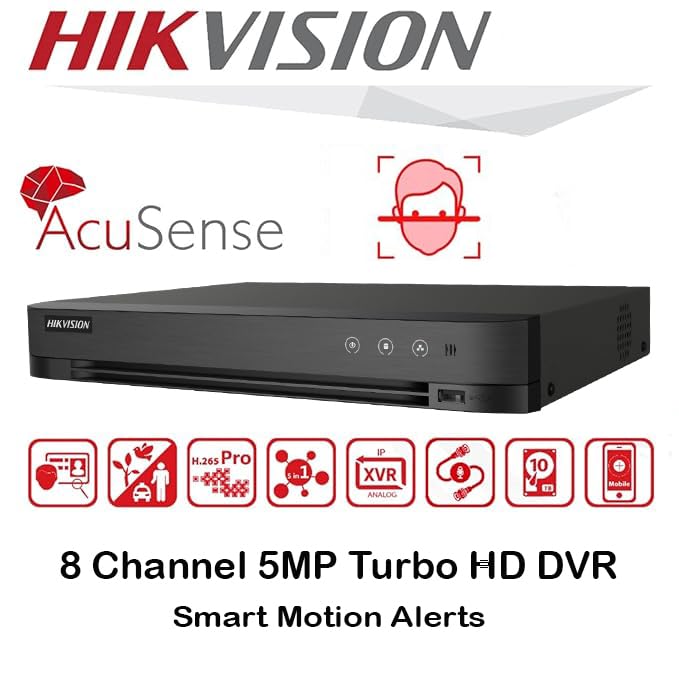
Whakaahua: Ka mutuview of key features including AcuSense, H.265+ compression, and 5MP resolution support.
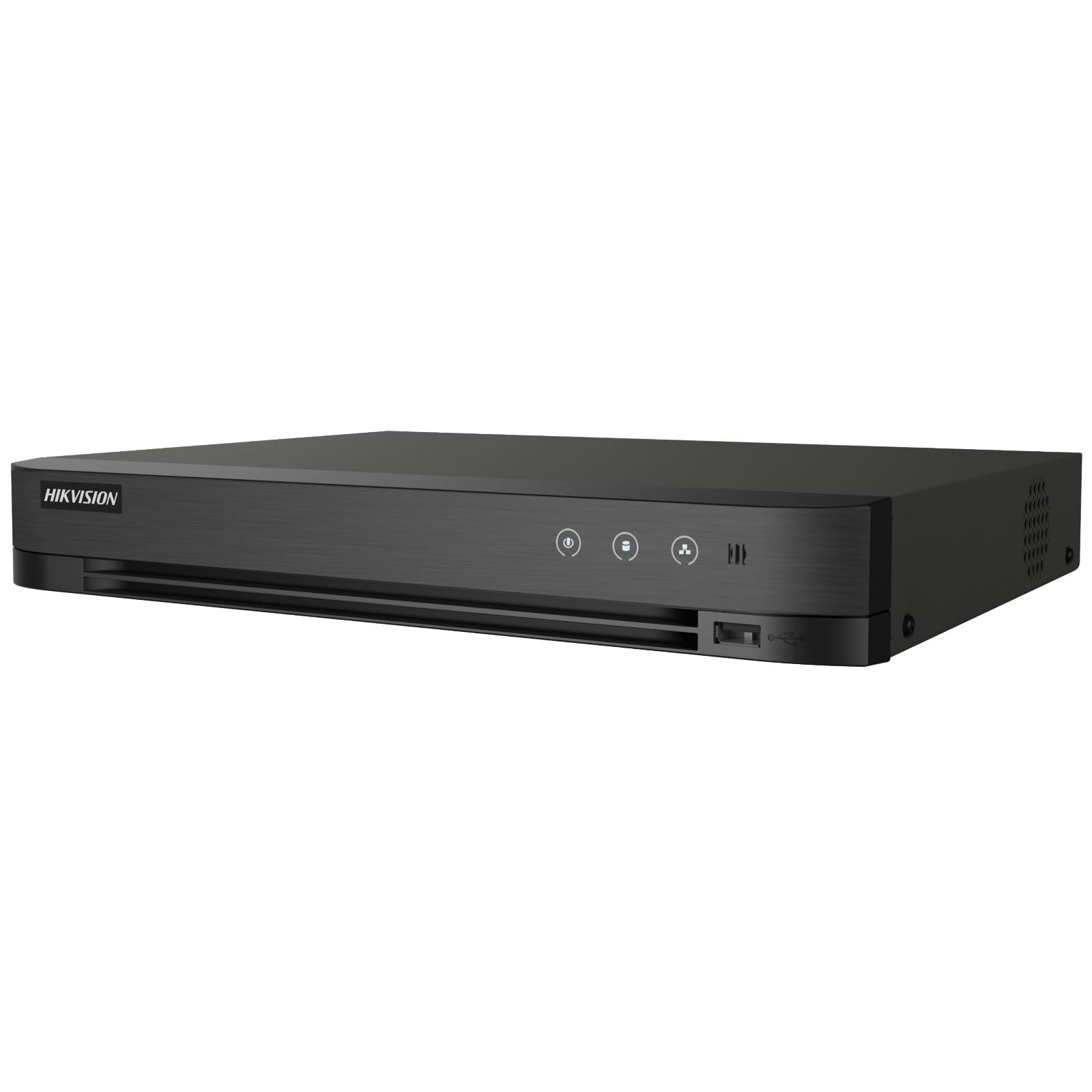
Image: The Hikvision Turbo HD DVR highlighting its support for two-way audio cameras, enabling interactive communication.
4. Atanga Tinana
Familiarize yourself with the ports and indicators on the DVR unit. The following diagram illustrates the rear panel of the Hikvision IDS-7208HQHI-M1/XT DVR:

Image: Rear panel connections of the DVR, showing video inputs, audio ports, network, and power.
- Ataata ki roto (BNC): Connect analog HD cameras (Turbo HD, AHD, CVI, CVBS).
- Video Out (BNC): Connect to a monitor for local display.
- Ororongo ki roto (RCA): Connect external audio input devices.
- Huaputa HDMI: Connect to an HDMI-compatible monitor or TV for high-definition video output.
- Putanga VGA: Connect to a VGA-compatible monitor.
- Ororongo Atu (RCA): Connect to external audio output devices.
- Tauranga USB: Connect a USB mouse, USB flash drive for backup, or external storage.
- Tauranga LAN (RJ45): Connect to your network for remote access and IP camera integration.
- RS-485: For PTZ camera control (if supported).
- 12V DC Tāuru Hiko: Honoa te urutau hiko whakauru.
- Kāpeka Whenua: Hei whakapūmau i te taputapu ki te whenua.
5. Tatūnga
Follow these steps for initial setup of your DVR system:
5.1 Hard Drive Installation (if not pre-installed)
- Wetekina te tīwiri ka tangohia te taupoki o runga o te DVR.
- Tūhonohia te taura raraunga SATA me te taura hiko ki te puku mārō.
- Secure the hard drive to the DVR chassis using the provided screws.
- Whakakapia te taupoki o runga, ka whakau ki ngā tīwiri.
5.2 Hononga Pikitia
- Connect your cameras to the Ataata I Roto (BNC) ports.
- Honoa he aroturuki ki te HDMI or VGA tauranga whakaputa.
- Connect the USB mouse to a Tauranga USB.
- Connect the DVR to your network router using an Ethernet cable plugged into the Tauranga LAN.
- Tūhono i te pūurutau hiko ki te 12V DC Whakauru Hiko and then plug it into a power outlet.
5.3 Whirihoranga Tuatahi
- Upon first boot, the DVR will guide you through a setup wizard.
- Set a strong password for the administrator account.
- Configure network settings (DHCP is usually sufficient for most home networks).
- Initialize the hard drive if prompted. This will format the drive for recording.
- Adjust date, time, and other system preferences as needed.
6. Mahi
Once the DVR is set up, you can begin monitoring and recording.
6.1 Ora View
Whai muri i te takiuru, ka whakaatuhia te ataata ora e te DVR. view from connected cameras on the monitor. You can switch between single-camera view me te matiti kamera-maha view mā te whakamahi i ngā mana whakahaere i runga i te mata, i te kiore rānei.
6.2 Te tuhi
The DVR is typically configured to record continuously or based on motion detection. You can adjust recording schedules and settings through the DVR's menu system (Configuration > Record > Schedule).
6.3 Whakahoki
Ki te review tuhia footage, navigate to the Whakahoki menu. Select the date, time, and camera channel to view recordings. Use the playback controls (play, pause, fast forward, rewind) to navigate through the footage.
6.4 Remote Access (Hik-Connect App)
The Hik-Connect app allows you to access your DVR remotely from a smartphone or tablet.
- Download the Hik-Connect app from your device's app store.
- Create a Hik-Connect account and log in.
- Add your DVR by scanning the QR code on the DVR's label or by manually entering its serial number.
- Whāia ngā tohutohu i roto i te taupānga hei whakaoti i te tāpiri i te pūrere.
- Kia tāpirihia, ka taea e koe view live feeds, play back recordings, and receive push notifications for events.

Image: Illustration of the Hik-Connect mobile application interface, demonstrating remote access to live video and recordings.
7. Tiaki
Regular maintenance ensures optimal performance and longevity of your DVR system.
- Clean the DVR: Periodically clean the exterior of the DVR with a soft, dry cloth. Ensure ventilation openings are free from dust to prevent overheating.
- Whakahōu Firmware: Check the official Hikvision website for firmware updates. Updating firmware can improve performance, add features, and fix bugs. Follow update instructions carefully.
- Hauora Puku Maama: Monitor the health of your hard drive through the DVR's system menu (Whakahaere HDD). Replace the hard drive if it shows signs of failure.
- Backup Important Footage: Regularly back up critical video footage ki tētahi puku USB o waho, ki tētahi rokiroki whatunga rānei.
- Haumarutanga Kupuhipa: Change your DVR and Hik-Connect passwords periodically to maintain security.
8. Te Raru
Ko tenei waahanga e aro ana ki nga take noa ka pa ki a koe.
8.1 Kaore he Putanga Ataata i runga i te Aroturuki
- Check if the monitor is powered on and correctly connected to the DVR's HDMI or VGA port.
- Me mohio kua tohua te puna whakauru tika ki to kaupane.
- Try connecting to a different monitor or using a different cable.
8.2 Kāore e Whakaaturia ana ngā Kāmera
- Verify that cameras are powered on and properly connected to the DVR's BNC inputs.
- Check camera power supplies.
- Ensure the camera type (TVI, AHD, CVI, CVBS) is compatible with the DVR and configured correctly in the DVR settings.
8.3 Kāore te Uru Mamao e Mahi Ana
- Ensure the DVR is connected to the internet via the LAN port.
- Check network settings on the DVR (Whirihoranga > Whatunga).
- Verify that the Hik-Connect service is enabled on the DVR.
- Me whakarite he hononga ipurangi kaha to waea atamai.
- Re-add the device to the Hik-Connect app if necessary.
8.4 Kāore he Hopu
- Check if a hard drive is installed and properly initialized (Configuration > HDD).
- Verify recording schedules are set correctly (Configuration > Record > Schedule).
- Ensure there is sufficient free space on the hard drive.
9. Whakatakotoranga
Detailed technical specifications for the Hikvision IDS-7208HQHI-M1/XT DVR:
| Āhuahira | Whakatakotoranga |
|---|---|
| Tau tauira | IDS-7208HQHI-M1/XT |
| Whakauru Ataata | 8-Channel (Turbo HD/AHD/CVI/CVBS/IP) |
| Kōpeketanga Ataata | H.265 + / H.265 / H.264 + / H.264 |
| Whakatau Rekoata | Tae atu ki te 5MP |
| Putanga Ataata | HDMI, VGA, BNC |
| Ororongo Whakauru/Putanga | 2-Way Audio Support |
| Atanga Matapihi | 1 RJ45 10M/100M Ethernet Interface |
| Atanga USB | 2 x USB 2.0 |
| Tautoko HDD | 1 SATA interface (up to 10 TB capacity per HDD) |
| Tuku Hiko | 12V DC |
| Ahu (L x W x H) | 19.7 x 19.2 x 4.1 cm |
| Taumaha | 1.5 kg |
| Kaihanga | HIKVISION, Prama Hikvision India Pvt. Ltd. |
10. Pūtāhui me te Tautoko
For warranty information and technical support, please refer to the warranty card included with your product or visit the official Hikvision webpae. Puritia to riirii hoko hei tohu mo te hoko mo nga kereme whakamana.
For further assistance, contact Hikvision customer support or your authorized dealer.