
1. Kupu Whakataki
This manual provides essential information for the safe and effective installation, operation, and maintenance of your Generic Stainless Steel Rotary Chimney Spinner. This device is designed to enhance natural ventilation and protect your chimney system. Please read these instructions thoroughly before installation and use.
2. Nga korero haumaru
Always prioritize safety during installation and maintenance.
- Ensure stable footing when working on roofs or elevated structures. Use appropriate safety equipment, including harnesses and fall protection, if necessary.
- Wear protective gloves and eyewear during installation to prevent injury from sharp edges or debris.
- Mena kaore koe i te tino mohio mo tetahi waahanga o te tukanga whakauru, korero ki tetahi tohunga ngaio.
- Do not attempt to modify the product. Unauthorized modifications may compromise its function and safety.
3. Hua Neke Atuview me nga ahuatanga
The Generic Stainless Steel Rotary Chimney Spinner is a wind-driven ventilation device designed for various applications. It utilizes natural wind convection to improve airflow and prevent downdrafts.
Āhuatanga matua:
- Hanga Kowiri tira: Durable and resistant to corrosion, suitable for outdoor use.
- Wind-Driven Operation: Operates without electricity, utilizing natural wind to create a vacuum effect, enhancing ventilation.
- Rain and Moisture Protection: Designed to prevent rain and moisture from entering the chimney or ventilation system.
- Mahi Ataahua: Engineered for minimal noise during rotation.
- Rererangi Whakapai ake: Accelerates the flow of air, improving indoor ventilation and preventing smoke or fumes from backing up.

Whakaahua 1: Product features highlighting stainless steel body, energy-free operation, and natural exhaust. This image illustrates the core benefits of the unpowered roof fan.
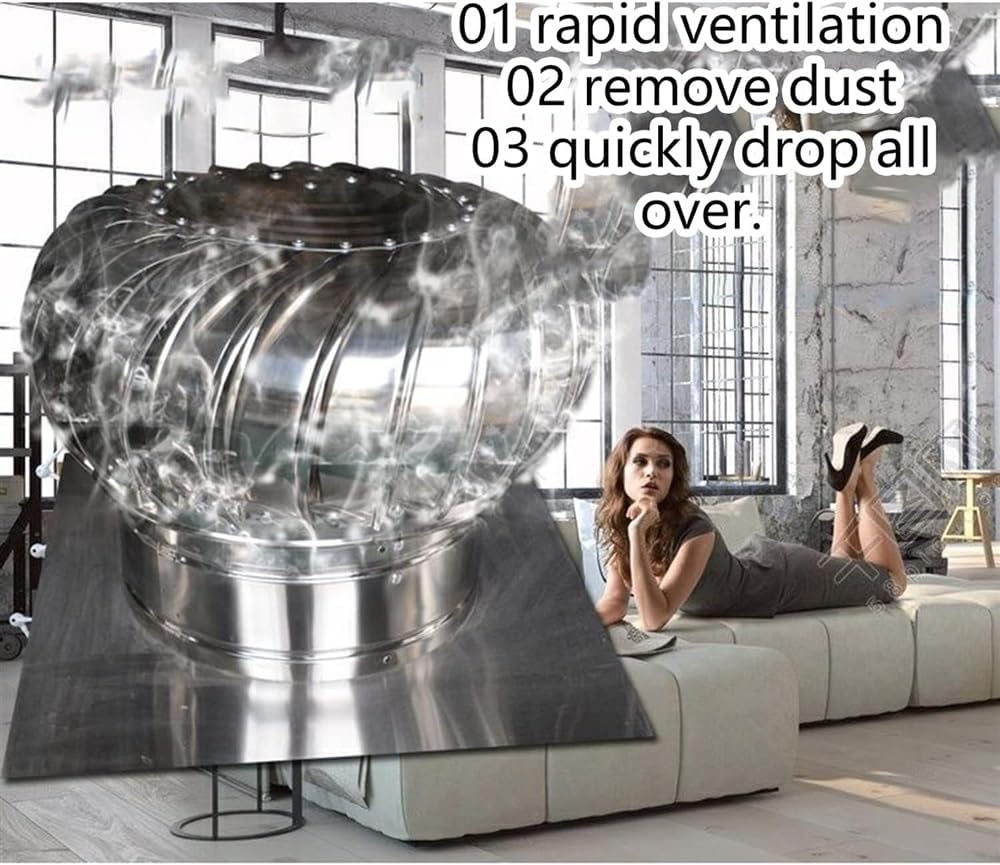
Whakaahua 2: The rotary spinner in action, illustrating its capability for rapid ventilation and effective dust removal from the system.

Whakaahua 3: He taipitopito view of the spinner's base, emphasizing its quiet rotational mechanism.
4. Tatūnga me te Tāuta
The rotary chimney spinner is designed for installation on various ventilation outlets, including chimneys, pipelines, and factory building vents.
Hipanga Tāuta Whānui:
- Kōwhiringa Pae: Choose a location on the roof or vent pipe that allows for unobstructed wind exposure.
- Inenga: Ensure the spinner's base diameter (200mm/7.9Inch) matches or can be securely adapted to your existing chimney or vent opening.
- Whakaritenga: Clean the installation surface, removing any debris or old sealant.
- Whakapiki: Secure the spinner's base to the chimney or vent opening using appropriate fasteners (not included) and a weather-resistant sealant to ensure a watertight seal.
- Whakataumata: Ensure the spinner is level to allow for optimal rotation and performance.
- Taki Whakamutunga: Verify that the spinner rotates freely and that all connections are secure and sealed.

Whakaahua 4: Ngā tono rerekēamples, including installation on a factory building roof, a vertical pipeline, and a chimney flue.
5. Nga Tohutohu Whakahaere
The Generic Stainless Steel Rotary Chimney Spinner operates automatically. Once installed, it harnesses wind energy to rotate its vanes, creating a low-pressure area that draws air upwards from the chimney or ventilation duct.
- No manual operation or power supply is required.
- The rotation speed will vary with wind intensity; stronger winds result in faster rotation and increased ventilation.
- The design ensures that rain and debris are kept out while allowing efficient air extraction.
6. Tiaki
Regular maintenance ensures optimal performance and longevity of your chimney spinner.
- Tirohanga Tau: Periodically inspect the spinner for any signs of damage, loose fasteners, or obstructions.
- Te horoi: If dust or debris accumulates on the vanes, gently clean them with a soft brush or cloth. Avoid using harsh chemicals that could damage the stainless steel finish.
- Tirohanga Kawe: Ensure the rotating mechanism moves freely. If it becomes stiff, it may require lubrication with a high-temperature, weather-resistant lubricant (consult a professional if unsure).
- Hiri Tika: Check the sealant around the base for cracks or deterioration and reapply if necessary to maintain a watertight seal.
7. Te Raru
If you encounter issues with your chimney spinner, refer to the following common problems and solutions:
| Raruraru | Take pea | Rongoā |
|---|---|---|
| Spinner not rotating or rotating slowly |
|
|
| Unusual noise during rotation |
|
|
| Te turuturu wai huri noa i te turanga |
|
|
8. Whakatakotoranga
| Āhuahira | Taipitopito |
|---|---|
| Tauira | 200mm/7.9Inch |
| Waitohu | Whakanuia |
| Rauemi | Kowiri tira |
| Mahi | Wind-driven, unpowered |
| ASIN | B0GRMBP61W |
| Tohutoro Kaihanga | Whakanuia |
9. Pūtāhui me te Tautoko
Information regarding specific warranty terms or dedicated customer support for this "Generic" branded product is not available in the provided product details. For any issues or inquiries, please refer to the retailer or point of purchase.
Spare parts availability information is also not provided.