Kupu Whakataki
This manual provides comprehensive instructions for the installation, operation, and maintenance of your Peco HO Scale Code 83 Insulfrog #5 Right-Hand Turnout (Model PPCSL8351). Designed for model railway enthusiasts, this turnout offers reliable performance and seamless integration into your HO scale layout. Please read these instructions carefully before proceeding with installation to ensure optimal functionality and longevity of your product.
Ka mutu te huaview
The Peco HO Scale Code 83 Insulfrog #5 Right-Hand Turnout is a precision-engineered track component designed for HO scale model railways. It features Code 83 rail, which is a common standard for realistic track appearance. The 'Insulfrog' design incorporates insulated frog sections, simplifying wiring for many DC and DCC layouts by preventing short circuits when wheels cross the frog. This right-hand turnout allows trains to diverge to the right when approaching from the common end.
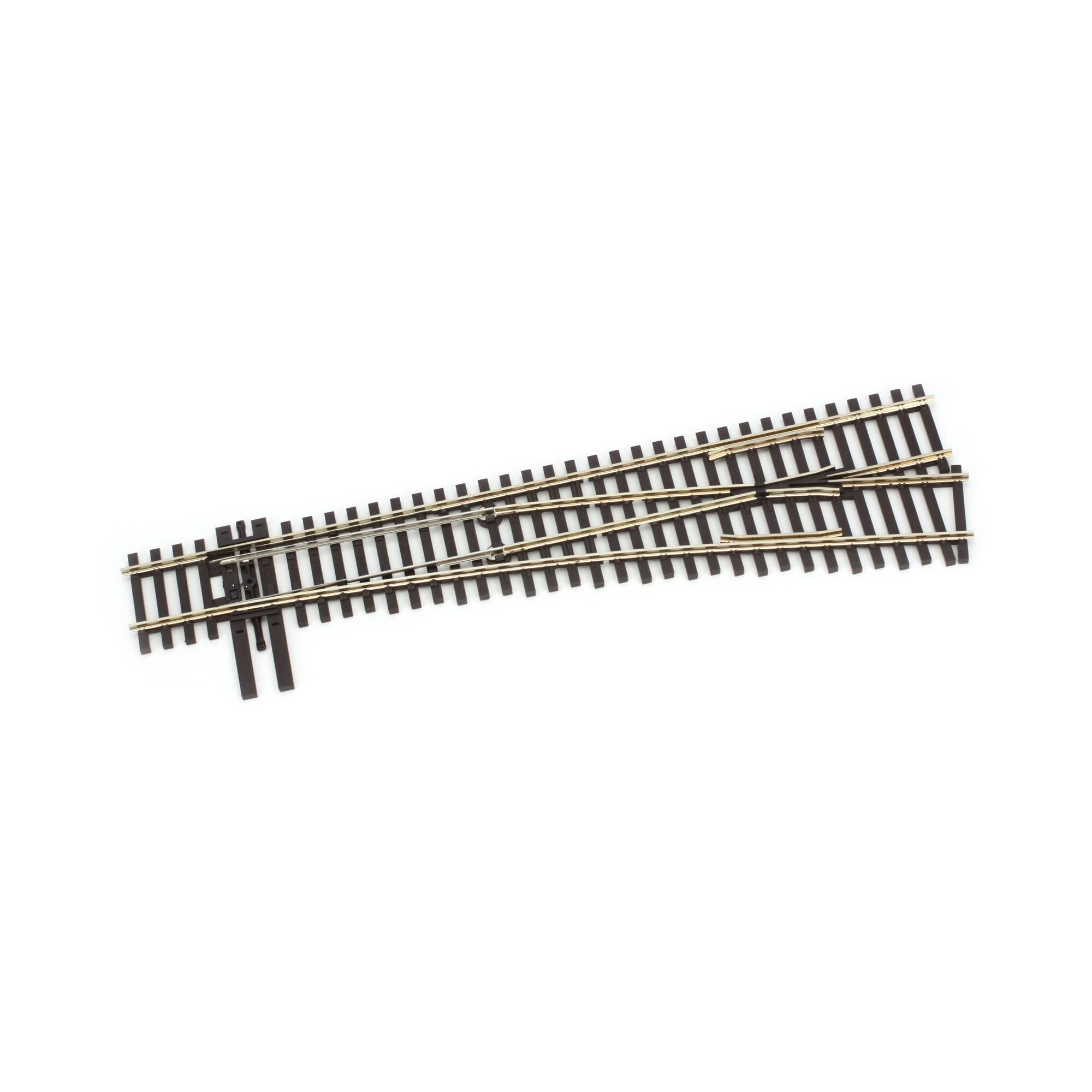
He upoko view of the Peco HO Scale Code 83 Insulfrog #5 Right-Hand Turnout, showing its track geometry and point mechanism. This image illustrates the standard configuration of the turnout, including the diverging and straight routes.
Ko nga ahuatanga matua ko:
- Exceptional Peco quality: Manufactured to high standards for durability and performance.
- Precision engineering: Ensures smooth operation and reliable track connections.
- Easy to use and install: Designed for straightforward integration into your layout.
- Ngā wāhanga pakari: Constructed for long-lasting use in a model railway environment.
Tatūnga
Proper setup is crucial for the reliable operation of your turnout.
1. Te Whakamahere i tō Tahora
Before installation, plan the exact position of the turnout on your layout. Ensure adequate clearance for rolling stock on both the straight and diverging routes. Consider the radius of curves leading into and out of the turnout to prevent derailments.
2. Securing the Turnout
- Position the turnout on your baseboard or roadbed.
- Connect it to adjacent track sections using rail joiners. Ensure all rail joiners are tight and provide good electrical contact.
- Secure the turnout to the baseboard using small track nails, screws, or adhesive. Do not nail through the moving point blades. Ensure the turnout is flat and level to prevent kinks or uneven track.
3. Electrical Connections (Insulfrog)
The Insulfrog design simplifies wiring. For most DC and DCC systems, the frog is internally insulated, meaning you typically do not need to wire the frog for correct polarity. Power is supplied to the turnout via the stock rails from the adjacent track sections. Always test electrical continuity after installation.
4. Point Operation
The turnout can be operated manually or with a point motor. If using a point motor, follow the motor manufacturer's instructions for installation and connection. Ensure the point blades move freely and fully engage with the stock rails in both positions.
Te whakahaere
Operating the Peco Insulfrog turnout involves switching the point blades to direct trains along the desired route.
1. Switching Routes
- Mahi ā-ringa: Gently push the tie bar connected to the point blades to move them from one position to the other. Ensure the blades are fully seated against the stock rails.
- Point Motor Operation: Activate your point motor control switch to change the turnout's position. Verify that the point blades have moved completely and are securely against the stock rails.
2. Train Movement
Always ensure the turnout is correctly set for the intended route before a train approaches. Incorrectly set points can lead to derailments. Observe trains passing through the turnout at various speeds to confirm smooth operation and proper wheel flange clearance.
Te tiaki
Regular maintenance will ensure the longevity and reliable performance of your turnout.
1. Te horoi
- Track Rails: Periodically clean the running surfaces of all rails, including the point blades and stock rails, using a track cleaning tool or a soft cloth with a suitable track cleaning fluid. This removes dirt, dust, and oxidation that can impede electrical conductivity and smooth running.
- Point Mechanism: Keep the area around the point blades and pivot points free of debris, ballast, or glue. A small brush or vacuum can be used.
2. Tirotiro
- Regularly inspect the turnout for any signs of wear, damage, or misalignment.
- Check that rail joiners are secure and providing good electrical contact.
- Ensure point blades move freely and fully seat against the stock rails without binding.
3. Whakahinuhinu
Generally, Peco turnouts do not require lubrication. Applying lubricants can attract dust and dirt, potentially hindering operation. If point blades feel stiff, ensure they are clean and free of obstructions rather than applying oil.
Raparongoā
Anei nga otinga mo nga take noa ka pa ki a koe:
| Raruraru | Take pea | Rongoā |
|---|---|---|
| Derailments on turnout | Incorrectly set points, uneven track, debris in points, wheel gauge issues. | Ensure points are fully thrown. Check for level track. Clean points. Verify rolling stock wheel gauge. |
| Poor electrical contact / Stalling trains | Dirty rails, loose rail joiners, oxidation. | Clean all rail surfaces. Tighten or replace rail joiners. Ensure power feeds are secure. |
| Stiff or binding point blades | Debris, ballast, glue, tight nailing, warped baseboard. | Clean the point mechanism thoroughly. Check for obstructions. Ensure turnout is not nailed too tightly. Verify baseboard flatness. |
| Point motor not operating | Wiring issue, faulty motor, power supply problem. | Check all wiring connections to the motor and control switch. Test the motor independently if possible. Verify power supply to the motor. |
Whakatakotoranga
| Momo Hua | HO Scale Code 83 Insulfrog #5 Right-Hand Turnout |
| Tau tauira | PPCSL8351 |
| Kaihanga | Peko |
| Hunga Hua | 12.4 x 3.11 x 0.39 inihi |
| Taumaha Tūemi | 2.24 hekere |
| ASIN | B000VKCBLU |
| Te Tau Manakohia | 14 tau ki runga ake |
Nga korero Whakaputanga
Peco products are manufactured to high standards. For specific warranty details, please refer to the packaging or contact Peco directly. Keep your proof of purchase for any warranty claims.
Tautoko
For further assistance, technical support, or inquiries regarding your Peco HO Scale Code 83 Insulfrog #5 Right-Hand Turnout, please visit the official Peco website or contact their customer service department. Contact information can typically be found on the product packaging or their webpae.


