Kupu Whakataki
Thank you for choosing the Trixie Aquarium Heater AH 302 100 Watts. This instruction manual provides important information for the safe and efficient operation of your new aquarium heater. Please read it thoroughly before installation and keep it for future reference.
This heater is designed to maintain a stable temperature in your aquarium, suitable for both fresh and saltwater environments. Its robust construction ensures reliable performance.
Nga waahanga matua
- Suitable for fresh and saltwater aquariums.
- Integrated dry-run protection for safety.
- Fully submersible design with a waterproof cap and safety glass.
- External control for easy and quick temperature regulation.
- Parallel heating elements ensure constant and even heat distribution.
- Indicator light to show active heating phases.
Nga Tohutohu Haumaru
Always follow these safety guidelines to prevent injury or damage to the product and your aquarium inhabitants:
- Panuihia nga tohutohu katoa i mua i te whakamahi.
- Ensure the heater is fully submerged in water before connecting it to a power source.
- Always unplug the heater and all other electrical devices in the aquarium before performing maintenance or handling the heater.
- Kaua e whakamahia te whakamahana mena kua pakaru te taura, te mono ranei.
- Do not attempt to repair the heater yourself. Contact qualified personnel for service.
- Kaua e taea e nga tamariki.
- Ensure a drip loop is formed with the power cord to prevent water from traveling along the cord and coming into contact with the electrical outlet.
- Ko tenei taputapu mo roto anake.
Ka mutu te huaview
The Trixie Aquarium Heater AH 302 consists of a durable glass tube housing the heating elements, protected by a perforated metal casing at the bottom. The top features a waterproof cap with an external control knob for temperature adjustment and an indicator light.
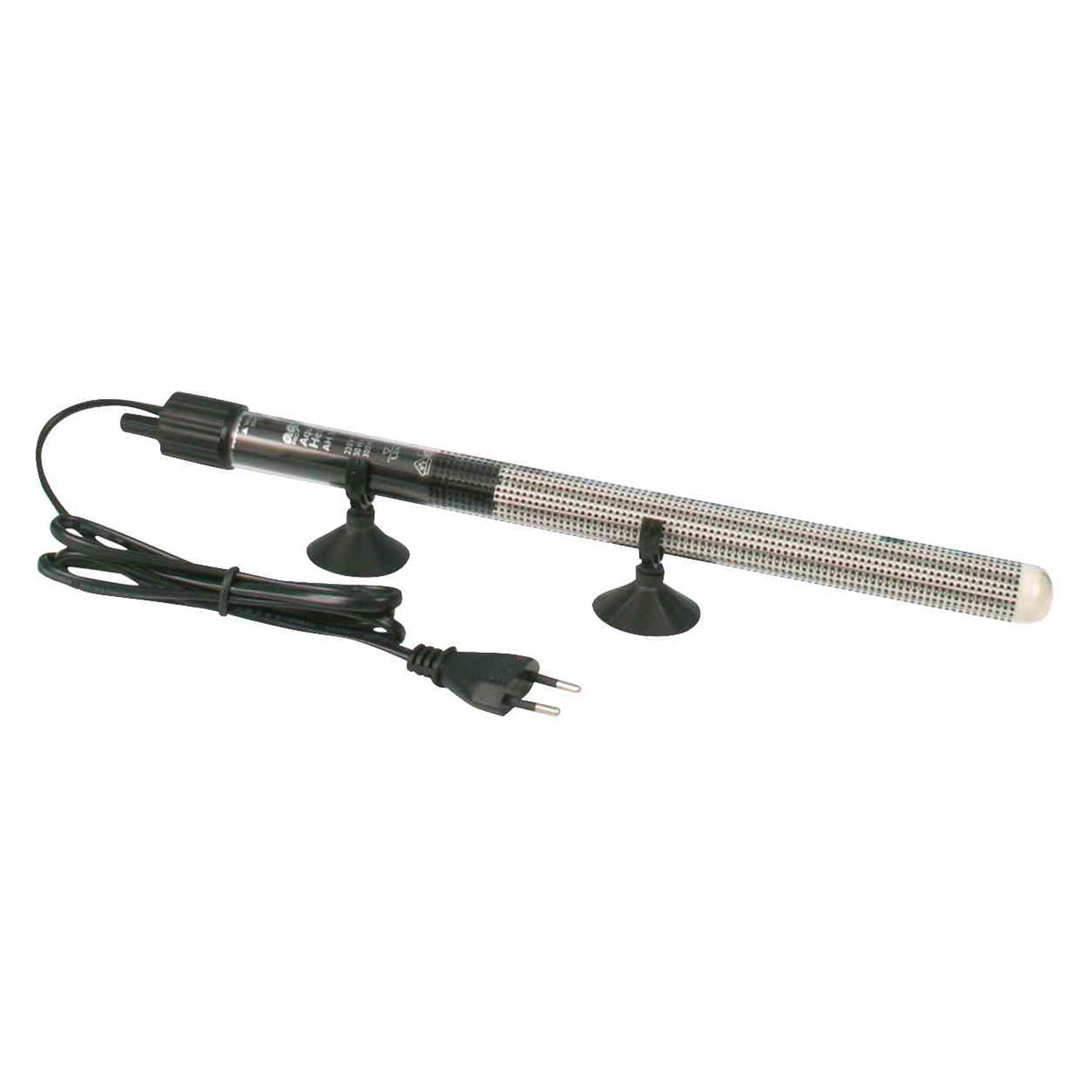
Image: Trixie Aquarium Heater AH 302 100 Watts. The image shows the heater vertically, with a black adjustable top, a clear section displaying temperature markings in Celsius and Fahrenheit, a red indicator bar, and an 'ON' light. The lower part of the heater is covered by a perforated metal guard.
- Adjustable Control Knob: Located at the top for setting desired temperature.
- Tauine Pāmahana: Visible through the glass, showing both Celsius and Fahrenheit.
- Maama Tohu: Illuminates when the heater is actively heating.
- Parenga Casing: Perforated metal guard around the heating element.
- Kapu Momo: For secure mounting inside the aquarium.
Tatūnga
- Wewete: Ata tango i te whakamahana mai i tana putunga. Tirotirohia mo te kino.
- Turanga: Mount the heater vertically or diagonally in an area of good water circulation within your aquarium. Use the provided suction cups to secure it firmly to the aquarium glass. Ensure it is fully submerged.
- Initial Temperature Setting: Before plugging in, set the desired temperature using the adjustable control knob. A common starting point for tropical fish is 24-26°C (75-79°F).
- Hononga Hiko: Create a drip loop with the power cord. Plug the heater into a suitable electrical outlet.
- Whakatairanga: Allow the heater to operate for at least 24 hours before making any further temperature adjustments. Use a separate aquarium thermometer to monitor the water temperature accurately.
Nga Tohutohu Whakahaere
Once installed and powered, the heater will automatically regulate the water temperature to your set point.
- Te Whakarerekenga Pawera: To change the temperature, gently turn the control knob at the top of the heater. Turn clockwise to increase temperature, counter-clockwise to decrease. Make small adjustments and allow several hours for the water temperature to stabilize before making further changes.
- Maama Tohu: The "ON" indicator light will illuminate when the heater is actively heating the water. It will turn off once the set temperature is reached and will cycle on and off to maintain the temperature.
- Aroturuki: Regularly check the aquarium water temperature with a reliable thermometer to ensure the heater is functioning correctly and maintaining the desired temperature.
Te tiaki
Ko te tiaki i nga wa katoa ka tino pai te mahi me te roa o to whakamahana.
- Te horoi: Over time, algae and mineral deposits may accumulate on the heater. Always unplug the heater and allow it to cool completely before removing it from the aquarium for cleaning. Gently wipe the heater surface with a soft cloth or sponge. For stubborn deposits, a mild aquarium-safe cleaning solution can be used, followed by thorough rinsing.
- Tirotiro: Periodically inspect the power cord for any signs of damage (fraying, cuts). Check the glass tube for cracks and the suction cups for wear. Replace worn suction cups as needed.
- Nga Huringa Wai: During water changes, ensure the heater remains submerged. If the water level drops below the heater, unplug it immediately and allow it to cool before refilling the tank.
Raparongoā
| Raruraru | Take pea | Rongoā |
|---|---|---|
| Heater not heating / Indicator light off |
|
|
| Nui rawa te pāmahana o te wai |
|
|
| He iti rawa te pāmahana wai |
|
|
Whakatakotoranga
| Tau tauira | 87302 |
| Wattage | 100 Watts |
| Kaihanga | Trixie |
| Te ruku | Tino Raro |
| Hototahi | Freshwater and Saltwater |
| Nga Pikohiko e hiahiatia ana | Kao |
| Ahu mōkihi | 34.6 x 9 x 5.6 cm |
| Taumaha Tūemi | 280 karamu |
Pūtāhui me te Tautoko
For warranty information or technical support, please refer to the contact details provided on the product packaging or the official Trixie webpae. Puritia to riiki hoko hei tohu mo te hoko.