1. Hua Neke Atuview
The Intermatic MIL72ASTUZH-240 is a robust 24-hour electromechanical timer module designed for precise control of electrical circuits. It is suitable for mounting inside a control panel, offering flexibility with both surface and DIN rail mounting options. This timer is engineered for light-duty commercial applications operating on 240 VAC single-phase power. Its applications include, but are not limited to, lighting control, HVACR systems, pumps, motors, fan controls, access control systems, and general-purpose electrical circuits. The unit features a non-replaceable Nickel Metal Hydride battery, which is pre-installed.
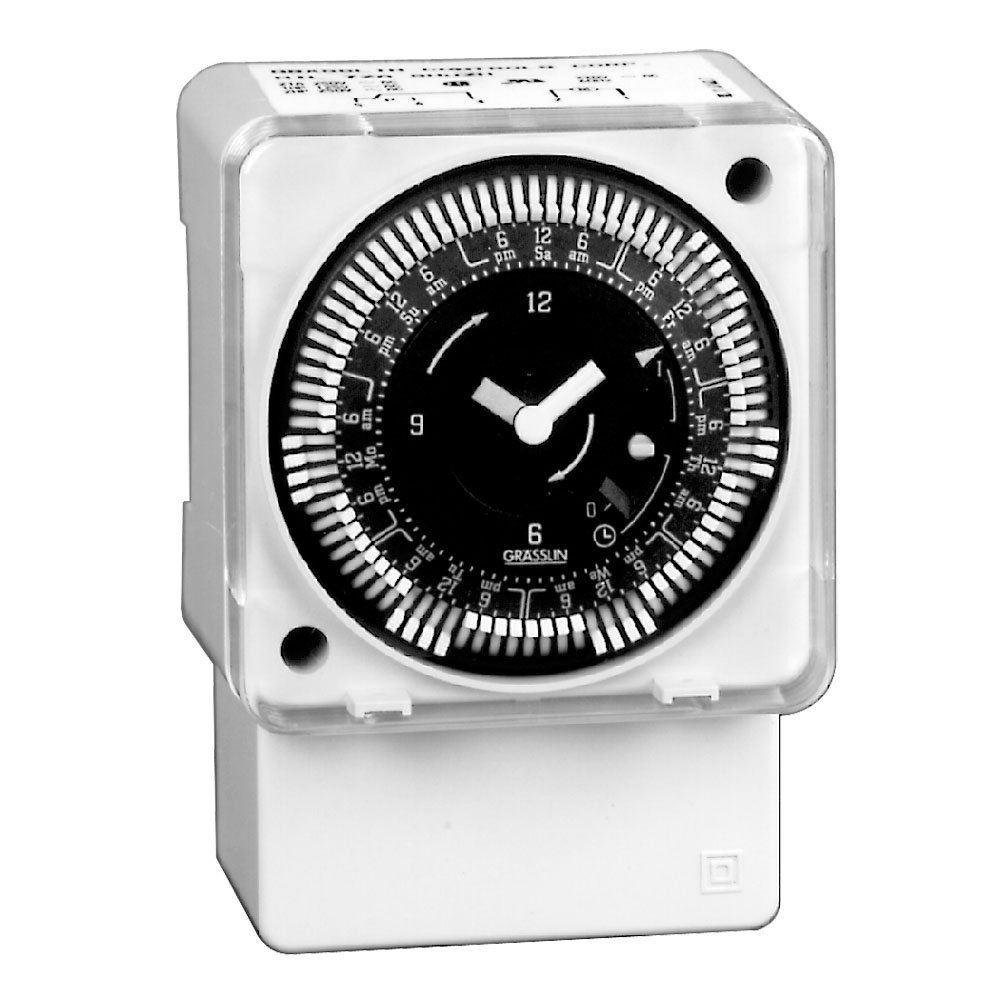
Whakaahua 1.1: Mua view of the Intermatic MIL72ASTUZH-240 Electromechanical Time Control module.
2. Nga waahanga matua
- Synchronous Drive: Operates without the need for battery backup for its primary timing function.
- 21 Amp SPDT Switch: Provides reliable switching for various electrical loads.
- Captive Trippers: Features 15-minute interval trippers for precise scheduling, which are captive to prevent loss.
- 1/4-Inch Quick-Connect Terminals: Facilitates easy and secure electrical connections.
- 3-Way Manual Override: Allows for temporary manual control of the timer's output, overriding the programmed schedule.
3. Whakatakotoranga
| Tau tauira | MIL72ASTUZH-240 |
| Aratau Mahi | ā-ringa |
| Whakatauranga o naianei | 21 Amps |
| Mahinga Mahi Voltage | 240 Volts |
| Momo Whakapā | Normally Open (SPDT Switch) |
| Momo Tuhono | Quick Connect (1/4-Inch) |
| Momo iahiko | 3-ara |
| Momo Whakaoho | Push Button (for manual override) |
| Rauemi | Te whakarewa |
| Ahu (L x W x H) | 4.63 x 3.25 x 3.25 inihi |
| Taumaha Tūemi | 8 hekere |
| Whakatauranga Tiaki o te Ao | IP00 |
| Pūhiko | Non-replaceable Nickel Metal Hydride (pre-installed) |
4. Tāuta me te Tatūnga
4.1 Whakatupato Haumaru
- WHAKATŪPATO: Disconnect power at the circuit breaker or fuse box before installing or servicing the timer. Failure to do so may result in serious injury or death.
- Ko te whakaurunga me mahi e tetahi tohunga hiko i runga i nga tikanga hiko o te motu me te rohe.
- Me whakarite te mahi voltage of the timer (240V) matches the supply voltage.
4.2 Whakapiki
The MIL72ASTUZH-240 timer module is designed for installation inside a control panel. It supports two mounting methods:
- Maunga Mata: Secure the timer directly to a flat surface within the control panel using appropriate fasteners (not included).
- Maunga Rerewe DIN: Attach the timer to a standard DIN rail within the control panel. Ensure the timer is securely clipped onto the rail.

Whakaahua 4.1: Taipitopito view of the timer showing mounting points and quick-connect terminals.
4.3 Waea Whakahoahoa
Connect the timer to the 240 VAC power supply and the load using the 1/4-inch quick-connect terminals. Refer to the wiring diagram provided with the product packaging for specific connection details. Ensure all connections are tight and secure.
- Identify the Line (L1, L2) and Load terminals.
- Connect the incoming 240V power to the appropriate Line terminals.
- Connect the device to be controlled (load) to the Load terminals.
5. Nga Tohutohu Whakahaere
5.1 Setting the Time of Day
Rotate the dial clockwise until the current time aligns with the time indicator arrow on the timer face. The dial is marked for 24 hours.
5.2 Ngā Wā Whakakā/Whakaweto o te Hōtaka
The timer uses captive trippers for programming. Each tripper represents a 15-minute interval.
- Hei whakatakoto i tētahi ON period, push the trippers outwards (away from the center) for the desired duration.
- Hei whakatakoto i tētahi WATE period, leave the trippers in their inward position (towards the center).
- Ensure that the desired ON/OFF periods are clearly defined by the tripper positions.
5.3 Whakakore a-ringa
The MIL72ASTUZH-240 features a 3-way manual override switch. This allows you to temporarily change the timer's state without altering the programmed schedule.
- Consult the timer's face or specific markings for the exact positions of the 3-way override. Common positions include:
- ON: Forces the connected load to remain ON, regardless of the program.
- MOTO: Allows the timer to follow its programmed schedule.
- WATE: Forces the connected load to remain OFF, regardless of the program.
- To return to automatic operation, set the override switch to the "AUTO" position.
6. Tiaki
The Intermatic MIL72ASTUZH-240 is designed for minimal maintenance. Regular inspection is recommended to ensure optimal performance.
- Te horoi: Keep the timer free from dust and debris. Use a dry, soft cloth for cleaning. Do not use liquid cleaners or solvents.
- Hononga: Tirohia ngā hononga hiko i ia wā, i ia wā, mō te piripono me ngā tohu o te waikura.
- Pūhiko: The unit contains a non-replaceable Nickel Metal Hydride battery. This battery is primarily for internal clock operation during power outages and is not user-serviceable. The synchronous drive means the main timing function does not rely on this battery for continuous operation.
- Nga Tikanga Taiao: Ensure the timer is operated within its specified environmental conditions (e.g., temperature, humidity) to prevent damage.
7. Te Raru
| Raruraru | Take pea | Rongoā |
|---|---|---|
| Timer not operating / Load not switching | No power supply; Incorrect wiring; Manual override engaged; Trippers not set correctly. |
|
| Load remains ON or OFF continuously | Manual override engaged; Trippers stuck or incorrectly set. |
|
| Timer dial not advancing | Kāore he hiko mō te taima. | Manatokohia te pūtake hiko ki te taima. |
If troubleshooting steps do not resolve the issue, contact a qualified electrician or Intermatic customer support for assistance.
8. Pūtāhui me te Tautoko
This product is sold without an explicit warranty from the manufacturer as per available information. For specific warranty details or support inquiries, please refer to the documentation included with your purchase or contact Intermatic directly through their official webpae, hongere ratonga kiritaki ranei.
Kaihanga: Intermatic Incorporated
Webpae: www.intermatic.com (This is a general link, specific support contact may vary)


