Nga Tohutohu Haumaru Nui
Pānuihia ngā tohutohu katoa i mua i te whakamahinga o te taputapu, ā, puritia hei tirotiro ā muri ake nei. Ki te kore e whai i ēnei tohutohu, ka pāngia pea koe e te ru hiko, te ahi, te whara kino rānei.
- Always ensure the oven is placed on a stable, heat-resistant surface, away from flammable materials.
- Do not touch hot surfaces. Use oven mitts or gloves when handling hot items or parts.
- Unplug the oven from the outlet when not in use and before cleaning. Allow it to cool completely before handling or cleaning parts.
- Do not immerse the cord, plug, or oven in water or other liquids to protect against electrical hazards.
- Me kati te tirotiro ina whakamahia e nga tamariki tetahi taputapu e tata ana ranei.
- Kaua e whakahaere i tetahi taputapu me te taura kua pakaru, te mono ranei, i muri ranei i te kino o te taputapu, kua pakaru ranei i tetahi ahua.
- Me whakarite kia pai te hau huri noa i te oumu i te wa e mahi ana. Kaua e araia nga whakatuwheratanga hau.
- Kaua e whakatakotoria tetahi mea ki runga i te oumu i te wā e mahi ana.
- Ko tenei taputapu mo te kainga anake. Kaua e whakamahi i waho.
Ka mutu te huaview
Familiarize yourself with the components of your Bimar B719 electric oven.
Waho View
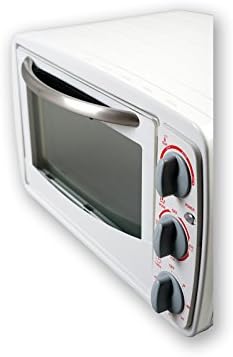
This image shows the Bimar B719 electric oven from a side angle, highlighting the control panel on the right side and the oven door handle.
Paewhiri Mana

He taipitopito view of the control panel, featuring three rotary knobs for temperature, cooking mode, and timer settings, along with a power indicator light.
Ngā Āhuatanga o Roto me ngā Taputapu
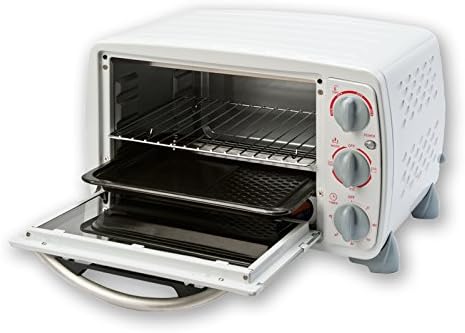
The oven interior is visible with the door open, showing the wire rack and baking tray accessories.
Whakahau
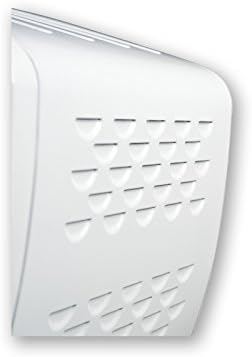
This image displays the side of the oven, showing the ventilation holes designed for heat dissipation.
Tatūnga
Follow these steps to set up your Bimar B719 electric oven for first use.
- Wewete: Carefully remove the oven and all accessories from the packaging. Retain packaging for future transport or storage if needed.
- Turanga: Place the oven on a flat, stable, and heat-resistant surface. Ensure there is at least 10-15 cm (4-6 inches) of clear space on all sides and above the oven for proper ventilation.
- Te horoi tuatahi: Horoia te roto me waho o te oumu ki te panuiamp cloth. Wash the wire rack and baking tray with warm, soapy water, rinse thoroughly, and dry completely.
- Hononga Hiko: Monohia te taura hiko ki roto i te putanga hiko. Me whakarite te voltage rite ana ki nga whakaritenga o te oumu (230 Volts).
Nga Tohutohu Whakahaere
Learn how to use your Bimar B719 electric oven for various cooking tasks.
I mua i te Whakamahinga Tuatahi
Before cooking food, operate the oven empty for approximately 15 minutes at the maximum temperature setting (230°C) with the mode set to both top and bottom heating. This helps to burn off any manufacturing residues and odors. Ensure the area is well-ventilated during this process.
Mana Pawera
The top rotary knob controls the oven temperature. Turn the knob clockwise to select the desired temperature, ranging from approximately 100°C to 230°C. The power indicator light will illuminate when the oven is heating.
Cooking Mode Selection
The middle rotary knob allows you to select the cooking mode. Available modes typically include:
- Weto: Kua whakawetohia te oumu.
- Te Whakamahana Runga: Heats from the top elements, ideal for browning or grilling.
- Whakawera Raro: Heats from the bottom elements, suitable for baking bases.
- Whakawera Runga me Raro: Heats from both elements, for conventional baking and roasting.
Mahi Matawā
The bottom rotary knob functions as a timer. Turn the knob clockwise to set the desired cooking time, up to 60 minutes. The oven will automatically switch off once the set time has elapsed, indicated by an audible signal. For continuous operation, turn the timer knob to the 'Stay On' position (if available, otherwise set to maximum time and monitor manually).
Automatic Safety Shut-off
The Bimar B719 oven is equipped with an automatic safety shut-off feature. This function ensures the oven turns off after the set timer has completed, preventing overcooking and enhancing safety.
Maama o roto
The oven includes interior lighting, allowing you to monitor the cooking process without opening the door and losing heat. The light typically activates when the oven is in operation.
Cold Door Feature
The oven features a 'cold door' design, which helps to keep the exterior glass cooler to the touch during operation, reducing the risk of accidental burns. However, caution should still be exercised as surfaces can become hot.
Te tiaki me te horoi
Ma te horoi me te tiaki i nga wa katoa ka mau te roa me te tino mahi o to oumu.
- Tango i nga wa katoa: I mua i te horoi, wetewetehia te oumu mai i te putanga hiko ka tuku kia tino whakamatao.
- Horoi o waho: Horoia nga mata o waho ki te ngohengohe, damp kakahu. Kaua e whakamahia he kai horoi whakakoi, he papa horoi, he matū kino rānei, nā te mea ka kino pea te whakaotinga.
- Horoi o Roto: Mō roto, murua ki te pānuitangaamp cloth and mild detergent. For stubborn food residues, a non-abrasive oven cleaner designed for conventional ovens can be used, following the product instructions carefully. Ensure all cleaner residue is wiped away.
- Apatoko: The wire rack and baking tray can be washed in warm, soapy water. Rinse thoroughly and dry completely before placing them back in the oven.
- Kuwhera Karu: Whakapaihia te tatau karaihe ki te horoi karaihe, panui raneiamp cloth. Avoid scratching the glass.
- Kaua e Rukuhia: Kaua rawa e rumakina te tinana o te oumu, te taura, te mono rānei ki roto i te wai, i tētahi atu wai rānei.
Raparongoā
If you encounter any issues with your Bimar B719 electric oven, refer to the table below for common problems and solutions.
| Raruraru | Take pea | Rongoā |
|---|---|---|
| Kare te umu e ka ana. | Kāore anō kia monohia; he hapa kei te putanga hiko; kāore anō kia whakatakotoria te taima. | Ensure the oven is securely plugged into a working outlet. Check the circuit breaker. Set the timer knob to the desired cooking time or 'Stay On' position. |
| Ko nga kai kaore e rite te tunu. | Te tūnga hē o te whata; te whakatakotoranga kai kāore i te ōrite; te whakatuwheratanga pinepine o te tatau. | Adjust rack position for optimal heat distribution. Arrange food evenly on the tray. Avoid opening the door unnecessarily during cooking. |
| He paowa, he kakara wera ranei i te wa o te whakamahinga tuatahi. | Ka wera nga toenga hangahanga. | This is normal for the first use. Ensure good ventilation. If it persists after initial burn-off, contact support. |
| Kare e mahi ana te taima. | Kāore i te tika te whakatakoto o te porowhita taima. | Ensure the timer knob is turned past the 0 mark and set to a specific time. |
Whakatakotoranga
Technical details for the Bimar B719 Electric Oven.
- Waitohu: Pimara
- Tau tauira: B719
- Tae: Mā
- Raukaha: 19 rita
- Te Mana/Wattage: 1300 Watts
- Voltage: 230 Volts
- Rahi Hua: 45 x 35 x 28 cm
- Taumaha: 7.5 kg
- Rauemi: Karāhe (tatau)
- Momo Mana: Nga Patene Hurihuri
- Kāhua kuaha: Kuaha taka-iho
- Nga waahanga motuhake: Automatic Safety Shut-off, Interior Lighting, Conventional Heating, Cold Door
Pūtāhui me te Tautoko
For information regarding warranty coverage, service, or technical support, please refer to the warranty card included with your product or contact Bimar customer service directly. Keep your proof of purchase for warranty claims.


