1. Kupu Whakataki
The Intel NUC DE3815TYKHE is a compact, fanless mini PC designed for various applications, including thin clients, digital signage, and embedded solutions. This kit provides a flexible platform with support for a 2.5-inch storage drive, offering a customizable computing experience in a small form factor.
2. Ihirangi mokete
Manatokona kei roto katoa nga mea kei roto i to kete:
- Intel NUC DE3815TYKHE Unit
- Pouaka AC
- VESA Mounting Bracket (with screws)
- Aratohu Timata Tere (mehemea kei roto)
3. Tino Tinoview
3.1 Paewhiri Mua
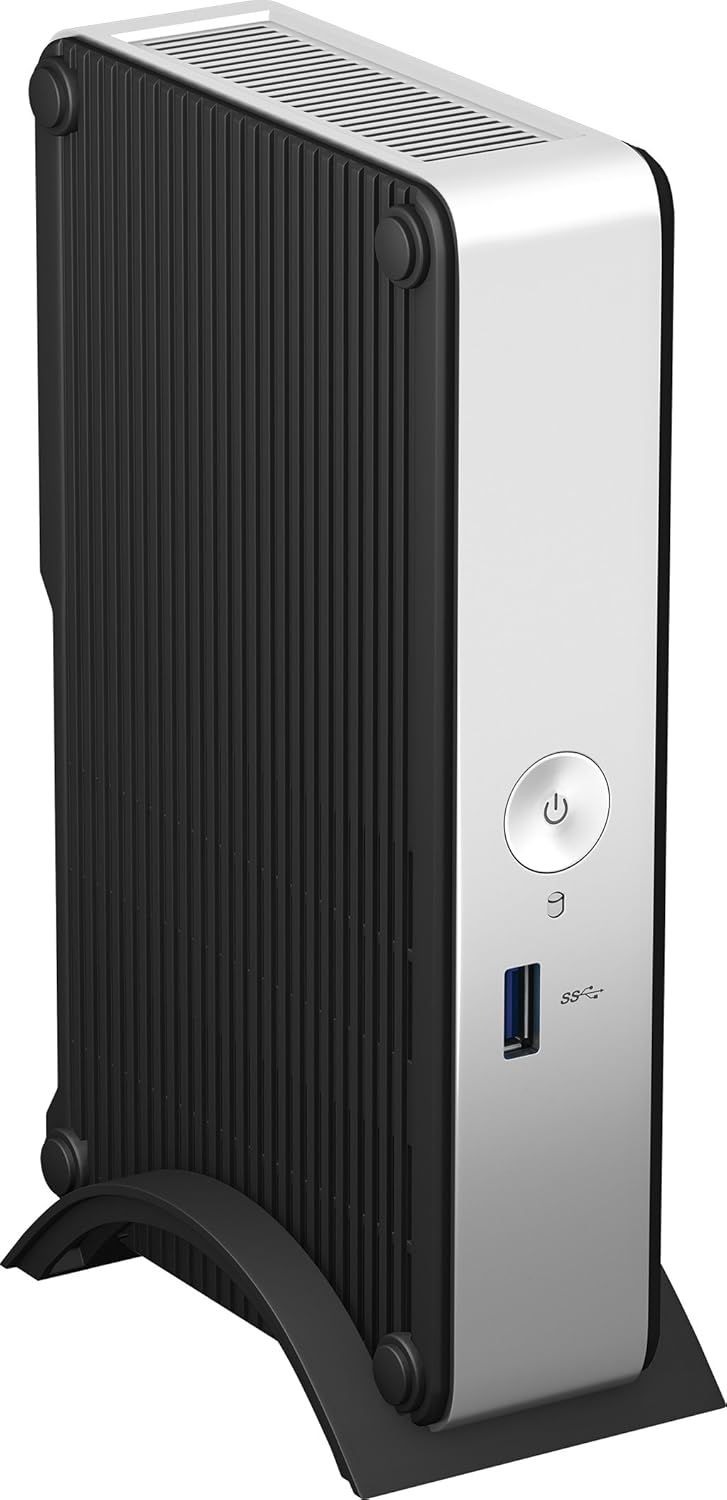
The front panel provides essential connectivity and controls.

Whakaahua 1: Mua view of the Intel NUC DE3815TYKHE. This image displays the compact, fanless design of the unit, highlighting the power button and a single blue USB 3.0 port on the front for easy access.
- Pātene Hiko: Ka whakamahia hei whakakā, whakaweto rānei i te kōwae.
- Tauranga USB 3.0: Mo te hono i nga taputapu USB tere-tere.
3.2 Paewhiri Whakamuri
The rear panel houses various ports for display, network, and peripherals.

Whakaahua 2: Whakamuri view of the Intel NUC DE3815TYKHE. This image details the available rear ports, including VGA, HDMI, two USB ports, an Ethernet port, and a headphone/microphone jack, along with the power input.
- Tauranga VGA: For connecting to older monitors or projectors.
- Paerewa HDMI: For connecting to modern displays with audio support.
- Tauranga USB 2.0 (x2): Hei hono i ngā taputapu USB paerewa.
- Tauranga Itarangi (RJ-45): Mo te hononga whatunga waea.
- Headphone/Microphone Jack: Mo te whakauru oro me te whakaputa.
- Tāuru Hiko DC: Mo te hono i te urutau hiko AC.
3.3 Nga Wae o Roto
Accessing the internal components is necessary for memory and storage installation.
Whakaahua 3: Intel NUC DE3815TYKHE unit displayed alongside its internal motherboard. This view illustrates the compact size of the main unit and the layout of the internal components, including the processor, memory slot, and connectors for storage.
- DDR3L SODIMM Slot: For installing system memory.
- 2.5-inch Drive Bay: For installing a SATA HDD or SSD.
- Antenna Korekore: Built-in for wireless connectivity.
- eMMC Storage: 4GB embedded storage for operating system or data.
4. Tatūnga
Follow these steps to prepare your Intel NUC for operation.
4.1 Te Tāuta Mahara (RAM)
- Unscrew and remove the bottom cover of the NUC unit.
- Locate the DDR3L SODIMM slot on the motherboard.
- Align the notch on the SODIMM module with the notch in the slot.
- Insert the module at a 45-degree angle and press down until the retaining clips snap into place.
4.2 Installing a 2.5-inch Storage Drive
- With the bottom cover removed, locate the 2.5-inch drive bay.
- Connect the SATA data and power cables from the NUC to your 2.5-inch HDD or SSD.
- Secure the drive within the bay using the provided screws (if applicable).
- Replace the bottom cover and secure it with screws.
4.3 Hononga Pikitia
- Whakaatu: Connect your monitor to the HDMI or VGA port.
- Papapātuhi me te Kiore: Connect USB keyboard and mouse to any available USB ports.
- Whatunga: For wired internet, connect an Ethernet cable to the RJ-45 port. For wireless, ensure antennas are clear.
- Ororongo: Connect headphones or speakers to the audio jack if needed.
4.4 Te Whakakaha
- Connect the AC power adapter to the DC power input on the rear panel.
- Monohia te urutau hiko ki te putanga pakitara.
- Press the power button on the front panel to turn on the NUC.
5. Tāuta Pūnaha Whakahaere
The Intel NUC DE3815TYKHE supports multiple operating systems. You will need to install your preferred OS onto the internal eMMC storage or the 2.5-inch drive you installed.
- Prepare a bootable USB drive with your chosen operating system (e.g., Windows, Linux).
- Connect the USB drive to a USB port on the NUC.
- Power on the NUC and enter the BIOS/UEFI setup (usually by pressing F2 during boot) to configure the boot order.
- Me whai i nga tohutohu a-mata hei whakauru i te punaha whakahaere.
6. Tiaki
The fanless design of the Intel NUC DE3815TYKHE minimizes maintenance requirements.
- Te horoi: Periodically wipe the exterior with a soft, dry cloth. Avoid using liquid cleaners directly on the unit.
- Whakahau: Ensure the ventilation slots are not obstructed to allow for proper passive cooling.
- Whakahōu Pūmanawa: Kia mau tonu te whakahōu i tō pūnaha whakahaere me ngā taraiwa mō te mahi tino pai me te haumarutanga.
7. Te Raru
Ki te tūtaki koe ki ngā raruraru, tirohia ngā mahi rapurongoā noa e whai ake nei.
- Kore Mana: Ensure the power adapter is securely connected to both the NUC and a working power outlet. Test the outlet with another device.
- Kore Whakaatu: Verify that the monitor is powered on and correctly connected to the NUC's HDMI or VGA port. Try a different cable or monitor if possible.
- Pūnaha Whakahaere Kaore i te Whakaara: Check the boot order in the BIOS/UEFI settings. Ensure the installed storage drive is detected and contains a valid operating system.
- Kaore i kitea te Piko: Ensure USB devices are properly seated in the ports. Try a different USB port or device.
- Kore Hononga Whatunga: For wired connections, check the Ethernet cable and router. For wireless, ensure Wi-Fi is enabled in the OS and the NUC is within range of a network.
8. Whakatakotoranga
| Āhuahira | Taipitopito |
|---|---|
| Ingoa Tauira | DE3815TYKHE |
| Tukatuka | Intel Atom Processor (e.g., E3815) |
| RAM | 4 GB DDR3L 1333 (SODIMM slot for expansion) |
| Rokiroki Roto | 4GB eMMC (embedded MultiMediaCard) |
| Roha Rokiroki | Internal 2.5-inch SATA HDD/SSD bay |
| Whakairoiro | Whakairoiro Intel Integrated |
| Putanga Ataata | Atanga, VGA |
| Tauranga USB | 1x USB 3.0 (mua), 2x USB 2.0 (muri) |
| Ororongo | Waeke Waea Waeaoro/Microphone Combo Jack |
| Whatunga | Ethernet (RJ-45), Built-in Wireless Antennas |
| Hoahoa | Pākore |
| Tautoko Pūnaha Whakahaere | Multiple OS options (e.g., Windows, Linux) |
| Tae | Metallic gray plastic ring with black sides |
9. Pūtāhui me te Tautoko
Mo nga korero whakamana me te tautoko hangarau, tirohia koa te Intel mana webpaetukutuku, whakapā atu rānei ki tō wāhi hoko. Puritia tō taunakitanga hoko mō ngā kereme pūtāhui.
- Tautoko Aipurangi: Haerenga Intel Support for DE3815TYKHE for drivers, downloads, and troubleshooting resources.
- Whakapā: Refer to the Intel support page for contact options.


