1. Kupu Whakataki
The Leica M-A (Typ 127) is a fully mechanical 35mm film camera designed for photographers who appreciate traditional photographic processes. This camera operates without a battery, relying entirely on mechanical controls for shutter speed, aperture, and focusing. Its robust construction and minimalist design emphasize the fundamental aspects of photography.
2. Hua Neke Atuview
The Leica M-A (Typ 127) embodies the essence of analog photography with its durable all-metal body and precise mechanical operation. It features a classic rangefinder focusing system and manual controls for a direct photographic experience.
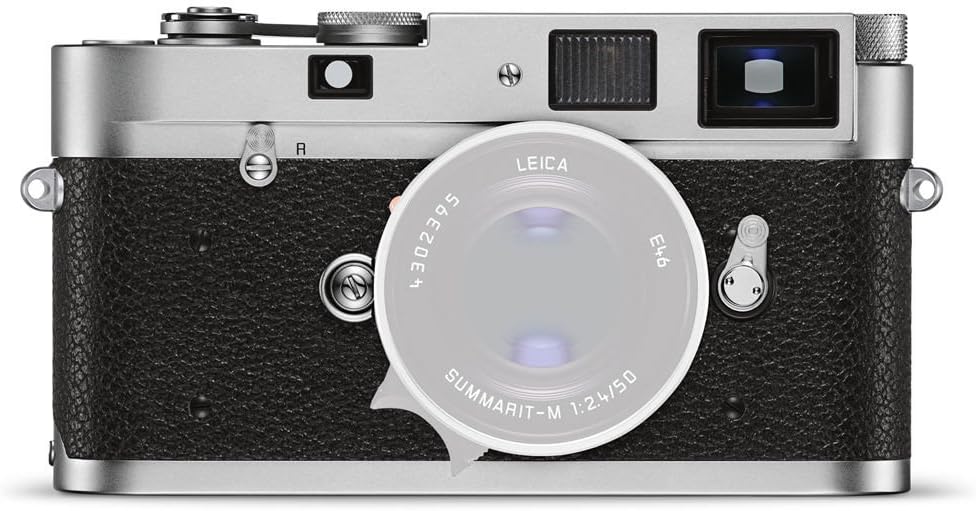
Mua view of the Leica M-A (Typ 127) camera with a lens attached, showcasing the classic rangefinder design and silver finish.

Runga view of the Leica M-A (Typ 127) camera, displaying the shutter speed dial, film advance lever, and the Leica branding.

Whakamuri view of the Leica M-A (Typ 127) camera, showing the film ISO reminder dial and the viewKaituku.
3. Tatūnga
3.1. Te Whakapiri i te Arotahi
- Align the red dot on the lens with the red dot on the camera body's lens mount.
- Gently insert the lens into the mount.
- Hurihia te arotahi ki te taha matau kia pāwhiritia rā anō ki tōna tūranga, e tohu ana kua raka pai.
3.2. Uta Kiriata
- Open the camera's base plate by rotating the locking key.
- Pull up the film rewind knob to open the film chamber.
- Insert a 35mm film cassette into the chamber.
- Pull the film leader across to the take-up spool and ensure it engages with the teeth.
- Close the film chamber and replace the base plate, securing it with the locking key.
- Advance the film two frames by operating the film advance lever and pressing the shutter button to ensure the film is properly loaded and the frame counter resets.
3.3. Tautuhi Tere Kiriata (ISO)
The M-A (Typ 127) does not have an internal light meter. The ISO dial on the back of the camera serves as a reminder for the film speed currently loaded. Rotate the dial to match the ISO of your film (e.g., ISO 100, 400, 800).
4. Nga Tohutohu Whakahaere
4.1. Te arotahi
The Leica M-A (Typ 127) uses a manual rangefinder focusing system:
- Titiro ma te viewfinder. You will see a bright frame and a central, brighter patch.
- Within the central patch, you will see a double image.
- Rotate the focusing ring on your lens until the double image in the central patch merges into a single, clear image. This indicates that your subject is in focus.
4.2. Setting Exposure (Aperture and Shutter Speed)
Exposure is set manually by adjusting the aperture on the lens and the shutter speed on the camera's top dial. There is no automatic exposure mode. Photographers must use an external light meter or their experience to determine the correct settings for desired exposure.
- Tuwhera: Controlled by the ring on the lens. Adjust to control depth of field and light entering the lens.
- Tere Marumaru: Controlled by the dial on the top plate. Adjust to control motion blur and duration of light exposure.
4.3. Te tango whakaahua
- Ensure film is loaded and advanced.
- Set the desired aperture on the lens.
- Set the desired shutter speed on the top dial.
- Arotahi ki tō kaupapa mā te whakamahi i te ine tawhiti.
- Gently press the shutter release button on the top plate to capture the image.
- Advance the film using the film advance lever for the next shot.
4.4. Takiwā-whaiaro
The camera is equipped with a self-timer function. To activate, wind the self-timer lever located on the front of the camera, then press the shutter button. The shutter will release after a short delay, typically 10-12 seconds.
5. Tiaki
5.1. Te horoi i te kamera
- Whakamahia he kakahu ngohengohe, kore-miro hei muru i te tinana o te kāmera.
- For the lens, use a lens brush to remove dust, followed by a lens cleaning solution and a microfiber cloth. Avoid touching the lens elements directly.
- Puritia te viewfinder and rangefinder windows clean for clear focusing.
5.2. Rokiroki
Store the camera in a dry, dust-free environment, away from direct sunlight and extreme temperatures. If storing for extended periods, remove any film and keep the lens cap on.
6. Te Raru
- Film not advancing: Ensure the film leader is properly engaged with the take-up spool. Check if the film rewind knob rotates when advancing the film.
- Shutter not firing: Confirm the film advance lever has been fully wound.
- Images out of focus: Practice using the rangefinder focusing system to ensure the double image merges completely.
- Exposure issues (too dark/too bright): Verify aperture and shutter speed settings are appropriate for the lighting conditions, potentially using an external light meter.
7. Whakatakotoranga
| Āhuahira | Taipitopito |
|---|---|
| Waitohu | Leica |
| Ingoa Tauira | 10371 |
| Huinga Tauira | M-A (Typ 127) |
| Whakanuia Hototahi | Leica M |
| Hangarau Pūoko Whakaahua | Other (Film) |
| Whakapumau Atahanga | Digital (Note: This refers to post-processing, camera is mechanical) |
| Whakaahuatanga ineita | Automatic (Note: This refers to the internal light meter, which is not present in the M-A. Exposure is manual.) |
| Kei roto nga Pikohiko | Kao |
| Āhuahira Motuhake | Fully Mechanical, No Battery Required |
| Taumaha Tūemi | 1.3 Pauna |
| Maramatanga Maama | ISO 100 to ISO 3200 (film dependent) |
| Viewkimi | Optical |
| Aratau Whakapupuri | ā-ringa |
| He Taima-whaiaro | Ae |
| Momo Arotahi | Arotahi a-ringa |
| Arotahi aunoa | Kao |
8. Pūtāhui me te Tautoko
The Leica M-A (Typ 127) camera comes with a manufacturer's warranty. For specific details regarding warranty coverage, duration, and terms, please refer to the documentation provided with your purchase or visit the official Leica website. For technical assistance, service, or further inquiries, please contact Leica customer support directly.
You can find more information and support resources on the official Leica webpae: Visit the Leica Store


