1. Kupu Whakataki
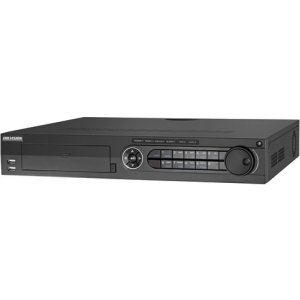
The Hikvision DS-7316HQHI-SH is a 16-channel Tribrid Digital Video Recorder (DVR) designed for advanced surveillance systems. This DVR supports Turbo HD, analog, and 1080P IP cameras, offering versatile compatibility for various security setups. It features H.264 video compression for efficient storage and supports auto-detection of camera types. This manual provides essential information for the proper installation, operation, and maintenance of your DVR system.
2. Nga Tohutohu Haumaru
Please read these safety instructions carefully before operating the device to prevent injury or damage.
- Whakaritehia te voltage is stable and meets the device's requirements.
- Do not place the device in direct sunlight, near heat sources, or in environments with high humidity or dust.
- Avoid placing heavy objects on top of the DVR.
- Whakamahia ngā taputapu me ngā urutau hiko kua whakaaetia e Hikvision anake.
- Momotuhia te hiko i mua i te whakahaere i tētahi tikanga tiaki, tāutanga rānei.
- Properly ground the device to prevent electrical shock.
3. Ihirangi mokete
Verify that all items are present in the package. If any items are missing or damaged, contact your supplier.
- Hikvision DS-7316HQHI-SH DVR Unit
- Pūurutau Hiko
- Kiore USB
- SATA Cables (for HDD connection)
- Screws (for HDD installation)
- Aratohu Timata Tere
4. Hua Neke Atuview
4.1 Paewhiri Mua

The front panel of the DVR provides access to essential controls and indicators. It typically includes:
- Tauranga USB: For connecting a mouse, USB flash drive, or external storage.
- Tohu Mana: LEDs for power, HDD activity, and network status.
- Patene Mana: Navigation and selection buttons for menu operation.
- Kaihoko IR: For remote control (if applicable).
4.2 Hononga Paewhiri Whakamuri
The rear panel houses all the necessary ports for connecting cameras, monitors, network, and power. Key connections include:
- Waitohu Ataata: BNC connectors for 16 Turbo HD/Analog cameras.
- Putanga Ataata: HDMI and VGA ports for monitor connection.
- Ororongo Whakauru/Putanga: RCA connectors for audio devices.
- Tauranga LAN: RJ45 Ethernet port for network connection.
- Tauranga USB: Ngā tauranga USB tāpiri mō ngā taputapu taapiri.
- Pūoho I/O: Terminal blocks for alarm input and output devices.
- Whakauru Hiko: DC 12V power jack.
5. Tatūnga
5.1 Tāuta Pūmārō
- Hard Disk Drive (HDD) Installation:
- Wetekina te tīwiri ka tangohia te taupoki o runga o te DVR.
- Connect the SATA data cable and power cable to the HDD.
- Align the HDD with the screw holes at the bottom of the DVR chassis and secure it with the provided screws.
- Whakakapia te taupoki o runga, ka whakau ki ngā tīwiri.
- Hononga kāmera: Connect your Turbo HD, analog, or IP cameras to the corresponding video input ports on the rear panel using BNC connectors. For IP cameras, ensure they are connected to the same network as the DVR.
- Hononga Aroturuki: Connect a monitor to the HDMI or VGA output port on the rear panel.
- Hononga Kiore: Connect the USB mouse to a USB port on the front or rear panel.
- Hononga Whatunga: Connect an Ethernet cable from your router/switch to the LAN port on the DVR.
- Hononga Hiko: Connect the power adapter to the DVR's power input and then plug it into a power outlet.
5.2 Hiko Tuatahi me te Whirihoranga
After connecting all hardware, power on the DVR. The system will boot up, and you will be prompted to set up basic configurations.
- Waihanga Kupuhipa Kaiwhakahaere: Follow the on-screen prompts to create a strong administrator password.
- Activate HDD: The newly installed HDD will need to be initialized or formatted by the DVR. Navigate to Menu > HDD > HDD Management ki te whakahōputu i te puku.
- Tautuhinga Whatunga: Configure network parameters (IP address, subnet mask, gateway, DNS) to enable remote access and IP camera integration. You can use DHCP or static IP.
- Rā me te Wā: Tautuhia te rā, te wā, me te rohe wā tika.
- Rapunga kāmera: The DVR will automatically detect connected Turbo HD and analog cameras. For IP cameras, you may need to add them manually via Menu > Camera > IP Camera.
6. Nga Tohutohu Whakahaere
6.1 Whakaterenga Atanga Kaiwhakamahi
Use the connected USB mouse to navigate the DVR's graphical user interface (GUI). Right-click to access the main menu, and left-click to select options.
- Ora View: Displays real-time video feeds from all connected cameras.
- Tahua Matua: Provides access to all system settings, recording, playback, and advanced features.
- Purei: Whakaaetia reviewTuhinga kua tuhiatage.
- Pūrua: For exporting recorded video to a USB device.
6.2 Whirihoranga Hopu
To configure recording settings:
- Haere ki Main Menu > Record > Parameters.
- Select the desired camera and configure settings such as resolution, frame rate, and bit rate.
- Whakatere ki Tahua Matua > Tuhituhi > Rārangi Mahi to set up continuous, motion-detection, or alarm-triggered recording schedules for each camera.
6.3 Whakahoki
To play back recorded footage:
- Mai i te koiora view, pawhiri-matau ka kowhiri Whakahoki, haere ranei ki Main Menu > Playback.
- Select the camera(s) and the date/time range you wish to review.
- Use the timeline and control buttons (play, pause, fast forward, rewind) to navigate through the footage.
6.4 Uru Mamao
To access your DVR remotely:
- Ensure the DVR is connected to the internet and network settings are correctly configured.
- Download and install the Hik-Connect app on your mobile device or the iVMS-4200 client software on your computer.
- Register an account and add your DVR using its serial number or QR code.
- Follow the app/software instructions to view live feeds, play back recordings, and manage settings remotely.
7. Tiaki
7.1 Whakahaere Puku Maama
Regularly check the status of your hard drive to ensure optimal recording performance. Go to Main Menu > HDD > HDD Management ki view disk status, remaining capacity, and perform formatting if necessary. It is recommended to format the HDD periodically (e.g., every 6-12 months) to maintain performance, after backing up any critical data.
7.2 Whakahoutanga Firmware
Keep your DVR's firmware updated to benefit from new features, security enhancements, and bug fixes. Download the latest firmware from the official Hikvision website. Update the firmware via USB or network through Main Menu > Maintenance > Upgrade.
7.3 Te horoi
Periodically clean the exterior of the DVR with a soft, dry cloth. Ensure ventilation openings are free from dust to prevent overheating. Do not use liquid cleaners or aerosols directly on the device.
8. Te Raru
| Raruraru | Take pea | Rongoā |
|---|---|---|
| Kāore he putanga ataata i runga i te mata | Loose HDMI/VGA cable; Incorrect monitor input; DVR not powered on. | Check cable connections; Select correct input on monitor; Verify DVR power. |
| Kore he whakaahua kamera | Camera not powered; Loose BNC cable; Incorrect camera type selected; IP camera not configured. | Check camera power and connections; Verify camera type in DVR settings; Add/configure IP camera. |
| Kaore he rekoata | HDD not initialized/formatted; Recording schedule not set; HDD full. | Initialize/format HDD; Configure recording schedule; Check HDD capacity. |
| Kāore e taea te uru atu ki te DVR mai i tawhiti | Network cable disconnected; Incorrect network settings; Router firewall blocking ports. | Check network cable; Verify DVR network settings (IP, DNS); Configure port forwarding on router or enable UPnP. |
9. Whakatakotoranga
| Āhuahira | Taipitopito |
|---|---|
| Tau tauira | DS-7316HQHI-SH-2TB |
| Nga Whakauru Ataata | 16 Channels (Turbo HD/Analog) + 2 IP Cameras (1080P) |
| Kōpeketanga Ataata | H.264 |
| Putanga Ataata | Atanga, VGA |
| Ororongo Whakauru/Putanga | Ae |
| Whakaoho I/O | Ae |
| Atanga Matapihi | 1 RJ45 10M/100M/1000M atanga Ipurangi |
| Atanga USB | 2 x USB 2.0 (front), 1 x USB 3.0 (rear) |
| Puku Kōpae Mārō | 2TB pre-installed (supports up to 2 SATA HDDs) |
| Tuku Hiko | 12V DC |
| Hunga Hua | 390 x 445 x 70 inches (Note: This dimension appears unusually large and may be a unit conversion error in the source data. Please refer to official product documentation for accurate dimensions.) |
| Taumaha Tūemi | 1 pauna |
10. Pūtāhui me te Tautoko
Hikvision products typically come with a limited warranty. For detailed warranty information, please refer to the warranty card included with your product or visit the official Hikvision website. For technical support, product registration, or service inquiries, please contact Hikvision customer support or your authorized dealer.
Whaimana Webpae: www.hikvision.com


