Kupu Whakataki
The Lexar JumpDrive S75 is a high-performance USB 3.1 flash drive designed for efficient storage and transfer of photos, videos, and files. It offers fast read and write speeds, making it suitable for various data management tasks. The drive features a retractable connector for protection and is compatible with both PC and Mac systems.
This manual provides essential information for setting up, operating, maintaining, and troubleshooting your Lexar JumpDrive S75.
Ka mutu te huaview
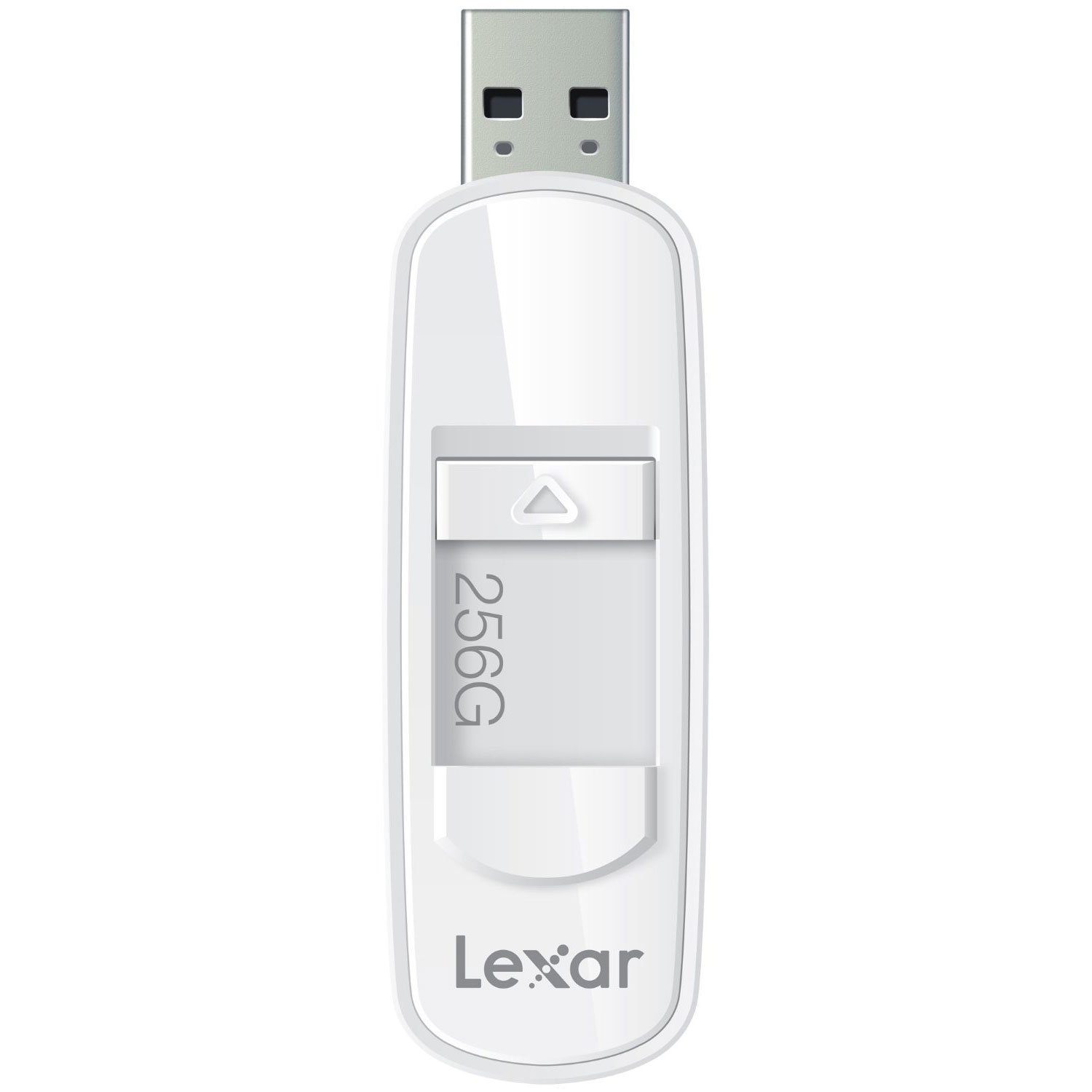
This image shows the Lexar JumpDrive S75 USB 3.1 Flash Drive, highlighting its compact design and retractable connector. The drive is being held in a hand, positioned near a laptop and a notebook, illustrating its portability and ease of use in a typical work or study environment.
The Lexar JumpDrive S75 features a sleek design with a retractable USB connector, which protects the connector when not in use. It is equipped with SuperSpeed USB 3.1 technology for rapid data transfer.
- SuperSpeed USB 3.1 Technology: Enables fast content transfer with speeds up to 150MB/s read and 60MB/s write for 64GB-256GB capacities.
- Retractable Connector: A convenient thumb slide mechanism extends and retracts the USB connector.
- Hototahi whanui: Works with both PC and Mac operating systems.
- LED Activity Indicator: A small light indicates when the drive is actively reading or writing data.
Tatūnga
The Lexar JumpDrive S75 is a plug-and-play device, requiring no special driver installation for most modern operating systems.
- Whakaroahia te Hononga: Use the thumb slide to extend the USB connector from the drive casing.
- Hono ki Rorohiko: Insert the USB connector into an available USB port on your computer. For optimal performance, use a USB 3.0 or USB 3.1 port. The drive is also backward compatible with USB 2.0 ports, though speeds will be limited to USB 2.0 specifications.
- Ahukahuka: Your computer's operating system should automatically detect the drive and make it accessible. It will typically appear as a removable disk drive in 'My Computer' (Windows) or on the desktop/Finder (Mac).
Nga Tohutohu Whakahaere
Te whakawhiti Files
- Open the Drive: Double-click the drive icon on your computer to open its contents.
- Tārua Files: Tōia ka taka files or folders from your computer to the JumpDrive S75, or vice versa. Alternatively, use the copy and paste functions.
- Monitor Transfer: Observe the LED activity indicator on the drive. A flashing light indicates that data is being read from or written to the drive.
Tango Haumaru
To prevent data corruption, always safely eject the flash drive before physically removing it from your computer.
- Matapihi: Click the 'Safely Remove Hardware and Eject Media' icon in the system tray, then select the Lexar JumpDrive S75. Wait for the 'Safe to Remove Hardware' message before unplugging.
- Mac: Drag the drive icon to the Trash, or right-click (Control-click) the drive icon and select 'Eject'. Wait for the icon to disappear before unplugging.
Te tiaki
- Protect the Connector: Always retract the USB connector into the drive casing when not in use to prevent damage to the connector pins.
- Te hapai me te tiaki: Avoid dropping the drive or subjecting it to excessive force, as this can cause internal damage.
- Kia maroke: Āraia te puku mai i te makuku me te pāmahana tino kino.
- Pūrua auau: While flash drives are reliable, it is good practice to back up important data to multiple locations to prevent data loss.
Raparongoā
Kaore i kitea te Puku
- Me mohio kua whakauruhia te puku ki te tauranga USB.
- Whakamātauria tētahi tauranga USB rerekē i tō rorohiko.
- Test the drive on another computer to determine if the issue is with the drive or the computer's USB port.
- Tīmataria anō tō rorohiko.
Nga Tere Whakawhiti Puturi
- Verify that you are connected to a USB 3.0 or USB 3.1 port. USB 2.0 ports will operate at significantly lower speeds.
- Te whakawhiti maha iti files he puhoi ake i te whakawhiti i te rahi kotahi file rite tonu te rahi.
- Me whakarite kei te hōu tonu ngā taraiwa o tō rorohiko.
Data Corruption or Inaccessible Files
- Always safely eject the drive before removal. Unexpected removal can lead to data corruption.
- If files become inaccessible, you may consider using data recovery software (third-party) or reformatting the drive if data is not critical. Reformatting will erase all data.
Reported Capacity Discrepancy
- The actual usable storage capacity may be less than the stated capacity due to formatting, operating system files, and other functions. This is normal for all storage devices.
Whakatakotoranga
| Ingoa Tauira | S75 |
| Tauira Tuemi | LJDS75-256ABNL |
| Te Rokiroki Mahara | 256 GB |
| Atanga Pūmārō | USB 3.0 (hototahi ki te USB 3.1) |
| Panui Tere | Tae atu ki te 150 MB/s |
| Tuhia Tere | Tae atu ki te 60 MB/s |
| Hangarau Hononga | USB |
| Pūmārō Pūmārō | PC, Mac |
| Pūnaha Mahi | PC; Mac |
| Tae | Mā |
| Taumaha Tūemi | 0.768 hekere |
| Hunga Hua | 4 x 0.54 x 5.5 inihi |
| Kaihanga | Lexar International |
Nga korero Whakaputanga
For detailed warranty information regarding your Lexar JumpDrive S75, please refer to the official Lexar website or the warranty card included with your product at the time of purchase. Warranty terms and conditions may vary by region and product.
Tautoko
If you encounter any issues or have questions not covered in this manual, please visit the official Lexar support website for further assistance, FAQs, and contact options.
Lexar Official Webpae: www.lexar.com