1. Kupu Whakataki
This manual provides detailed instructions for the installation, operation, and maintenance of the GeoVision GV-MFD2501-6F 2MP Mini Fixed Dome IP Security Camera. Please read this manual thoroughly before using the product to ensure proper setup and functionality. Keep this manual for future reference.
1.1 Hua Neke atuview
The GV-MFD2501-6F is a compact 2-megapixel mini fixed dome IP camera designed for various surveillance applications. It features a 2.3mm lens, super low lux capabilities, and supports network connectivity for remote monitoring.
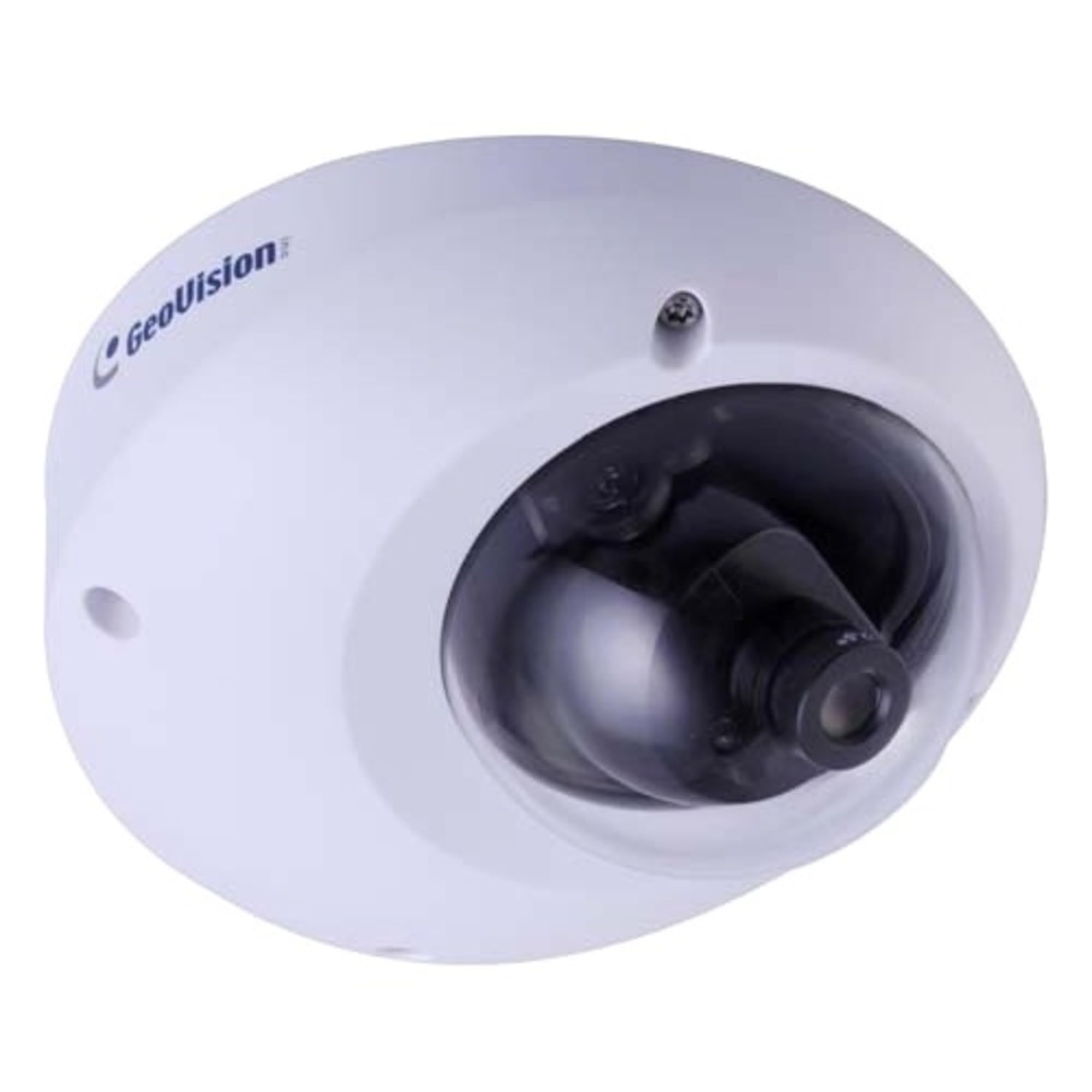
Figure 1.1: GeoVision GV-MFD2501-6F Mini Fixed Dome IP Security Camera. This image shows the compact design of the camera, highlighting its dome shape and lens.
1.2 Ihirangi mokete
Me manatoko kei roto i te kete ngā taonga katoa. Mena kei te ngaro, kei te pakaru rānei ētahi taonga, whakapā atu ki tō kaihoko tonu.
- GV-MFD2501-6F IP Camera
- Whakaeke Miro Hoko
- Aratohu Tāuta
- CD Pūmanawa (hono tikiake ranei)
- Hononga Ārai Wai (mēnā e tika ana)
2. Nga korero haumaru
WARNING: To prevent fire or shock hazard, do not expose this unit to rain or moisture.
- Whakamahia anake te urutau hiko kua tohua mō tēnei pūrere.
- Do not open the camera housing. Refer all servicing to qualified personnel.
- Avoid placing the camera in direct sunlight, near heat sources, or in areas with high humidity or dust.
- Me whakarite kia tika te hau huri noa i te kamera.
- Momotuhia te hiko i mua i te horoi, te mahi tiaki ranei.
3. Tatūnga
3.1 Tāutanga Tinana
The GV-MFD2501-6F is designed for indoor use. Choose a suitable mounting location that provides the desired field of view and is within reach of network and power cables.
- Whakapaia te Mata Maunga: Whakamahia te tauira whakapuru e whakaratohia ana (mehemea kei roto) hei tohu i nga rua wiri.
- Rua rua: Porohia nga kohao pairati mo nga wiri whakapuru.
- Tiakina te Kāmera: Āpitihia te turanga kāmera ki te mata whakairinga mā te whakamahi i ngā tīwiri kua whakaratohia.
- Whakarite Koki: Loosen the adjustment screws to position the camera lens for the desired viewing angle, then tighten the screws to secure it.
Figure 3.1: Illustrative diagram of camera mounting. This image would typically show the steps for securing the camera to a ceiling or wall, including screw placement and cable routing.
3.2 Waea me nga Hononga
Connect the camera to your network and power source.
- Tauira Itarangi: Connect an Ethernet cable from your network switch or router to the camera's RJ-45 port. If using Power over Ethernet (PoE), this single cable provides both power and data.
- Power Adapter (if not using PoE): If PoE is not available, connect a compatible 12V DC power adapter (not included) to the camera's power input port.
Figure 3.2: Diagram showing camera wiring connections. This image would illustrate how to connect the Ethernet cable and, if necessary, the power adapter to the camera's ports.
3.3 Whirihoranga Whatunga Tuatahi
After physical installation and connection, configure the camera for network access.
- Whakahiko: Connect the camera to power. The camera will perform a self-test.
- Kāmera Kimihia: Use the GeoVision GV-IP Device Utility (available on the GeoVision website) to discover the camera on your local network. The utility will display the camera's IP address.
- Urunga Web Atanga: Tuwhera a web browser (e.g., Chrome, Firefox) and enter the camera's IP address in the address bar.
- Takiuru: Enter the default username (e.g., "admin") and password (e.g., "admin" or "1234"). You will be prompted to change the password upon first login for security.
- Tautuhinga Whatunga: Navigate to the network settings to configure IP address (DHCP or Static), subnet mask, gateway, and DNS settings as required by your network environment.
4. Nga Tohutohu Whakahaere
Once configured, the camera can be accessed and managed through its web interface or compatible GeoVision VMS software.
4.1 Ora View
Mai i te web interface, navigate to the "Live View" section to see the real-time video feed from the camera. You can adjust video stream settings such as resolution, frame rate, and quality here.
4.2 Tautuhinga Hopu
Configure recording schedules, motion detection recording, and continuous recording options. Recordings can be stored on a network-attached storage (NAS), local storage (if supported), or a GeoVision NVR/VMS.
4.3 Te Motini Te Motini
Set up motion detection zones and sensitivity levels. When motion is detected, the camera can trigger recording, send email alerts, or activate other alarm outputs.
4.4 Uru Mamao
To access the camera remotely, ensure your network router is configured for port forwarding (if not using a VPN or cloud service). Refer to your router's manual for port forwarding instructions. GeoVision also offers mobile applications for remote viewing.
5. Tiaki
5.1 Te horoi i te kamera
Regularly clean the camera lens and housing to ensure optimal image quality. Use a soft, dry cloth. For stubborn dirt, a slightly damp cloth with mild detergent can be used, followed by a dry cloth. Do not use abrasive cleaners or solvents.
5.2 Whakahoutanga Firmware
Periodically check the GeoVision website for firmware updates. Firmware updates can provide new features, performance improvements, and security enhancements. Follow the instructions provided with the firmware update package carefully.
5.3 Whakahaere Kupuhipa
Regularly change your camera's password to a strong, unique password to prevent unauthorized access.
6. Te Raru
| Raruraru | Take pea | Rongoā |
|---|---|---|
| Kaore he mana ki te kamera | Power adapter unplugged or faulty; PoE not active. | Check power connections. Ensure PoE switch/injector is active. Test with a known good power source. |
| Karekau he kai ataata | Network cable disconnected; incorrect IP address; firewall blocking access. | Verify Ethernet cable connection. Use GV-IP Device Utility to find camera. Check network settings and firewall rules. |
| Kaore e taea te takiuru | Incorrect username/password. | Ensure correct credentials. If forgotten, refer to the GeoVision website for password reset procedures (may require physical access). |
| Te kounga whakaahua kounga | Dirty lens; improper focus; low light conditions; incorrect video settings. | Clean the lens. Adjust focus if applicable. Ensure adequate lighting. Check resolution, frame rate, and compression settings. |
7. Whakatakotoranga
The following are key specifications for the GeoVision GV-MFD2501-6F camera:
- Tauira: 84-MFD2501-6F1U
- Whakatau: 2 Megapixel
- Arotahi: 2.3mm Tono Whakatuturu
- Hononga: Ahokore Note: While "Wireless" is listed in specifications, this IP camera primarily uses wired Ethernet for reliable data transmission and PoE. Wireless functionality may refer to specific optional modules or control methods.
- Mana: PoE (Mana i runga i te Ethernet) 12V DC rānei (kāore i te whakaurua te urutau)
- Ahu: Tata ki te 21 x 18.6 x 9.3 cm (Ngā Ahu o te Mōkihi)
- Taumaha: Approximately 487 g (Parcel Weight)
- Te Waahi Mahi: (Information not provided, typical range is -10°C to 50°C)
- Kaihanga: GeoVision
8. Pūtāhui me te Tautoko
8.1 Nga Korero Whakaputanga
GeoVision products typically come with a limited warranty. For specific warranty terms and conditions, please refer to the warranty card included with your product or visit the official GeoVision webpae. Puritia to tohu hoko mo nga kereme whakamana.
8.2 Tautoko Hangarau
For technical assistance, product inquiries, or troubleshooting beyond this manual, please contact GeoVision customer support or your authorized GeoVision dealer. Visit the official GeoVision webpae (www.geovision.com.tw) for support resources, FAQs, and contact information.


