Nga Tohutohu Haumaru Nui
PĀNUIA NGĀ TOHUTOHU KATOA I MUA I TE WHAKAMAHI.
- Momotuhia te pūkaha hau i te putanga hiko i mua i te horoi, te tiaki, te nuku rānei.
- Kaua e kuhuhia nga maihao me etahi atu mea ki roto i te reihi i te wa e mahi ana te powhiriwhiri.
- Kaua e whakahaere i tetahi mea powhiriwhiri me te taura pakaru, te mono ranei. Makahia te mea powhiriwhiri, hoki mai ranei ki tetahi whare ratonga whai mana mo te tirotiro me te whakatika.
- Kaua e rere te taura i raro i te whariki. Kaua e hipokina te taura ki nga whariki maka, nga omaoma, nga uhi pera ranei. Whakaritea te taura mai i te waahi waka me te waahi e kore e taka.
- Kaua e whakamahia te powhiriwhiri ki te makuku, ki te damp nga waahi penei i nga kaukau, nga waahi horoi ranei.
- Ko tenei mea powhiriwhiri mo te whakamahi o roto anake. Kaua e whakamahi i waho.
- Keep the fan away from curtains, drapes, or any objects that may get caught in the fan blades.
- Aroturukihia ngā tamariki ina whakamahia te pā hau.
Ka mutu te huaview
The Optimus 18-inch High Velocity Industrial Floor Fan is designed to provide powerful air circulation in various indoor environments. Its robust construction and high-velocity motor make it suitable for workshops, garages, and large rooms.
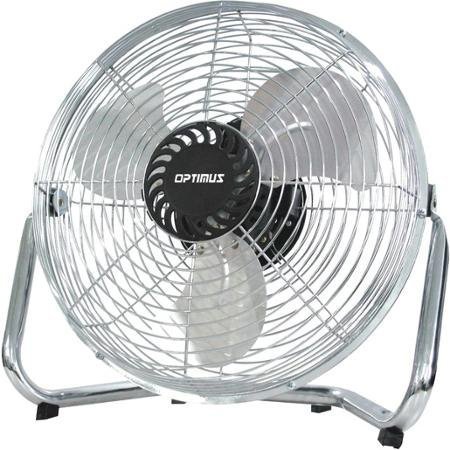
Image: Optimus 18-inch High Velocity Industrial Floor Fan. This image shows the fan with its silver metallic finish and sturdy floor stand.
Āhuatanga matua:
- 18-inch diameter for wide air distribution.
- Industrial-grade high velocity airflow.
- Durable metallic finish.
- Floor standing design for stable placement.
- Multiple power levels for adjustable airflow.
Tohutohu Tatūnga
- Wewetehia te Poihi: Carefully remove the fan and all components from the packaging. Retain packaging for future storage or transport.
- Assemble the Floor Stand:
- Attach the fan head to the floor stand using the provided screws and tools. Ensure all connections are secure.
- Verify the fan head can pivot smoothly on the stand.
- Turanga: Place the fan on a firm, level surface. Ensure there is adequate space around the fan for proper air circulation and to prevent obstruction of the air intake/output. Keep the fan at least 3 feet away from walls or furniture.
- Hononga Hiko: Ensure the fan is in the "OFF" position before plugging it into a standard 120V AC electrical outlet.
Nga Tohutohu Whakahaere
This fan features push-button controls for easy operation. A remote control may also be included for convenience.
- Hiko Whakaka/Weto: Locate the power button on the control panel. Press the button once to turn the fan ON. Press it again to turn the fan OFF.
- Whakaritea Terenga Kiri: The fan has 4 power levels. After turning the fan ON, repeatedly press the speed control button to cycle through the available speed settings (Low, Medium, High, Max). The fan will operate at the selected speed.
- Whakaritea te Aronga Rererangi: The fan head can be tilted manually to direct airflow upwards or downwards. Gently tilt the fan head to the desired angle. Do not force the fan head beyond its intended range of motion.
Te tiaki
Regular cleaning and maintenance will ensure optimal performance and extend the life of your fan.
- Te horoi i te Fan:
- Always unplug the fan from the power source before cleaning.
- Whakamahia he ngohengohe, damp cloth to wipe the exterior surfaces of the fan. Do not use abrasive cleaners or harsh chemicals, as these may damage the finish.
- To clean the fan blades, carefully remove the front grille (if detachable, refer to assembly instructions for details). Wipe the blades with a soft cloth. Ensure the grille is securely reattached before operating the fan.
- Me whakarite kia maroke rawa ngā wāhanga katoa i mua i te mono anō i te hau.
- Rokiroki: When not in use for extended periods, store the fan in a cool, dry place. It is recommended to store it in its original packaging to protect it from dust and damage.
Raparongoā
| Raruraru | Take pea | Rongoā |
|---|---|---|
| Kare te Fan e huri. | Kāore i monohia; kāore te putanga hiko e mahi ana; kua whakawetohia te pana hau. | Ensure fan is securely plugged into a working outlet. Check household fuse/circuit breaker. Press the power button to turn the fan on. |
| Te rere hau iti. | Fan speed set too low; obstructed intake/output; dirty blades. | Increase fan speed. Clear any obstructions. Clean fan blades and grilles as per maintenance instructions. |
| He haruru rerekē, he ngangau rānei. | Loose parts; fan not on a level surface; foreign object in blades. | Unplug the fan and check for any loose screws or components. Place the fan on a stable, level surface. Carefully inspect for and remove any foreign objects. |
Whakatakotoranga
| Āhuahira | Taipitopito |
|---|---|
| Waitohu | Optimus |
| Ingoa Tauira | Tere Tere |
| Tauira Tuemi | 306c1b92-f36b-4ccc-ac62-2ad33d5c9efb |
| Diamita | 18 Inihi |
| Tae | Hiriwa |
| Kāhua | Ahumahi |
| Puna Mana | Hiko Hiko |
| Te maha o nga taumata hiko | 4 |
| Tikanga Mana | Mana Patene |
| Mahinga o roto/waho | Roo-roto |
| Nga Waahanga kei roto | Floor Stand, Remote Control |
| Momo Whakatakotoranga | OSHA |
Pūtāhui me te Tautoko
Optimus products are manufactured to high-quality standards. This product is covered by a limited warranty against defects in materials and workmanship from the date of purchase. Please refer to the warranty card included with your product for specific terms and conditions.
For technical support, troubleshooting assistance, or warranty claims, please contact Optimus customer service. Contact information can typically be found on the product packaging or the official Optimus webpae.
Tena koa pupurihia to tohu hoko mo nga kaupapa whakamana.


