1. Kupu Whakataki
This manual provides essential information for the safe and efficient operation of your Cotek SP-3000-112 High Frequency Pure Sine Wave Inverter. This device converts 12V DC power from batteries into 120V AC power, suitable for a wide range of electronic appliances. Please read this manual thoroughly before installation and use, and retain it for future reference.
2. Nga korero haumaru
Failure to follow these safety instructions may result in electric shock, fire, serious injury, or death. Always exercise caution when working with electrical equipment.
- Panuitia nga Tohutohu Katoa: Before operating the inverter, read all instructions and cautionary markings on the inverter, the batteries, and all appropriate sections of this manual.
- Kaimahi Tohu: Installation and servicing should be performed by qualified personnel familiar with batteries and inverters.
- Whakahau: Ensure adequate ventilation around the inverter. Do not install in a zero-clearance compartment.
- A ape i te wai: Do not expose the inverter to rain, snow, spray, or bilge water.
- Whakapapa Tika: Me tika te whakapūmau i te taura whenua o te kaitahuri.
- Haumaru Pūhiko: Work near lead-acid batteries is dangerous. Batteries generate explosive gases during normal operation. Ensure proper ventilation and wear appropriate personal protective equipment.
- Momotu Mana: Always disconnect the battery supply before performing any maintenance or troubleshooting.
- Tika Voltage: Me whakarite te vol tāuru DCtage matches the inverter's specifications (12VDC for this model).


3. Hua Neke Atuview
3.1 Nga waahanga matua
- Pure sine wave output for sensitive electronics.
- Power ON / OFF remote control capability (Green Terminal).
- Input & output fully isolated for enhanced safety.
- Temperature & load controlled cooling fan for optimal performance.
- User-friendly interface with 3-color LED status indicators.
- Multiple protection features: Reverse Polarity (Fuse), Under Voltage / Neke atu i te Voltage, Output Protection (Short Circuit / Overload / Over Temperature).
- E-13 / UL / CE / FCC approved.
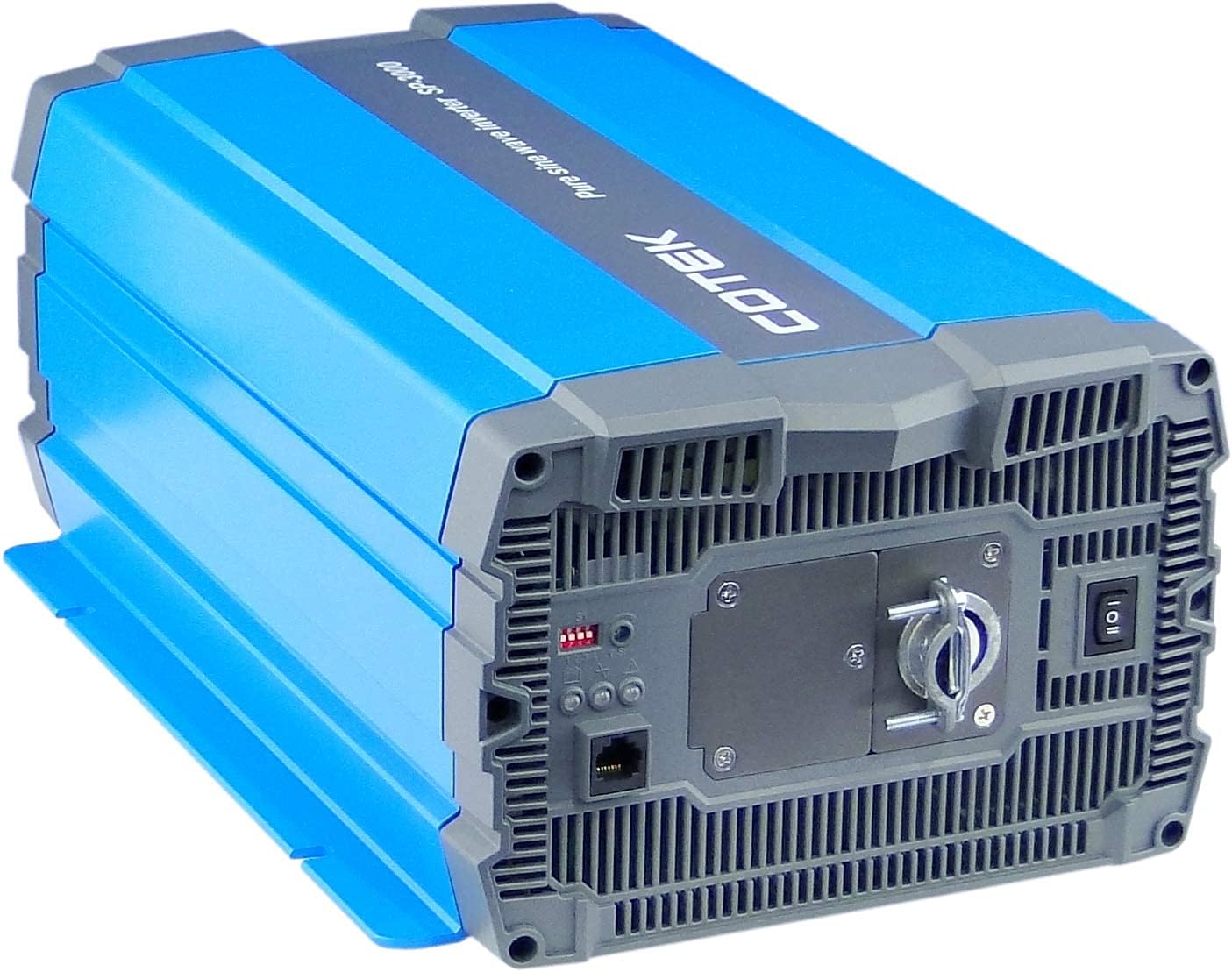
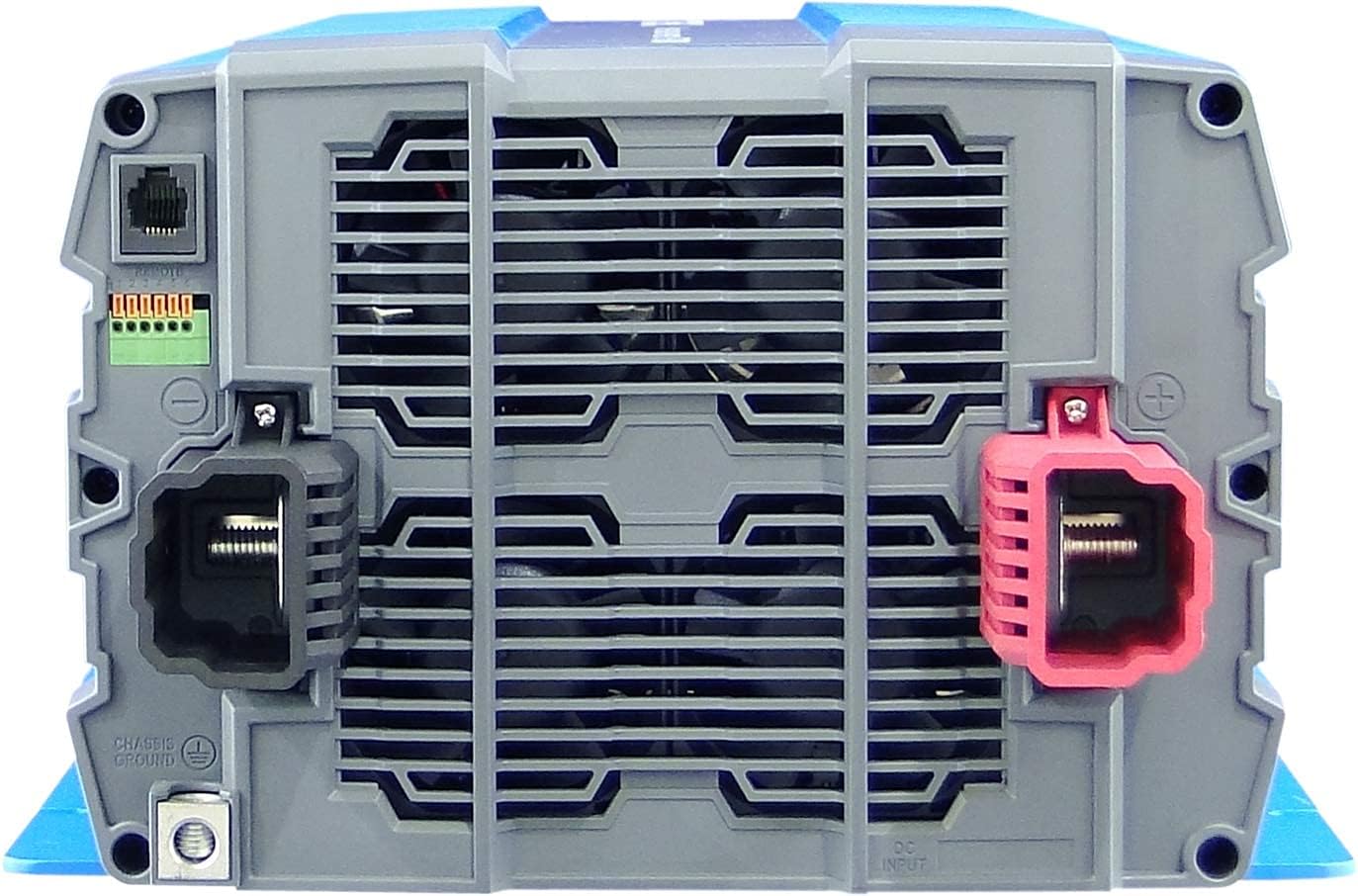
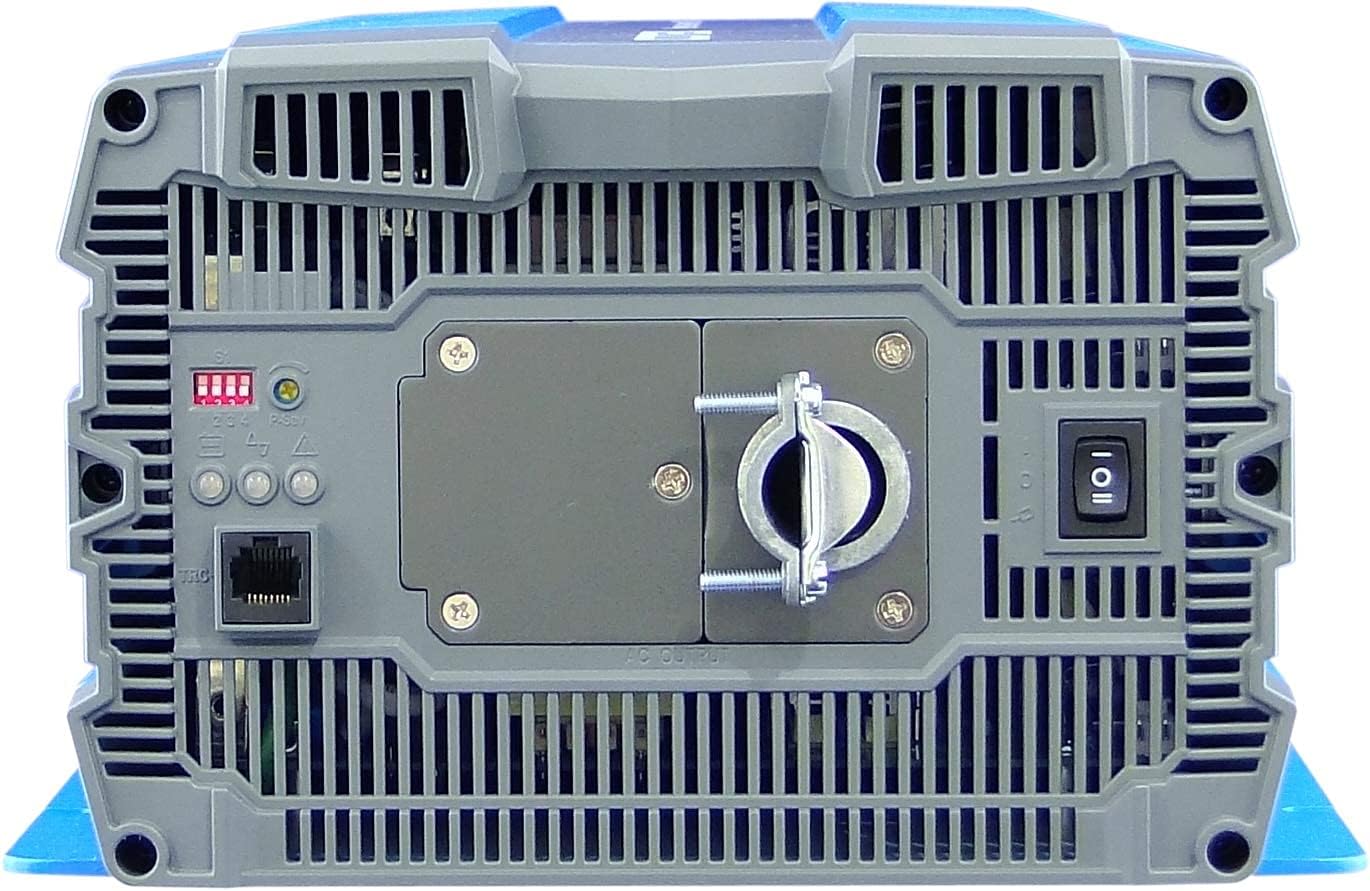
3.2 Inverter Components

4. Tatūnga me te Tāuta
Proper installation is crucial for the safe and efficient operation of your inverter. Refer to local electrical codes and standards.
4.1 Whakanoho
- Install the inverter in a dry, well-ventilated area, away from direct sunlight, heat sources, and flammable materials.
- Ensure sufficient clearance around the inverter for proper airflow, especially around the cooling fan vents.
- Mount the inverter securely on a stable, non-combustible surface.
- Avoid areas where dust, moisture, or corrosive fumes are present.
4.2 Waea Whakahoahoa
All wiring must comply with applicable electrical codes and be performed by a qualified electrician.
- Whakapapa: Connect the inverter's chassis ground terminal to a reliable earth ground using appropriate gauge wire.
- Hononga Whakauru DC:
- Ensure the battery bank voltage ko 12VDC.
- Use appropriately sized cables for the DC input to minimize voltage drop and ensure safety. Refer to cable sizing charts based on current and distance.
- Connect the positive (+) terminal of the battery bank to the red (+) terminal on the inverter.
- Connect the negative (-) terminal of the battery bank to the black (-) terminal on the inverter.
- Install a DC-rated fuse or circuit breaker between the battery bank and the inverter's positive terminal, as close to the battery as possible.
- Hononga Putanga AC:
- Connect your AC loads to the hardwire AC output terminal block.
- Ensure the total load does not exceed the inverter's continuous power rating (3000W).
- Mana Mamao (Kōwhiringa): Connect the remote control unit to the RJ45 port or use the green terminal for external ON/OFF control if desired.
5. Nga Tohutohu Whakahaere
5.1 Kei te Hiko / Weto
- Hei Whakahiko: Ensure all DC and AC connections are secure. Flip the main power switch on the inverter's rear panel to the 'ON' position. The Power LED indicator should illuminate.
- Hei Whakaweto: Disconnect all AC loads from the inverter. Flip the main power switch to the 'OFF' position.
5.2 Tohu LED
The inverter features 3-color LED status indicators on the control panel (refer to Figure 4) to provide operational feedback:
- LED Kakariki: Indicates normal operation and power output.
- LED kōwhai: Indicates a warning condition, such as low battery voltage or high temperature. The inverter may continue to operate but requires attention.
- LED Whero: Indicates a fault condition, such as overload, short circuit, or severe over/under voltage. The inverter will shut down to protect itself and connected devices.
5.3 Tautuhinga Whakawhiti DIP
The DIP switches on the control panel allow for customization of certain inverter parameters, such as output voltage, frequency, and power saving mode. Refer to the detailed specifications table (Figure 5) or the product datasheet for specific configurations. Always adjust DIP switches when the inverter is powered off.
6. Tiaki
Regular maintenance ensures the longevity and reliable operation of your inverter.
- Te horoi: Periodically clean the exterior of the inverter with a dry cloth. Ensure ventilation openings are free from dust and debris. Do not use liquid cleaners.
- Hononga: Regularly check all electrical connections (DC input, AC output, ground) for tightness and corrosion. Loose connections can cause overheating and poor performance.
- Tirohanga Pūhiko: Inspect batteries for signs of damage, corrosion, or electrolyte leakage. Ensure battery terminals are clean and tight.
- Taiao: Manatokohia kei te noho tonu te taiao whakahaere i roto i nga awhe pāmahana me te makuku.
7. Te Raru
Ko tenei waahanga e whakarato ana i nga otinga mo nga take noa ka pa ki a koe. Mena kei te haere tonu te raru, whakapā atu ki te tautoko a te kaihoko.
| Raruraru | Take pea | Rongoā |
|---|---|---|
| Karekau te kaihurihuri e huri. | No DC input power; Loose battery connections; Blown DC fuse/breaker; Inverter switch OFF. | Tirohia te puhiko voltage; Tighten connections; Replace fuse/reset breaker; Turn inverter switch ON. |
| Kaore he putanga AC. | Overload; Short circuit; Over-temperature shutdown; Low/High DC input voltage. | Reduce AC load; Check for short circuits in wiring/appliances; Allow inverter to cool; Check battery voltage. |
| Yellow LED illuminated. | Puhiko pūhiko ititage warning; High temperature warning. | Recharge batteries; Ensure adequate ventilation, reduce load. |
| Red LED illuminated / Inverter shut down. | Overload; Short circuit; Over-temperature; Under/Over voltage. | Identify and correct the fault (e.g., reduce load, fix short, allow cooling, check battery voltage), then restart the inverter. |
| Cooling fan runs constantly or loudly. | He nui te pāmahana o roto na te taumaha o te kawenga, te ngoikore ranei o te hau. | Reduce load; Improve ventilation around the inverter. |
8. Whakatakotoranga
The following table outlines the technical specifications for the Cotek SP-3000 Series Pure Sine Wave Inverter, specifically for the SP-3000-112 model.

| Kāwai | Tawhā | SP-3000-112 |
|---|---|---|
| Putanga | AC Voltage | 100 / 110 / 115 / 120VAC ±5% |
| Te Mana Whakatau | 3000W | |
| Surge Power (1 Sec.) | 6000W | |
| Te Mana Putanga Morahi (1 Min) | 3450W | |
| Puka Ngaru Huaputa | Pure Sine Wave (THD<3%) | |
| Auautanga | 50 / 60 Hz ±0.5% | |
| Whakauru | DC Voltage | 12VDC |
| Voltage Awhe | 10.5 ~ 16.5VDC | |
| Kore Uta o Naianei | <3.0A@12VDC | |
| Aratau Tiaki Hiko | <0.4A@12VDC | |
| Te kaha (Max.) | 90% | |
| Parenga | Input Under - Voltage Tiaki | 10.5 ±0.3VDC |
| Input Under - Voltage Whakaoho | 11.0 ±0.3VDC | |
| Input Under - Voltage Whakaora | 12.0 ±0.3VDC | |
| Input Over - Voltage Tiaki | 16.5 ±0.3VDC | |
| Input Over - Voltage Whakaora | 14.5 ±0.3VDC | |
| Putanga Putanga Nui | Whakaweto putanga voltage, tīmata anō kia ora | |
| Putanga Poto | Whakaweto putanga voltage, tīmata anō kia ora | |
| Taiao | Temp Mahi. | -20°C ~ +40°C |
| Rokiroki Temp. & Haumākū | -30°C ~ +70°C, 10 ~ 95% RH | |
| Whānui | Ahu (W x H x D) | 442 x 214 x 102 mm (17.4 x 8.4 x 4.0 inihi) |
| Taumaha | 8.2kg (18.1 lbs) | |
| Te whakamatao | Te pamahana me te utaina i te mea whakamatao kai |

9. Pūtāhui me te Tautoko
9.1 Nga Korero Whakaputanga
The Cotek SP-3000-112 Pure Sine Wave Inverter comes with a 2-Tau Whakaputanga Kaihanga. Ka kapi tenei raihana i nga hapa o nga rawa me nga mahi i raro i te whakamahinga noa. Tena koa pupurihia to tohu mo te hoko mo nga kereme whakamana.
9.2 Tautoko Kiritaki
For technical assistance, troubleshooting beyond this manual, or warranty inquiries, please contact Cotek customer support through their official website or your point of purchase. Provide your model number (SP-3000-112) and a detailed description of the issue to expedite service.


