1. Kupu Whakataki
The AIMS Power 3600 Watt Modified Sine Power Inverter converts 12 Volt DC battery power to 120 Volt AC household power. This unit is ETL Listed and conforms to UL 458 Standards, as well as CSA Standard C22.2 No. 107.1-01 in Canada. It is designed for various applications including mobile power, backup systems, or off-grid power solutions in homes, RVs, cabins, boats, and vehicles.
Key features include 3600W continuous power and 7200W surge capability, dual GFCI outlets, and an AC direct connect terminal block for full wattage delivery. The inverter incorporates soft start technology and comprehensive protections against overload, over temperature, high/low voltage, and short circuits. Integrated volt and amp meters allow for performance monitoring, complemented by LED indicators for power and fault conditions.
2. Nga Tohutohu Haumaru Nui
WHAKATŪPATO: Ki te kore e whai i enei tohutohu ka puta he whara nui, he kino rawa ranei.
- Whakahau: Ensure the inverter is installed in a well-ventilated area to prevent overheating. Do not block ventilation openings.
- makuku: Do not expose the inverter to rain, snow, spray, or bilge water. Do not install in a wet environment.
- Rauemi mura: Do not install the inverter in compartments containing flammable materials or where flammable fumes may accumulate.
- Hononga Pahiko: Always connect the inverter to a 12V DC battery system. Ensure correct polarity (red to positive, black to negative) to avoid damage. Use appropriate gauge cables for connections.
- Whakapapa: Me tika te tūnga whenua o te kaitahuri. Honoa te pūnga whenua ki te whenua whenua e tika ana.
- Kaimahi Tohu: Installation and servicing should be performed by qualified personnel familiar with electrical systems and safety procedures.
- Tamariki: Keep the inverter and all associated wiring out of reach of children.
3. Ihirangi mokete
Your AIMS Power 3600 Watt Modified Sine Power Inverter package includes the following items:
- AIMS Power 3600 Watt Modified Sine Power Inverter
- Pukapuka Tohutohu
- DC Battery Terminal Covers (Red and Black)
4. Nga waahanga hua me nga waahanga
The AIMS Power 3600 Watt Modified Sine Power Inverter is engineered for robust performance and user convenience. Below are its primary features and components:
- Putanga Hiko: 3600W maximum continuous power, 7200W surge capability, with soft start technology.
- Putanga AC: Takirua 20 Amp GFCI (Ground Fault Circuit Interrupter) outlets for enhanced safety.
- AC Terminal Block: Direct connect AC terminal block capable of delivering the full 3600 watts to a single source.
- Whakauru DC: Rugged DC terminals for secure battery connections.
- Āhuatanga parenga: Overload, over temperature, high voltage, vol ititage, short circuit, internally fused, low and high voltage alarm, cooling fan, and isolated ground neutral.
- Aroturuki: Integrated Volt and Amp meters to monitor inverter performance. LED indicators for power and fault conditions.
- Whakawhiti Auautanga: A switch to select between 50Hz and 60Hz output, if needed.
- Tauranga Mamao: Dedicated port for an optional remote switch (adapter cable included).
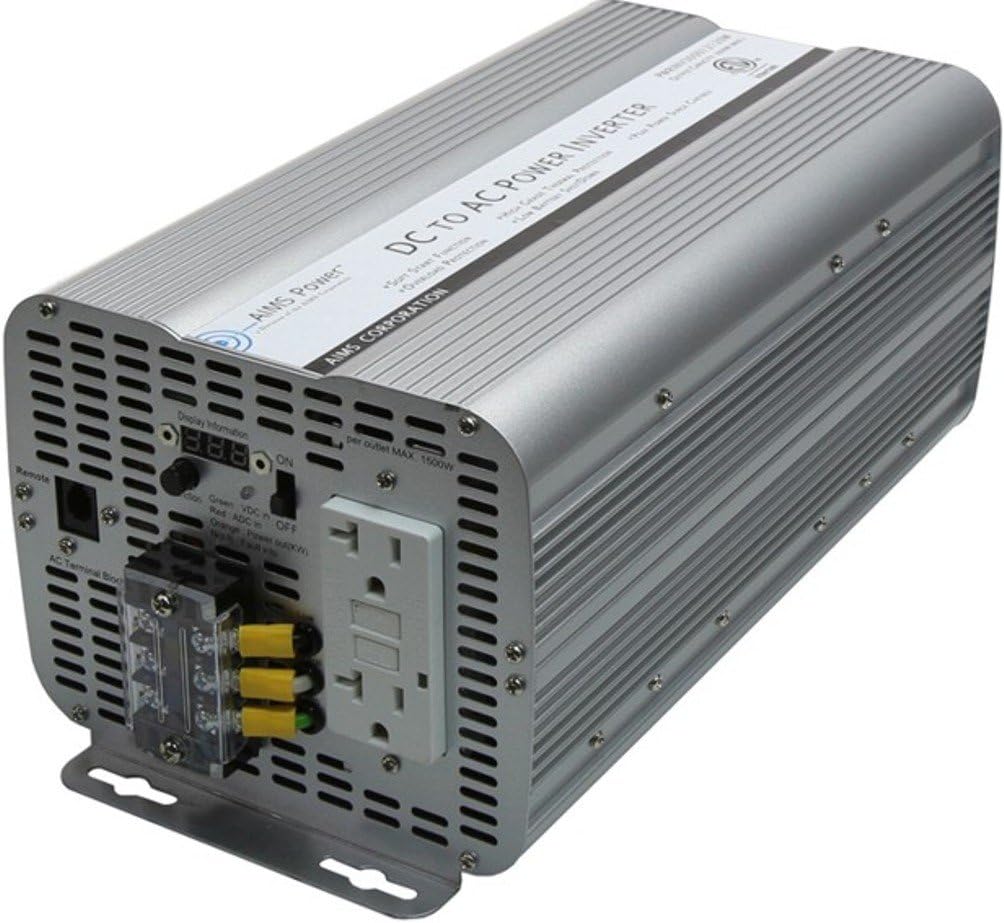
Whakaahua 4.1: Te katoa view of the AIMS Power 3600 Watt Modified Sine Power Inverter.
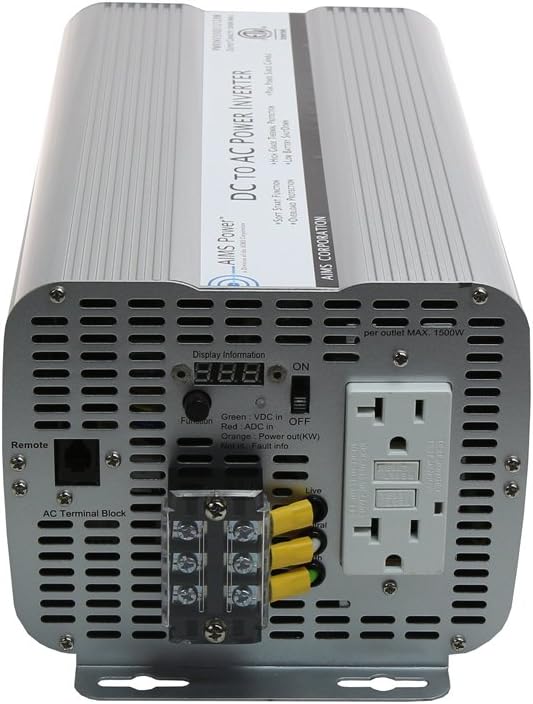
Figure 4.2: Front panel showing AC outlets, terminal block, and controls.

Figure 4.3: Rear panel displaying the DC input terminals and cooling fans.

Whakaatu 4.4: Taipitopito view of the dual GFCI outlets and the AC direct connect terminal block.

Whakaatu 4.5: Taipitopito view of the DC input terminals with protective covers.
Ataata 4.1: Kua mutuview of the AIMS Power 3600 Watt Modified Sine Inverter, highlighting its features and connection points.
5. Tatūnga me te Tāuta
Proper installation is crucial for the safe and efficient operation of your inverter. Follow these steps carefully:
5.1 Te Kōwhiri Tauwāhi
- Tāutahia te inverter ki tētahi wāhi maroke, e pai ana te hau, kia matara atu i te rā tika, i ngā pūtake wera, me te makuku.
- Ensure adequate clearance around the inverter for proper airflow to the cooling fans.
- Whakamaua te inverter ki runga i tētahi mata pumau, kore e mura.
5.2 Hononga Whakauru DC (Pūhiko)
- Me whakarite kei te tūranga OFF te pana hiko o te inverter.
- Connect the supplied DC battery terminal covers to the appropriate terminals on the inverter: red to positive (+), black to negative (-).
- Connect the other end of the DC cables to your 12V DC battery bank, ensuring correct polarity. Use heavy-gauge cables suitable for the inverter's wattage.
- Tighten all connections securely to prevent loose connections, which can cause overheating and damage.
5.3 Hononga Putanga AC
- Putanga GFCI: For standard AC appliances, plug them directly into the dual 20A GFCI outlets on the front panel.
- AC Terminal Block: For applications requiring the full 3600W or a hardwired connection, use the AC direct connect terminal block. Consult a qualified electrician for proper wiring to this block. Ensure all wiring adheres to local electrical codes.
5.4 Remote Switch Connection (Optional)
If using an optional remote switch, connect its cable to the dedicated remote port on the inverter's front panel. An adapter cable is included for this purpose.
6. Nga Tohutohu Whakahaere
Once the inverter is properly installed and connected, follow these steps for operation:
6.1 Kei te Hiko / Weto
- Ensure all AC loads are disconnected or turned off before powering on the inverter.
- Flip the main power switch on the inverter to the "ON" position. The green LED indicator should illuminate, and the volt/amp meters will display readings.
- If using a remote switch, ensure the inverter's main switch is ON, then use the remote switch to control the inverter's power.
- To power off, first disconnect or turn off all AC loads, then flip the inverter's main power switch to "OFF."
6.2 Te Aroturuki i te Mahi
- The integrated volt and amp meters provide real-time feedback on your system's performance. Monitor these displays to ensure stable operation and prevent overloading.
- LED indicators will show green for normal operation and red for fault conditions (e.g., overload, over temperature).
6.3 Kōwhiringa Auautanga
A switch is provided on the unit to change the output frequency between 50Hz and 60Hz. Adjust this setting according to the requirements of your connected appliances.
7. Tiaki
Regular maintenance ensures the longevity and optimal performance of your AIMS Power Inverter:
- Te horoi: Periodically clean the exterior of the inverter with a dry cloth. Ensure ventilation openings are free from dust and debris. Do not use liquid cleaners.
- Taki Hononga: Regularly inspect all DC and AC connections for tightness. Loose connections can lead to power loss, overheating, and potential fire hazards.
- Hauora Pūhiko: Monitor your battery bank's health and charge level. A healthy battery system is essential for inverter performance.
- Rokiroki: If storing the inverter for an extended period, ensure it is disconnected from all power sources and stored in a cool, dry place.
8. Te Raru
Mena ka raru koe ki to kaitahuri, tirohia nga raru me nga otinga e whai ake nei:
| Raruraru | Take pea | Rongoā |
|---|---|---|
| Kāore he Putanga AC / Kāore te Inverter e Tahuri | Ngā hononga DC korekore, te iti o te kaha o te pākahikotage, blown fuse, inverter switch off. | Check DC cable connections and battery voltage. Ensure inverter switch is ON. Replace internal fuses if necessary (consult manual or qualified technician). |
| Overload Alarm / Red Fault LED | Connected load exceeds inverter's continuous or surge rating. | Reduce the total load connected to the inverter. Disconnect some appliances and restart the inverter. |
| Neke atu i te Waahi Whakaoho | Inadequate ventilation, blocked cooling fans, high ambient temperature. | Ensure inverter is in a well-ventilated area. Clear any obstructions from cooling fans. Allow inverter to cool down before restarting. |
| Vol Rawatage Whakaoho | Pūhiko voltage he iti rawa. | Recharge or replace the battery bank. Ensure battery cables are of adequate gauge and length. |
| GFCI Tripping | Ground fault detected in connected appliance or wiring. | Disconnect all appliances from the GFCI outlets. Reset the GFCI. Reconnect appliances one by one to identify the faulty device. |
9. Whakatakotoranga
| Whakatakotoranga | Uara |
|---|---|
| Ingoa Tauira | PWRINV360012120W |
| Te Mana Tonu | 3600 watts |
| Te Mana Puke | 7200 watts |
| DC Whakauru Voltage | 12 Volts |
| AC Putanga Voltage | 120 Volt AC |
| Puka Ngaru Huaputa | Ngaru Sine kua whakarereketia |
| Tiwhikete | ETL Certified to UL 458, CSA Standard C22.2 No. 107.1-01 |
| Huinga AC | Dual GFCI Outlets (20 Amp ia) |
| Additional AC Output | AC Poraka Poraka |
| Taumaha Tūemi | 9.04 pauna |
| Hunga Hua | 14.5 x 6.62 x 5.6 inihi |
| Nga Whakamahinga Manakohia | Home, Office, RV, Cabin |
| Puna Mana | Pūhiko Powered |
10. Pūtāhui me te Tautoko
AIMS Power stands behind its products. This inverter comes with a 2-tau pūtāhui. All technical support, warranty claims, and sales inquiries are handled directly from our support center in Nevada, USA. For assistance, please refer to the contact information provided in your product packaging or visit the official AIMS Power webpae.


