Kupu Whakataki
This manual provides comprehensive instructions for the Dogtra 610C rechargeable dog training collar. Designed for small to medium-sized dogs, the 610C features a compact receiver and a handheld transmitter with 100 levels of electrostatic stimulation and vibration. This device is intended solely for dog training purposes and must not be used on humans or other animals. Dogtra-Europe disclaims responsibility for improper use.

Image: The Dogtra 610C system, showing the handheld transmitter and the receiver collar.
Nga waahanga hua
- Awhe Morahi: Up to 600 meters (approximately 650 yards).
- Taumata Whakatairanga: 100 levels of electrostatic stimulation with seamless transitions.
- Ngā Aratau Whakaohooho: Nick (Flash) and Constant stimulation.
- Aratau Wiri: Pager (vibration only, no stimulation).
- Pūhiko Rechargeable: Equipped with rechargeable accumulators.
- Tohu LED: LED light indicates battery charge level.
- Taumaha Kaiwhiwhi: Collar-receiver weighs 115 grams.
- parewai: Both transmitter and collar-receiver are waterproof (IPX9K rated).
- Compact Receiver: Suitable for small to medium-sized dogs (as small as 10 lbs).

Image: Graphic illustrating key features of the Dogtra 610C, including range, stimulation types, and dog size suitability.
Ihirangi mokete
The Dogtra 610C package includes the following components:
- He Kaipanui Tuku Taputapu
- Collar-Receiver
- 5V Pūhiko Rihi
- Splitter Cable (Double Plug)
- Aratohu Kaiwhakamahi
Tatūnga me te Mahi
1. Te Whakataki i nga Pahiko
Before first use, fully charge the lithium-polymer batteries in both the transmitter and receiver.
- Connect the splitter cable to the 5V charger.
- Plug one end of the splitter cable into the charging port of the transmitter and the other end into the charging port of the receiver.
- Monohia te rihi ki roto i te putanga pakitara paerewa.
- The LED indicator on both units will glow red during charging and turn green when fully charged.
- Charging typically takes approximately 2 hours.
2. Fitting the Receiver Collar
He mea nui te taunga tika o te kara o te kaiwhiwhi mō te mahi whai hua me te haumaru.
- Ensure the dog is standing comfortably.
- Place the receiver collar around your dog's neck so that the contact points are positioned underneath, making direct contact with the skin.
- The collar should be snug enough that two fingers can barely fit under the strap, but not so tight as to restrict breathing or cause discomfort.
- Tapahia te whitiki kara taikaha mēnā e tika ana.
3. Mana Whakawhiti

Image: Labeled diagram of the Dogtra 610C handheld transmitter, highlighting its controls.
- Rheostat Intensity Dial: Located on top of the transmitter, this dial allows you to adjust the stimulation level from 0 (lowest) to 100 (highest). Turn clockwise to increase intensity, counter-clockwise to decrease.
- Nick Button: Delivers a single, rapid pulse of electrostatic stimulation.
- Constant Button: Delivers continuous electrostatic stimulation for up to 12 seconds, or until the button is released.
- Pager Button: Activates the vibration-only mode, providing a non-stimulating tactile sensation.
4. Whakahaere i te Pūnaha
Ensure both the transmitter and receiver are powered on. The receiver typically turns on automatically when charged or by pressing a button (refer to specific instructions if not automatic).
- Selecting Stimulation Level: Use the Rheostat Intensity Dial to choose the appropriate level for your dog's temperament and training needs. Start at a low level and gradually increase until your dog responds.
- Applying Stimulation: Press the Nick, Constant, or Pager button as required for your training command.
- Awhe: The system has a maximum range of 600 meters. Environmental factors and obstacles can affect actual range.

Image: Illustration of the Dogtra 610C's operational range, indicating up to 600 meters.
Te tiaki
- Te horoi: Regularly clean the contact points on the receiver collar to ensure proper function and prevent skin irritation. Use a damp kakahu me te hopi ngawari.
- Tiaki Pūhiko: To prolong battery life, avoid fully discharging the batteries frequently. Recharge them when the LED indicator shows low battery. If storing for an extended period, charge the batteries to about 50% and recharge every few months.
- Rokiroki: Whakaorangia te waeine ki te waahi makariri, maroke atu i nga wera nui.
Raparongoā
If you encounter issues with your Dogtra 610C, refer to the following common troubleshooting steps:
- Kore Mana: Ensure both the transmitter and receiver are fully charged. Check the charging connections.
- No Stimulation/Vibration:
- Verify the receiver collar is properly fitted with contact points touching the dog's skin.
- Increase the stimulation level using the Rheostat Intensity Dial.
- Me whakarite kei te whakakāhia ngā waeine e rua, ā, kei roto i te awhe o te mamaoa.
- Awhe Whakaitihia: Check for environmental interference (e.g., large metal objects, dense foliage). Ensure the transmitter antenna is not damaged.
- Irirangi kiri: If your dog develops skin irritation, discontinue use immediately and consult a veterinarian. Ensure the collar is not worn for more than 8-10 hours per day and reposition it frequently.
Whakatakotoranga
| Tau tauira | 170535 |
| Recommended for Species | Medium dogs |
| Collar-Receiver Weight | 115 karamu |
| Momo Pūhiko | 2 Lithium-polymer (kei roto) |
| Whakatauranga parewai | IPX9K (Transmitter and Receiver) |
| Awhe Morahi | 600 mita |
| Taumata Whakatairanga | 100 (Waea Rheostat) |
| Momo Katinga | Porou |
| Tae | Pango |
| Kaihanga | Dogtra |
Nga Korero Haumaru Nui
The Dogtra 610C training collar is designed exclusively for dog training. It is not intended for use on humans or any other animals. Misuse of this product can lead to injury or harm. Dogtra-Europe assumes no responsibility for incorrect or improper use of the Dogtra training collar.
- Always use the lowest effective stimulation level.
- Do not leave the collar on your dog for more than 8-10 hours per day.
- Regularly check your dog's neck for signs of skin irritation or pressure sores.
- Never use the collar as a leash attachment point.
- Kaua e taea e nga tamariki.
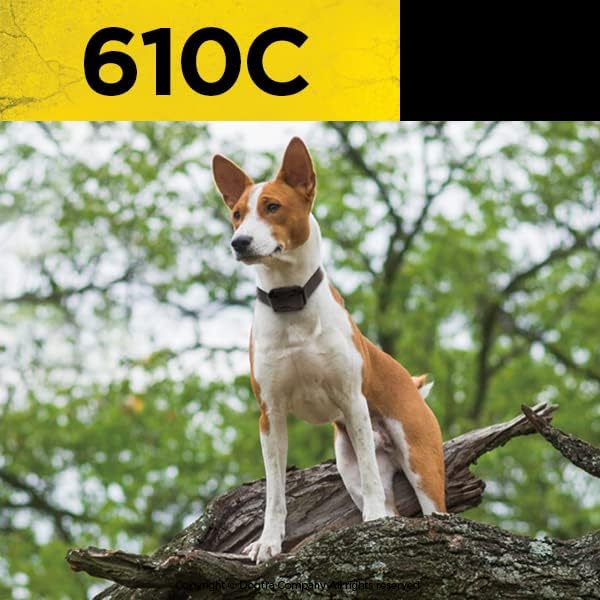
Image: A dog wearing the Dogtra 610C collar, demonstrating proper fit.
Pūtāhui me te Tautoko
For detailed warranty information, product registration, or technical support, please visit the official Dogtra website or contact Dogtra customer service directly. Retain your proof of purchase for warranty claims.


