1. Neke atu i teview
The Apple iMac 21.5-inch (Late 2015) is an all-in-one desktop computer designed for various computing tasks. This model features a 4K Retina Display, an Intel Core i5 processor, 8GB of RAM, and a 1TB hard drive. It includes essential connectivity options for peripherals and external devices.
Āhuatanga matua:
- 21.5-inch 4K Retina Display for sharp visuals.
- 3.1GHz quad-core Intel Core i5 processor with Turbo Boost up to 3.6GHz.
- 8GB Onboard Memory (DDR3 SDRAM at 1867 MHz).
- 1TB (5400-rpm) Hard Drive for storage.
- Intel Iris Pro Graphics 6200.
- hopuoro whakauru.
- Multiple high-speed I/O ports including two Thunderbolt ports and four USB 3.0 ports.
- Wireless connectivity: Wi-Fi (802.11a, 802.11abg) and Bluetooth.
2. Hua Views

Mua me te taha view of the Apple iMac 21.5-inch (Late 2015) showing its slim profile me te whakaatu.
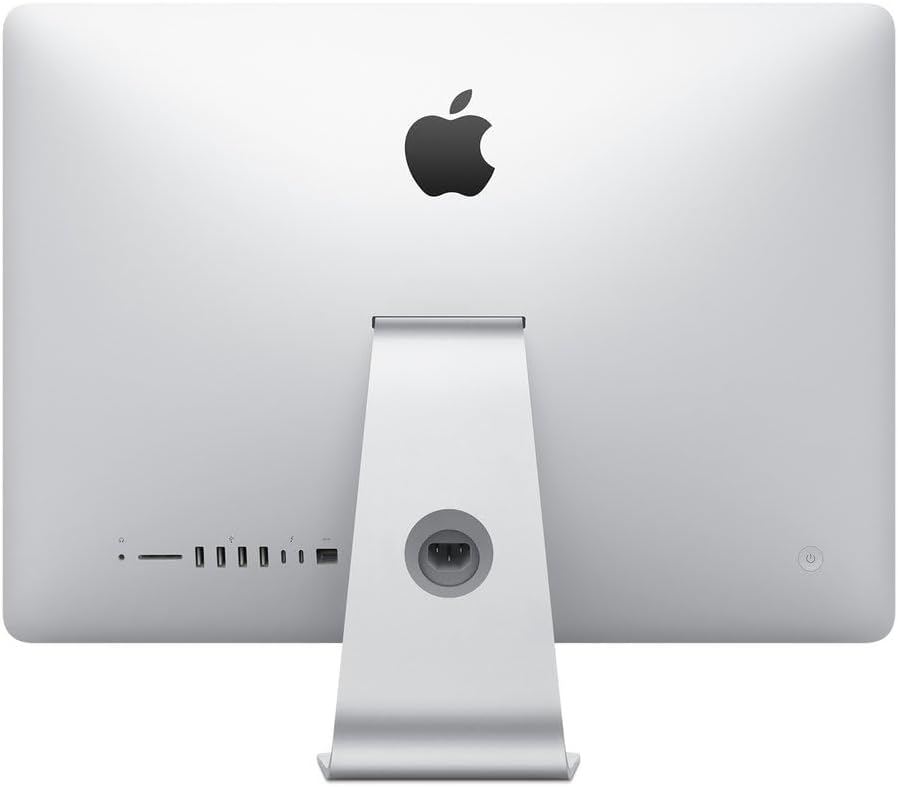
Whakamuri view of the Apple iMac 21.5-inch (Late 2015) highlighting the various input/output ports and power connection.
3. Tatūnga
3.1 Te Wetewete
Carefully remove the iMac from its packaging. Ensure all components, including the power cord, keyboard, and mouse, are present. Place the iMac on a stable, flat surface.
3.2 Hononga Pikitia
- Papapātuhi me te Kiore: Connect the provided generic wired keyboard and mouse to any of the four USB 3.0 ports located on the back of the iMac.
- Mana: Connect the power cord to the power port on the back of the iMac, then plug it into a grounded electrical outlet.
- Whatunga (Whiringa): For a wired internet connection, connect an Ethernet cable from your router or modem to the Ethernet port on the back of the iMac. For Wi-Fi, setup will be completed during initial software configuration.
- Ngā Pūrere o Waho (Whiringa): Use the Thunderbolt ports or additional USB 3.0 ports for external hard drives, printers, or other accessories.
3.3 Te Whakakaha
Press the power button located on the lower-left rear side of the iMac. The screen will illuminate, and the macOS setup assistant will guide you through the initial configuration process, including language selection, network connection, and user account creation.
4. Operating System Basics
The iMac comes pre-installed with macOS (OS X El Capitan or later). This section provides a general overview of basic macOS operation.
4.1 macOS Interface
- papamahi: The main workspace where you can see your files, folders, and application icons.
- Tauranga: Located at the bottom of the screen, the Dock provides quick access to frequently used applications, documents, and folders.
- Pae Tahua: At the top of the screen, the Menu Bar contains menus for the active application, system status icons, and the Apple menu.
- Kai kimi: Ko te file management system for macOS, allowing you to browse, organize, and access your files.
4.2 Essential Applications
Your iMac includes a suite of pre-installed applications for productivity, creativity, and communication, such as Safari (web browser), Mail, Pages, Numbers, Keynote, Photos, Music, and Messages.
5. Tiaki
5.1 Cleaning the iMac
- Mata: Whakamahia he kakahu ngohengohe, karekau he ngongo paku dampened with water to clean the display. Avoid harsh chemicals.
- Whakapiri: Horoia te whare konumohe ki te kakahu ngohengohe, maroke.
- Pikitia: Clean the keyboard and mouse regularly to prevent dust and debris buildup.
5.2 Whakahōu Pūmanawa
Regularly check for and install macOS updates to ensure optimal performance, security, and access to the latest features. Go to System Settings (or System Preferences) > Software Update.
5.3 Internal Dust Management
Over time, dust can accumulate inside the iMac, potentially affecting performance and cooling. While internal cleaning should ideally be performed by a qualified technician, users can use compressed air to gently clear dust from external vents. Ensure the iMac is powered off and unplugged before attempting any cleaning.
6. Te Raru
6.1 Puturi te Mahi
- Tīmata anō: A simple restart can often resolve temporary performance issues.
- Mokowā Kōpae: Ensure you have sufficient free space on your 1TB hard drive. Delete unnecessary files or move them to external storage.
- Kaupane Mahi: Use Activity Monitor (found in Applications/Utilities) to identify applications or processes consuming excessive CPU, memory, or disk resources.
- Whakahōu Pūmanawa: Me mohio kei te noho hou te macOS me nga tono katoa.
- Hanga Puehu: Excessive internal dust can lead to overheating and slow performance. Refer to the Maintenance section for cleaning advice.
6.2 Hononga Piko
- Pūrere USB: If a USB device is not recognized, try connecting it to a different USB port or restarting the iMac.
- Wireless Keyboard/Mouse: If using wireless peripherals (not included with this renewed model but commonly used), ensure they are charged and properly paired via Bluetooth. Check battery levels.
- Wi-Fi: If experiencing Wi-Fi issues, restart your router and modem. Check Wi-Fi settings in macOS to ensure you are connected to the correct network.
6.3 Whakaatu Take
- Kore Whakaatu: Me mohio kei te whakahikohia te iMac ka hono pai te taura hiko.
- Whakaaturanga Pikopiko/Pōhehe: Try restarting the iMac. If the issue persists, it may indicate a hardware problem requiring professional service.
7. Whakatakotoranga Hangarau
| Waitohu | Aporo |
| Tau tauira | MK452LL/A |
| Ingoa Tauira | iMac |
| Tau tauira | 2015 |
| Rahi Mata | 21.5 Inihi |
| Whakaatu Taumira Morahi | 4096 x 3204 |
| Whakatau Maori | 4K (3840 x 2160) |
| Tauira PTM | Intel Core i5 |
| Tere PTM | 3.1 GHz (Turbo Boost up to 3.6GHz) |
| Kua Tāutahia te Mahara RAM | 8 GB DDR3 SDRAM (1867 MHz) |
| Te Whakapiki Kōpae Tika | 1 TB (5400-rpm) |
| Whakaahuatanga Kaari Whakairoiro | Intel Iris Pro Graphics 6200 |
| Pūnaha Mahi | OS X El Capitan (or later) |
| Tauranga USB | 4 x USB 3.0 |
| Tauranga Whatitiri | 2 |
| Hangarau Hononga | Itarangi, Wi-Fi, Nihokikorangi |
| Rahi Tūemi (LxWxH) | 20.79 x 6.89 x 17.72 inihi |
| Taumaha Tūemi | 12.5 Pauna |
8. Pūtāhui me te Tautoko
This renewed Apple iMac comes with a 90-ra iti pūtāhui. For technical assistance or warranty claims, please refer to the documentation provided by the seller or contact their customer support. Additional support resources for macOS and Apple products can be found on the official Apple Support webpae.


