1. Kupu Whakataki
The PerfectPrime GA0080 is a portable gas leak detector designed to identify the presence of natural gas (NG), methane, propane, and butane. This device utilizes a catalytic method gas sensor to provide a quick and reliable indication of gas leaks, enhancing safety in residential and commercial environments. It features a visible LED alarm system and a clear display for gas concentration readings.
2. Nga Korero Haumaru Nui
Please read all instructions carefully before using the PerfectPrime GA0080. Failure to follow these instructions may result in inaccurate readings, property damage, or personal injury.
- This device is intended for detecting combustible gases such as natural gas, methane, propane, and butane. It is not designed to detect carbon monoxide or other toxic gases.
- Kaua e tukuna te taputapu ki te wera nui, te makuku, te ra tika ranei.
- Puritia te taputapu mai i nga mara hiko kaha.
- Kaua e ngana ki te whakatika, ki te whakarerekē rānei i te taputapu. Tukuna ngā mahi tiaki katoa ki ngā kaimahi whai tohu.
- Ensure proper ventilation when investigating a gas leak. If a significant leak is suspected, evacuate the area, shut off the gas supply, and contact emergency services.
- Always replace batteries with new ones of the specified type (AA 1.5V).
3. Ihirangi mokete
Manatokona kei roto katoa nga mea kei roto i to kete:
- PerfectPrime GA0080 Portable Gas Leak Detector
- Pukapuka Kaiwhakamahi
- Note: 2 x AA 1.5V batteries are required and typically not included.
4. Hua Neke Atuview
Familiarize yourself with the components of your GA0080 gas leak detector.

Whakaahua 4.1: Te nuinga view of the PerfectPrime GA0080 Portable Gas Leak Detector, highlighting the digital display and power button.

Whakaahua 4.2: Close-up of the sensor end of the GA0080, showing the protective grille and ventilation holes for gas detection.
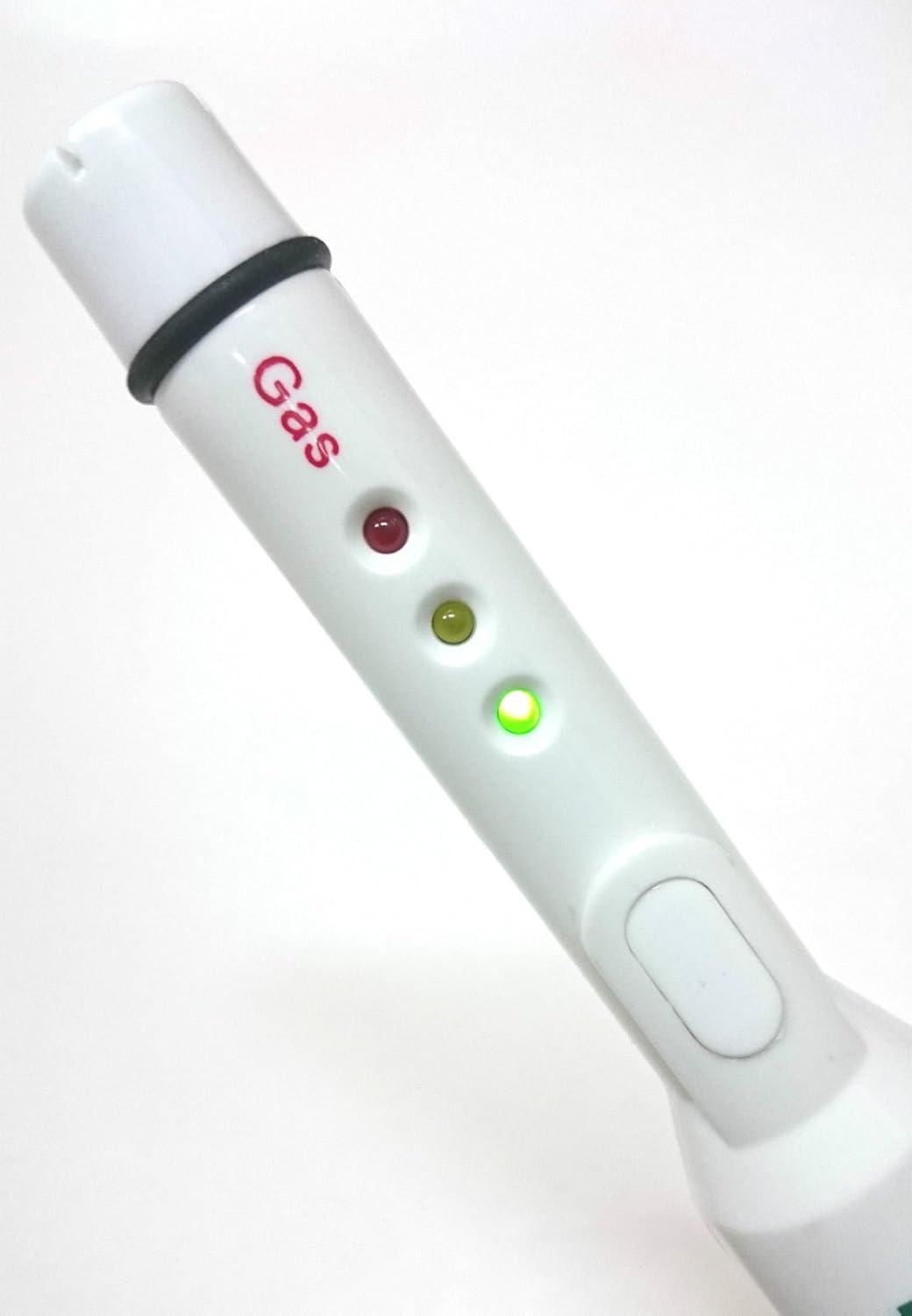
Whakaahua 4.3: Te taha view of the GA0080, illustrating the three LED indicators (green, yellow, red) for visual alarm signals.
- Upoko Pūoko: Located at the tip, responsible for detecting gas.
- Whakaaturanga Mamati: Shows gas concentration in ppm.
- Pātene Hiko: Ka whakakā/whakaweto i te taputapu.
- Tohu LED: Provide visual alarm signals (Green, Yellow, Red).
- Wāhanga Pūhiko: Houses two AA 1.5V batteries.
5. Tatūnga
5.1 Tāuta Pūhiko
- Kimihia te uhi o te wahanga pākahiko kei muri o te taputapu.
- Kiriata, wetekina ranei te uhi hei whakatuwhera i te wahanga.
- Insert two (2) AA 1.5V batteries, ensuring correct polarity (+/-).
- Katia kia mau te uhi o te wahanga pākahiko.
Note: Always use fresh batteries for optimal performance. Remove batteries if the device will not be used for an extended period.
6. Mahi
6.1 Te Whakakā me te Whakamahana
- Patohia me te pupuri i te paatene Hiko kia huri ra ano te taputapu.
- The device will enter a warm-up phase, which takes approximately 200 seconds. During this time, the display may show a countdown or "Warm Up".
- Once warm-up is complete, the device is ready for use, and the display will show "0 ppm" or a low background reading.
6.2 Detecting Gas Leaks
- Move the sensor head slowly along gas lines, connections, and potential leak points.
- The device detects gas in the range of 0 to 9999 ppm with a resolution of 100 ppm.
- Visual Alarm Indicators:
- LED Kakariki: Indicates normal operation or very low gas levels.
- LED kōwhai: Illuminates when gas concentration reaches approximately 2% LEL (Lower Explosive Limit), indicating a potential leak.
- LED Whero: Illuminates when gas concentration reaches approximately 10% LEL, indicating a significant leak and a higher risk.
- An audible alarm (2.713kHz / 100ms) will also sound when gas levels exceed the alarm thresholds.
- The digital display will show the detected gas concentration in parts per million (ppm).
6.3 Whakawetohia
Press and hold the Power button until the device turns off.
7. Tiaki
- Te horoi: Horoia te taputapu ki te kakahu ngohengohe, maroke. Kaua e whakamahi i nga kai horoi me nga whakarewa.
- Rokiroki: Store the device in a cool, dry place away from direct sunlight and extreme temperatures. Remove batteries if storing for extended periods.
- Tiaki pūoko: Avoid exposing the sensor head to liquids, dust, or harsh chemicals, as this can affect its accuracy and lifespan.
8. Te Raru
| Raruraru | Take pea | Rongoā |
|---|---|---|
| Kaore te taputapu i te hiko. | Nga pākahiko kua mate, kua he ranei te whakaurunga. | Replace batteries with new AA 1.5V batteries, ensuring correct polarity. |
| Ko nga panui kaore i te tika, kaore ranei i te rite. | Sensor not fully warmed up; sensor contamination; low battery. | Allow full warm-up time (200 seconds). Ensure sensor head is clean. Replace batteries. |
| Device constantly alarms in a clean environment. | High background gas levels; sensor malfunction. | Move to a well-ventilated area to check if the alarm stops. If the issue persists, contact customer support. |
| No alarm when gas is present. | Gas concentration below alarm threshold; device malfunction. | Ensure gas concentration is sufficient to trigger an alarm (2% LEL for yellow, 10% LEL for red). Test with a known gas source if safe to do so. Contact customer support if malfunction is suspected. |
9. Whakatakotoranga
| Nga hau kimi | Natural Gas (NG), Methane, Propane, Butane |
| Momo Pūoko | Catalytic Method Gas Sensor |
| Te wa whakamahana | I roto i te 200 hēkona |
| Awhe Rapunga | 0 ~ 9999 ppm |
| Whakatau | 100 ppm |
| LED Whakaoho | Three colors (Green, Yellow, Red) |
| Paepae Whakaoho | Yellow LED: ~2% LEL; Red LED: ~10% LEL |
| Whakaoho Rongo | 2.713kHz / 100ms |
| Te Mahana Mahi | -20°C ~ 70°C (-4°F ~ 158°F) |
| Haumākū Mahi | Iti iho i te 90% RH |
| Puna Mana | 2 x AA 1.5V Pūhiko (kaore i whakauruhia) |
| Ahu (L x W x H) | 220 x 20 x 20 mm (8.66" x 0.79" x 0.79") |
| Taumaha | Approx. 80g (2.82 oz) |
10. Pūtāhui me te Tautoko
For warranty information or technical support, please contact PerfectPrime customer service. Refer to the product packaging or the official PerfectPrime webpae mo nga taipitopito whakapā o naianei.
Webpae: www.perfectprime.com
Tuhinga e pa ana - GA0080
 |
PerfectPrime AR168 Digital Pressure Gauge Manual Tohutohu He pukapuka tohutohu mo te PerfectPrime AR168 Digital Pressure Gauge, e hipoki ana i te whakaurunga o nga hua, nga mahi taketake, nga mahi hangarau, nga awhe ine, nga whakamaramatanga tohu, nga mahi paatene, nga whakatupato, me nga korero taapiri. |
 |
PerfectPrime TC0520 USB Atanga Kawa Aratohu He aratohu matawhānui ki te kawa atanga USB mo te PerfectPrime TC0520 datalogger thermometer, nga whakahau taipitopito, te whakaputanga raraunga, me te tirotiro hapa. |
 |
PerfectPrime TC0580 Thermocouple Temperature Data Logger Instruction Manual This instruction manual provides comprehensive guidance on the PerfectPrime TC0580 Thermocouple Temperature Data Logger. It covers product features, specifications, software installation, device operation, data logging, viewing, exporting, and troubleshooting. |