1. Kupu Whakataki
This manual provides comprehensive instructions for the safe and effective use of the PCE Instruments PCE-170 A Light Meter. This device is designed for measuring illuminance (lux or foot-candles) in various environments, such as offices, factories, and outdoor settings. It features a wide measurement range, fast response time, and a compact design for ease of use.
Tena koa panuihia tenei pukapuka i mua i te whakahaere i te taputapu ka pupuri tonu hei tohutoro a meake nei.
2. Nga korero haumaru
Observe the following safety precautions to prevent injury and avoid damage to the device:
- Kaua e tukuna te taputapu ki te wera nui, te makuku, te ra tika ranei.
- A ape i nga wiri kaha, i nga paanga ranei.
- Kaua e ngana ki te whakatuwhera, ki te whakarereke ranei i te taputapu. Tukuna atu nga ratonga katoa ki nga kaimahi whai tohu.
- Keep the light sensor clean and free from obstructions to ensure accurate readings.
- Tangohia te pākahiko mēnā kāore te taputapu e whakamahia mō te wā roa hei ārai i te turuturu.
- Makahia nga pākahiko me te taputapu kia rite ki nga ture o te rohe.
3. Hua Neke Atuview
The PCE-170 A Light Meter consists of a main unit with a display and control buttons, and an integrated light sensor.

Whakaahua 1: Mua view of the PCE-170 A Light Meter, showing the display, control buttons, and light sensor at the top.
3.1 Waehanga
- Pūoko Maama: Located at the top of the device, protected by a white dome. This silicon photodiode measures incident light.
- Whakaaturanga LCD: A 5-digit display showing measurement values, units (lux/fc), and function indicators (e.g., AUTO RANGE, HOLD, MIN, MAX).
- Pātene Hiko (Ka/Weto): Ka whakakā, whakaweto rānei i te taputapu.
- Pātene CAL: Used for zero adjustment.
- Pātene HOLD: Ka whakatio i te panui o naianei kei te whakaaturanga.
- fc/lx Button: Toggles between foot-candle (fc) and lux (lx) measurement units.
- Patene RANGE: Manually selects measurement ranges or activates auto-ranging.
- Wāhanga Pūhiko: Located at the rear, houses the 9V battery.

Whakaahua 2: Kati-ake view of the LCD display, showing a reading of "534 lx" and "AUTO RANGE 4 000".
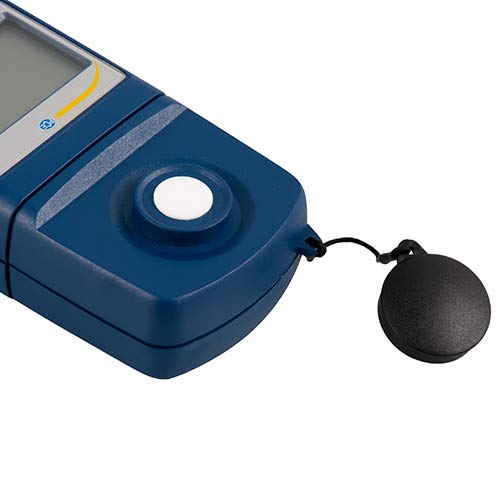
Whakaahua 3: Taipitopito view of the light sensor at the top of the device, with its protective cap removed.
4. Tatūnga
4.1 Tāuta Pūhiko
- Kimihia te uhi o te wahanga pākahiko kei muri o te taputapu.
- Slide the cover open or unscrew it, depending on the model.
- Insert one 9V battery, observing the correct polarity (+/-).
- Whakakapihia te uhi o te wahanga pākahiko kia mau.
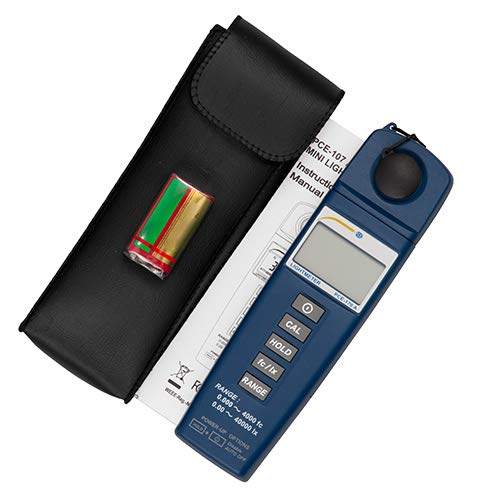
Whakaahua 4: The PCE-170 A Light Meter shown with its carrying case and the included 9V battery, ready for installation.
4.2 Hiko-Whakaahua Tuatahi
Pehia te Mana button to turn on the device. The display will illuminate and show a reading. If the battery symbol appears, replace the battery.
5. Nga Tohutohu Whakahaere
5.1 Te Whanganga
- Whakakāhia te taputapu mā te whakamahi i te Mana pātene.
- Ensure the light sensor is clean and unobstructed.
- Position the light sensor at the location where illuminance is to be measured. Ensure the sensor is facing the light source directly for accurate readings.
- The current illuminance value will be displayed on the LCD.

Whakaahua 5: A user measuring light levels in an office environment with the PCE-170 A Light Meter.
5.2 Changing Measurement Units (fc/lx)
Pehia te fc/lx button to toggle between foot-candles (fc) and lux (lx) units. The selected unit will be indicated on the display.
5.3 Mahi HOLD
Pehia te KAUPAPA hei whakatio i te pānui o nāianei kei te whakaaturanga. Pēhia anō hei tuku i te pātene pupuri me te tīmata anō i ngā inenga ora.
5.4 Zero Adjustment (CAL)
Hei mahi whakatikatika kore:
- Place the light sensor in a completely dark environment (e.g., cover it with the protective cap or place it in a dark box).
- Pehia te CAL button. The display should show "0.00" or a value very close to zero.
- If the display does not show zero, repeat the process.
5.5 Range Selection
The device typically operates in auto-ranging mode. To manually select a range or cycle through available ranges, press the PANUI button. The display will indicate the active range. Press and hold the PANUI button to return to auto-ranging mode.
5.6 Min/Max Function (Power-Up Option)
The PCE-170 A supports Min/Max recording. To activate this feature, refer to the power-up options indicated on the device label (e.g., press and hold a specific button during power-on). This function records the minimum and maximum illuminance values detected during a measurement session.
6. Tiaki
6.1 Te horoi
Wipe the device with a soft, dry cloth. Do not use abrasive cleaners or solvents. Keep the light sensor clean and free of dust or smudges, as this can affect measurement accuracy.
6.2 Rokiroki
When not in use, store the PCE-170 A Light Meter in its carrying case in a cool, dry place, away from direct sunlight and extreme temperatures. Remove the battery if storing for extended periods.
7. Te Raru
| Raruraru | Take pea | Rongoā |
|---|---|---|
| Kaore e tahuna te taputapu. | Kua mate, kua hē ranei te whakauru i te pākahiko. | Tirohia te kaha o te pākahiko, whakakapia rānei ki tētahi pākahiko 9V hou. |
| Display shows "OL" (Overload). | Light intensity exceeds the current measurement range. | Switch to a higher measurement range using the PANUI button, or move to a less intensely lit area. |
| Ko nga panui kore tika. | Dirty sensor, incorrect zero adjustment, or sensor not facing light source correctly. | Clean the sensor, perform zero adjustment in darkness, and ensure the sensor is properly oriented. |
| Ko te whakaaturanga kei te patea, kei te korikori ranei. | He iti te pākahiko. | Whakakapihia te papahiko 9V. |
8. Whakatakotoranga
| Tawhā | Uara |
|---|---|
| Awhe Ine | 0.00 ... 40,000 lux / 0.000 ... 4000 fc |
| Whakatau | 0.01 lux / 0.001 fc |
| Tika | ±3% of measurement value + 5 digits |
| Tohu Taumaha | "OL" |
| Te Ine Ine | Ia 2 hēkona |
| Te Waahi Mahi | 0 ... 40°C / 32 ... 104°F |
| Pūoko Maama | Silicon photodiode, corrected cosine angle |
| Whakaatu | 5-mati LCD |
| Puna Mana | 9V pākahiko (kei roto) |
| Ahu | 33 x 54 x 196 mm / 1.3 x 2.1 x 7.7 in |
| Taumaha | 180 g / <1 lb (approx. 9.17 ounces) |
8.1 Te Mahinga Tukunga
The standard delivery package includes:
- 1 x PCE-170 A Lux Meter
- 1 x 9V pākahiko
- 1 x Puhi kawe
- 1 x Kaiwhakamahi pukapuka (tenei tuhinga)
9. Pūtāhui me te Tautoko
PCE Instruments provides a warranty for this product against defects in materials and workmanship. For specific warranty terms and conditions, please refer to the warranty card included with your purchase or visit the official PCE Instruments website. For technical support, service, or calibration inquiries, please contact PCE Instruments customer service.
PCE Instruments US: Haere ki te Toa