Kupu Whakataki
This manual provides essential information for the safe and efficient operation of your RCF ART 710A active 2-way speaker. Please read this manual thoroughly before using the product to ensure proper setup, operation, and maintenance. Retain this manual for future reference.

Whakaahua 1: Mua view of the RCF ART 710A active speaker, showcasing its robust grille and RCF logo.
Nga Korero Haumaru Nui
- Tuku Hiko: Whakaritehia te voltage matches the requirements specified on the unit. Use only the provided power cord.
- Whakahau: Kaua e araia nga whakatuwheratanga hau. Me whakarite kia pai te rere o te hau huri noa i te waahanga kia kore ai e wera rawa.
- makuku: Do not expose the unit to rain or moisture. Avoid placing liquids on or near the speaker.
- Turanga: Place the speaker on a stable, level surface or mount it securely using appropriate hardware.
- Ratonga: Tukuna ngā mahi tiaki katoa ki ngā kaimahi tiaki whai tohu. Kaua e ngana ki te whakatuwhera, ki te whakatika rānei i te waeine māu ake.
- Parenga Rongo: Ko te roa o te rongo ki nga taumata pehanga oro teitei ka pakaru tonu te rongo. Whakamahia he whakamarumaru whakarongo ina mahi ana i nga pukapuka nui.
Nga waahanga matua
- 1400W Peak Power, 700W RMS
- 10-inch Woofer, 1-inch Compression Driver
- FiRPHASE Technology for linear response
- Integrated DSP with equalization, phase control, soft limiting, crossover, and speaker protections
- Te akomanga D Ampkaikawe
- Frequency Response: 50 Hz - 20 kHz
- SPL mōrahi: 129 dB
Tatūnga
1. Te wetewete
Āta tango i te kaikōrero i tōna tākainga. Tirotirohia te waahanga mo nga tohu o te kino i puta i te wa o te whakawhiti. Pupuritia te putunga taketake mo te kawe me te rokiroki a muri ake nei.
2. Te Whakanoho me te Whakanui
The ART 710A can be used as a main front-of-house speaker, a stage monitor, or mounted on a pole. Ensure the speaker is placed on a stable surface or securely mounted.
- Whakapuru Pou: Use a standard 35mm speaker pole. Ensure the pole is rated to support the speaker's weight (approximately 37 lbs / 16.8 kg).
- Turanga Papa: Mo te stage monitor applications, position the speaker at the desired angle.
- Whakatarewa: If suspending the speaker, consult a qualified professional and use appropriate rigging hardware.
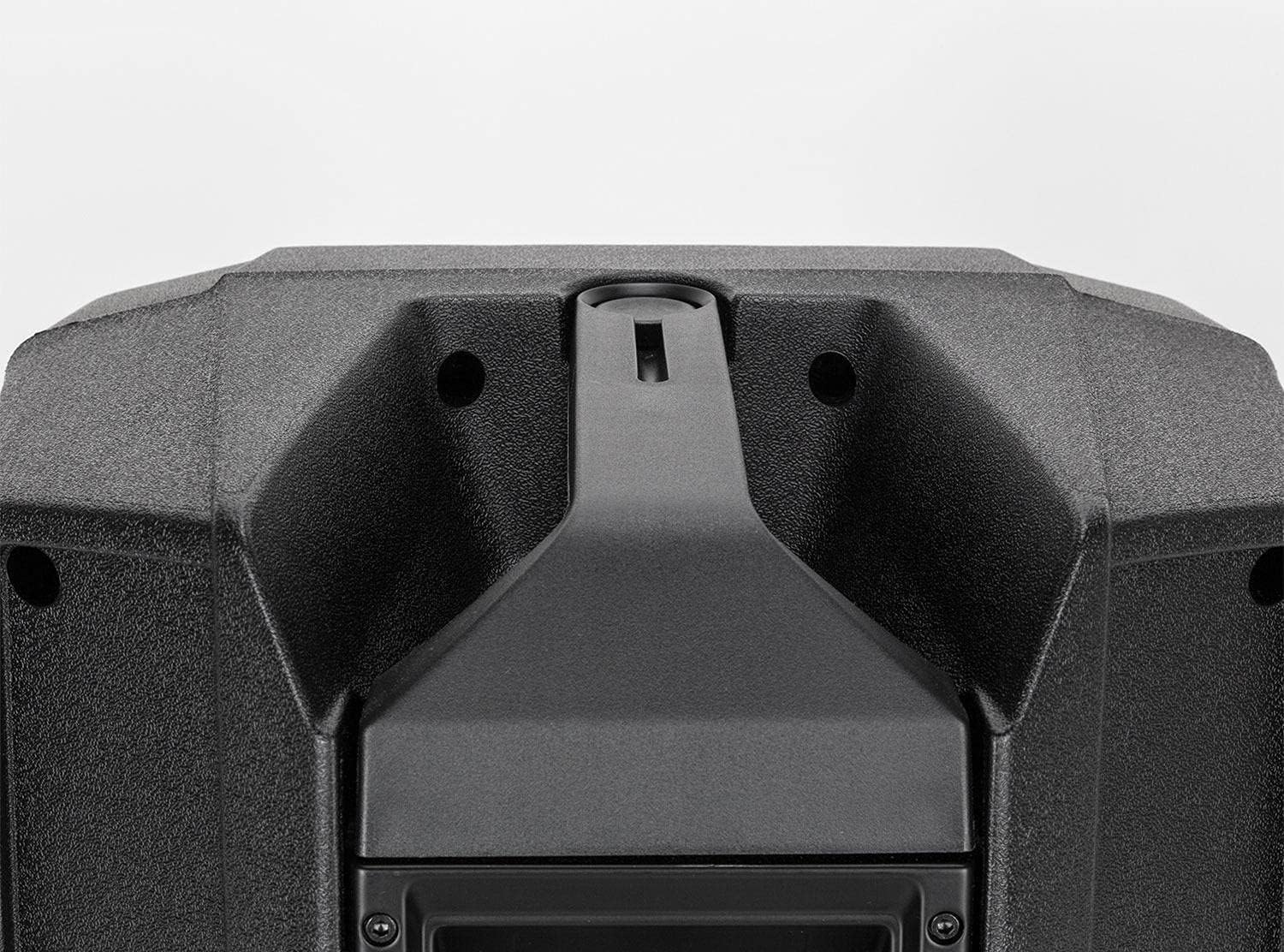
Whakaahua 2: Runga view of the RCF ART 710A, highlighting the integrated pole mount socket for stand placement.
3. Hononga
Refer to the rear panel for all input and output connections.

Figure 3: Rear panel of the RCF ART 710A, displaying XLR inputs, output, volume control, and power connection.
- Tāuru Ororongo: Connect your audio source (mixer, instrument, etc.) to the WHAKATOKANGA AWITI te whakamahi i te taura XLR.
- Audio Output (Link): Whakamahia te Tuhinga o mua to link to another speaker or audio device.
- Whakauru Hiko: Honoa te taura hiko kua whakaratohia ki te AC KOREUTU turanga.
- Input Sensitivity Switch: Adjust for microphone or line-level signals.
- Mana Rōrahi: Adjust the overall output level of the speaker.
Nga Tohutohu Whakahaere
1. Te Whakakaha/Weto
- Ensure all connections are secure and the volume control is set to minimum before powering on.
- Porehia te HUITANGA POWER to the "ON" position. The power indicator LED will illuminate.
- To power off, set the volume to minimum, then flip the HUITANGA POWER to "OFF".
2. Adjusting Volume and Input Sensitivity
- Tīmata ki te ROTO control at its minimum setting.
- Whakaritea te TE KAUPAPA KAUPAPA switch according to your source: "MIC" for microphone level signals, "LINE" for line level signals (e.g., mixer output).
- Whakanuia te ROTO control to the desired listening level. Monitor the signal LEDs to avoid clipping (distortion).
3. DSP Functions (Internal Processing)
The ART 710A features an integrated Digital Signal Processor (DSP) that manages equalization, phase control, soft limiting, crossover, and speaker protections automatically. There are no user-adjustable DSP parameters directly on the unit. The system is optimized for a linear response and balanced sound.
Te tiaki
- Te horoi: Clean the speaker cabinet with a soft, dry cloth. Do not use abrasive cleaners or solvents.
- Tunu: Periodically check the front grille for dust or debris and gently clean if necessary to maintain optimal sound dispersion.
- Rokiroki: When not in use for extended periods, store the speaker in a dry, temperate environment, ideally in its original packaging or a protective cover.
- Tirotiro: Regularly inspect power cables and audio cables for any signs of wear or damage. Replace damaged cables immediately.
Raparongoā
| Raruraru | Take pea | Rongoā |
|---|---|---|
| Kaore he putanga oro |
|
|
| Oro kerekere |
|
|
| Hamama, haruru ranei |
|
|
Whakatakotoranga Hangarau
| Āhuahira | Taipitopito |
|---|---|
| Tauira | RCF ART 710A |
| Momo Kaikorero | Active 2-way Speaker |
| Putanga Mana | 1400W Peak, 700W RMS |
| Woofer | 10-inihi |
| Atekōkiri Kōpeketanga | 1-inihi |
| Whakautu auau | 50 Hz - 20 kHz |
| Max SPL | 129 dB |
| Nga waahanga DSP | FiRPHASE Technology, EQ, Phase Control, Soft Limiting, Crossover, Protections |
| Ampmomo Momo | Te akomanga D |
| Hononga Whakauru | XLR |
| Tūhono Huaputa | XLR |
| Ahu (H x W x D) | 22.3 x 15.4 x 13.9 inihi (56.6 x 39.1 x 35.3 cm) |
| Taumaha | 37 lbs (16.8 kg) |
| Puna Mana | Hiko Hiko |
Nga korero Whakaputanga
RCF products are covered by a limited warranty against defects in materials and workmanship. The specific terms and duration of the warranty may vary by region and product. Please refer to the official RCF website or your local distributor for detailed warranty information and registration procedures. Keep your proof of purchase for warranty claims.
Tautoko Kiritaki
For technical assistance, service, or spare parts, please contact RCF customer support or your authorized RCF dealer. You can find contact information on the official RCF webpae:
When contacting support, please have your product model (ART 710A) and serial number ready. The serial number is located on the rear panel of the speaker.


