1. Kupu Whakataki
This manual provides detailed instructions for the setup, operation, and maintenance of your Waveshare 13.3-inch Capacitive Touch Screen LCD (V1). This display features a 1920x1080 resolution, HDMI input, IPS panel for wide viewing angles, and a durable toughened glass cover. Please read this manual thoroughly before using the product to ensure proper functionality and longevity.
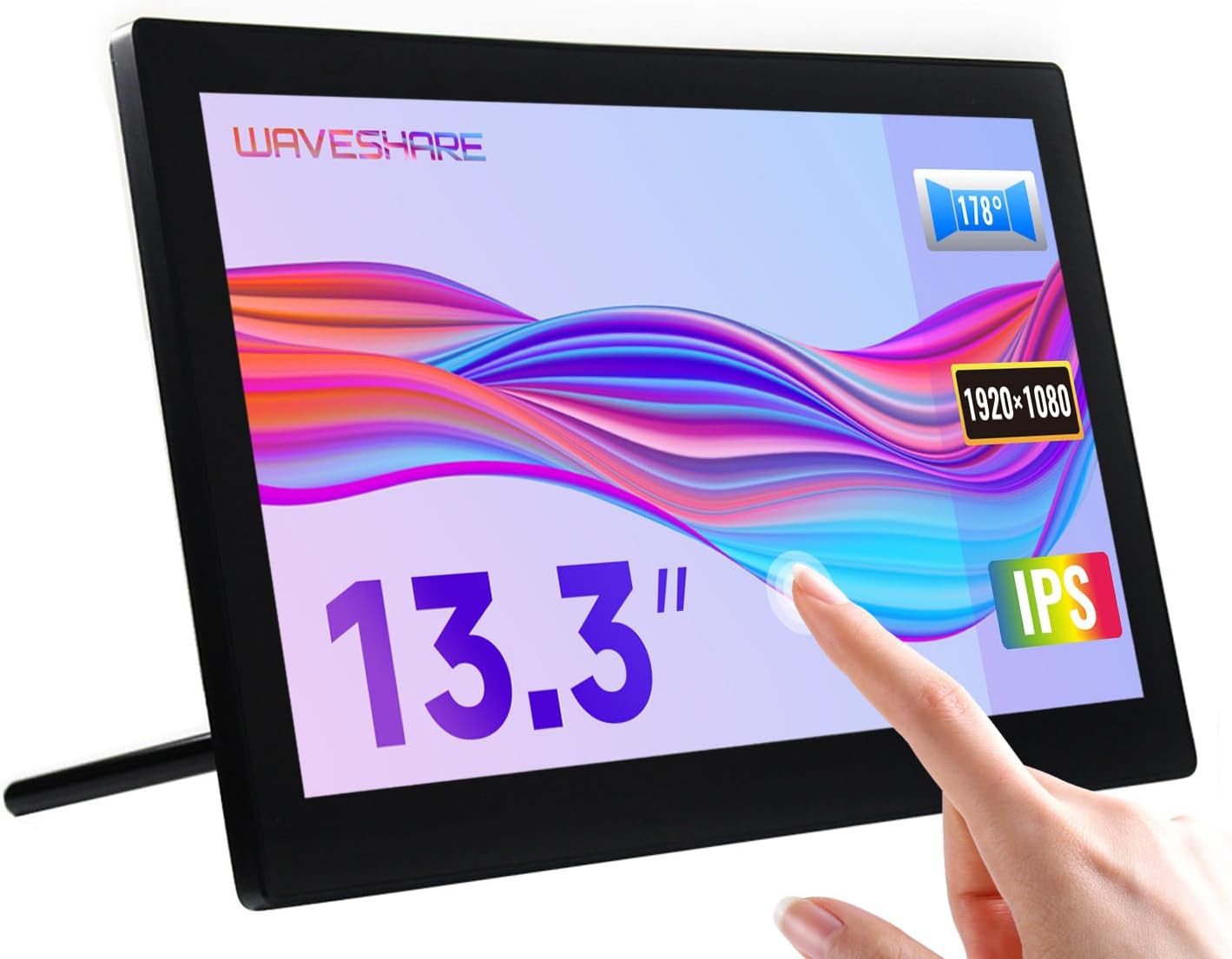
Image 1.1: The Waveshare 13.3-inch Capacitive Touch Screen LCD, showcasing its touch functionality and sleek design.
2. Nga korero haumaru
- Whakaritehia te voltage matches the product's requirements to prevent damage.
- Avoid exposing the display to extreme temperatures, humidity, or direct sunlight.
- Kaua e wetewete i te waeine. Tukuna atu nga ratonga katoa ki nga kaimahi whai tohu.
- Keep the screen away from strong magnetic fields.
- Handle with care to avoid dropping or impacting the screen, especially the toughened glass panel.
3. Ihirangi mokete
Manatokona kei roto katoa nga mea kei roto i te kete:
- Waveshare 13.3-inch HDMI LCD (H) Display
- Pūurutau Hiko
- Tauera HDMI
- USB-A to Micro-USB Cable (for touch functionality)
- Pukapuka Kaiwhakamahi (tenei tuhinga)
4. Hua Neke Atuview
4.1. Nga ahuatanga
- 13.3-inch IPS panel with 1920x1080 resolution.
- Capacitive 10-point touch control (operating system dependent).
- Toughened glass panel with up to 6H hardness.
- HDMI and VGA display interfaces.
- Built-in Hi-Fi speakers and 3.5mm audio jack.
- Supports various devices including Raspberry Pi, Jetson Nano, PCs, and game consoles.
- Integrated case with a 75° back stand and VESA mounting holes (75x75mm).

Image 4.1: Detailed features and system compatibility of the display.
4.2. Wae-a-tinana
The display includes various ports and control buttons:
- VGA Display Port: For video input via VGA.
- Paerewa HDMI: For video input via HDMI.
- 3.5mm Jack Ororongo: Mo te putanga ororongo.
- Touch Port (USB): For connecting the touch functionality to your device.
- Tāuru Mana 12V: Mo te hono i te urutau hiko.
- Back Buttons: Power, direction controls, and Menu/Enter/Return buttons for OSD navigation.

Whakaahua 4.2: Whakamuri view of the display with ports and a Raspberry Pi connection example.
5. Tohutohu Tatūnga
5.1. Hononga Tuatahi
- Tūhono Ataata: Use the provided HDMI cable to connect the display's HDMI port to your source device (e.g., Raspberry Pi, PC). If using VGA, connect a VGA cable.
- Connect Touch (USB): Connect the USB-A to Micro-USB cable from your source device's USB port to the display's Touch Port. This enables touch functionality.
- Hono Hono: Plug the power adapter into the display's 12V Power Input, then connect it to a power outlet.
- Whakahiko: Press the power button on the back of the display. The screen should illuminate and display content from your source device.

Image 5.1: Display showing a Windows desktop after successful connection.
5.2. Hononga Examples
The display supports various connection configurations:
- Working with Raspberry Pi 4: Connect HDMI for video and USB for touch. Power the display with its 12V adapter.
- Working with Raspberry Pi Zero W: Requires additional mini HDMI adapter and USB cable. Connect mini HDMI for video and USB for touch. Power the display with its 12V adapter.
- Working with AI Computer Jetson Nano: Connect HDMI for video and USB for touch. Power the display with its 12V adapter.
- Working with Mini PC: Connect HDMI for video and USB for touch. Power the display with its 12V adapter.

Image 5.2: Visual guide for connecting the display to different devices.
6. Nga Tohutohu Whakahaere
6.1. Tahua Whakaatu-a-Mata (OSD).
The OSD menu allows you to adjust display settings such as brightness, contrast, and input source. Use the back buttons (direction controls and Menu/Enter/Return) to navigate and select options.
- Pehia te MENU pātene hei whakatuwhera i te tahua OSD.
- Whakamahia te Te aronga ngā pātene hei whakatere i ngā kōwhiringa tahua.
- Perehi MENU again (or the designated Enter button) to select an option or confirm a setting.
- Whakamahia te Hoki mai button to go back or exit the menu.
6.2. Displaying Content
Once connected and powered on, the display will automatically detect the active video input. Ensure your source device is outputting video to the selected HDMI or VGA port.

Image 6.1: The display showing multimedia content from a web pūtirotiro.
6.3. Mana Pa
The display features capacitive 10-point touch control. Ensure the USB touch cable is connected to your source device for touch functionality. Driver-free operation is supported on most compatible operating systems.

Image 6.2: Illustration of touch control and audio features.
6.4. Putanga Ororongo
The display includes built-in Hi-Fi speakers for audio output. Alternatively, you can connect external speakers or headphones to the 3.5mm audio jack for private listening or higher quality audio.
7. Device & System Support
The Waveshare 13.3-inch display offers broad compatibility:
- Rāhipere Pi: Supports all versions of Raspberry Pi.
- Supports Raspberry Pi OS, 10-point touch, driver free.
- Supports Ubuntu / Kali / WIN10 IoT, single point touch, driver free.
- Supports Retropie, driver free.
- Jetson Nano: Supports Ubuntu, single point touch, driver free.
- PC: Supports Windows 11 / 10 / 8.1 / 8 / 7, 10-point touch, driver free.
- Papatohu Kēmu: Supports Xbox360, PS4, Switch (display and sound only).

Whakaahua 7.1: Ka mutuview of supported devices and operating systems.
8. Tiaki
- Te horoi i te Mata: Whakamahia he kakahu ngohengohe, karekau he ngongo paku damphoroia ki te wai, ki te wai horoi mata rānei. Āta karohia ngā matū kino, ngā rauemi whakakoi rānei.
- Tiaki Whānui: Keep the display free from dust. When not in use for extended periods, consider covering it to prevent dust accumulation.
- Rokiroki: Store the display in a cool, dry place, away from direct sunlight and extreme temperatures.
9. Te Raru
| Raruraru | Take pea | Rongoā |
|---|---|---|
| Karekau he mata whakaatu/pango |
|
|
| Touch not working |
|
|
| Karekau he ororongo |
|
|
10. Whakatakotoranga
| Āhuahira | Taipitopito |
|---|---|
| Rahi Mata | 13.3 Inihi |
| Whakatau | 1920x1080 (FHD 1080p) |
| Paewhiri Whakaatu | IPS |
| Viewing Koki | 178° |
| Momo Pa | Pā ā-pūmanawa, pā-10-ira |
| Touch Panel Hardness | Up to 6H Toughened Glass |
| Whakaatu Atanga | Atanga, VGA |
| Putanga Ororongo | Built-in Hi-Fi Speakers, 3.5mm Audio Jack |
| Whakauru Mana | 12V DC |
| Rahi Hua (LxWxH) | 7.09 x 3.94 x 3.54 inihi (180 x 100 x 90 mm tata) |
| Taumaha Tūemi | 2.2 pauna (1 kg pea) |
| Rauemi Whakapiri | Polycarbonate / ABS |

Image 10.1: Physical dimensions of the display.
11. Pūtāhui me te Tautoko
Waveshare products are designed for reliability and performance. For warranty information, technical support, or further assistance, please visit the official Waveshare webpaetukutuku, whakapā atu ranei ki ta raatau ratonga kaihoko. Puritia to riirii hoko hei tohu mo te hoko mo nga kereme whakamana.
Ngā Waveshare Whaimana Webpae: www.waveshare.com


