1. Kupu Whakataki
This manual provides essential information for the safe and effective operation of the Mark-10 EKM5-200 Myometer Kit. The EKM5-200 Myometer Kit is designed to facilitate a wide range of strength assessments and ergonomics studies. It features a Series 5 force gauge with a 200 lbF (1,000 N) range, a tabletop mount, a strap, and various accessories. This kit is suitable for ergonomists and other professionals requiring precise force measurement.
2. Nga korero haumaru
Please read all instructions carefully before using the EKM5-200 Myometer Kit. Failure to follow these instructions may result in injury or damage to the equipment.
- Ensure the device is used within its specified force capacity of 200 lbF (1,000 N). Exceeding this limit can damage the force gauge.
- Only use the provided AC adapter/charger for powering and charging the device.
- Keep the device away from liquids and extreme temperatures.
- Kaua e ngana ki te wetewete, ki te whakatika rānei i te taputapu. Tukuna ngā mahi tiaki katoa ki ngā kaimahi whai tohu.
- Always secure the force gauge properly when using the tabletop mounting kit to prevent accidental detachment.
- When performing strength assessments, ensure the subject is positioned safely and comfortably.
3. Ihirangi mokete
The Mark-10 EKM5-200 Myometer Kit includes the following components:
- M5-200 Advanced Force Gauge
- Te Kawe i te Keehi
- Tabletop Mounting Kit (for vertical or horizontal orientations)
- Adjustable Length Looped Strap
- AC Adapter/Charger (110V)
- MESUR Lite Data Collection Software
- Tauira USB
- NIST-traceable Certificate of Calibration with Data
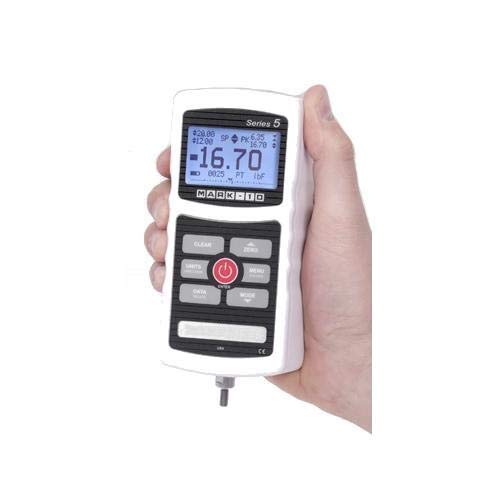
Figure 1: The M5-200 Advanced Force Gauge, a key component of the EKM5-200 kit. It features a digital display and control buttons.
4. Hua Neke Atuview me nga ahuatanga
The EKM5-200 Myometer Kit is designed for precise force measurement in various applications. Its core component, the M5-200 force gauge, offers advanced capabilities.
Āhuatanga matua:
- Measures real-time, average, and peak pull and push forces.
- Force capacity: 200 lbF (1,000 N).
- Accuracy: ±0.1% of full scale.
- Sampling rate: 7,000 Hz.
- Output options: USB, RS-232, and analog.
- High/low limit indicators for pass/fail and minimum force testing.
- 1,000-point data memory with statistical calculations.
- Data can be bulk downloaded to the included MESUR Lite data collection software.
- Force gauge is compatible with other Mark-10 grips and attachments.
5. Tatūnga
5.1 Charging the Force Gauge
- Connect the AC adapter/charger to the force gauge's power input port.
- Plug the AC adapter into a standard 110V electrical outlet.
- Allow the device to charge fully before initial use. The charging indicator on the gauge will provide status.
5.2 Assembling the Tabletop Mounting Kit
- Identify the components of the tabletop mounting kit.
- Attach the force gauge securely to the mounting bracket. Ensure all fasteners are tightened.
- Mount the assembly to a stable tabletop or surface, ensuring it is firm and does not wobble. The kit supports both vertical and horizontal orientations.
- Attach the adjustable length looped strap to the force gauge or an appropriate attachment point on the mounting kit, depending on the test setup.
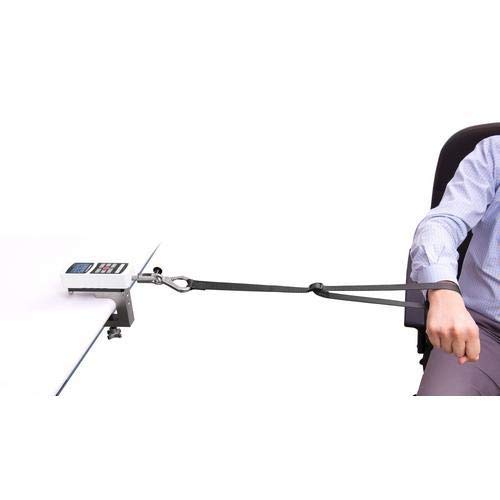
Whakaahua 2: Example setup of the EKM5-200 Myometer Kit for an ergonomics study, showing the force gauge mounted on a table and connected to a subject via a strap.
6. Nga Tohutohu Whakahaere
6.1 Kei te Hiko / Weto
- Kia kaha tonu, paatohia kia mau te MANA pēhi i te pātene kia mārama rā anō te mata.
- Ki te whakaweto, patohia kia mau te MANA pātene kia weto te whakaaturanga.
6.2 Ine Taketake
- Ensure the force gauge is powered on and properly calibrated (refer to NIST certificate).
- Pehia te ZERO button to tare the current reading before applying any force.
- Apply force to the sensor via the strap or other attachment. The display will show the real-time force.
- The gauge can display peak force, average force, and real-time force. Use the MODE button to cycle through display modes.
- Observe the high/low limit indicators for pass/fail testing, if configured.
6.3 Whiringa Unit
Pehia te NGA WAIATA button to cycle through available measurement units (e.g., lbF, N, kgF).
7. Whakahaere Raraunga
7.1 Internal Data Memory
The M5-200 force gauge can store up to 1,000 data points internally, along with statistical calculations. Refer to the force gauge's dedicated manual for detailed instructions on saving and reviewing data directly on the device.
7.2 MESUR Lite Data Collection Software
- Install the MESUR Lite data collection software on your computer using the provided media or by downloading it from the Mark-10 webpae.
- Connect the force gauge to your computer using the supplied USB cable.
- Launch the MESUR Lite software. The software will detect the connected force gauge.
- Follow the on-screen instructions within MESUR Lite to bulk download stored data, perform real-time data acquisition, and analyze measurements.
8. Tiaki
8.1 Te horoi
- Wipe the exterior of the force gauge and accessories with a soft, damp kakahu.
- Kaua e whakamahia nga kai horoi, nga whakarewa ranei, na te mea ka kino pea te whakaoti me nga waahanga o roto.
- Ensure no moisture enters the device's ports.
8.2 Rokiroki
- When not in use, store the EKM5-200 Myometer Kit in its provided carrying case to protect it from dust, impacts, and environmental factors.
- Whakaorangia ki te waahi makariri, maroke, mawehe atu i te ra tika me te wera nui.
8.3 Whakariterite
The force gauge comes with a NIST-traceable certificate of calibration. Regular recalibration is recommended to maintain accuracy, especially for critical applications. Refer to Mark-10's guidelines or contact their support for recalibration services.
9. Te Raru
| Raruraru | Take pea | Rongoā |
|---|---|---|
| Kaore te taputapu i te hiko. | He iti te pākahiko, he take urutau hiko ranei. | Connect the AC adapter and charge the device. Ensure the adapter is properly plugged into a working outlet. |
| Ko nga panui kore tika. | Not zeroed before use, or device requires recalibration. | Pehia te ZERO button before measurement. If problem persists, consider recalibration. |
| Cannot connect to MESUR Lite software. | USB cable issue, driver not installed, or software not running. | Ensure USB cable is securely connected. Install necessary drivers. Restart MESUR Lite software and the force gauge. |
| Display shows "OVERLOAD". | Applied force exceeds the device's capacity. | Immediately remove the excessive force. Ensure future measurements stay within the 200 lbF (1,000 N) limit. |
If you encounter issues not listed here or if the suggested solutions do not resolve the problem, please contact Mark-10 technical support.
10. Whakatakotoranga
| Tawhā | Uara |
|---|---|
| Tauira | EKM5-200 |
| Te Kaha Kaha | 200 pauna F (1,000 N) |
| Tika | ±0.1% o te tauine katoa |
| Sampreiti reiti | 7,000 Hz |
| Mahara Raraunga | 1,000 tohu raraunga |
| Nga Putanga | USB, RS-232, Analog |
| Whakauru Mana | 110V AC Whāurutau |
| Kaihanga | Mark-10 |
| ASIN | B07D8SFSKC |
| UPC | 666758807621 |
11. Pūtāhui me te Tautoko
11.1 Nga Korero Whakaputanga
For detailed warranty information regarding your Mark-10 EKM5-200 Myometer Kit, please refer to the documentation included with your purchase or visit the official Mark-10 webpae. Ko nga kupu whakamana ka kapi i nga hapa whakangao mo te waa kua tohua mai i te ra o te hokonga.
11.2 Tautoko Hangarau
Should you require technical assistance, troubleshooting, or service for your EKM5-200 Myometer Kit, please contact Mark-10 customer support.
- Kaihanga: Mark-10
- Webpae: www.mark-10.com (Tena koa tirohia te rangatira website for contact details and the latest support resources.)
When contacting support, please have your model number (EKM5-200) and serial number (if applicable) ready.


