1. Kupu Whakataki
This manual provides detailed instructions for the safe and efficient installation, operation, and maintenance of your RAGGIE RG-PT30 MPPT Solar Charge Controller. Please read this manual thoroughly before attempting any installation or operation to ensure optimal performance and longevity of the device.
2. Nga Tohutohu Haumaru
- Ensure all connections are correct and secure before applying power. Incorrect wiring can damage the controller and connected devices.
- Me hono tonu te pākahiko i te tuatahi, kātahi te panera rā, ā, ko te kawenga i te mutunga. Momotuhia i te raupapa whakamuri: te kawenga, kātahi te panera rā, kātahi te pākahiko.
- Do not disassemble or attempt to repair the controller yourself. Refer to qualified personnel for service.
- Tāutahia te pūmana ki tētahi wāhi e pai ana te hau, kia matara atu i te rā tika, i ngā pāmahana tiketike, me te makuku.
- Use appropriate circuit breakers or fuses for the battery and solar panel circuits.
- Wear protective eyewear when working with batteries.
3. Hua Neke Atuview
The RAGGIE RG-PT30 is an advanced Maximum Power Point Tracking (MPPT) solar charge controller designed to optimize the power harvest from your solar panels and efficiently charge your battery bank. It supports 12V and 24V battery systems and features a 30A charging capacity, an intuitive LED display, and multiple USB output ports for charging external devices.
3.1 Nga waahanga matua
- MPPT (Maximum Power Point Tracking) Technology for enhanced charging efficiency.
- Automatic 12V/24V system voltage āhukahuka.
- 30A maximum charge current.
- LED screen display for real-time monitoring of input, battery, and output status.
- Four 5V 2A USB output ports for device charging.
- Comprehensive electronic protection functions.
3.2 Tautuhinga Wae

Whakaahua 1: Mua View of the RAGGIE RG-PT30 Controller. This image shows the front panel of the solar charge controller, featuring the LED display at the top, two control buttons (MENU and POWER) below the display, and four 5V 2A USB output ports at the bottom right. The main terminals for solar input, battery, and load are located at the very bottom.
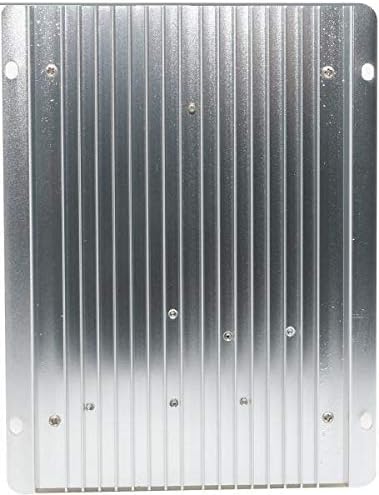
Whakaahua 2: Hoki View of the RAGGIE RG-PT30 Controller. This image displays the rear side of the solar charge controller, characterized by its metallic heat sink fins. These fins are designed to dissipate heat generated during operation, ensuring the controller maintains optimal temperature and performance.
4. Tatūnga me te Tāuta
4.1 Whakapiki i te Kaiwhakahaere
- Kōwhirihia he waahi maroke, he pai te hau, ka tiakina mai i te ra me te makuku.
- Mount the controller vertically on a non-flammable surface to allow for proper heat dissipation.
- Ensure there is sufficient clearance around the controller for air circulation.
4.2 Hononga Waea
Follow the connection order strictly to prevent damage to the controller or system components. Use appropriate wire gauges for your system's current and distance.
- Tūhono te Pūhiko: Connect the positive and negative terminals of the battery to the corresponding battery terminals on the controller. The controller will automatically detect the system voltage (12V, 24V ranei).
- Honoa te Paewhiri Solar: Connect the positive and negative terminals of the solar panel(s) to the corresponding solar input terminals on the controller.
- Honoa te Utaina DC (Whiringa): Connect the positive and negative terminals of your DC load to the corresponding load terminals on the controller.
Important: Ensure correct polarity for all connections. Reverse polarity can cause permanent damage.
5. Nga Tohutohu Whakahaere
5.1 Whakaaturanga LED
The LED screen provides real-time information about your solar system:
- Whakauru: Ka whakaatu i te voltage and current from the solar panel.
- PAKATI: Ka whakaatu te puhiko voltage me te utu o naianei.
- PUTANGA: Indicates the load voltage me o naianei.
5.2 Nga Mahi Patene
- MENU Pātene: Press to cycle through different display parameters or enter settings mode.
- Pihi POWER: Press to turn the DC load output ON/OFF. Long press may enter or exit certain settings.
5.3 Putanga USB
The four 5V 2A USB ports can be used to charge compatible electronic devices. These ports are active when the controller is powered and the battery has sufficient charge.
6. Tiaki
- Tirotiro auau: Ia wa, tirohia nga hononga waea katoa mo te piri me te waikura.
- Te horoi: Kia noho ma te kaiwhakahaere kia kore e pehu me te para. Whakamahia he kakahu maroke mo te horoi.
- Whakahau: Ensure that the ventilation openings and heat sink fins are not obstructed.
- Taki Pūhiko: Regularly check the battery's state of charge and electrolyte level (for flooded batteries).
7. Te Raru
| Raruraru | Take pea | Rongoā |
|---|---|---|
| Karekau he whakaaturanga/Kaiwhakahaere kaore i te hiko | Kaore te pākahiko i hono, iti ranei te voltage; polarity whakamuri. | Tirohia nga hononga pākahiko me te voltage. Me whakarite kia tika te polarity. |
| Karekau te pākahiko e utu ana | Solar panel not connected; low solar input; faulty panel/wiring. | Check solar panel connections. Verify solar panel output voltage. Ensure sufficient sunlight. |
| Kare e mahi ana te uta | Load output turned off; overload; faulty load. | Press POWER button to turn on load. Reduce load. Check load device. |
| Ko nga tauranga USB kaore e mahi | Pūhiko voltage too low; controller fault. | Ensure battery is adequately charged. If problem persists, contact support. |
8. Whakatakotoranga
| Tawhā | Uara |
|---|---|
| Tauira | RG-PT30 |
| Waitohu | RAKIE |
| Aratau utu | MPPT (Aroturuki Pūnaha Mana Mōrahi) |
| Pūnaha Voltage | 12V / 24V Whakaaetanga Aunoa |
| Te Utu Nui o Naianei | 30A |
| Momo Whakaatu | Mata LED |
| Putanga USB | 4 x 5V / 2A |
| ASIN | B07PC3TNCB |
| Te Ra Tuatahi Wātea | 3 Maehe 2019 |
9. Pūtāhui me te Tautoko
For warranty information or technical support, please refer to the documentation provided with your purchase or contact your retailer. Keep your purchase receipt as proof of purchase.


