1. Hua Neke Atuview
The Powerhorse Gas Cold Water Pressure Washer is designed for efficient and powerful cleaning. This unit features a Powerhorse 420cc OHV engine and a dependable Annovi Reverberi direct drive triplex pump. It is capable of delivering 4.0 GPM at 4000 PSI, making it suitable for tough cleaning jobs. Built-in safeguards include thermal protection and low oil shutdown. The rugged steel cart with flat-free tires ensures portability. The package includes 5 quick-connect nozzles, a 35ft. 3/8in. hose, lance, and gun.
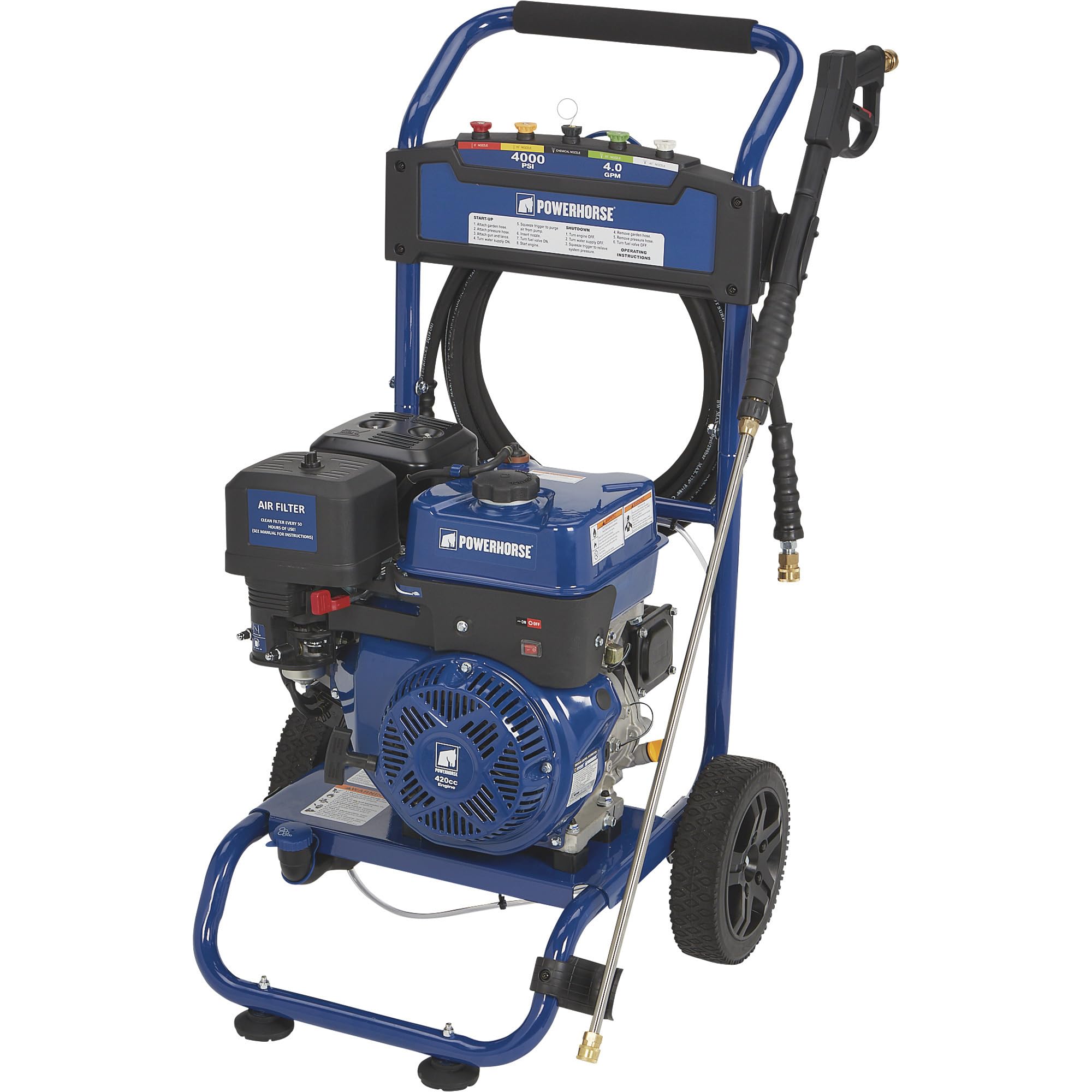
Whakaahua 1: Mua view of the Powerhorse Gas Cold Water Pressure Washer.
Āhuatanga matua:
- Powerhorse 420cc OHV engine with low oil shutdown
- Annovi Reverberi direct drive triplex pump
- Stainless steel ceramic-coated plungers
- Brass manifold
- Easy Start for convenience
Ataata 1: Ka mutuview of the Powerhorse Gas Cold Water Pressure Washer (4000 PSI, 4.0 GPM).
2. Tohutohu Tatūnga
2.1. Fueling the Engine
Ensure the engine is off and cool before adding fuel. The fuel tank capacity is 1.5 liters. Use fresh, unleaded gasoline with an octane rating of 87 or higher. Do not use E85 fuel.
Video 2: Demonstrates how to fill the fuel tank and check oil levels.
2.2. Tāpiri Hinu Miihini
Before first use, or after an oil change, fill the engine with the recommended oil type (typically SAE 10W-30). Use the dipstick to ensure the oil level reaches at least the 'L' (Low) mark, but do not overfill. The engine has a low oil shutdown feature to prevent damage.
2.3. Te Hononga i te Pūnaha Wai
Connect a standard garden hose to the water inlet on the pressure washer. Ensure all connections are tight to prevent leaks. Open the water source completely. Before starting the engine, pull the trigger on the spray gun to purge air from the pump and hose until a steady stream of water flows out.

Whakaahua 2: Taha view showing the water inlet connection for the garden hose.
2.4. Selecting the Nozzle
The pressure washer comes with 5 quick-connect nozzles, each designed for different applications:
- Red (0°) Nozzle: Delivers a concentrated, high-impact stream for tough stains and hard-to-reach areas. Use with extreme caution.
- Yellow (15°) Nozzle: Provides a 15-degree fan spray for intense cleaning of smaller areas.
- Green (25°) Nozzle: Offers a 25-degree fan spray for general cleaning tasks on various surfaces.
- White (40°) Nozzle: Produces a wide 40-degree fan spray for gentle cleaning of delicate surfaces.
- Black (Soap) Nozzle: Used for applying detergent at low pressure.
Always select the appropriate nozzle for your cleaning task to avoid damaging surfaces. Start with a wider spray pattern and lower pressure on a small, inconspicuous area.

Figure 3: Nozzle storage on the control panel.
3. Nga Tohutohu Whakahaere
3.1. Ka timata te Miihini
- Me whakarite kei te tūranga 'ON' te takirere wahie.
- Nekehia te rīwhi kōkō ki te tūranga 'CHOKE' (mēnā he makariri te mīhini).
- Tahurihia te pana o te miihini ki te tūranga 'ON'.
- Pull the recoil starter slowly until resistance is felt, then pull briskly to start the engine.
- Kia tīmata te mīhini, nekehia mārire te rīwhi ārai ki te tūranga 'OMA'.

Figure 4: Turning the engine switch to the 'ON' position.
Video 3: Instructions on how to correctly start the pressure washer engine.
3.2. Using the Pressure Washer
With the engine running and water flowing, you can begin cleaning. Hold the spray gun firmly with both hands and maintain a safe distance from the surface being cleaned. Adjust your distance and nozzle choice to achieve the desired cleaning effect without causing damage.

Figure 5: Operating the pressure washer to clean a patio surface.
Video 4: Demonstration of the pressure washer's cleaning capability.
3.3. Applying Detergent
To apply detergent, attach the black (soap) nozzle. Place the detergent siphon tube into a container of pressure washer-safe detergent. The pressure washer will automatically draw detergent when the black nozzle is in use. After applying detergent, switch to a high-pressure nozzle (e.g., green or yellow) to rinse the surface thoroughly.
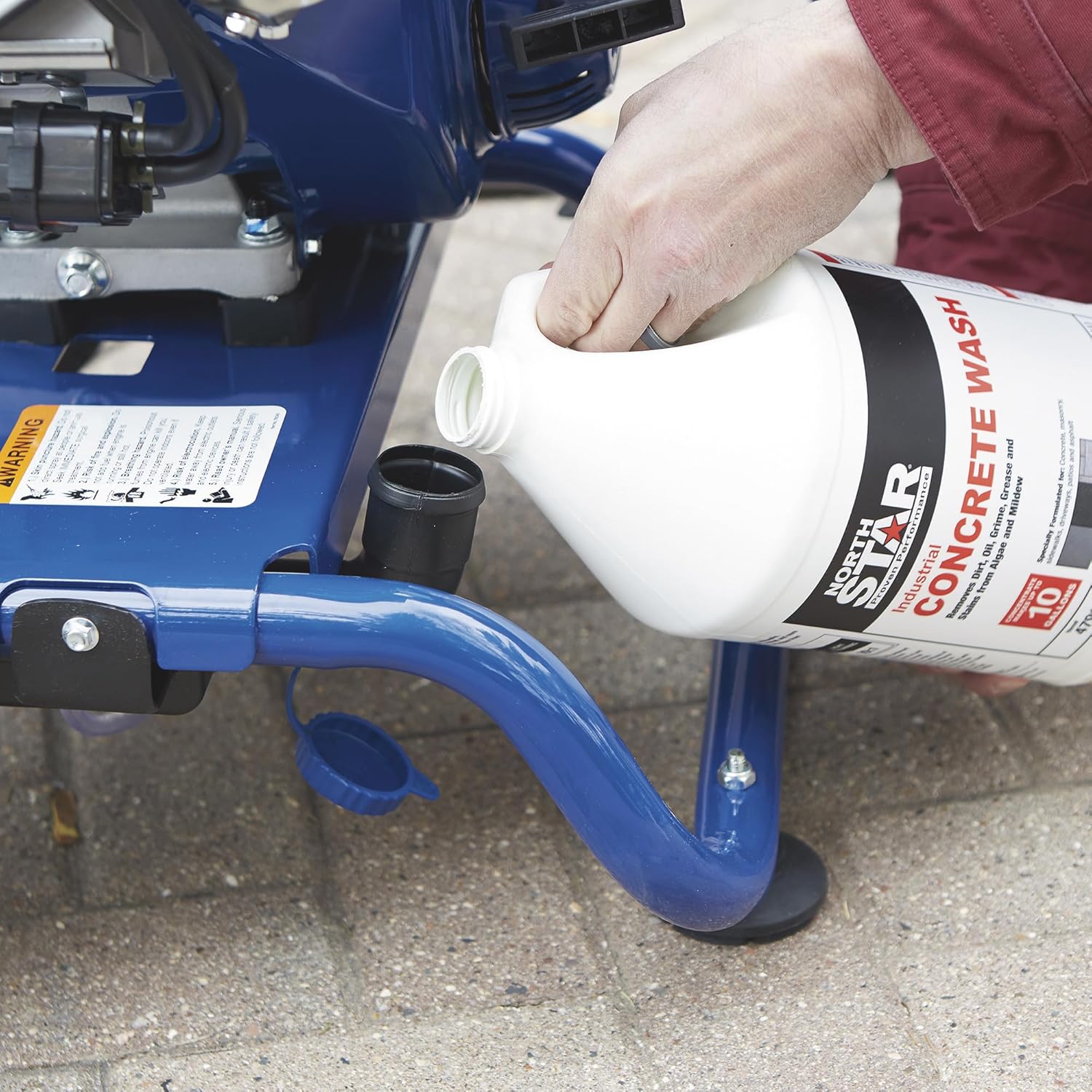
Figure 6: Adding detergent to the onboard chemical tank.
3.4. Shutting Down the Pressure Washer
- Whakawetohia te whakawhiti miihini.
- Whakawetohia te puna wai.
- Pull the spray gun trigger to release any remaining pressure in the system.
- Momotuhia te ngongo ngongo kari me te ngongo pehanga teitei.
4. Tiaki
Regular maintenance ensures optimal performance and extends the life of your pressure washer. Always refer to the full owner's manual for detailed maintenance schedules and procedures.
4.1. Ngā Tohutohu Tiaki Whānui
- Tirohia te taumata hinu: Before each use, check the engine oil level and add if necessary.
- Tātari Hau Ma: Regularly inspect and clean the air filter. A dirty air filter can reduce engine performance.
- Inspect Hoses and Nozzles: Check hoses for cracks or leaks and nozzles for blockages or wear.
- Puru korakora: Inspect and clean or replace the spark plug as recommended in the full manual.
4.2. Rokiroki
For long-term storage, especially in freezing temperatures, it is crucial to properly prepare the unit:
- Drain all fuel from the tank and carburetor.
- Drain all water from the pump, hoses, and spray gun to prevent freezing and damage.
- Store the pressure washer in a clean, dry area.
5. Te Raru
If you encounter issues with your pressure washer, consult the comprehensive troubleshooting guide in the full owner's manual. Common issues often relate to fuel, oil, or water supply. Ensure all connections are secure and that the engine has adequate fuel and oil.
6. Whakatakotoranga
| Āhuahira | Whakatakotoranga |
|---|---|
| Hunga Hua | 29 x 24 x 46 inihi |
| Taumaha Tūemi | 152 pauna |
| Kaihanga | Te hoiho kaha |
| ASIN | B07Y5NT755 |
| Tauira Tuemi | RM |
| Waitohu | Te hoiho kaha |
| Puna Mana | Te Mahi Hau |
| Tae | Kahurangi |
| Te roa o te ngongo | 35 Puawai |
| Rere Rere Morahi | 4 Karini mo ia Meneti |
7. Pūtāhui me te Tautoko
For information regarding product warranty, please refer to the documentation included with your purchase. For customer support, please contact the manufacturer directly or refer to the contact information provided by your retailer.
Mahere Tiaki:
- Mahere Tiaki 2-Tau
- Mahere Tiaki 3-Tau
- Tiaki Whakaoti: Ko tetahi mahere e kapi ana i nga hoko o mua me nga mea kei te heke mai


