Kupu Whakataki
Welcome to the user manual for your new Windgoo Electric Scooter. This manual provides essential information for the safe and efficient operation, maintenance, and troubleshooting of your scooter. Please read it thoroughly before your first ride and keep it for future reference.
The Windgoo e-scooter is a modern, economic, and ecological mode of transport designed to save time and enhance your daily commute. It offers a convenient way to navigate urban environments, providing a fresh air alternative to traditional transportation. It is an ideal means of transport for school, work, office, short trips, metro connections, and home use.
Nga waahanga hua
Powerful Motor and Durable Battery
Equipped with an upgraded 350W motor, it can reach speeds up to 25 km/h, travel up to 20 km, and support a maximum load of 120 kg. This scooter reduces the need for public transport, minimizing contact with others. The long-range lithium-ion battery ensures reliable performance for your daily commutes.
Lightweight and Foldable Design
The scooter features a lightweight aluminum frame and can be folded in just one step, making it highly portable. With a net weight of approximately 12.2 kg, this device is also easy to transport, allowing you to carry it into metro stations or elevators, offering unparalleled convenience for multi-modal travel.
Safe Braking System
Safety is paramount. The integrated braking system combines a magnetic brake on the front wheel with a physical brake on the rear wheel, providing reliable stopping power. Large taillights enhance visibility, ensuring other road users clearly see your location, especially during night rides.
Intuitive LED Display
An intuitive LED display provides real-time information, including current speed, selected speed mode, and battery life. The battery charges fully in 4-5 hours, making it ready for your next journey. This display helps you monitor your ride parameters at a glance.
Tatūnga me te Runanga
Your Windgoo Electric Scooter comes mostly pre-assembled. Follow these steps to prepare it for its first use:
- Wewete ana: Carefully remove all components from the packaging. Ensure you have the scooter, charger, and this user manual.
- Te whakatuwhera i te Scooter:
Locate the folding mechanism near the base of the handlebar stem. Release the latch and carefully lift the handlebar stem until it locks into the upright position. Ensure the locking mechanism is securely engaged before proceeding.

Image: The Windgoo Electric Scooter fully unfolded and ready for use. This shows the main structure including the handlebar, stem, deck, and wheels.
- Handlebar Attachment (if applicable): If the handlebars are separate, align them with the stem and secure them using the provided screws and tools. Ensure they are tightened firmly.
- Akona Tuatahi: I mua i tō haerenga tuatahi, whakakīia katoatia te pākahiko o te kuta.
- Kimihia te tauranga utu, kei te taha tonu o te rahoraho.
- Honoa te rihi ki te kuta, kātahi ka mono ki te putanga hiko.
- The LED indicator on the charger will change (e.g., from red to green) when charging is complete. The charging time is approximately 4-5 hours.
- Tire Tire: Ensure the tires are properly inflated. Refer to the tire sidewall for recommended pressure.
Nga Tohutohu Whakahaere
Understanding Your Scooter's Controls

Image: Detailed diagram illustrating the various parts of the Windgoo Electric Scooter, including the control panel, handlebars (brake, horn, accelerator, headlight), folding mechanism, motor, battery, kickstand, charging port, and rear wheel components (buckle, brake light, disc brake). The control panel shows the LED display with indicators for speed, mileage, power, and control buttons.
- Pātene Hiko: Located on the LED display. Press and hold to turn on/off.
- Kaiwhakatere: Thumb lever on the right handlebar. Press down to accelerate.
- Taumata Parai: Lever on the left handlebar. Squeeze to activate the front magnetic brake and rear physical brake.
- Maama: Integrated into the front of the handlebar stem. Typically activated via the power button or a dedicated button on the display.
- Whakaatu LED: Shows current speed, speed mode, battery level, and mileage.
Te eke i to Kaihikara
- Whakahiko: Press and hold the power button on the LED display until it illuminates.
- Whana Timata: For safety, the scooter requires a kick start. Place one foot on the deck and use the other foot to push off the ground, gaining a small amount of momentum (approx. 3-5 km/h).
- Whakatere: Once moving, gently press the accelerator lever with your thumb. The scooter will begin to accelerate. Gradually increase pressure for smoother acceleration.
- Piripiri: Release the accelerator and gently squeeze the brake lever to slow down or stop. For emergency stops, apply firm pressure to the brake lever.
- Hurihuri: Lean your body slightly in the direction you wish to turn. Avoid sharp turns at high speeds.
- Kōpaki mō te Rokiroki/Kawe: To fold, ensure the scooter is powered off. Release the folding latch and carefully fold the handlebar stem down until it clicks into place.

Image: Diagram showing the dimensions of the Windgoo Electric Scooter in both unfolded (106x44x115cm) and folded (106x44x48cm) states, highlighting its compact design for storage and transport.
Nga Aratohu Haumaru
- Always wear a helmet and appropriate safety gear (knee pads, elbow pads).
- Kia mohio koe ki nga ture me nga ture o te rohe mo te whakamahi i te kuta hiko.
- Do not ride in heavy rain, on slippery surfaces, or through puddles deeper than 2 cm.
- Avoid riding on uneven terrain or over large obstacles.
- Kia noho haumaru mai i te hunga hikoi me etahi atu waka.
- Kaua e mahi whakakorikori me nga mahi ohorere.
- The maximum load capacity is 100 kg. Exceeding this may affect performance and safety.
Te tiaki
Regular maintenance ensures the longevity and safe operation of your Windgoo Electric Scooter.
- Te horoi:
Horoia te kuta ki te panuiamp cloth after each use. Do not use high-pressure water jets or immerse the scooter in water. Avoid harsh chemicals that may damage the finish.
- Tiaki Pūhiko:
Charge the battery regularly, even if the scooter is not in use for extended periods (at least once a month). Do not fully discharge the battery before recharging. Store the scooter in a cool, dry place away from direct sunlight and extreme temperatures.
- Tire Tire:
Regularly check tire pressure and inflate to the recommended PSI (found on the tire sidewall). Inspect tires for wear, punctures, or damage. Replace worn tires promptly.
- Pūnaha Perehi:
Periodically check the brake levers and cables for proper tension and function. Ensure the disc brake on the rear wheel is clean and free of debris. If braking performance degrades, have it inspected by a qualified technician.

Whakaahua: Kati-ake views of key components: the bright LED headlight for night visibility, the robust front wheel, and the rear wheel with its integrated disc brake system, crucial for safe stopping.
- Ngā toromoka:
Check all screws and bolts regularly to ensure they are tight. Vibrations from riding can loosen fasteners over time.
Raparongoā
| Raruraru | Take pea | Rongoā |
|---|---|---|
| Scooter won't turn on | Low battery; Loose connections; Faulty power button | Whakakīia te pākahiko ki te katoa; Tirohia ngā hononga taura katoa e kitea ana; whakapā atu ki te tautoko mēnā ka mau tonu te raruraru. |
| Kāore te kuta e tere haere ana | Not kick-started; Accelerator malfunction; Motor issue | Ensure you kick-start to at least 3 km/h before pressing accelerator; Check accelerator for debris; Contact support. |
| Te awhe iti, te tere ranei | Low tire pressure; Overload; Battery degradation; Steep incline | Inflate tires to recommended pressure; Ensure load is within 100 kg limit; Battery may need replacement over time; Avoid steep inclines if possible. |
| He ngoikore te frein | Brake pads worn; Cable loose; Disc brake dirty | Inspect brake pads and replace if worn; Adjust brake cable tension; Clean disc brake; Contact support if unsure. |
| Nga haruru rereke | Loose components; Debris in wheels/motor; Worn bearings | Check all screws and bolts; Inspect wheels and motor area for foreign objects; Contact support for professional inspection. |
Whakatakotoranga Hangarau

Image: The Windgoo Electric Scooter with an overlay of its key specifications, including Max Speed (25 KM/H), Max Distance (17-20KM), Wheel Size (8.5"), Max Weight (120KG), Power (250W), Slope (15°), Battery (36V/6.0AH), and Charging Time (3H).
| Whakatakotoranga | Uara |
|---|---|
| Tauira | M12 (F1K) |
| Te Mana Motini | 350W (Peak), 250W (Rated Hub Motor) |
| Pūhiko | 36V Lithium-ion |
| Tere Max | 25 km/h |
| Rangi Tuarahi | Tae atu ki te 20 km |
| Waa Whakatau | 4-5 haora |
| Te Kaha Uta Max | 100 kg (Speed may reduce above 82 kg) |
| Taumaha Kupenga | Approx. 11.6 kg |
| Rahi Tire | 8.5 inch Pneumatic |
| Rauemi Tāpare | Konumohe |
| Pūnaha Piripiri | Front Magnetic Brake + Rear Physical Disc Brake |
| Ahu (Kua Tuwhera) | 108 x 43 x 114 cm |
| Nga Rahi (Kaha) | 106 x 44 x 48 cm |
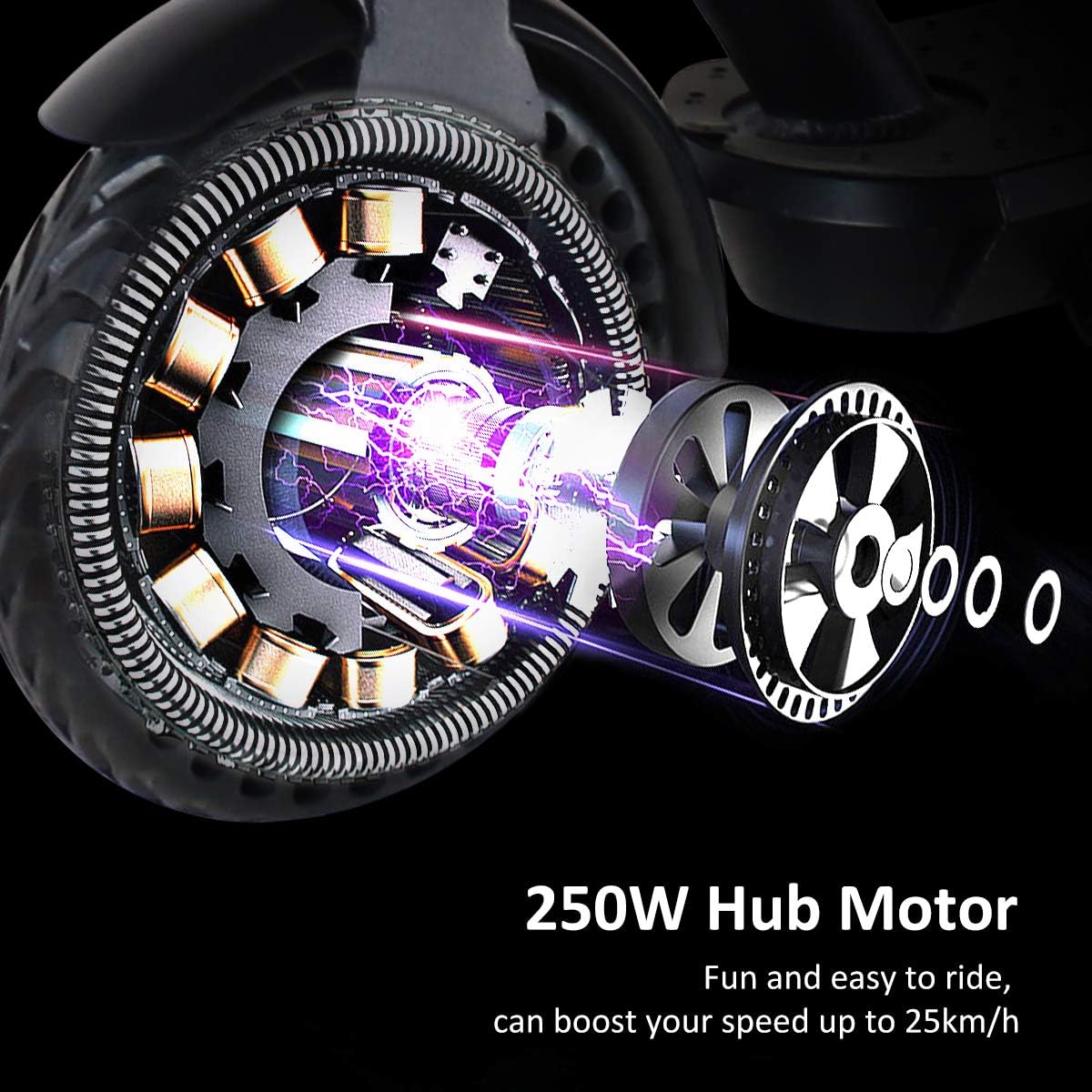
Whakaahua: He roto view of the 250W Hub Motor, illustrating its design and integration within the wheel, which provides efficient power for the scooter.
Pūtāhui me te Tautoko
Windgoo offers a 1-tau pūtāhui on this electric scooter. This warranty covers manufacturing defects and ensures the quality of your product.
If you encounter any problems or have questions regarding your Windgoo Electric Scooter, please do not hesitate to contact our customer support. We are committed to providing prompt assistance and will respond to your inquiries within 24 hours to resolve any issues you may experience.
For support, please refer to the contact information provided with your purchase documentation or visit the official Windgoo webpae.
Nga Korero Nui
- Always ride responsibly and be aware of your surroundings.
- Regularly check for loose parts and ensure all components are functioning correctly.
- Do not modify the scooter in any way, as this may void the warranty and compromise safety.
- Makahia nga pākahiko me nga waahanga hiko kia rite ki nga ture o te rohe.

Image: A person riding the Windgoo Electric Scooter on a paved surface in an urban environment, demonstrating its practical use for personal transportation.


