Kupu Whakataki
This manual provides essential information for the proper use and maintenance of your Sinocare Electronic Arm Blood Pressure Monitor. Please read this manual thoroughly before using the device to ensure accurate measurements and safe operation. Regular monitoring of blood pressure can help you stay informed about your health condition and assist medical professionals in understanding your medical history more precisely.
The Sinocare Blood Pressure Monitor is designed for convenient and reliable blood pressure measurement at home. It features a large LED display, voice broadcast function, and memory storage for two users.
Nga korero haumaru
- Me korero ki to rata i mua i te whakamahi i tenei taputapu mena kei a koe etahi mate hauora.
- Kaua e whakamahia tenei taputapu mo te tātaritanga, te maimoatanga ranei o tetahi raru hauora, mate ranei.
- Tiakina te taputapu kia kore e taea e nga tamariki.
- Kaua e whakamahia te taputapu i roto i te waka neke, i runga ranei i te waka rererangi.
- Avoid taking measurements immediately after bathing, exercising, or consuming alcohol/caffeine.
- Ensure the cuff is applied correctly and comfortably; over-tightening may cause discomfort.
Nga waahanga hua

Whakaahua: Ka mutuview of the Sinocare Blood Pressure Monitor's key features, including two-user support, accuracy, irregular heartbeat symbol, large LED display, heartbeat detection, one-button design, voice function, automatic shutdown, and Type-C power.
- Mahinga Reo: Features an English voice broadcast for readings, ideal for the elderly. Voice can be turned on/off.
- Whakaaturanga LED Nui: High-definition LED screen (89mm * 97mm) with large numbers for easy reading of systolic, diastolic, and pulse rate data.
- 2x90 Memory for 2 Users: Stores 90 readings for each of two users, including date and time, and displays the average of the last three readings.
- Irregular Heartbeat (IHB) Detection: Alerts the user to irregular heartbeats during measurement.
- Tohu Whakarōpūtanga Pēhanga Toto: Provides a color-coded indicator based on WHO guidelines for easy interpretation of blood pressure levels.
- Ringa Whakarerekē: Comes with a comfortable cuff suitable for arm circumferences from 22cm to 42cm.
- Smart Pressure & Over-pressure Protection: Ensures accurate and safe inflation during measurement.
- Kōwhiringa Hiko: Can be powered by 4 AAA batteries (included) or via AC/DC adapter with a Type-C port.
- Katia Aunoa: Device automatically turns off after a period of inactivity to conserve power.
Components and Display

Whakaahua: Taipitopito view of the monitor's components, including the charging port, setting button, switch button, and memory button. The screen indicators for irregular heartbeat, user groups, blood pressure levels, and cuff detection are also highlighted.
The Sinocare Blood Pressure Monitor consists of the main unit and an arm cuff. The main unit features a large LED display and several control buttons:
- Whakaatu LED: Shows systolic (SYS), diastolic (DIA), pulse (PUL) readings, irregular heartbeat symbol, user group, memory indicator, and cuff detection status.
- Pātene Tīmata/Kati: Ka tīmata, ka whakamutu hoki i te tukanga ine.
- Patene Tautuhinga: Used to adjust date, time, and voice settings.
- Patene Whakawhiti: Allows switching between User 1 and User 2 memory profiles.
- Pātene Pūmahara: Accesses stored measurement data.
- Tauranga Utu (Momo-C): For connecting an AC/DC adapter (not included) for power.
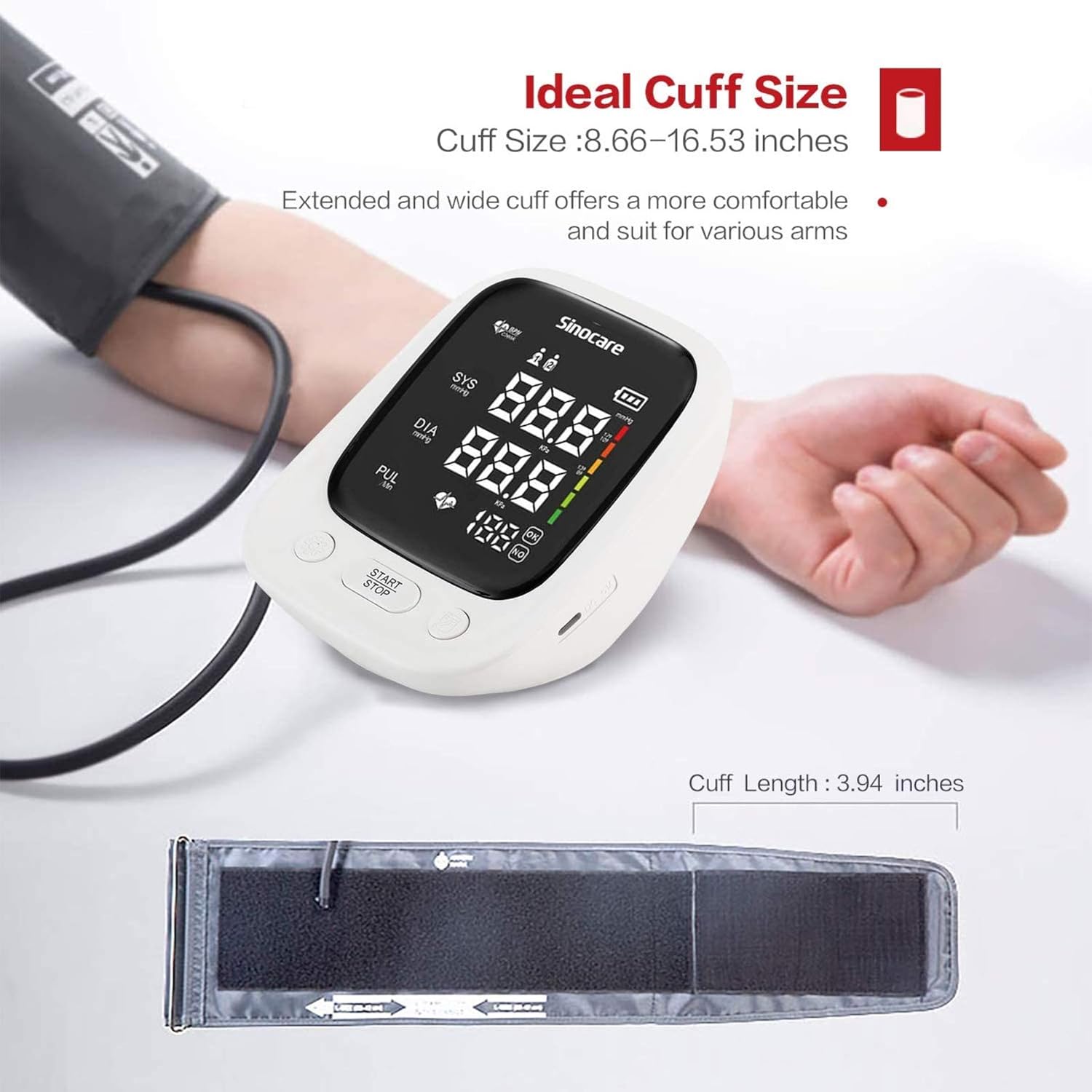
Image: The adjustable arm cuff, demonstrating its extended and wide design for comfortable fit on various arm sizes (22-42cm).
The arm cuff is designed to fit arm circumferences from 22cm to 42cm, ensuring a comfortable and accurate fit for most users.
Tatūnga
1. Tāuta Pūhiko
The device requires 4 AAA batteries. Open the battery compartment cover on the back of the monitor. Insert the batteries according to the polarity indicators (+/-) inside the compartment. Close the cover securely.
2. Te Whakapiri i te Aima
Connect the air tube of the arm cuff to the air jack on the side of the main unit. Ensure the connection is secure.
Nga Tohutohu Whakahaere
1. Wearing the Cuff
- Place the cuff on your bare upper arm, 1 to 2 cm above the elbow joint.
- Ensure the air tube points towards your forearm.
- The red marked area on the cuff should point towards the middle of your finger. Keep the nozzle pointing upwards.
- Wrap the cuff snugly around your arm, ensuring it is not too tight or too loose.
2. Measurement Posture and Conditions
Mō ngā pānui tika, whai i ēnei aratohu:
- Sit upright with your back straight and relaxed.
- Place your forearm on a table with your palm facing upwards.
- Ensure the center of the cuff is at the same height as your heart.
- Relax and avoid talking or moving during the measurement.
- Expose your upper arm or wear only thin clothing.
3. Te Whanganga i tetahi Ine

Image: A finger pressing the 'START/STOP' button, illustrating the one-key operation of the device.
- Once the cuff is correctly positioned and you are in the proper posture, press the TITIAKI/TATA pātene.
- The cuff will automatically inflate. Remain still and quiet.
- After the measurement is complete, the systolic, diastolic, and pulse rate readings will be displayed on the LED screen. If the voice function is enabled, the readings will be announced.
- The device will automatically store the reading in the selected user's memory.
4. Using the Voice Function
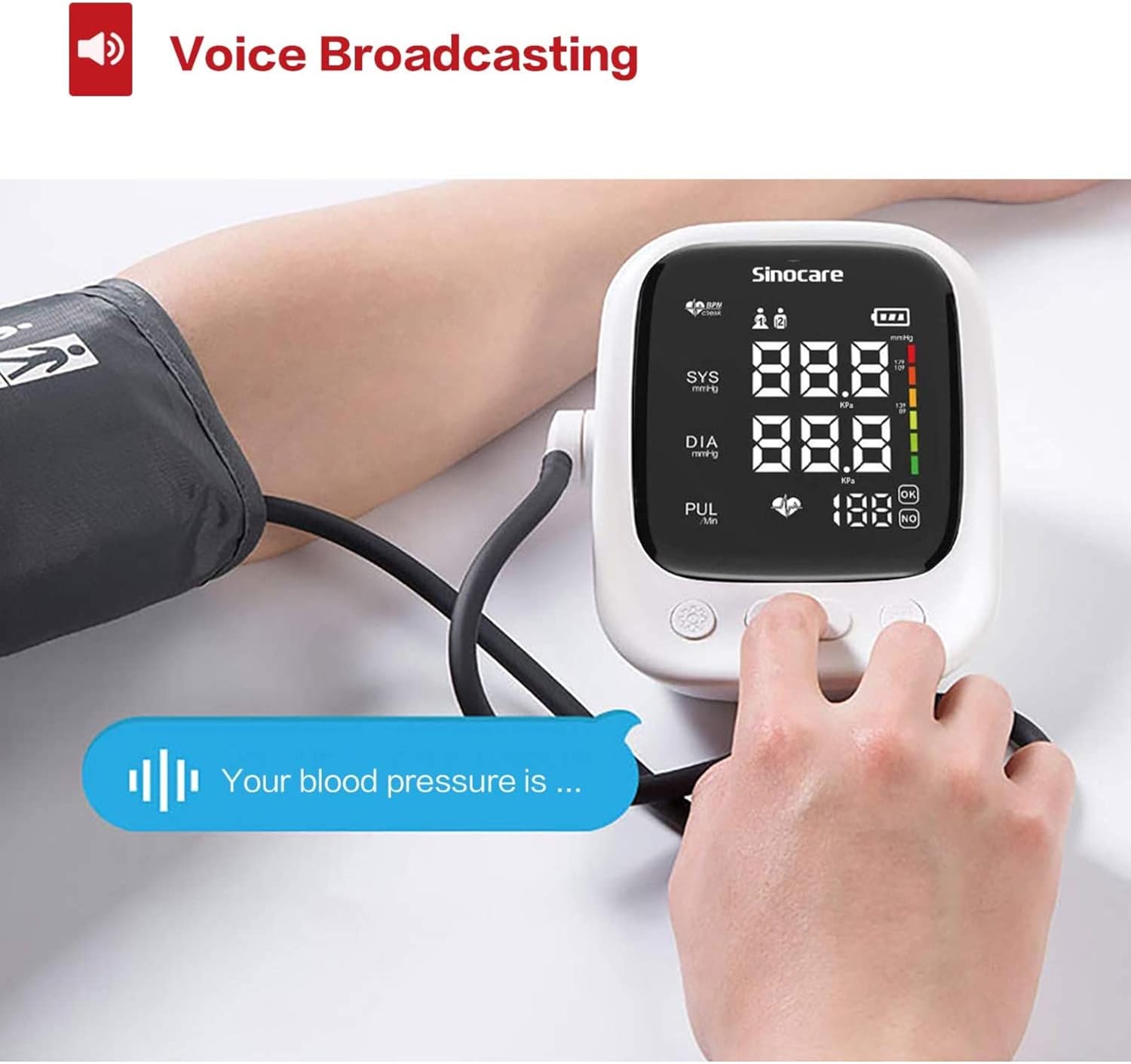
Image: The blood pressure monitor in use, with a voice bubble indicating the device's voice broadcasting feature for announcing readings.
The monitor is equipped with an English voice broadcast function. To enable or disable the voice, or to adjust its volume, refer to the settings menu accessible via the Tautuhinga pātene.
5. Memory Function (2 Users)

Image: The monitor highlighting its ability to switch between two user profiles, each storing 90 groups of readings to help monitor health.
The device supports two users, each with 90 memory slots. To switch between User 1 and User 2, press the Whakawhiti pātene. Ki view Tuhinga o mua, pehia te Maharahara button. The monitor will display the average of the last three readings for the selected user.
Te tiaki
- Te horoi: Horoia te mata me te poroporo ki te kakahu ngohengohe, maroke. Kaua e whakamahi i ngā mea horoi whakakoi, kaua hoki e rumakina te pūrere ki te wai.
- Rokiroki: Whakaorangia te taputapu ki te waahi makariri, maroke, mawehe atu i te ra tika me te wera nui.
- Pūhiko: Tango pākahiko ki te kore te taputapu e whakamahia mo te wa roa kia kore ai e pakaru.
Raparongoā
| Raruraru | Take pea | Rongoā |
|---|---|---|
| Kāore he whakaaturanga/Kāore te pūrere e tahuri | Pūhiko iti, mate rānei; Tāutanga pūhiko hē | Whakakapia ngā pākahiko; Tirohia te kaha o te pākahiko |
| Nga korero tika | Improper cuff placement; Incorrect posture; Movement/talking during measurement | Re-apply cuff correctly; Ensure proper posture; Remain still and quiet |
| Cuff does not inflate | Air tube not connected; Air leakage from cuff | Ensure air tube is securely connected; Check cuff for damage |
| Karere hapa i te mata | Specific error detected by the device | Refer to the error code in the manual (if provided by manufacturer) or contact customer support. |
Whakatakotoranga
- Tauira: AES-U181
- Ahu: 137mm * 109.2mm * 82 mm
- Taumaha: Approx. 255g ± 26g (excluding batteries)
- Whakaatu: Whakaaturanga LED
- Rahi Mata: 89mm * 97mm
- Rahinga Cuff: Adjustable, 22-42cm
- Pūmahara: 2 users, 90 sets of data each
- Puna Hiko: 4 AAA batteries (included) or AC/DC adapter (not included) via Type-C port
- Katia Aunoa: Ae
Pūtāhui me te Tautoko
For warranty information, technical support, or service inquiries, please refer to the warranty card included with your product or contact Sinocare customer service directly. Contact details can typically be found on the product packaging or the official Sinocare webpae.