Ka mutu te huaview
The electriQ Freestanding Mini Table Top Portable Dishwasher (Model EQDWTTGF) is designed for compact spaces, offering efficient dish cleaning without requiring permanent plumbing. It features a 2-place setting capacity, accommodating up to 22 items, making it ideal for small households, apartments, or caravans. This appliance can be used on a countertop and operates with a built-in water tank, providing flexibility in installation.
Key features include multiple wash programs, a quick wash cycle for lightly soiled items, and specialized programs for baby care and fruit washing. A delay timer allows for convenient scheduling of wash cycles.

Whakaahua 1: Mua view of the Electriq Mini Table Top Portable Dishwasher, showing dishes loaded inside.
Tatūnga me te Tāuta
This dishwasher is designed for ease of setup, requiring no permanent plumbing. It is suitable for countertop placement.
Te Whakakore me te Whakanoho Tuatahi
- Carefully remove the dishwasher and all accessories from its packaging.
- Place the dishwasher on a stable, level countertop surface. Ensure there is adequate space around the unit for ventilation and operation.
- The dimensions of the unit are approximately 43.5 cm (D) x 42 cm (W) x 43.5 cm (H).
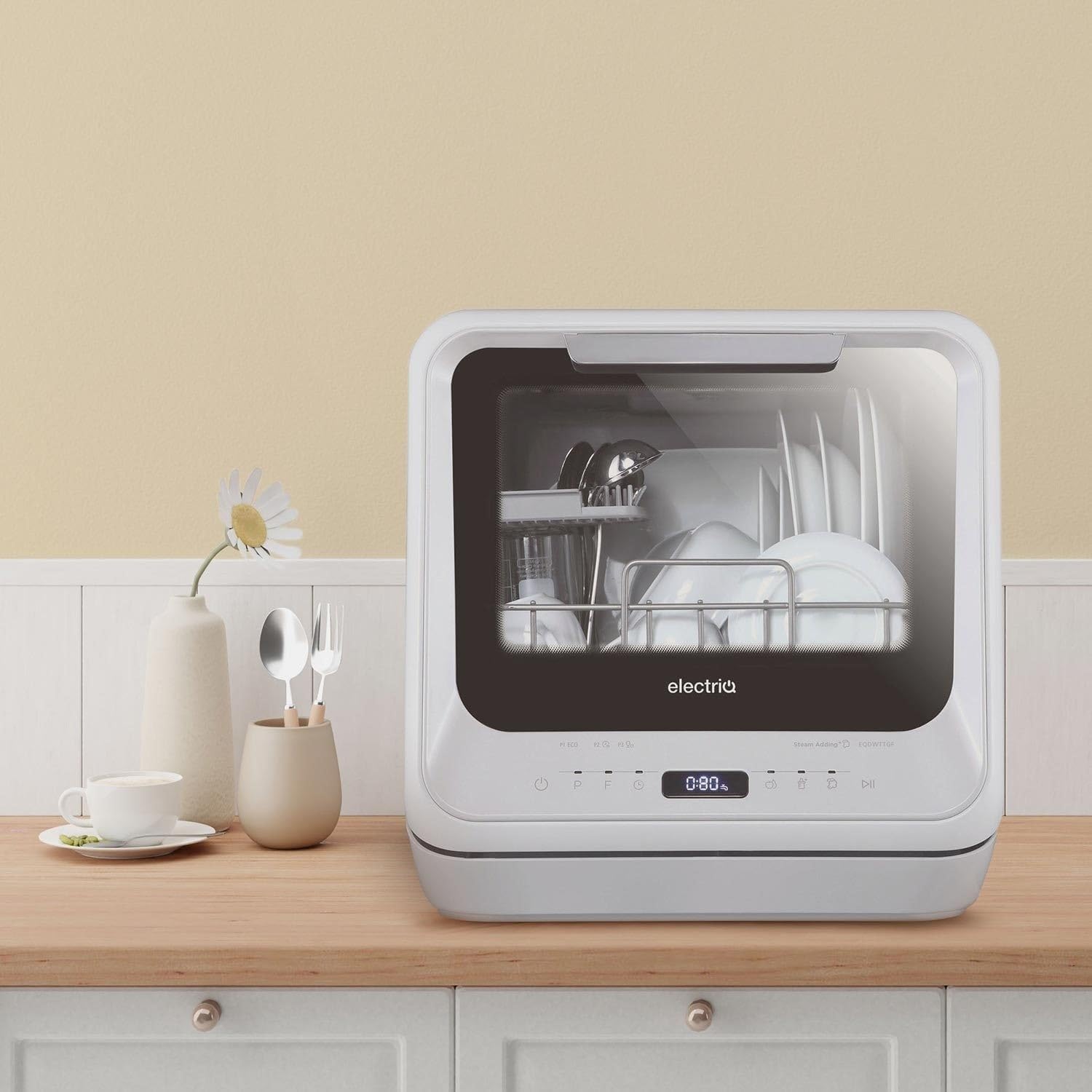
Figure 2: The dishwasher positioned on a kitchen countertop, demonstrating its compact size.
Tuku Wai
The dishwasher features a built-in water tank, eliminating the need for a direct water line connection. Water is manually added to the top of the unit.
- Open the water inlet cover on the top of the dishwasher.
- Using the provided jug, slowly pour clean water into the inlet. The dishwasher will emit a beep sound when the tank is full (approximately 5-6 litres).
- Katia kia mau te taupoki uru wai.
Hononga Whakaheke
The dishwasher includes a drainage pipe for automatic water discharge.
- Connect the drainage pipe to the waste outlet at the back of the dishwasher.
- Position the other end of the drainage pipe into a sink or suitable drain to allow for wastewater disposal. Ensure the pipe is securely placed to prevent spills.

Whakaahua 3: Whakamuri view of the dishwasher, highlighting the drainage pipe connection point.
Horoi Riu Tote
For optimal performance and to prevent limescale buildup, it is recommended to use dishwasher salt.
- Locate the salt container inside the dishwasher.
- Wewetehia te potae o te ipu tote.
- Pour approximately 1 litre of water into the container, followed by 130g of dishwasher salt.
- Securely screw the cap back on. This process may need to be repeated every 5-6 washes, depending on water hardness.
Nga Tohutohu Whakahaere
Uta Rihi
Proper loading ensures effective cleaning. The dishwasher has a 2-place setting capacity.
- Scrape off any large food particles from dishes before loading. Rinsing is recommended for heavily soiled items.
- Place plates, bowls, and cups in the designated racks. Ensure items do not block the spray arms.
- The maximum plate size that can be accommodated is approximately 9.5 inches (24 cm).
- Place cutlery in the cutlery basket, ensuring handles are facing down for better cleaning.
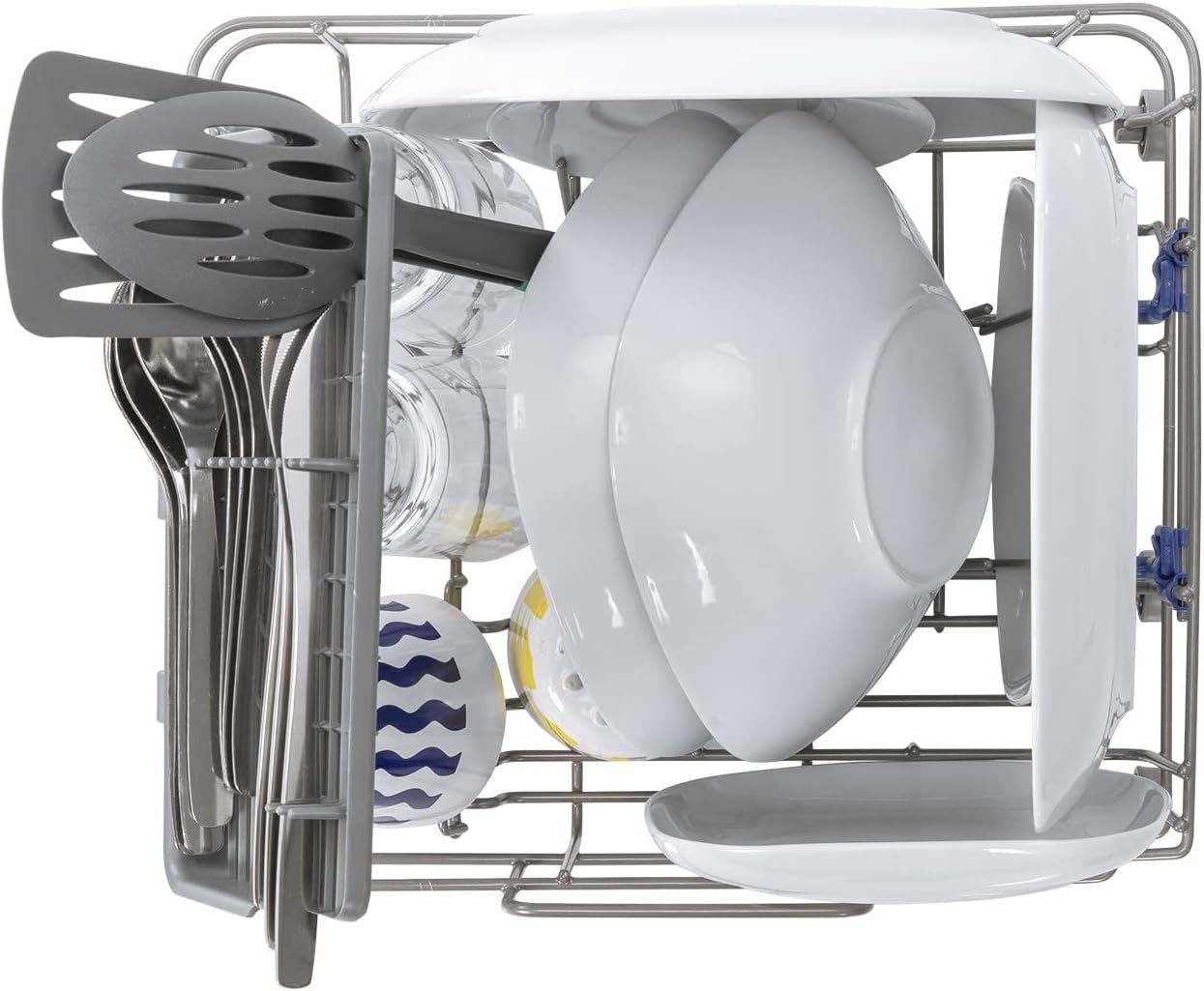
Whakaahua 4: He example of how to load dishes and cutlery into the dishwasher for optimal cleaning.
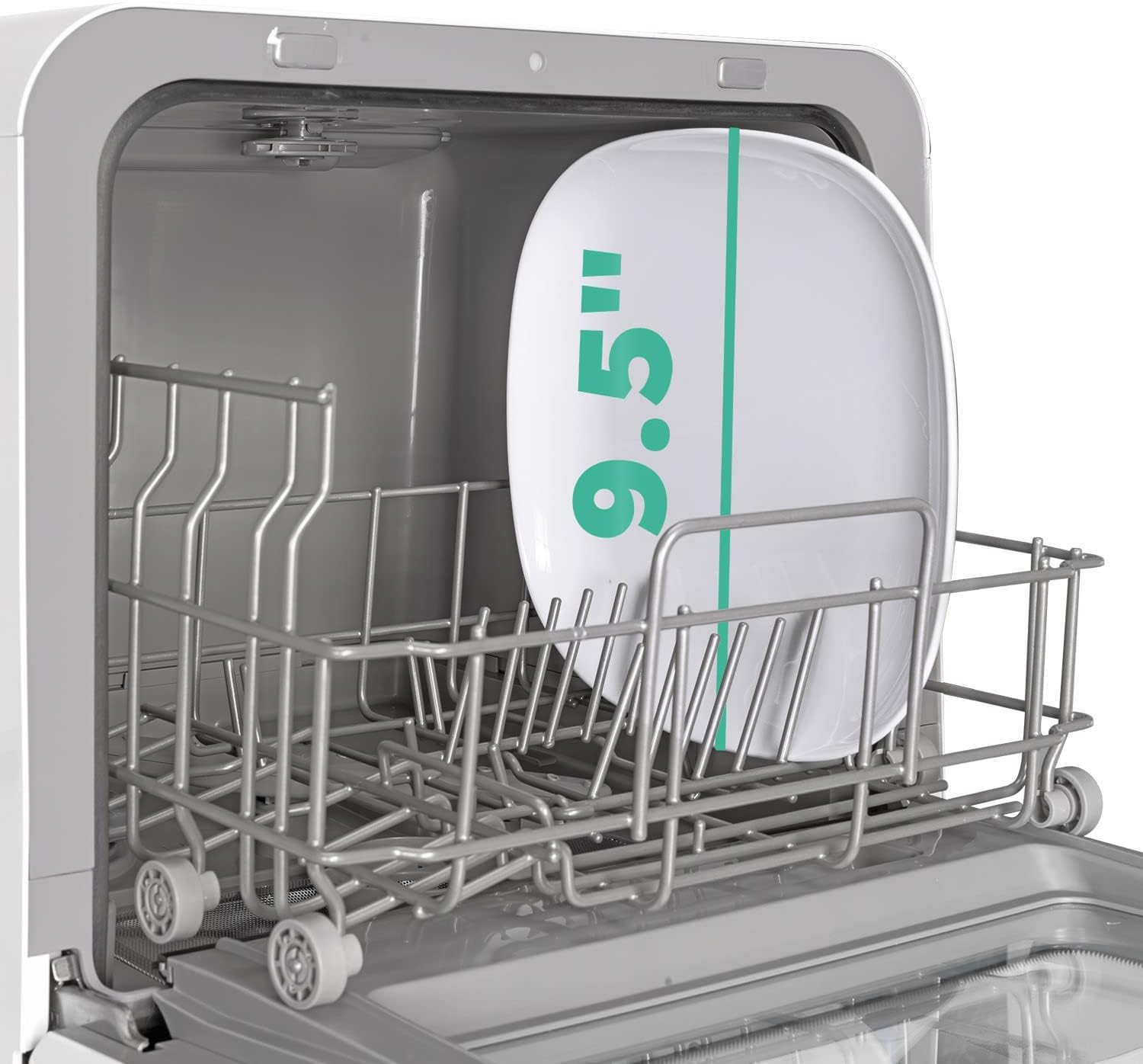
Figure 5: Illustration of the maximum plate size (9.5 inches) that fits inside the dishwasher.
Te taapiri i te horoi horoi
Use standard dishwasher tablets or powder detergent.
- Place one dishwasher tablet or the recommended amount of powder detergent into the detergent dispenser.
- Katia te taupoki dispenser.
Te Kōwhiringa Papatono
The dishwasher offers various wash programs to suit different needs.

Figure 6: The control panel displaying various program options and the digital timer.
| Papatono | Whakaahuatanga | Roa Angamaheni |
|---|---|---|
| Horoi Tere | For lightly soiled dishes, quick cleaning. | 29-30 meneti |
| 1-Haora Porohita | Standard wash, rinse, and dry cycle. | 1 haora |
| Tiaki Pepi | Thorough cleaning for baby bottles and accessories, includes steaming/sterilizing. | Approx. 2 haora |
| Fruit Wash | Gentle wash for fruits, can be hot or cold. Includes a fruit basket. | Taurangi |
| Ētahi atu Papatono | Refer to the control panel for additional programs (e.g., P1 ECO, P2, P3). | Taurangi |
Taima Whakaroa
The delay timer allows you to postpone the start of a wash cycle.
- Press the delay button to set the desired delay time, typically from 1 to 24 hours.
- Once set, the dishwasher will automatically start the selected program after the delay period.
Te Timata i te Porohita
- Ensure the water tank is filled and detergent is added.
- Select your desired wash program.
- Pēhia te pātene Tīmata hei timata i te huringa.
Te tiaki
Ko te tiaki i nga wa katoa ka mau te roa me te mahi tino pai o to horoi rihi.
Tātari horoi
- Periodically check and clean the filters located at the bottom of the dishwasher tub.
- Remove any food debris or residue from the filters under running water.
- Reinstall the filters securely after cleaning.
Refilling Dishwasher Salt
- Monitor the salt level indicator (if available) or refill approximately every 5-6 washes as described in the Setup section.
Whakapai Whānui
- Wipe down the exterior of the dishwasher with a soft, damp kakahu.
- Clean the interior periodically to remove any buildup or odors.
Raparongoā
If you encounter issues with your dishwasher, refer to the following common problems and solutions.
| Raruraru | Take pea | Rongoā |
|---|---|---|
| Ko nga rihi kaore e ma | Improper loading, clogged spray arms, insufficient detergent, dirty filters, heavily soiled items. | Ensure dishes are loaded correctly, clear spray arms, use appropriate detergent, clean filters, pre-rinse heavily soiled items. |
| Kaore te wai e whakaheke | Clogged drain pipe, kinked drain hose, blocked sink drain. | Check and clear the drain pipe, ensure the hose is not kinked, verify sink drain is clear. |
| Kaore e timata te horoi rihi | He take tuku hiko, he kuaha kaore i kati tika, kaore i kowhiria te kaupapa. | Check power connection, ensure door is fully latched, select a wash program. |
| Haruru nui | Dishes interfering with spray arms, foreign object inside. | Rearrange dishes, check for and remove any foreign objects. |
| Baby bottles greasy after wash | Specific residue, improper loading for bottle type. | Ensure bottles are thoroughly rinsed before loading. Experiment with loading positions to ensure water reaches all surfaces. Consider manual pre-cleaning for stubborn residue. |
Whakatakotoranga
| Āhuahira | Taipitopito |
|---|---|
| Waitohu | Hikohiko |
| Tauira | EQDWTTGF (WQP4 -2605) |
| Tauwehe Puka | Freestanding, Table Top |
| Te kaha | 2 Place Settings (approx. 22 items) |
| Nga Ahinga (D x W x H) | 43.5 cm x 42 cm x 43.5 cm |
| Voltage | 240 Volts |
| Auautanga Mahi | 50 Hz |
| Taumata Haruru | 58 dB |
| Nga waahanga motuhake | Portable, Touch Panel, Built-In Water Tank |
| Momo Mana | Paa |
| Rauemi | Glass (door), other materials |
| Nga Waahanga kei roto | Dishwasher, fruit basket (for fruit wash program) |
Pūtāhui me te Tautoko
For warranty information, technical support, or service inquiries, please refer to the documentation provided with your purchase or contact Electriq customer service. Electriq is committed to providing top-notch customer service for its products.
Tena koa pupurihia to tohu mo te hoko mo etahi kereme whakamana.


