1. Nga Korero Haumaru Nui
Please read this manual thoroughly before operating your appliance to ensure safe and efficient use. Keep these instructions for future reference.
- Me whakarite kia momotu te taputapu i te hiko i mua i te horoinga, i te tiakitanga rānei.
- Kaua e tūkinotia te ara iahiko whakamatao.
- Kaua e whakamahia nga taputapu hiko i roto i nga waahanga rokiroki kai, ki te kore ko nga momo e kiia ana e te kaiwhakanao.
- Ko tenei taputapu he mea mo te kainga anake.
- Puritia nga tuwhera hau kia kore e arai.
2. Tatūnga me te Tāuta
2.1 Te Wetewete
Remove all packaging materials, tapes, and protective films from the refrigerator. Inspect the appliance for any damage during transit. Report any damage to your retailer immediately.
2.2 Whakanoho
- Whakatakotoria te pouaka whakamātao ki runga i tētahi mata mārō, papatahi. Whakamahia ngā waewae whakarerekē hei whakataurite i te taputapu mēnā e tika ana.
- Ensure adequate ventilation around the appliance. Maintain a minimum distance of 5 cm (2 inches) from walls and other appliances to allow for proper air circulation.
- Avoid placing the refrigerator near heat sources such as direct sunlight, ovens, or radiators, as this will increase energy consumption.
- The appliance is designed for operation in ambient temperatures between 10°C and 43°C.

Whakaahua 1: Waho view of the Beko RDNE430K12B No Frost Refrigerator. This image shows the overall design and black finish of the appliance.
2.3 Hononga Hiko
Connect the appliance to a grounded power outlet with a voltage of 240 Volts AC. Ensure the power cord is not trapped or damaged. Do not use extension cords or multiple socket adapters.
2.4 Whakamahi Tuatahi
After installation, wait at least 4 hours before plugging in the appliance to allow the refrigerant to settle. Once plugged in, allow the refrigerator to operate for 6-12 hours empty to reach its optimal operating temperature before loading with food.
2.5 Hurihuri Kuaha
This refrigerator features a reversible door, allowing it to open from either the left or right side. If you wish to change the door opening direction, please refer to the detailed instructions provided in the separate installation guide or contact qualified service personnel.
3. Te whakahaere i to pouaka pouaka
3.1 Te Mana Pawera
The Beko RDNE430K12B refrigerator uses a mechanical control system with a sensor to regulate temperature. The thermostat dial, typically located inside the refrigerator compartment, allows you to adjust the cooling intensity. Turn the dial to a higher number for colder temperatures and a lower number for warmer temperatures. Start with a medium setting and adjust as needed based on ambient temperature and food load.
3.2 Nga Aratohu Pupuri Kai
Mā te penapena tika i ngā kai ka noho hou tonu, ā, ka ārai hoki i te pirau.
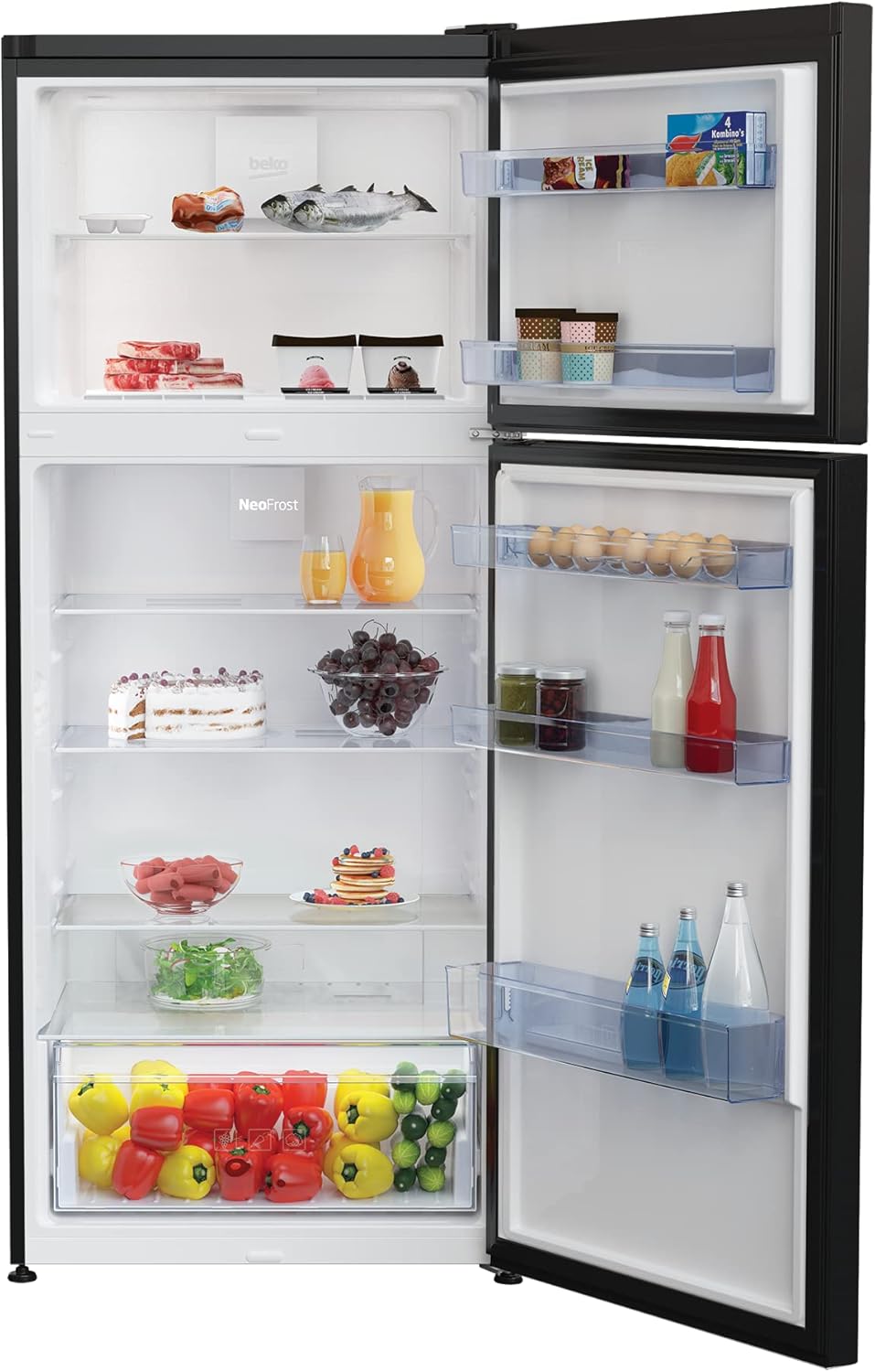
Whakaahua 2: Roto view of the Beko RDNE430K12B refrigerator, showing various food items stored on shelves and in door bins. This illustrates typical food placement within the fresh food and freezer compartments.
- Fresh Food Compartment (274 Liters): Store fruits and vegetables in the crisper drawer. Dairy products, cooked foods, and beverages should be placed on the shelves. Ensure food is covered to prevent drying out and odor transfer.
- Wāhanga Pouaka Tio (93 Rita): Use for long-term storage of frozen foods. Ensure packages are sealed to prevent freezer burn. The daily freezing capacity is 6 kg, and daily ice making capacity is 1.5 kg.
3.3 NeoFrost Technology
Your Beko RDNE430K12B refrigerator features NeoFrost technology, which provides two separate cooling systems for the fresh food and freezer compartments. This prevents odor transfer between compartments and maintains optimal humidity levels in the fresh food section, keeping food fresher for longer. The No Frost system eliminates the need for manual defrosting.
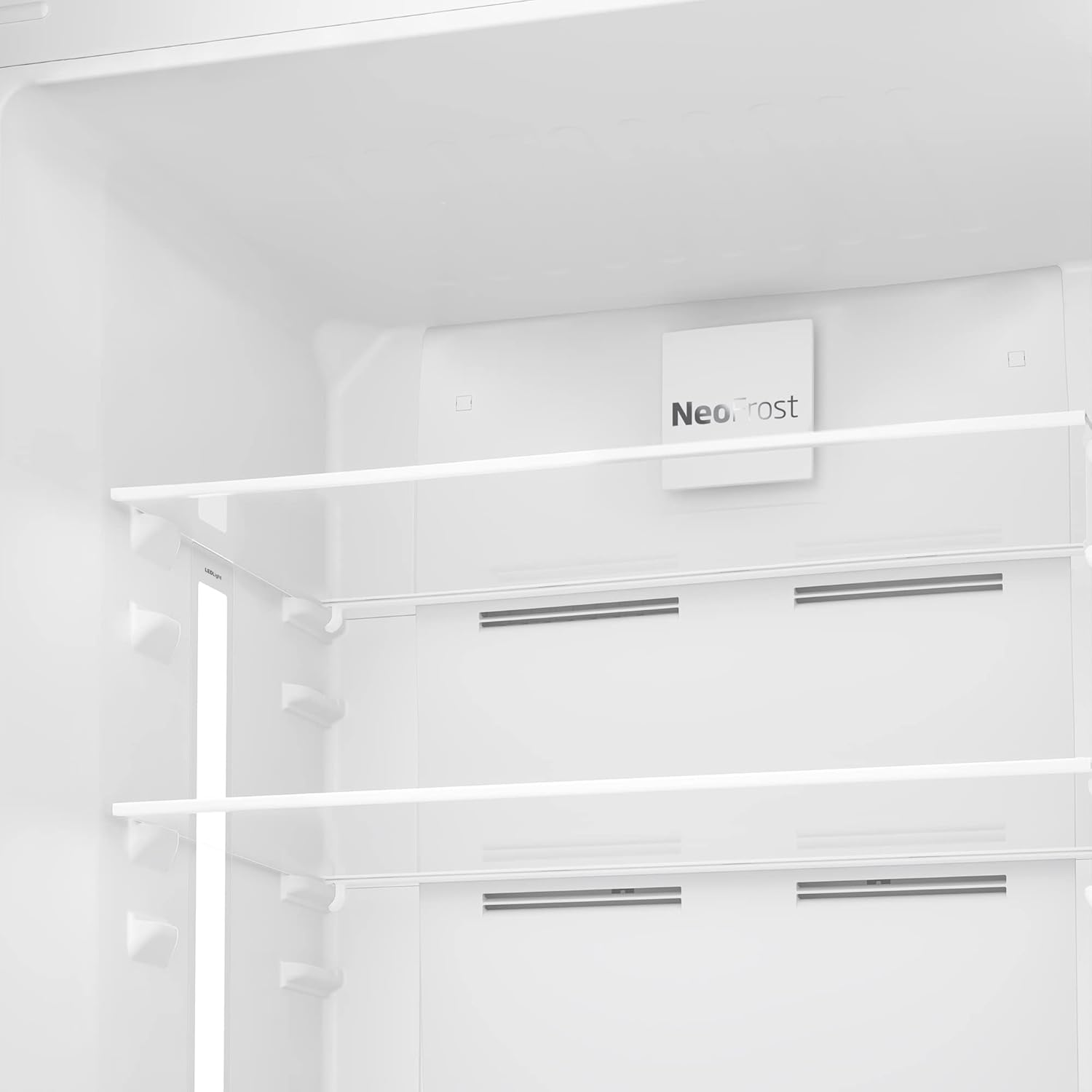
Whakaahua 3: Whakatata view of the "NeoFrost" label inside the refrigerator compartment, indicating the advanced cooling technology.
3.4 Rarama o roto
The refrigerator compartment is illuminated by energy-efficient LED lighting located on the left wall, providing clear visibility of the contents.
4. Tiaki me te Whakapai
Ma te horoi me te tiaki i nga wa katoa ka mau te roa me te pai o te mahi o to pouaka pouaka.
- I mua i te horoi: Always unplug the refrigerator from the power outlet before cleaning.
- Horoi o Roto: Horoia ngā mata o roto ki te kakahu ngohengoheampened with a solution of warm water and a mild, non-abrasive detergent. Rinse with clean water and dry thoroughly. Do not use harsh chemicals or abrasive cleaners.
- Horoi o waho: Clean the exterior surfaces with a soft cloth and a mild detergent. For the black finish, avoid abrasive materials that could scratch the surface.
- hiri kuaha: Regularly check and clean the door gaskets to ensure they are free from food particles and remain flexible. Clean with warm soapy water and dry thoroughly. The anti-bacterial gasket helps prevent bacterial growth.
- Anti-bacterial Odor Filter: The refrigerator is equipped with an anti-bacterial odor filter. Refer to the full product manual for instructions on cleaning or replacing this filter, if applicable.
- Kaore he Pūnaha Hukapapa: As this is a No Frost appliance, manual defrosting of the freezer compartment is not required.
5. Te Raru
I mua i te whakapā atu ki te ratonga, tirohia nga take me nga otinga e whai ake nei:
| Raruraru | Take pea | Rongoā |
|---|---|---|
| Kaore te pouaka pouaka e mahi. | No power, plug loose, fuse blown. | Check power supply, ensure plug is secure, check household fuses. |
| Kāore i te rawaka te makariri o te pāmahana i roto. | Door opened too frequently, thermostat set too high, large amount of warm food added, poor ventilation. | Avoid frequent door openings, adjust thermostat to a colder setting, allow warm food to cool before placing inside, ensure proper ventilation. |
| Haruru nui. | Appliance not level, items rattling inside, compressor noise (normal). | Level the appliance using adjustable feet, rearrange items, compressor noise is normal during operation. |
| He wai kei raro o te pouaka pouaka whakamātao. | Kua āraia te kōhao waikeri. | Whakawāteahia te kōhao wai i te tuarongo o te wāhanga pouaka whakamātao. |
Mena ka mau tonu te raruraru i muri i te tirotiro i ēnei āhuatanga, whakapā atu ki ngā kaimahi ratonga whai mana.
6. Whakatakotoranga
Key technical specifications for the Beko RDNE430K12B Refrigerator:
| Āhuahira | Taipitopito |
|---|---|
| Tau tauira | RDNE430K12B |
| Waitohu | Peko |
| Raukaha Tapeke | 430 rita |
| Rōrahi Wāhanga Kai Hou | 274 rita |
| Rōrahi Wāhanga Whakatio | 93 rita |
| Momo Defrost | No Frost (Frost Free) |
| Momo Tāuta | Pūkana |
| Tae | Pango |
| Voltage | 240 Volts (AC) |
| Taumata Haruru | 43 dB |
| Teitei | 172 cm |
| Whānui | 70 cm |
| Taumaha Tuku | 70 kg |
| Momo Rawa | Stainless Steel (finish/components) |
| Nga waahanga o te tatau | Reversible Door, Anti-bacterial Door Handle |
| Nga waahanga motuhake | Anti-bacterial Gasket, Anti-bacterial Odor Filter, LED Lighting |
7. Pūtāhui me te Tautoko
Your Beko RDNE430K12B Refrigerator is covered by a manufacturer's warranty. Please refer to the warranty card included with your appliance for specific terms, conditions, and duration of coverage.
For technical assistance, service requests, or to purchase genuine spare parts, please contact Beko customer support or an authorized service center in your region. Contact details can typically be found on the Beko official webpae, i roto ranei i to tuhinga whakamana.


