1. Neke atu i teview
The SINOTIMER TM618 timer module is designed to automatically control the power supply to various electrical apparatus, such as streetlights, neon signs, billboards, and other appliances, based on a preset time schedule. This digital timer switch features a rechargeable internal battery to maintain program settings during power outages.

Whakaahua 1.1: Mua view of the TM618 Timer Module.
2. Nga waahanga matua
- He hoahoa kiato me te mokowhiti.
- Engineered with advanced digital timing technology.
- High functionality for precise time control.
- Built-in rechargeable battery for program retention.
- Multiple ON/OFF programs for weekly scheduling.
3. Tatūnga me te Tāuta
3.1. Hoahoa Waea
Proper wiring is crucial for the safe and correct operation of the TM618 timer module. Refer to the diagram below for connection details. Ensure power is disconnected before performing any wiring.
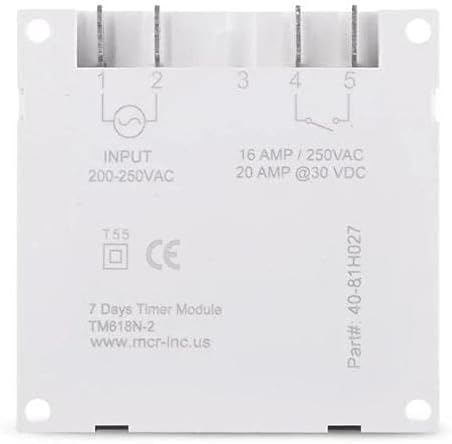
Figure 3.1: Wiring Terminals and Specifications.
- Input (200-250VAC): Connect your main power supply to terminals 1 and 2.
- Output (16 AMP / 250VAC, 20 AMP @30 VDC): Terminals 3, 4, and 5 are for the controlled output. Terminal 3 is common, Terminal 4 is normally open (NO), and Terminal 5 is normally closed (NC). Connect your load to the appropriate terminals based on your application (e.g., between 3 and 4 for normally off, turning on when timed).
3.2. Initial Power-Up and Battery
Upon initial power-up, the timer's internal rechargeable battery (40mAh) will begin charging. This battery saves your programmed settings during power interruptions. Allow the unit to be powered for at least 30 minutes for the battery to gain sufficient charge before programming or disconnecting power.

Figure 3.2: Internal 40mAh Rechargeable Battery.
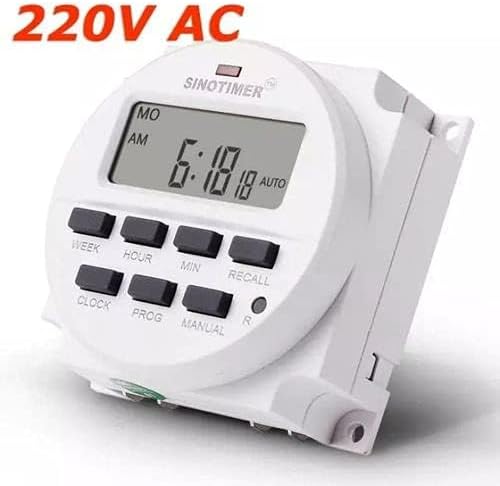
Figure 3.3: TM618 Operating Voltage (220V AC shown).
4. Nga Tohutohu Whakahaere
The TM618 timer allows for precise control with up to 16 ON/OFF programs per day or week. The buttons on the front panel are used for setting the time and programs.

Figure 4.1: Timer Module with Manual.
4.1. Te Tautuhinga Wā o nāianei
- Pehia te KARAKA button and hold it.
- I te wa e mau ana KARAKA, perehi WIKI ki te whakarite i te ra o te wiki.
- I te wa e mau ana KARAKA, perehi HOUR ki te whakarite i te haora o naianei.
- I te wa e mau ana KARAKA, perehi MIN ki te tautuhi i te meneti o naianei.
- Tukua te KARAKA pātene. Kua whakaritea te wā inaianei.
4.2. Ngā Wā Whakakā/Whakaweto o te Hōtaka
Ka tautoko te matama ki te 16 nga kaupapa ON/OFF. Kei ia hotaka he wa ON me tetahi wa OFF.
- Pehia te MAUI kotahi te paatene. Ka whakaatu te whakaaturanga "1 ON".
- Perehi WIKI to select the day(s) for this program (e.g., MO, TU, WE, TH, FR, SA, SU, or combinations like MO-FR, SA-SU, MO-SA, etc.).
- Perehi HOUR to set the desired ON hour.
- Perehi MIN to set the desired ON minute.
- Perehi MAUI ano. Ka whakaatu te whakaaturanga "1 OFF".
- Repeat steps 2-4 to set the desired OFF day(s), hour, and minute for this program.
- Perehi MAUI to advance to the next program ("2 ON") or to exit programming mode if no more programs are needed.
- To clear a program, press WHAKAMAHI i te wa viewing the specific ON or OFF program you wish to clear.
4.3. Whakakahoretanga A-Ringa
Pehia te MANUAL pātene hei huri i roto i ngā momo whakahaere rerekē:
- MOTO ON: The timer is currently ON and will follow the programmed schedule.
- MATE MONO: The timer is currently OFF and will follow the programmed schedule.
- ON: The timer is forced ON, overriding any programs.
- WATE: The timer is forced OFF, overriding any programs.
4.4. Recall Function
Ko te WHAKAMAHI button (often marked 'R' or 'RESET') is used to clear specific program settings or to reset the timer. A small pinhole button (R) is typically used for a full reset, which clears all programs and resets the time.
5. Tiaki
5.1. Tiaki Pūhiko
The TM618 features a built-in rechargeable battery. To ensure its longevity and proper function, keep the timer connected to power for regular charging. If the timer is stored for extended periods without power, the battery may discharge, requiring a full charge upon reconnection.
5.2. Te horoi
Clean the exterior of the timer module with a soft, dry cloth. Do not use abrasive cleaners or solvents, as these can damage the plastic casing or display. Ensure no liquids enter the device.
6. Te Raru
- He waatea te whakaaturanga: Check power connections. Ensure the unit has been powered for at least 30 minutes to charge the internal battery.
- Ngā papatono kāore e whakahaerehia ana: Verify that the current time is set correctly. Check that the timer is in "AUTO ON" or "AUTO OFF" mode, not forced ON/OFF. Review your programmed ON/OFF times for accuracy.
- Karekau te taima e whakautu ana ki nga paatene: Perform a full reset using the small 'R' pinhole button. If issues persist, ensure proper power supply.
7. Whakatakotoranga
| Huanga | Uara |
|---|---|
| Ingoa Waitohu | Sinotimer |
| Tau tauira | TM618N-2 (Item model number: WN-5KCF-8SVQ) |
| Whakauru Voltage | 200-250VAC |
| Raukaha Putanga | 16 AMP / 250VAC, 20 AMP @30 VDC |
| Te maha o nga Papatono | 16 nga kaupapa ON/OFF |
| Awhe Wā | 1 minute to 168 hours (7 days) |
| Pūhiko o roto | 40mAh ka taea te utu |
| Rauemi | Kirihou |
| Tae | Mā |
| Hunga Hua | 25 x 18 x 8cm; 11g |
7.1. Nga rahinga
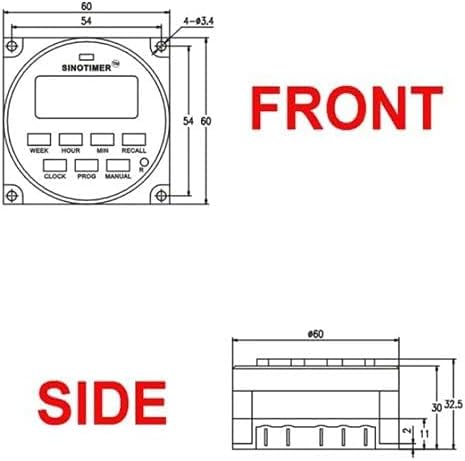
Figure 7.1: Front Dimensions.

Figure 7.2: Side Dimensions.
8. Pūtāhui me te Tautoko
For information regarding product warranty, technical support, or service, please refer to the documentation provided with your purchase or contact your retailer. Keep your proof of purchase for any warranty claims.


