1. Kupu Whakataki
Thank you for choosing an Indesit appliance. This user manual provides essential information for the safe and efficient operation, installation, and maintenance of your Indesit TWE 71252 S EU front-loading washing machine. Please read these instructions carefully before using the appliance and keep them for future reference. Proper use and maintenance will ensure optimal performance and extend the lifespan of your washing machine.
2. Nga korero haumaru
Haumaru Whānui:
- Ko tenei taputapu he mea mo te kainga anake.
- Do not allow children to play with the appliance. Supervise children to ensure they do not climb into the drum.
- Wewetehia te taputapu i nga wa katoa i mua i te horoi, te whakahaere ranei i tetahi mahi tiaki.
- Do not operate the washing machine if the power cord or plug is damaged, or if the appliance itself is faulty. Contact qualified service personnel.
- Me whakarite kia tika te whenua o te taputapu.
Haumarutanga Tāuta:
- Remove all transit bolts and packaging materials before use. Failure to do so can cause severe damage.
- Install the appliance on a firm, level floor. Adjust the feet to ensure stability.
- Me whakarite kia pai te hau huri noa i te taputapu.
- Honoa te ngongo ngongo wai ki te tap wai matao. Me whakarite kia piri nga hononga katoa kia kore ai e pakaru.
- The drain hose must be securely fixed to prevent displacement during operation.
3. Hua Neke Atuview
Your Indesit TWE 71252 S EU washing machine features a user-friendly design with essential components for efficient laundry care.

Whakaahua 3.1: Mua view of the Indesit TWE 71252 S EU washing machine. This image shows the overall design, including the control panel at the top, the detergent dispenser on the left, and the main loading door in the center.
Wae matua:
- Paewhiri Mana: Located at the top, featuring digital touch controls, push buttons, and a rotary knob for program selection.
- Kaihoroi Hopara: A pull-out drawer for adding detergent and fabric softener.
- Uta Kuaha: Front-loading door for adding and removing laundry.
- Kororo. He kowiri tira te roto, hei horoi i ngā kākahu.
- Tātari Wairewa: Kei te taha raro o mua, e wātea ana mō te horoi.

Whakaahua 3.2: Close-up of the detergent dispenser and control panel. This view highlights the various compartments within the dispenser for pre-wash, main wash, and softener, along with the program selection knob and digital display.

Whakaahua 3.3: o roto view of the stainless steel drum. This image shows the perforated surface of the drum, designed for effective washing and rinsing, and the agitator paddles.
4. Tāuta me te Tatūnga
He mea nui te whakaurunga tika mo te mahi me te roa o to miihini horoi.
4.1 Wewetewete:
- Tangohia marietia ngā rauemi takai katoa, tae atu ki te turanga polystyrene me te kiriata tiaki.
- Remove the transit bolts located at the rear of the machine. These bolts secure the drum during transport and must be removed before operation. Keep them for future transport if needed.
4.2 Turanga:
- Place the washing machine on a flat, stable surface, away from direct sunlight or heat sources.
- Adjust the adjustable feet at the bottom of the machine to ensure it is perfectly level. Use a spirit level to verify.
- Ensure there is sufficient space around the machine for ventilation and ease of access.
4.3 Hononga Wai:
- Connect the supplied water inlet hose to the cold water tap. Hand-tighten the connection, then use a wrench for a quarter turn.
- Connect the other end of the inlet hose to the water inlet valve at the back of the washing machine.
- Position the drain hose into a standpipe or over the edge of a sink, ensuring it is securely fixed to prevent it from falling out during draining. The height of the drain point should be between 65 cm and 100 cm from the floor.
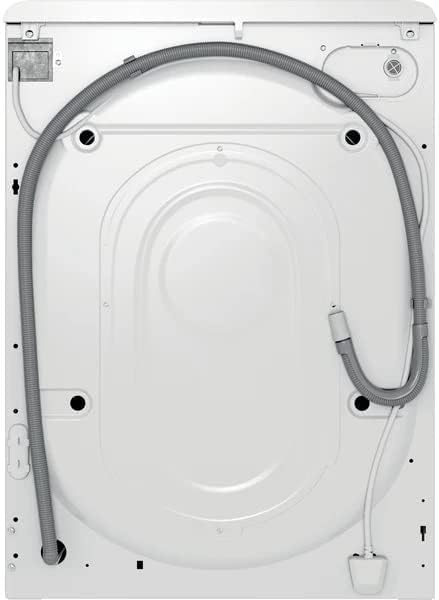
Whakaahua 4.1: Whakamuri view of the washing machine. This image illustrates the connections for the water inlet hose (typically blue or white) and the drain hose, along with the power cable.
4.4 Hononga Hiko:
- Plug the power cord into a properly earthed electrical socket.
- Kaua e whakamahi i nga taura toronga, i nga mono-maha ranei.
4.5 First Wash Cycle:
- Before washing clothes, run an empty wash cycle to clean the drum and remove any manufacturing residues.
- Tāpirihia he iti o te hopi horoi ki te wāhanga horoi matua.
- Select a short, hot wash program (e.g., 60°C cotton cycle) and start the machine.
5. Nga Tohutohu Whakahaere
Whāia ēnei mahi hei whakahaere pai, hei whakahaere haumaru hoki i tō mīhini horoi.
5.1 Loading Laundry:
- Whakatuwheratia te tatau uta.
- Kōmaka horoi mā te momo papanga, te tae, me te tohu o te poke.
- Load laundry loosely into the drum, ensuring not to overload. The 7kg capacity refers to dry laundry weight.
- Katia te kuaha kia kati ra ano kia kati.
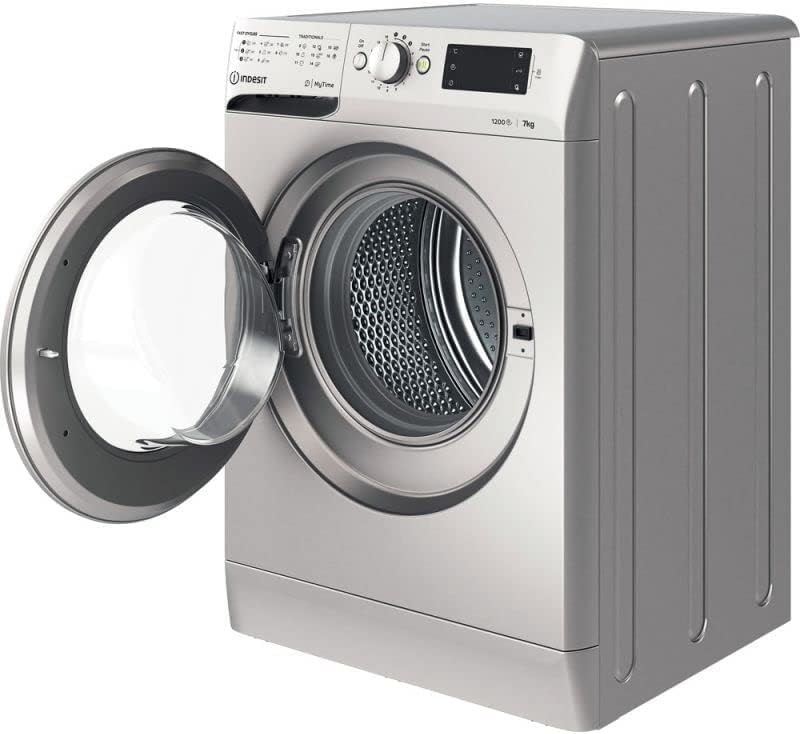
Whakaahua 5.1: Mua view of the washing machine with the door open. This image shows the wide opening for easy loading and unloading of laundry into the drum.
5.2 Adding Detergent and Additives:
- Unuhia ki waho te kaitapa horoi horoi.
- Add the appropriate amount of detergent to the main wash compartment (usually marked 'II' or 'Main Wash').
- If using fabric softener, pour it into the designated compartment (usually marked with a flower symbol or 'Softener'). Do not exceed the 'MAX' level.
- Katia ata te pouaka toha.
5.3 Selecting a Program:
- Turn the rotary knob on the control panel to select the desired wash program. The machine offers various programs for different fabric types and soil levels, including a 'Quick Wash' option.
- Use the digital touch controls and push buttons to adjust additional settings such as temperature, spin speed (up to 1200 RPM), or delay start, if available for the selected program.
5.4 Starting a Cycle:
- Press the 'Start/Pause' button to begin the wash cycle. The indicator light will illuminate.
5.5 Pausing/Canceling a Cycle:
- To pause a cycle, press the 'Start/Pause' button. The indicator light will flash.
- To cancel a cycle, press and hold the 'Start/Pause' button for a few seconds, or turn the program selector knob to 'Off' and then back to a new program.
5.6 End of Cycle:
- The machine will signal the end of the cycle (e.g., with an audible alert or a specific display message).
- Open the door and remove the laundry promptly to prevent creasing and odors.
- Waiho te tatau kia paku tuwhera kia maroke ai te pahu i te hau.
6. Tiaki me te Whakapai
Mā te tiaki auau ka tino pai te mahi me te akuaku.
6.1 Cleaning the Detergent Dispenser:
- Hutia rawatia te pouaka toha.
- Tangohia ngā wāhanga katoa e taea te tango, ka horoia i raro i te wai rere.
- Horoia te whare o te pouaka ki te paraihe.
- Huihuia ka whakauru ano i te pouaka.
6.2 Cleaning the Drum:
- Run a maintenance wash cycle (e.g., a hot cycle with a drum cleaning agent or white vinegar) every few months to prevent odor and residue buildup.
6.3 Cleaning the Door Seal:
- Horoia te hiri tatau rapa i muri i ia horoinga hei tango i te paru, te paru, me te makuku. Mā tēnei ka ārai i te harore me ngā haunga kino.
6.4 Cleaning the Drain Filter:
- Periodically clean the drain filter to prevent blockages and ensure proper drainage.
- Whakatuwheratia te taupoki i te taha raro o mua o te mīhini.
- Whakanohoia he ipu papaku ki raro hei hopu i te toenga wai.
- Slowly unscrew the filter, allowing water to drain.
- Tangohia te huruhuru hipi, ngā moni, ngā mea tauhou rānei i te tātari me tōna pūhara.
- Rinse the filter under running water and screw it back in firmly. Close the cover.

Whakaahua 6.1: Close-up of the drain filter access. This image shows the removable cap that covers the drain filter, which needs to be regularly cleaned to prevent blockages.
6.5 External Cleaning:
- Horoia te taha o waho o te miihini ki te ngohengohe, damp kakahu. Kaua e whakamahi i nga kai horoi me nga whakarewa.
7. Te Raru
Before contacting customer service, try these simple solutions for common issues.
| Raruraru | Take pea | Rongoā |
|---|---|---|
| Kaore e timata te miihini | No power; Door not closed; Program not selected; Start/Pause button not pressed. | Tirohia te pūtake hiko; Me whakarite kia kati pai te tatau; Tīpakohia he hōtaka; Pēhia te Tīmata/Whakamutu. |
| Kaore te wai e whakakiia | Katia te pa wai; Ko te ngongo ngongo kuuru kua kurua; He iti rawa te pehanga wai. | Whakatuwherahia te tap wai; Whakatikahia te ngongo; Tirohia te pehanga wai o te whare. |
| Kaore te wai e whakaheke | Kua piko, kua āraia rānei te ngongo waikeri; Kua āraia te tātari waikeri. | Straighten or clear drain hose; Clean the drain filter (see Section 6.4). |
| Wiri nui / haruru | Ko nga tutaki whakawhiti kaore i tangohia; Kaore te miihini i te taumata; Te kawenga koretake. | Remove transit bolts (if not already); Adjust feet to level machine; Redistribute laundry evenly. |
| Ngā toenga hopi horoi i runga i ngā kākahu | Too much detergent; Detergent dispenser blocked; Insufficient rinse. | Reduce detergent amount; Clean dispenser; Select an extra rinse option if available. |
8. Whakatakotoranga
Detailed technical specifications for the Indesit TWE 71252 S EU washing machine.
| Āhuahira | Whakatakotoranga |
|---|---|
| Tauira | TWE 71252 S EU |
| Waitohu | Indesit |
| Te kaha | 7 kg |
| Morahi Tere Miro | 1200 RPM |
| Ahu (H x W x D) | 85 cm x 59.5 cm x 54 cm |
| Taumaha | 66.5 kg |
| Pungao Pungao | A+++ 90% |
| Rauemi Paoro | Kowiri tira |
| Momo Mana | Digital Touch, Push Button, Rotary Knob |
| Momo Tāuta | Pūkana |
| Tae | Hiriwa |
| Nga waahanga motuhake | Durable, Quick Wash Option |
| Nga Waahanga kei roto | Miihini horoi |
9. Pūtāhui me te Tautoko
For warranty information, please refer to the warranty card provided with your appliance or contact your retailer. Keep your proof of purchase (receipt or invoice) as it will be required for any warranty claims.
If you encounter issues that cannot be resolved using the troubleshooting guide, please contact Indesit customer service or an authorized service center. Do not attempt to repair the appliance yourself, as this may void your warranty and pose safety risks.


