1. Nga Korero Haumaru Nui
Please read this manual carefully before using your washing machine. Keep it for future reference. Always follow basic safety precautions to reduce the risk of fire, electric shock, and injury.
- Me whakarite kia tika te turanga o te taputapu.
- Do not allow children to play with or in the appliance.
- Wewetehia te taputapu i mua i te horoi, te mahi tiaki ranei.
- Do not wash items that have been previously cleaned in, washed with, soaked in, or spotted with gasoline, dry-cleaning solvents, or other flammable or explosive substances.
- Kaua e utaina, rokirokia ranei tenei taputapu ki te waahi ka kitea ki te huarere, ki te makariri ranei.
2. Tatūnga me te Tāuta
2.1 Te Wetewete
Carefully remove all packaging materials. Ensure all components are present and undamaged. Retain packaging for future transport if needed.
2.2 Removing Transport Bolts
Before operating the washing machine, you must remove the transport bolts located at the rear of the appliance. Failure to do so will cause severe vibration and damage during operation.

Whakaahua 1: Whakamuri view of the washing machine. Locate and remove the transport bolts before installation.
2.3 Te Turanga me te Whakataumata
Place the washing machine on a firm, level floor. Adjust the leveling feet to ensure the appliance is stable and balanced. A level washing machine reduces noise and vibration during operation.

Whakaahua 2: Te taha view of the washing machine. Adjust the feet to ensure the appliance is level.
2.4 Hononga Wai me te Hiko
Connect the water inlet hose to a cold water tap. Ensure connections are tight to prevent leaks. Plug the power cord into a grounded electrical outlet. Do not use extension cords.
3. Nga Tohutohu Whakahaere
3.1 Paewhiri Mana Ki rungaview
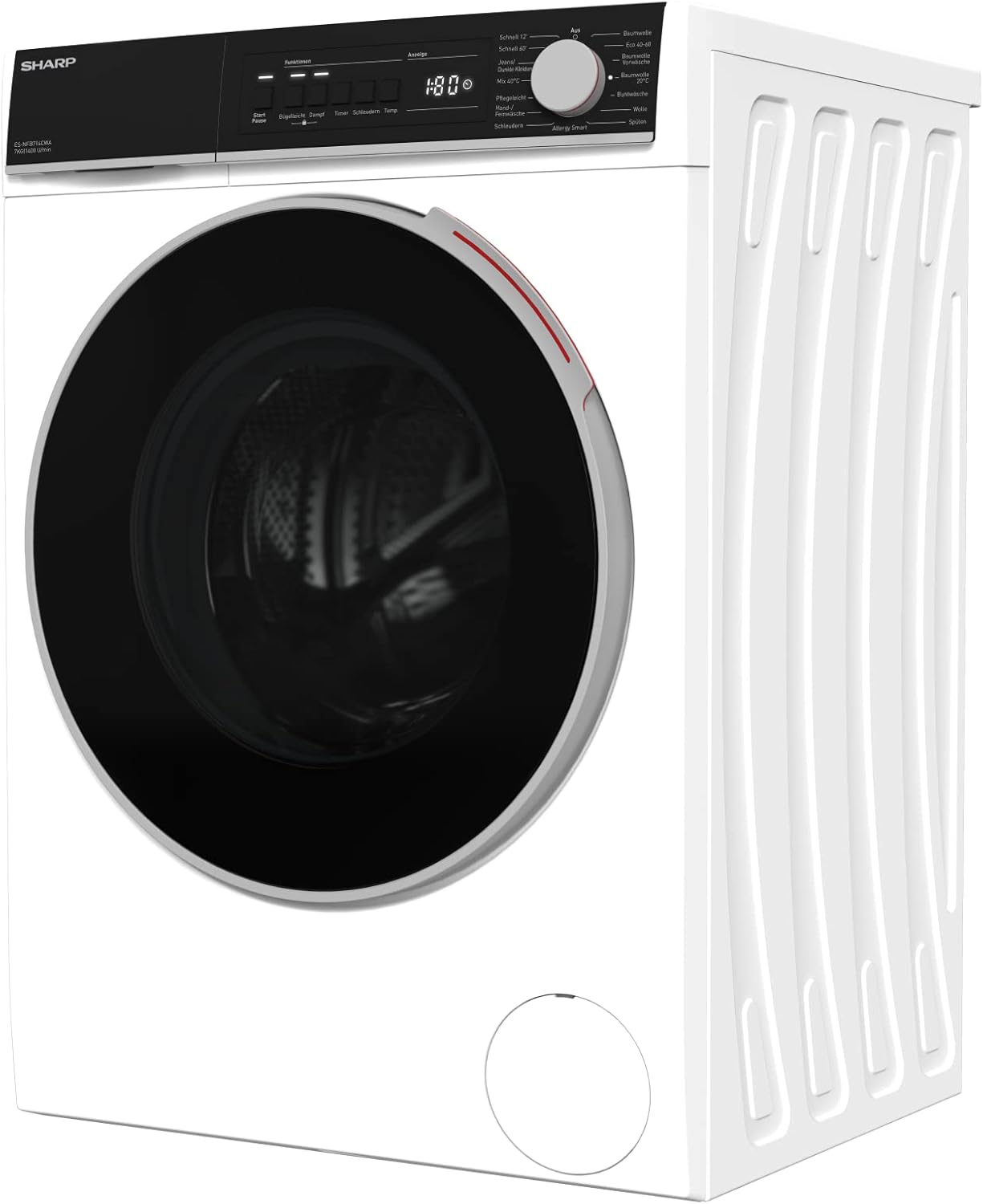
The control panel features a program selector dial, function buttons, and a digital display. Familiarize yourself with these controls for optimal use.

Whakaahua 3: Taipitopito view of the control panel, showing the program dial, display, and function buttons.
3.2 Uta horoi horoi
Open the door and load laundry into the drum. Do not overload the machine; leave enough space for clothes to tumble freely. Close the door firmly.

Whakaahua 4: The washing machine drum with the door open, ready for loading laundry.
3.3 Te taapiri i te hopi me nga taapiri
Unuhia ki waho te afata toha horoi horoi. Tāpirihia te nui o te hopi horoi ki te wahanga horoi matua me te whakangawari papanga ki tana waahanga kua tohua. Tirohia ki te kohinga horoi mo nga taunakitanga inenga.
Whakaahua 5: The detergent dispenser drawer, showing compartments for detergent and fabric softener.
3.4 Tīpakonga Papatono me te Tīmata
Turn the program selector dial to choose your desired wash program (e.g., Cotton, Eco 40-60, Quick 12'). Use the function buttons to select additional options like steam or extra rinse. Press the Start/Pause button to begin the cycle.
- Advanced Inverter Motor: This motor provides powerful yet quiet operation, enhancing durability and energy efficiency.
- Mahi Steam: Select programs offer a steam option for deep cleaning and improved hygiene, reducing allergens and making clothes easier to iron.
4. Tiaki
4.1 Te Whakapai i te Kaihoko Hoahoa
Regularly clean the detergent dispenser drawer to prevent residue buildup. Remove the drawer, rinse it under warm water, and clean any stubborn deposits with a brush. Reinsert the drawer.
4.2 Te horoi i te Pahu
Run a maintenance wash cycle (e.g., a hot wash with no laundry and a descaling agent) periodically to clean the drum and remove any odors or residue.
4.3 Te Whakapai i te Tātari Whakarere
The drain filter should be cleaned regularly to ensure proper drainage and prevent blockages. Refer to the full manual for detailed instructions on accessing and cleaning the filter.
4.4 Tiaki o waho
Horoia te taha o waho o te miihini horoi ki te ngohengohe, damp kakahu. Kaua e whakamahi i nga kai horoi me nga whakarewa.
5. Te Raru
If you encounter issues with your washing machine, consult the following table before contacting service.
| Raruraru | Take pea | Rongoā |
|---|---|---|
| Kaore e timata te miihini | Ko te taura hiko kaore i te mono; kare i tutakina tika te tatau; kāore te hōtaka i kōwhiria; Karekau te paatene Timata/Tatari kia pehia. | Check power connection; ensure door is latched; select a program; press Start/Pause. |
| Kaore te wai e whakakiia | Water tap closed; water inlet hose kinked; water pressure too low. | Whakatuwherahia te tap wai; whakatika ngongo; tirohia te pehanga wai o te whare. |
| Wiri nui / haruru | Kaore i tangohia nga tutaki waka; miihini kore taumata; kawenga koretake. | Tangohia nga tutaki waka; te whakatika i nga waewae; tohatoha ano i te horoi i roto i te pahū. |
| Te rerenga wai | Hose connections loose; detergent dispenser overflowing; drain filter not properly closed. | Tighten hose connections; do not overfill detergent dispenser; ensure drain filter is secure. |
6. Whakatakotoranga Hangarau
- Waitohu: koi
- Tauira: ES-NFB714CWA-DE
- Raukaha: 7 kg
- Tere Āmio Mōrahi: 1400 rpm
- Karaehe Puai Pungao: A (A-G scale)
- Ahu (WxDxH): 59.7 x 52.7 x 84.5 cm
- Taumaha: 72.5 kg
- Taumata Haruru (Tino): 75 dB
- Voltage: 220 Volt
- Wattage: 2200 watt
- Nga waahanga motuhake: Advanced Inverter Motor, Steam Function, AquaStop


Whakaahua 6: EU Energy Label and Technical Data Sheet for the ES-NFB714CWA-DE model. For more details, visit the Paetukutuku EPREL.
7. Pūtāhui me te Tautoko
7.1 Nga Korero Whakaputanga
This Sharp washing machine comes with a standard manufacturer's warranty of 24 marama mai i te ra o te hokonga. Tena koa pupurihia to tohu mo te hoko mo nga kereme whakamana. Ka hipokina e te whakamana nga hapa hangahanga me nga mahi kino i raro i nga tikanga whakamahi noa.
7.2 Tautoko Kiritaki
For technical assistance, spare parts, or warranty service, please contact Sharp customer support. You can find contact information and additional resources on the official Sharp webpae ma te toro ranei ki te Toa Sharp i runga i a Amazon.


