Kupu Whakataki
The Intel NUC 10 Performance NUC10i3FNHN is a compact barebone system designed for versatility. It features a customizable board and chassis, allowing users to integrate their preferred memory, storage, and operating systems. This mini PC is suitable for a wide range of applications, including business, education, and DIY projects, offering a powerful computing solution in a small form factor.
Ihirangi mokete
Upon opening your Intel NUC 10 Performance kit, please verify that all components are present:
- Intel NUC 10 Performance kit - NUC10i3FNHN Barebone System
- Uira hiko US
Note: Memory, storage, and operating system are not included and must be purchased separately. Ensure the power cord provided is compatible with your region's electrical outlets.
Tatūnga
Follow these steps to set up your Intel NUC system:
- Tāuta Pūmahara (RAM):
Locate the DDR4 SDRAM compatible slots inside the NUC chassis. Carefully insert the memory modules into the slots until they click into place. Ensure proper alignment to prevent damage.
- Tāutahia te Rokiroki:
The NUC supports various storage options, including M.2 SSDs and 2.5-inch SATA drives. Connect your chosen storage device to the appropriate Serial ATA/600 interface or M.2 slot. Secure the drive with the provided screws if necessary.
- Tūhono Pikitia:
Connect your monitor to one of the available video output ports (e.g., HDMI, USB-C/Thunderbolt). Connect your keyboard, mouse, and other USB-compatible devices to the available USB ports. The NUC features 7 USB ports for extensive connectivity.
- Hononga Whatunga:
For wired network access, connect an Ethernet cable to the Gigabit Ethernet port. For wireless connectivity, ensure your NUC has a Wi-Fi module installed (if not integrated) and configure it after OS installation.
- Hononga Hiko:
Connect the provided US power cord to the NUC's power input and then to a wall outlet. Ensure the connection is secure.
- Initial Boot and OS Installation:
Press the power button to turn on the NUC. Follow the on-screen prompts to install your preferred operating system (e.g., Windows 10, Linux distribution). You may need to create a bootable USB drive with the OS installer.

Whakaahua 1: Mua view of the Intel NUC 10 Performance NUC10i3FNHN, showing the power button, USB ports, and SD card slot.
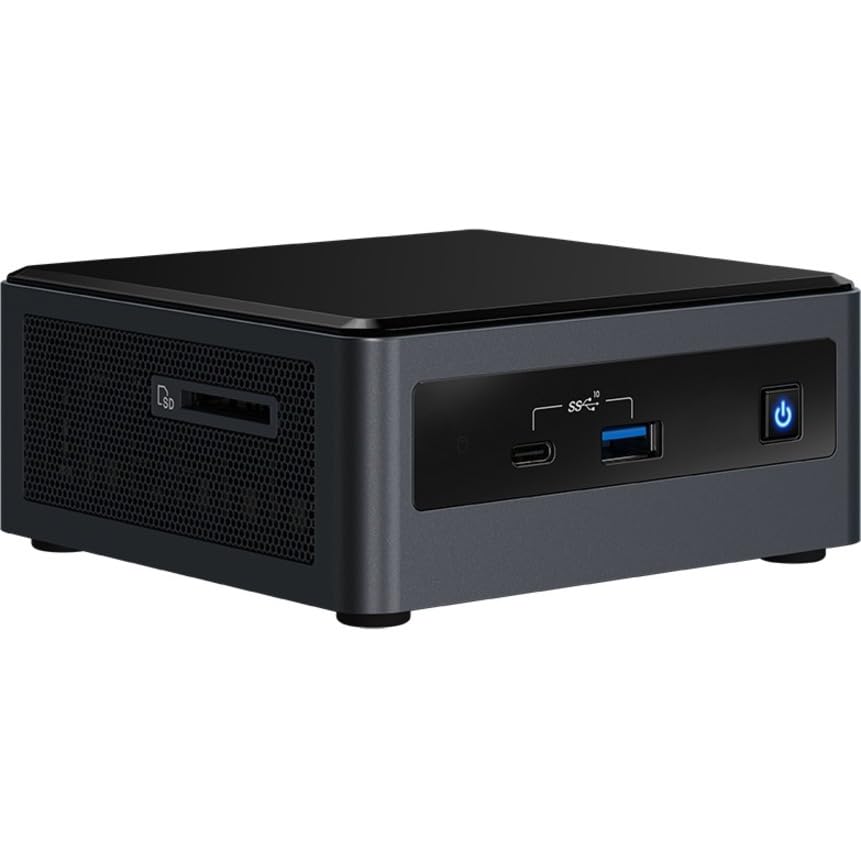
Whakaahua 2: Taha view of the Intel NUC 10 Performance NUC10i3FNHN, highlighting the ventilation and additional ports.
Nga Tohutohu Whakahaere
Once your Intel NUC is set up and the operating system is installed, you can begin using it for various tasks.
- Hiko Whakaka/Weto: Press the power button located on the front panel to turn the system on or off. For a controlled shutdown, use the operating system's shutdown function.
- Tūhono Pūrere USB: Utilize the multiple USB ports (including USB 2.0 and USB 3.0/3.1) to connect external hard drives, flash drives, printers, and other peripherals.
- Network Usage: The Gigabit Ethernet port provides high-speed wired network connectivity, ideal for large file transfers and stable internet access. Wireless connectivity (if equipped) allows for flexible network access.
- Whakaatu Putanga: Connect to displays using the available HDMI or USB-C/Thunderbolt ports. The NUC supports high resolutions, including 3840x2160 and 4096x2304, for a clear visual experience.
- Ororongo: Connect speakers or headphones to the audio jack for sound output.
Te tiaki
Ko te tiaki i nga wa katoa ka awhina i te wa roa me te mahi tino pai o to Intel NUC.
- Tango Puehu: Periodically clean the exterior of the NUC with a soft, dry cloth. Use compressed air to gently clear dust from ventilation grilles to maintain proper airflow and prevent overheating. Ensure the system is powered off before cleaning.
- Whakahōu Pūmanawa: Regularly update your operating system, drivers, and BIOS/firmware. Visit the Intel support website for the latest drivers specific to your NUC model.
- Whakaha Uepu: Ensure all cables connected to the NUC are neatly organized and not obstructing ventilation.
- Nga Tikanga Taiao: Operate the NUC in a well-ventilated area, away from direct sunlight, heat sources, and excessive moisture.
Raparongoā
Ko tenei waahanga e whakarato ana i nga otinga mo nga take noa ka pa ki a koe.
- Kāore he hiko/Pūnaha Kāore e tahuri ana:
Ensure the power cord is securely connected to both the NUC and a working electrical outlet. Verify that the power outlet is active. If you are using an international power adapter, ensure it is compatible with your region's voltage and plug type. Some users have reported receiving power cords incompatible with their region; a replacement may be necessary.
- Kore Putanga Whakaatu:
Check that the monitor is powered on and the video cable (HDMI, USB-C) is securely connected to both the NUC and the monitor. Try a different video port or cable if available. Ensure the monitor input source is correctly selected.
- System Not Booting After RAM/Storage Installation:
Verify that the RAM modules and storage devices are correctly seated in their respective slots. Refer to the installation steps in the Setup section. Ensure the storage device contains a valid operating system.
- Mahinga Puturi:
Ensure you have installed sufficient RAM (up to 64 GB DDR4) and a fast storage solution (e.g., NVMe SSD). Close unnecessary applications. Check for background processes consuming resources. Ensure drivers are up to date.
- Nga Take Hononga Whatunga:
For wired connections, check the Ethernet cable and router/modem. For wireless, ensure the Wi-Fi module is enabled and drivers are installed. Verify network settings in your operating system.
Whakatakotoranga
Detailed technical specifications for the Intel NUC 10 Performance NUC10i3FNHN Barebone System:
| Āhuahira | Taipitopito |
|---|---|
| Tau tauira | NUC10i3FNHN |
| Tukatuka | Intel Core i3 10th Gen i3-10110U Dual-core (2 Core) |
| Tere Tukatuka | 1.9 GHz |
| RAM (Max Supported) | 64 GB DDR4 SDRAM |
| Tere Mahara | 2666 MHz |
| Kaitukatuka Whakairoiro | Whakairoiro Intel UHD (Whakaurua) |
| Taumira Mata Max | 4096x2304 |
| Atanga Puku Maama | Serial ATA/600, Solid State (M.2) |
| Tauranga USB | 7 (including USB 2.0, USB 3.0/3.1, USB-C) |
| Whatunga | Gigabit Ethernet, Bluetooth (Wireless Type) |
| Operating System (Compatible) | Windows 10 (Barebone system, OS not included) |
| Taumaha Tūemi | 1.25 pauna |
| Rahi Hua (LxWxH) | 6.1 x 5 x 4.8 inihi |
| Tae | Pango |
Pūtāhui me te Tautoko
Mo nga korero whaimana me te tautoko hangarau, tirohia te Intel mana webpae, whakapā atu ranei ki te ratonga kiritaki Intel. Puritia to tohu hoko mo nga kereme whakamana.
Rauemi ipurangi:
Note: Warranty terms may vary by region and retailer. Always consult the official Intel warranty policy for the most accurate information.