1. Kupu Whakataki
The RadioMaster R86 is a compact and versatile 6-channel receiver designed for remote control (RC) applications, particularly suitable for FPV drones and other RC models. It supports both PWM and SBUS output formats and is compatible with the FrSky D8 protocol, making it suitable for use with various RadioMaster transmitters and other D8 compatible systems.
Ko nga ahuatanga matua ko:
- Hongere: 6 channels (PWM), 8 channels (SBUS)
- Awhe Auautanga: 2400-2483.5Mhz
- Hōputu Huaputa: PWM / SBUS
- Awhe Whakauru Hiko: 4.5-8.4V

Image 1.1: The RadioMaster R86 6CH Receiver, showing its compact design and pin layout.
2. Tatūnga me te Tāuta
2.1 Tāutanga Tinana
Install the R86 receiver in your RC model, ensuring it is securely mounted and protected from vibrations and moisture. Position the antennas away from carbon fiber, metal, or other conductive materials to maximize signal reception. For optimal performance, ensure the antennas are oriented at a 90-degree angle to each other.

Image 2.1: RadioMaster R86 receiver with its dual antennas extended, illustrating proper antenna placement for optimal signal.
2.2 Hononga Waea
Connect the receiver to your flight controller or servos according to your model's requirements. The R86 provides both PWM and SBUS outputs.
- Putanga PWM: Channels 1-6 are available as individual PWM outputs. Connect your servos or ESCs directly to these pins.
- SBUS Output: The SBUS output provides all 8 channels over a single wire. Connect this to the SBUS input of your flight controller.
- Whakauru Hiko: The receiver operates on a voltage range of 4.5V to 8.4V. Ensure your power source (e.g., BEC from ESC, flight controller) provides power within this range.

Atahanga 2.2: Whakatata view of the R86 receiver's pin headers, labeled CH1 through CH6, for PWM and SBUS connections.
2.3 Binding Procedure (FrSky D8 Mode)
To establish communication between your RadioMaster R86 receiver and your transmitter, follow these binding steps:
- Power on your RadioMaster R86 receiver. The LED indicator on the receiver will begin to flash slowly, indicating it is not bound.
- Patohia me te pupuri i te KAUPAPA pātene i runga i te kaiwhiwhi.
- While holding the BIND button, power on your transmitter.
- On your transmitter, navigate to the model setup menu and select the FrSky D8 protocol.
- Initiate the binding process on your transmitter. Refer to your transmitter's manual for specific instructions on how to enter bind mode.
- The LED on the R86 receiver should change from slowly flashing to solid, indicating a successful bind.
- Once bound, power cycle both the receiver and the transmitter to exit bind mode and confirm the connection.
Note: If binding fails, ensure your transmitter is set to the correct D8 protocol and repeat the steps. Some transmitters may require specific firmware versions for D8 compatibility.
3. Nga Tohutohu Whakahaere
After successful binding, the receiver will establish a connection with your transmitter upon power-up. The solid LED on the receiver indicates a stable link. Always perform a range check before flying, especially with new setups or in new environments.
3.1 Taki Awhe
With your model powered on and the receiver linked, activate the range check mode on your transmitter (refer to your transmitter's manual). Walk a reasonable distance away from your model (e.g., 30-50 meters) while observing control surface responses. Ensure consistent control throughout the range check area. If control is lost or intermittent, re-evaluate antenna placement and check for potential interference sources.
3.2 Failsafe Configuration
It is critical to configure failsafe settings on your transmitter to ensure your model reacts predictably in case of signal loss. Common failsafe options include holding the last known positions or setting channels to specific positions (e.g., throttle to zero, control surfaces neutral). Consult your flight controller and transmitter manuals for detailed failsafe setup procedures.
4. Tiaki
The RadioMaster R86 receiver is designed for durability, but proper care will extend its lifespan and ensure reliable operation.
- Parenga: Keep the receiver protected from physical impact, moisture, and extreme temperatures. Consider using heat shrink or a protective case if operating in harsh environments.
- Antennas: Regularly inspect antenna wires for damage (cuts, kinks). Damaged antennas can significantly reduce range and signal quality. Ensure they are securely attached to the receiver.
- Hononga: Verify all wiring connections are secure and free from corrosion. Loose connections can lead to intermittent signal loss.
- Te horoi: If necessary, gently clean the receiver with a soft, dry brush to remove dust or debris. Avoid using liquids or solvents.
5. Te Raru
| Raruraru | Take pea | Rongoā |
|---|---|---|
| Receiver LED not solid after binding attempt |
|
|
| Intermittent signal loss or poor range |
|
|
| No control output (PWM/SBUS) |
|
|
6. Whakatakotoranga
| Āhuahira | Taipitopito |
|---|---|
| Tauira | R86 |
| Nga hongere | 6 (PWM), 8 (SBUS) |
| Awhe Auautanga | 2400-2483.5Mhz |
| Hōputu Huaputa | PWM / SBUS |
| Awhe Whakauru Mana | 4.5-8.4V |
| Ahu (Ahua) | 28.2mm x 17mm x 12.5mm (1.11in x 0.67in x 0.49in) |
| Taumaha | 4.4g (0.155 oz) |
| Kaihanga | RADIOMASTER |
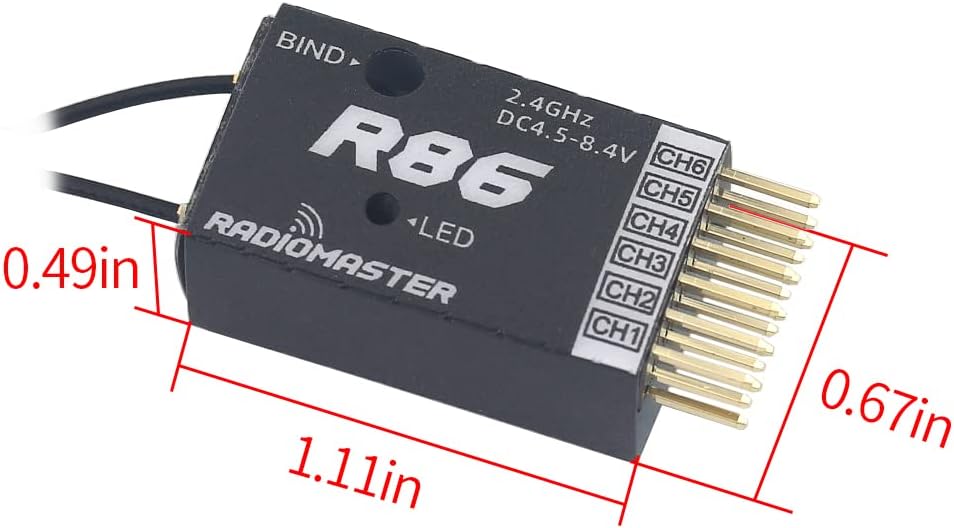
Image 6.1: Dimensions of the RadioMaster R86 receiver, showing its compact size.

Image 6.2: The RadioMaster R86 receiver on a digital scale, indicating its light weight of 4.4 grams.
7. Pūtāhui me te Tautoko
Information regarding specific warranty terms and direct customer support channels for the RadioMaster R86 receiver was not available in the provided product data. For warranty claims or technical assistance, please refer to the official RadioMaster webpae, whakapā atu ranei ki to waahi hoko.


