Kupu Whakataki
The Docooler Bone Conduction Speaker is a compact, portable audio device designed to transform various surfaces into sound-producing diaphragms. Utilizing bone conduction technology, it offers a unique audio experience with enhanced bass and volume depending on the surface it is placed upon. This manual provides essential information for the safe and effective use of your speaker.
Nga korero haumaru
Please read and follow these safety guidelines to prevent damage to the device or personal injury:
- Kaua e tukuna te kaikorero ki nga wera nui, ki te ra tika ranei.
- A ape i te tuku, te tuku ranei i te taputapu ki nga paanga kaha.
- Keep the speaker away from water and liquids, as it is not waterproof.
- Kaua e ngana ki te wetewete, ki te whakatika, ki te whakarerekē rānei i te taputapu. Ka whakakorea te pūtāhui.
- Whakamahia anake te taura utu kua whakaratohia me te urutau hiko hototahi.
- Kaua e whakarongo roa ki ngā oro teitei hei ārai i te kino o te whakarongo.
Ihirangi mokete
Manatokona kei roto katoa nga mea kei roto i to kete:
- Docooler Bone Conduction Speaker (1 unit)
- Taura Utu Momo-C USB (1 waeine)
- Pukapuka Kaiwhakamahi (tenei tuhinga)
- Adhesive Pads / Suction Cup (for mounting)
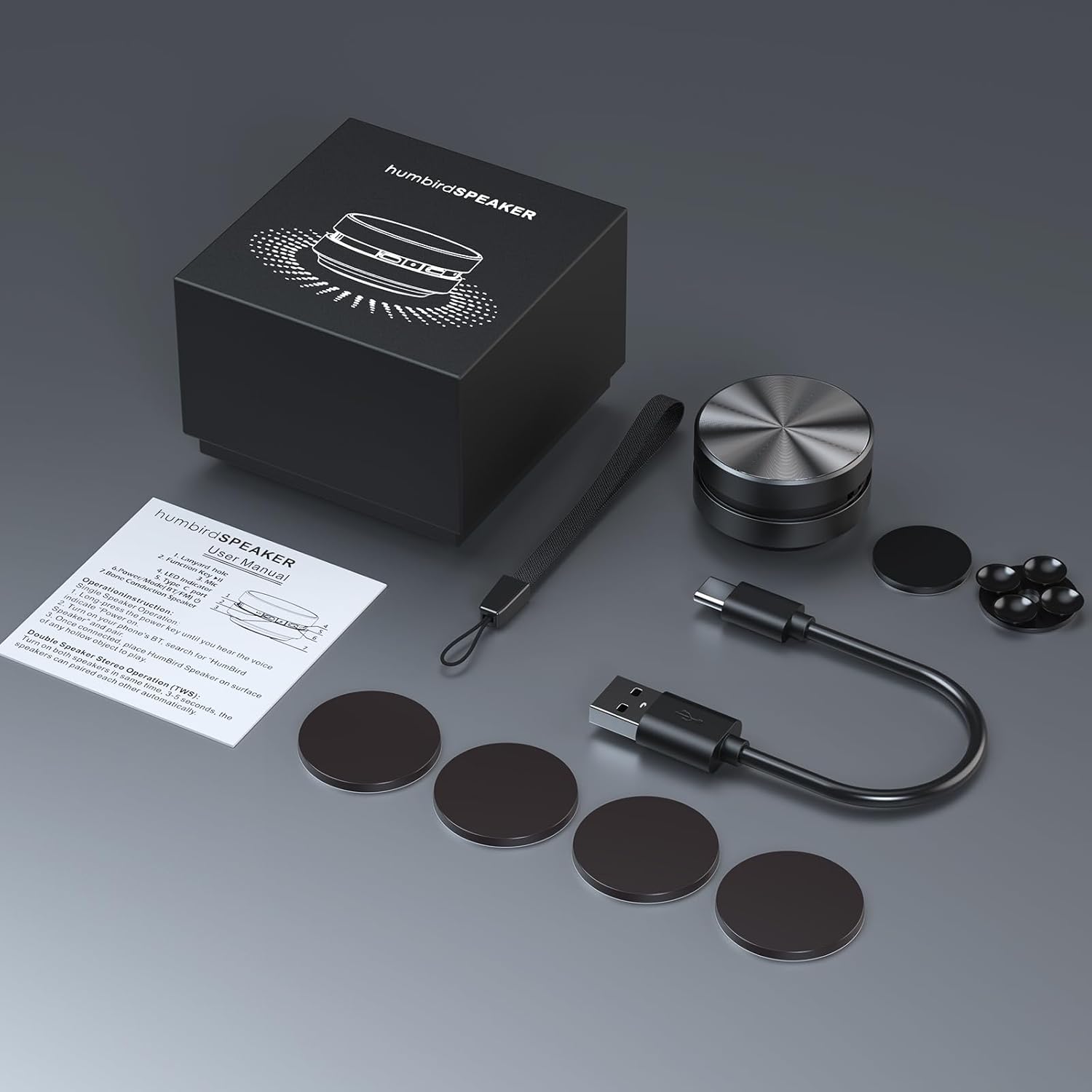
Image: Contents of the Docooler Bone Conduction Speaker package, showing the speaker, charging cable, and various adhesive pads for mounting.
Ka mutu te huaview
The Docooler Bone Conduction Speaker is a compact device with a minimalist design. It features a durable aluminum alloy casing and a Type-C charging port. The speaker utilizes Bluetooth 5.0 for wireless connectivity and supports True Wireless Stereo (TWS) pairing for an enhanced audio experience.

Whakaahua: Mua view of the Docooler Bone Conduction Speaker, highlighting its key features such as Bone Conduction technology, Bluetooth 5.0, TWS, Type-C Charging Port, Fast Charge, and Aviation Aluminum Alloy construction.
Tatūnga
1. Whakakii i te Tukuoro
- Honoa te taura USB Momo-C kua whakaratohia ki te tauranga utu o te kaikorero.
- Plug the other end of the cable into a compatible USB power source (e.g., wall adapter, computer USB port).
- Ka whakaatuhia te tūnga utu e te rama tohu (tirohia te wāhanga tohu LED mō ētahi atu kōrero).
- He 1-2 haora pea te utu katoa.
2. Te Hononga Nihokikorangi (Kaikōrero Kotahi)
- Press and hold the power button on the speaker until the indicator light flashes, indicating pairing mode.
- I runga i tō waea atamai, i tētahi atu pūrere rānei e whakahohea ana e te Nihokikorangi, whakahohea te Nihokikorangi, ka rapu i ngā pūrere e wātea ana.
- Select "Humbird Speaker" (or similar name) from the list of devices.
- Once connected, the indicator light will remain solid, and you will hear a confirmation tone.
3. Te Hononga o te Reo Tīwhara Ahokore Tuturu (TWS) (E Rua ngā Kaikōrero)
For a stereo sound experience, you can pair two Docooler Bone Conduction Speakers together:
- Me whakarite kua whakakiia katoatia nga kaikorero e rua ka weto.
- Power on both speakers simultaneously. They will automatically attempt to pair with each other within 3-5 seconds.
- Once successfully paired, one speaker will act as the master (left channel) and the other as the slave (right channel). The indicator lights will reflect their connected status.
- Now, connect your smartphone or Bluetooth device to the master speaker as described in the "Bluetooth Pairing (Single Speaker)" section.

Image: Two Docooler Bone Conduction Speakers positioned for True Wireless Stereo (TWS) pairing, demonstrating their ability to create a wider soundstage.
Nga Tohutohu Whakahaere
1. Te Hiko / Whakaweto
- Whakahiko: Pēhia me te pupuri i te paatene hiko mo te 3 hēkona.
- Weto Whakakore: Pēhia me te pupuri i te paatene hiko mo te 3 hēkona.
2. Mana Whakatangi Anō
- Purei/Tatari: Pihi poto i te paatene mana kotahi.
- Riu Panuku: Double-press the power button.
- Riu o mua: Triple-press the power button.
3. Whakaritenga Rōrahi
Volume is primarily controlled via your connected Bluetooth device (smartphone, tablet, etc.). The speaker itself does not have dedicated volume buttons.
4. Using with Different Surfaces
The unique feature of this bone conduction speaker is its ability to use various surfaces as sound amplifiers. Experiment with different materials to discover unique sound profiles:
- Hollow Objects: Cardboard boxes, plastic containers, or hollow wooden surfaces often produce a fuller sound with enhanced bass.
- Mata Karaihe: Windows or glass tables can create a clear, crisp sound.
- Ngā Mata Rākau: Desks, guitars, or wooden panels can offer a warm, resonant tone.
- Car Dashboards: Can provide an immersive in-car audio experience.
Use the included adhesive pads or suction cup to securely attach the speaker to your chosen surface. The sound quality will vary significantly based on the material, size, and hollowness of the surface.

Image: The bone conduction speaker demonstrated on different surfaces, including a guitar, a kitchen countertop, a mirror, and a car dashboard, illustrating its versatility in sound production.
Te tiaki
To ensure the longevity and optimal performance of your Docooler Bone Conduction Speaker, follow these maintenance tips:
- Te horoi: Wipe the speaker with a soft, dry cloth. Do not use abrasive cleaners, alcohol, or solvents.
- Rokiroki: Whakaorangia te kaikorero ki te waahi makariri me te maroke kia matara atu i te ra tika me te wera nui ina kore e whakamahia.
- Tiaki Pūhiko: For best battery life, avoid fully discharging the speaker frequently. Charge it regularly, even if not used for extended periods.
Raparongoā
| Raruraru | Rongoa pea |
|---|---|
| Karekau te kaikorero e kaha ana. | Me whakarite kua whakakiia te kaikorero. Honoa ki te puna hiko ka ngana ano. |
| Kaore e taea te hono ma te Nihokikorangi. | Make sure the speaker is in pairing mode (flashing indicator light). Turn off and on Bluetooth on your device. Ensure the speaker is within range (up to 10 meters). |
| Karekau he oro, he iti te reo. | Increase the volume on your connected device. Ensure the speaker is placed on a suitable surface. Try a different surface. Check if the speaker is properly connected. |
| I rahua te takirua TWS. | Ensure both speakers are powered off before attempting TWS pairing. Power them on simultaneously and wait for automatic pairing. Disconnect any existing Bluetooth connections before TWS pairing. |
| He ngoikore te kounga tangi. | Experiment with different surfaces. Hollow and resonant surfaces generally yield better results. Ensure the speaker is securely attached to the surface. |
Whakatakotoranga
| Āhuahira | Taipitopito |
|---|---|
| Ingoa Tauira | Kaikorero Whakawhitinga Koiwi |
| Tau tauira | RM |
| Waitohu | Kaituku |
| Rauemi | Konumohe |
| Hunga Hua | 2.76"D x 2.76"W x 1.97"H |
| Taumaha Tūemi | 4.6 hekere (0.13 Kirokaramu) |
| Hangarau Hononga | Nihokikorangi |
| Awhe Nihokikorangi | 10 Mita |
| Aratau Putanga Ororongo | Tirotiro (me te takirua TWS) |
| Kaikorero Te Mana Putanga Morahi | 3 Watts |
| Whakautu auau | 20 KHz |
| Tohu Waitohu-ki-Toi | 70 dB |
| Puna Mana | Pūhiko Powered |
| Pūhiko Raukaha | 400 Miliamp Nga haora |
| Tikanga Mana | App (implied by product data, but primary control is physical buttons) |
| He parewai | He teka |
Pūtāhui me te Tautoko
The Docooler Bone Conduction Speaker comes with a limited warranty. For specific warranty details, please refer to the documentation included with your purchase or contact Docooler customer service.
If you encounter any issues or have questions not covered in this manual, please contact Docooler customer support through their official channels. Contact information can typically be found on the product packaging or the official Docooler webpae.


