1. Kupu Whakataki
This manual provides essential information for the safe and efficient operation of your Sharp SJ-HM700-HS refrigerator. Please read these instructions thoroughly before using the appliance and retain them for future reference. Proper installation, use, and maintenance will ensure optimal performance and longevity of your refrigerator.
2. Nga korero haumaru
Nga Tohutohu Haumaru Nui:
- Ensure the refrigerator is connected to a properly grounded 220V power outlet. Do not use extension cords or adapters.
- Kia mau tonu nga tuwhera o te hau i roto i te keenga taputapu, i roto ranei i te hanganga o roto kia kore e arai.
- Kaua e whakamahi i nga taputapu miihini, i etahi atu tikanga ranei hei whakatere i te mahi whakaheke hukapapa, i tua atu i nga mea e taunakihia ana e te kaihanga.
- Kaua e tūkinotia te ara iahiko whakamatao.
- Kaua e whakamahi i nga taputapu hiko i roto i nga waahanga rokiroki kai o te taputapu, mena kaore i te momo e taunakihia ana e te kaihanga.
- Ko tenei taputapu ehara i te mea mo te whakamahi ma te hunga (tae atu ki nga tamariki) he iti te kaha o te tinana, te tairongo, te hinengaro, te kore wheako me te mohiotanga, mena ka tukuna atu ki a raatau te tirotiro, te tohutohu ranei mo te whakamahi i te taputapu e te tangata whai mana mo to raatau haumaru.
- Me mataki nga tamariki kia kore ai ratou e takaro ki te taputapu.
3. Hua Neke Atuview
The Sharp SJ-HM700-HS is a top-freezer refrigerator designed for efficient food preservation. It features an automatic defrost system, eliminating the need for manual defrosting.
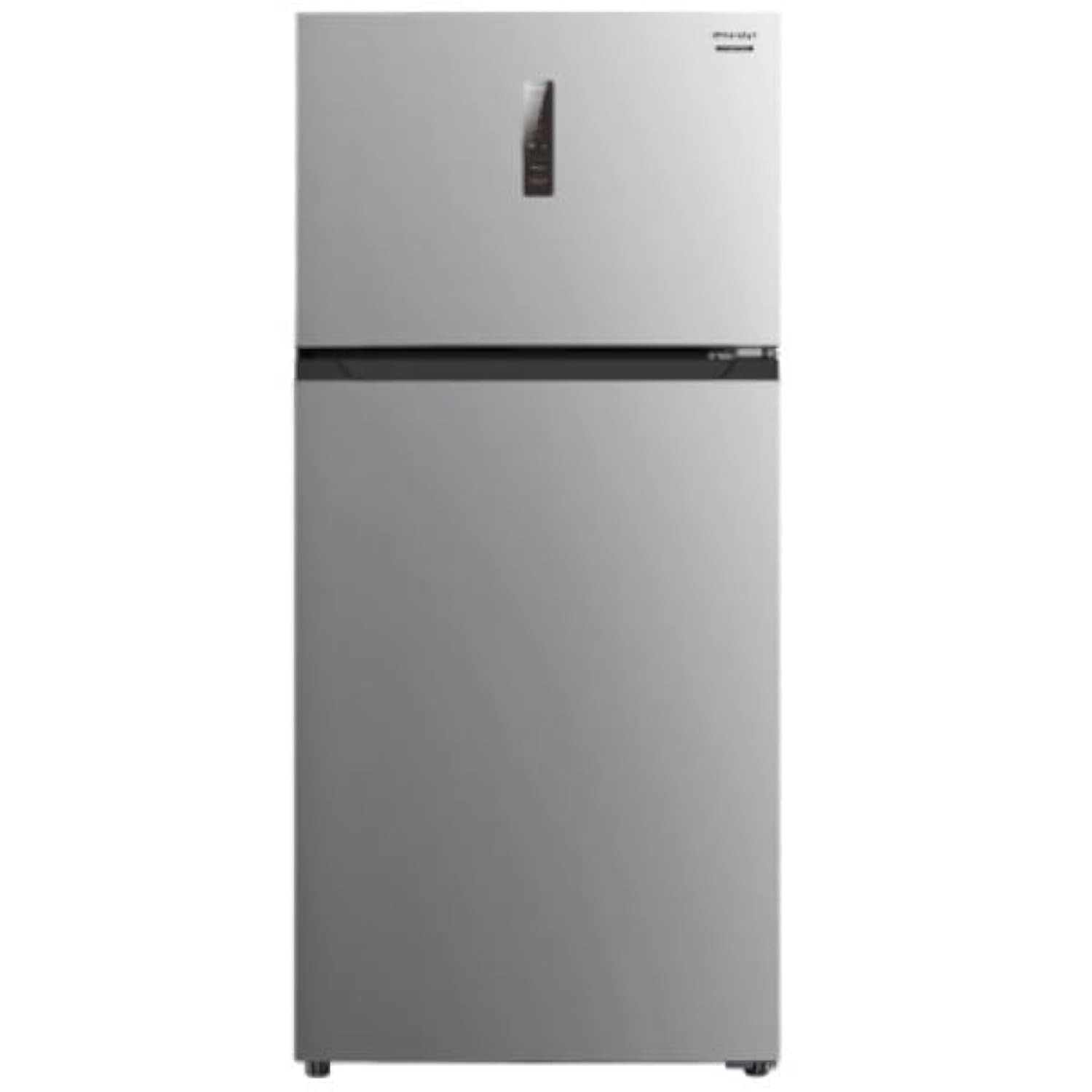
Whakaahua 1: Mua view of the Sharp SJ-HM700-HS refrigerator with both doors open, revealing the interior layout. The top section is the freezer, and the larger bottom section is the fresh food compartment, equipped with glass shelves and two crisper drawers. The door shelves are also visible.
Wae matua:
- Wāhanga Whakatio: Located at the top, for frozen food storage.
- Wāhanga pouaka pouaka: Main section for fresh food, beverages, and dairy.
- Papa karaihe: Nga whata ka taea te whakarite mo te rokiroki ngawari.
- Nga Kaiutuutu Crisper: Two drawers designed to maintain optimal humidity for fruits and vegetables.
- Door Shelves: Multiple shelves on both doors for bottles, jars, and smaller items.
- Waea Mana Pawera: For adjusting the cooling intensity.
4. Tatūnga
A pee i enei mahi mo te whakauru tika i to pouaka pouaka:
- Wewete ana: Tangohia ngā rauemi tākai katoa, tae atu ki te rīpene me ngā kiriata tiaki. Me maka atu te tākai me te whakaaro nui.
- Turanga: Position the refrigerator on a flat, stable surface away from direct sunlight, heat sources (like ovens or radiators), and moisture. Ensure adequate ventilation space around the appliance (at least 10 cm on sides and back, 30 cm on top).
- Whakataumata: Use the adjustable leveling feet at the bottom of the refrigerator to ensure it is stable and level. This prevents vibrations and ensures proper door sealing.
- Te horoi: I mua i te whakamahinga tuatahi, murua ngā mata o roto, o waho hoki ki te kakahu ngohengoheampened with a mild detergent solution. Rinse and dry thoroughly.
- Hononga Hiko: Plug the refrigerator into a dedicated 220V grounded electrical outlet. Do not share the outlet with other appliances.
- Te whakamatao tuatahi: Allow the refrigerator to operate for at least 2-4 hours empty before loading food. This allows the interior to reach the desired temperature.
5. Nga Tohutohu Whakahaere
Mana Pawera:
- The temperature control dial is typically located inside the refrigerator compartment.
- Adjust the dial to your desired cooling level. A higher number usually indicates colder temperatures.
- For optimal food preservation, the refrigerator compartment should be maintained between 0°C and 4°C (32°F and 39°F), and the freezer compartment at -18°C (0°F) or colder.
- Avoid frequent door openings to maintain stable internal temperatures.
Nga Aratohu Pupuri Kai:
- Store raw meats and poultry on the lowest shelf to prevent drips onto other foods.
- Use the crisper drawers for fruits and vegetables to help them stay fresh longer.
- Ensure all food items are properly sealed or covered to prevent odor transfer and maintain moisture.
- Do not overload the refrigerator, as this can obstruct airflow and reduce cooling efficiency.
6. Tiaki
Regular maintenance helps ensure the efficiency and longevity of your refrigerator.
- Te horoi i te Roto: Clean the interior regularly with a solution of mild detergent and warm water. Wipe down shelves, drawers, and walls. Avoid abrasive cleaners or harsh chemicals.
- Te horoi i waho: Horoia nga mata o waho ki te ngohengohe, damp kakahu. Mō ngā mata kowiri tira, whakamahia he kaihoroi kowiri tira motuhake.
- Whakahau Aunoa: This refrigerator features an automatic defrost system, so manual defrosting of the freezer compartment is not required. Any frost that forms will be melted periodically and drained away.
- Pūkete Kuaha: Regularly check and clean the door gaskets (seals) to ensure they are free from food particles and remain flexible. A tight seal is crucial for energy efficiency.
- Roopu Condenser: Periodically clean the condenser coils, usually located at the back or bottom of the refrigerator. Dust and debris can accumulate, reducing efficiency. Unplug the appliance before cleaning.
7. Te Raru
I mua i te whakapā atu ki te ratonga, tirohia nga take e whai ake nei:
| Raruraru | Take pea | Rongoā |
|---|---|---|
| Kaore te pouaka pouaka e mahi. | Kaore i whakauruhia; ka pakaru te ara iahiko; mana outage. | Tirohia te hononga taura hiko; tautuhi anō i te whati ara iahiko; tirohia te pūnaha hiko o te whare. |
| Kaore i te makariri te pāmahana. | He mahana rawa te huinga mana o te pāmahana; he maha nga wa i tuwhera ai nga tatau; te nui o te kai mahana kua taapirihia; hau kino. | Adjust temperature control to a colder setting; minimize door openings; allow warm food to cool before storing; ensure proper clearance around the unit. |
| Nga haruru rereke. | Ko te pouaka pouaka kaore i te taumata; nga mea e wiri ana i roto; haruru compressor (noa). | Level the refrigerator; rearrange items; normal operating noises are expected. |
| Te wai i runga i te papa. | Kua purua te ngongo waikeri; kua puhake te paepae maturuturu. | Kia mārama te ngongo waikeri; kia tika te tūnga o te paepae waikeri. |
8. Whakatakotoranga
| Āhuahira | Taipitopito |
|---|---|
| Ingoa Waitohu | koi |
| Tauira korero | SJ-HM700-HS |
| Rahi Hua (H x W x D) | 184 x 97 x 71 cm |
| Taumaha Tūemi | 75 Kirokaramu |
| Raukaha Tapeke | 18.6 cu.ft. |
| Fresh Food Compartment Capacity | 14.5 cu.ft. |
| Te Raukaha Whakatio | 4.1 cu.ft. |
| Te Whakamahi Pungao a-Tau | 350 kWh |
| Momo Tāuta | Pūkana |
| Tauwehe Puka | Pouaka Tio runga |
| Nga waahanga motuhake | Whakarewa Aunoa |
| Tae | Hiriwa |
| Voltage | 220 Volts |
| Vegetable/Crisper Drawers | 2 |
| Pūnaha Tiaki | Aunoa |
| Hinihi tatau | Matau |
| Momo Rauemi Kuaha | Kowiri tira |
| Whata | 2 |
| Whakatauranga | Whetu Pungao |
| Momo Rawa | Maha |
| Nga Waahanga kei roto | Product only |
| Nga Pikohiko e hiahiatia ana | Kao |
9. Pūtāhui me te Tautoko
For warranty information and technical support, please refer to the warranty card included with your product or contact Sharp customer service directly. Keep your purchase receipt as proof of purchase for warranty claims.
For further assistance, visit the official Sharp webpaetukutuku, whakapā atu ranei ki o raatau pokapū ratonga whai mana i to rohe.