1. Kupu Whakataki
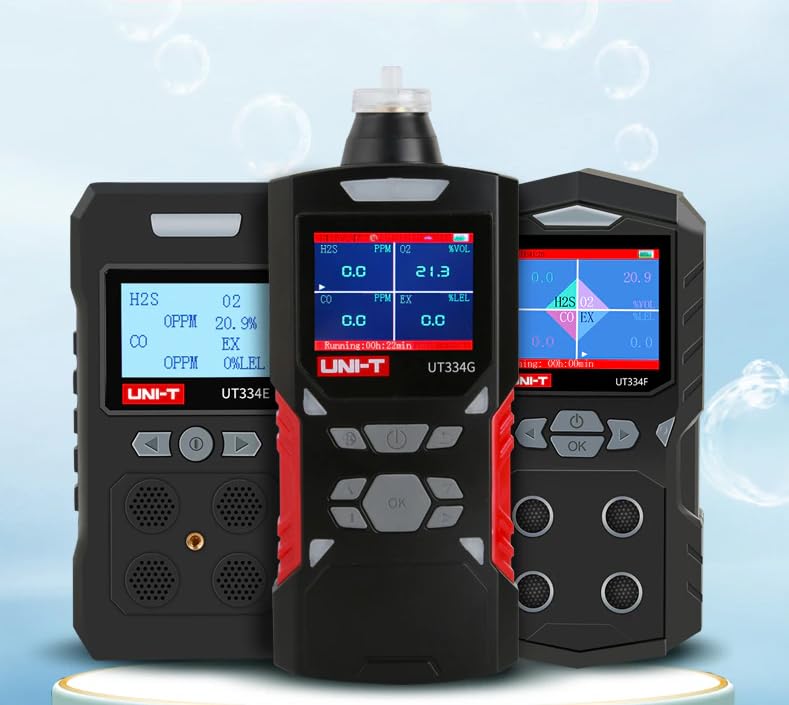
The UNI-T UT334E is a portable, voice-enabled, four-in-one gas detector designed for continuous monitoring of gas concentrations. This safety device utilizes advanced integrated circuit technology, embedded microcomputer control, and high-quality imported gas sensors to provide excellent sensitivity and repeatability. It features a dot matrix LCD display with support for both English and Chinese interfaces and voice prompts, ensuring ease of use and maintenance. The robust shell is constructed from high-strength engineering plastic, offering good vibration resistance, high strength, and protection against dust, water, and explosions.

2. Nga Hua o te Hua
The UT334E gas detector incorporates several key features to ensure reliable and user-friendly operation:
- Tautoko Reo-maha: Switch between English and Chinese interfaces and voice prompts.
- Quadruple Alarm System: Provides sound, light, vibration, and screen flashing alarms for comprehensive alert notification.
- Pūhiko Roa-roa: Equipped with a 2500mAh built-in high-capacity lithium battery for extended operation.
- Rokiroki Raraunga: Automatically stores detection records, which can be easily viewed ka mukua.
- Maama Whakaatu: Features a 2.4-inch color LCD display for clear visualization of gas concentrations and device status.
- Hanga Roa: Made from high-strength engineering plastic, offering resistance to compression, drops, and explosion-proof properties.
- Pūoko-Pono Tino: Utilizes imported sensors for sensitive induction, short response time, and accurate detection.
- Curve Drawing Function: Supports graphical representation of gas concentration over time, aiding in observing periodic states.

3. Tatūnga
Before using your UNI-T UT334E gas detector, please follow these setup instructions:
- Wewete ana: Carefully remove the device and all accessories from the packaging. Inspect for any signs of damage.
- Akona Tuatahi: Connect the device to a power source using the provided MicroUSB cable. Ensure the battery is fully charged before first use. A full charge typically takes approximately 4 hours.
- Whakahiko: Press and hold the power button until the LCD screen illuminates. The device will perform a self-test.
- Tīpakonga Reo: If prompted, select your preferred language (English or Chinese) using the navigation buttons.

4. Nga Tohutohu Whakahaere
The UT334E is designed for straightforward operation. Here are the basic steps for gas detection:
- Whakahiko: Press and hold the power button to turn on the device. Allow it to complete its startup sequence and sensor calibration.
- Aroturuki: Once powered on, the device will continuously monitor the ambient air for the four specified gases (EX, H2S, CO, O2). Real-time concentrations will be displayed on the 2.4-inch color LCD screen.
- Paepae Whakaoho: The device has pre-set low and high alarm points for each gas. These can often be adjusted through the device's menu settings if required.
- Curve Drawing: To observe gas concentration trends, navigate to the curve drawing function via the menu. This feature displays a graphical representation of gas levels over time.
- Raraunga Review: Access the stored records through the menu to review past detection data. Records can also be deleted from this section.
- Weto Whakakore: Patohia me te pupuri i te paatene hiko kia mutu ra ano te hiko o te taputapu.

5. Alarms and Indicators
The UT334E employs a comprehensive quadruple alarm system to alert users to hazardous gas levels:
- Whakaoho Whakaoho: A loud buzzer will sound when gas concentrations exceed set thresholds.
- Pūoho Ataata: Indicator lights will flash, and the screen may change color (e.g., red background) to visually signal an alarm condition.
- Pūoho Wiri: The device will vibrate, providing a tactile alert, especially useful in noisy environments.
- Screen Flashing: The LCD screen will flash to draw immediate attention to the detected hazard.
These alarms activate when gas levels reach either the low or high alarm points configured for each gas type.

6. Tiaki
Proper maintenance ensures the longevity and accuracy of your gas detector:
- Te horoi: Regularly wipe the device with a soft, dry cloth. Do not use abrasive cleaners or solvents.
- Tiaki pūoko: Avoid exposing the sensors to extreme temperatures, high humidity, or corrosive substances, as this can affect their lifespan and accuracy. The typical sensor life is 2 years.
- Whakahaere Pūhiko: Recharge the battery when the low battery indicator appears. Avoid fully discharging the battery frequently to prolong its life.
- Rokiroki: Ki te kore e whakamahia mo te wa roa, penapenahia te taputapu ki te waahi makariri, maroke kia matara atu i te ra tika me te wera nui.
- Whakatikatika: For professional applications, periodic calibration of the sensors may be required to maintain accuracy. Refer to local regulations and industry standards.
7. Te Raru
If you encounter issues with your UT334E gas detector, consider the following:
- Kaore te Pūrere i te hiko: Ensure the battery is charged. Connect the device to a charger and try again.
- Nga Panui Heke: Ensure the sensors are clean and unobstructed. If readings remain inconsistent, the sensors may require calibration or replacement.
- Alarms Not Functioning: Check the device settings to ensure alarms are enabled. Verify that the volume and vibration settings are appropriate for your environment.
- Nga Take Mata: If the screen is blank or flickering, try restarting the device. If the problem persists, contact customer support.
For persistent issues or technical support, please refer to the contact information provided in the warranty and support section.
8. Whakatakotoranga
Detailed technical specifications for the UNI-T UT334E Gas Leak Detector:

| Tawhā | Uara |
|---|---|
| Kaihanga | UNI-Trend |
| Tau tauira | HY-UT334E |
| Taumaha Tūemi | 1.32 pauna (0.6 kg) |
| Hunga Hua | 6.5 x 4.33 x 4.72 inihi (165 x 110 x 120 mm) |
| Rauemi | Acrylonitrile Butadiene Styrene (ABS) |
| Puna Mana | Pūhiko Powered |
| Wattage | 5 watts |
| Tikanga ine | ±0.1% |
| Tiwhikete | CE, ISO 9001, RoHS, UKCA |
| Momo Pūhiko | Konukura Ritiuma (kei roto) |
| Pūhiko Raukaha | 2500mAh |
| Waa Whakatau | 4 haora |
| Wā tūtatari | Neke atu i te 10 haora |
| Te ora pūoko | 2 tau |
| Taiao Mahi | Temperature: -20°C to 50°C; Humidity: <95%RH (non-condensing) |
9. Pūtāhui me te Tautoko
UNI-T products are manufactured to high-quality standards. For warranty information, technical support, or service inquiries, please contact your authorized UNI-T dealer or visit the official UNI-T webpae. Puritia to riirii hoko hei tohu mo te hoko mo nga kereme whakamana.


