Kupu Whakataki
The Cisco Headset 721 is a wireless on-ear Bluetooth headset designed for professional use, offering comfort and advanced features for communication and collaboration. This manual provides comprehensive instructions for its setup, operation, and maintenance.
He aha kei roto i te Pouaka
Manatokona kei roto katoa nga mea kei roto i te kete:
- Cisco Headset 721 (Single On-Ear Headset)
- USB-A HD Bluetooth Adapter
- Tu Whakatau
- USB-He Uera Whakatau
- Take Parenga ngohengohe
- Urunga Taringa (kua tāutahia i mua, kua tāpirihia rānei)
- He potae māhunga (kua whakauruhia)

Image: The Cisco Headset 721 shown alongside its soft protective case, highlighting its portability.
Tatūnga
1. Te Whakataki i te Paneoro
Before initial use, fully charge the headset. The headset has a battery life of approximately 23 hours of talk time.
- Connect the USB-A charging cable to the charging stand.
- Connect the other end of the USB-A charging cable to a powered USB port (e.g., computer, wall adapter).
- Place the headset onto the charging stand, ensuring proper alignment. The LED indicator on the headset will show charging status.
2. Te hono ma te Nihokikorangi
The headset can connect wirelessly to two devices simultaneously via Bluetooth.
- Whakahiko: Press and hold the Power button on the headset until the LED indicator flashes.
- Aratau takirua: With the headset powered on, press and hold the Bluetooth button until the LED indicator flashes blue and red alternately. This indicates pairing mode.
- Takirua Pūrere: On your device (e.g., smartphone, laptop), go to Bluetooth settings and select "Cisco Headset 721" from the list of available devices.
- Whakaū: Ka huri kikorangi te rama pane whakarongo ina honoa angitu.
3. Connecting with USB-A HD Bluetooth Adapter
For optimal performance and integration with Cisco applications, use the provided USB-A HD Bluetooth Adapter.
- Plug the USB-A HD Bluetooth Adapter into an available USB-A port on your computer.
- The adapter will automatically attempt to pair with your Cisco Headset 721. The LED on the adapter will indicate connection status.
- Ensure your headset is in pairing mode if it does not connect automatically.
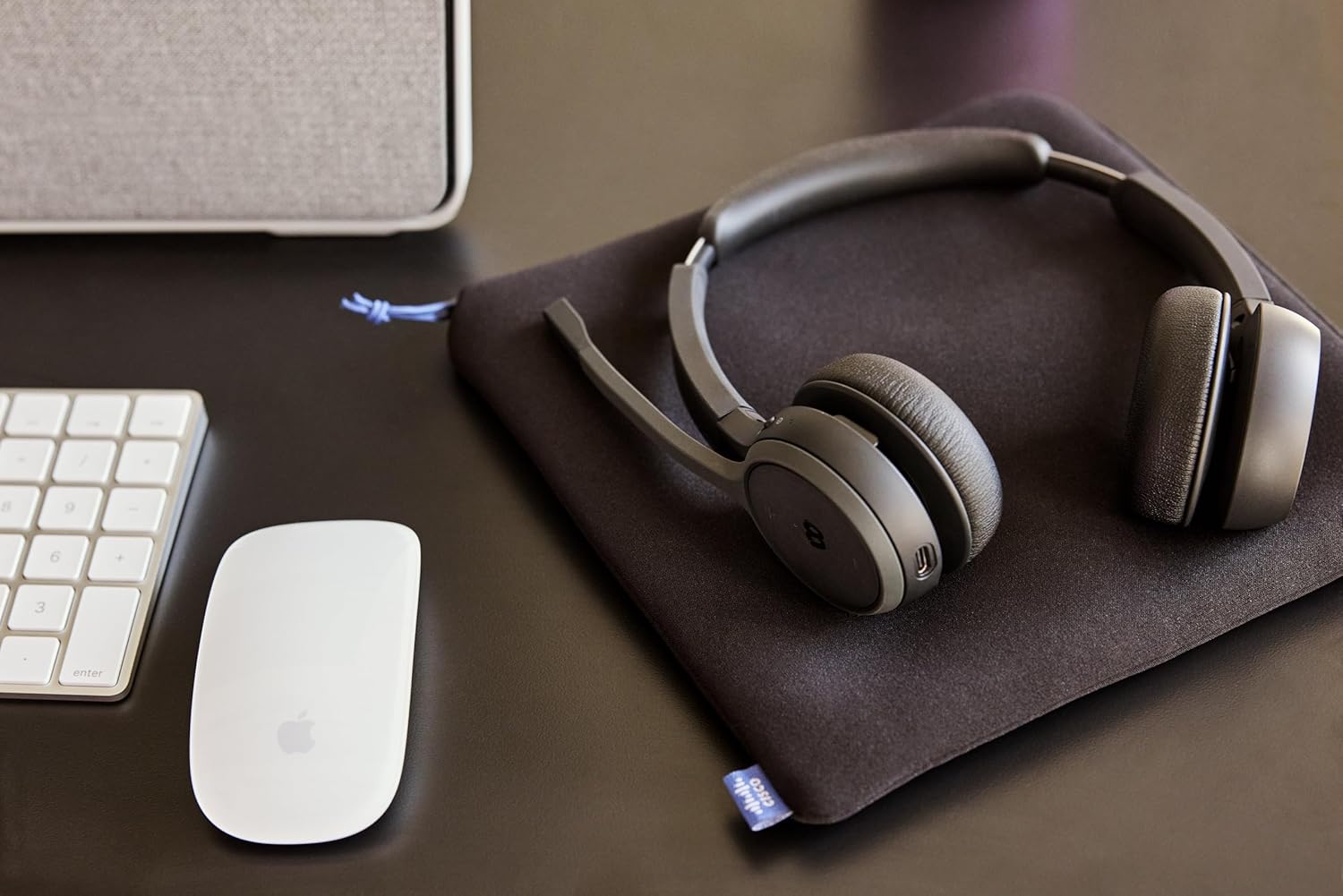
Image: The Cisco Headset 721, USB-A adapter, and charging stand arranged on a desk, illustrating a typical setup.
4. Adjusting the Microphone Boom Arm
The microphone boom arm rotates 276 degrees for optimal placement and features a flip-to-mute function.
- Position the microphone approximately two finger-widths from the corner of your mouth for clear audio.
- To mute the microphone, flip the boom arm upwards. Flip it down to unmute.
Nga Tohutohu Whakahaere
Mana-taringa
The headset features intuitive on-ear controls for managing calls and media.
- Rōrahi Whakarunga/Whakararo: Use the dedicated volume buttons to adjust audio levels.
- Whakautu/Whakamutu Waea: Press the Call button once to answer an incoming call or end an active call.
- Wahangu/Wahangu: In addition to the flip-to-mute boom arm, a dedicated mute button may be present for quick toggling.
- Purei/Tatari Paapaho: Press the Call button once to play or pause media playback.
- Panuku Panuku / O Mua: Use specific media control buttons if available, or double-press/triple-press the Call button (refer to specific model documentation for exact functionality).
Webex Button Integration
Ko te whakatapua Webex button provides seamless integration with Cisco Webex applications.
- Hono Webex Hui: Pehia te Webex button to quickly join an active or scheduled Webhui ex.
- Webex Control: The button may also provide quick access to other Webex-specific functions depending on the application version.
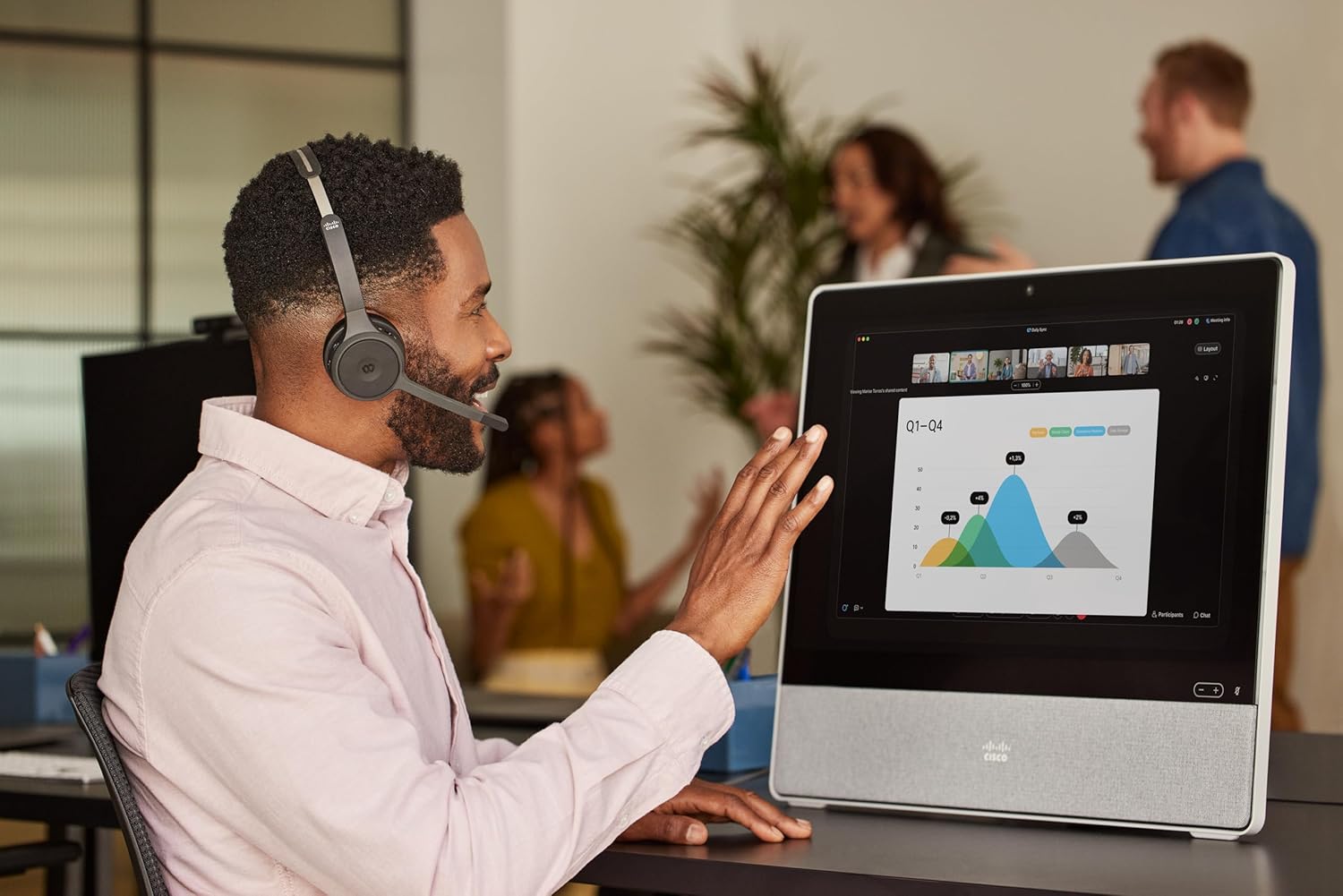
Image: A person wearing the Cisco Headset 721 while engaged in a video conference on a large display, demonstrating its use in a professional setting.
AI Voice-Activated Microphones
The headset features AI voice-activated microphones designed to minimize background noise, ensuring clear communication.
- These microphones automatically focus on your voice and suppress ambient sounds.
- No specific user action is required for this feature; it operates automatically.
Takirua Takirua
The headset supports multipoint pairing, allowing it to be connected to two Bluetooth devices simultaneously.
- Once paired with two devices, the headset can seamlessly switch between them for calls or media.
- Mo te example, you can be connected to your laptop for a video conference and your smartphone for incoming calls.
Te tiaki
Te horoi i te Paneoro
Regular cleaning helps maintain the headset's hygiene and performance.
- Use a soft, dry, lint-free cloth to wipe the surfaces of the headset.
- Mō ngā urunga taringa, horoia mārire ki te wai mahana.amp cloth (water only) and allow to air dry completely before use.
- A ape i te whakamahi i nga matū kino, nga whakarewa, me nga mea awhiowhio.
Rokiroki
When not in use, store the headset properly to protect it from damage.
- Use the provided soft protective case for storage and transport.
- Whakaorangia ki te waahi makariri, maroke atu i te ra tika me te wera nui.
Raparongoā
Nga take me nga otinga noa
| Putanga | Rongoā |
|---|---|
| Karekau te paneoro i te hiko. | Ensure the headset is fully charged. Connect it to the charging stand and check the LED indicator. |
| Kaore e taea te hono ki tetahi taputapu. | Ensure the headset is in pairing mode (LED flashing blue/red). Check your device's Bluetooth settings. Try restarting both the headset and the device. |
| Kaore he ororongo, he ngoikore ranei te kounga ororongo. | Check the volume levels on both the headset and the connected device. Ensure the headset is selected as the audio output device. Move closer to the connected device to avoid interference. |
| Kaore e mahi ana te hopuoro. | Ensure the microphone boom arm is flipped down (unmuted). Check microphone settings on your connected device/application (e.g., Webtauira). |
| Webex button not responding. | Ensure the headset is properly connected to a device running the Webex application. Verify that the Webex application is up to date. |
Whakatakotoranga
| Āhuahira | Taipitopito |
|---|---|
| Tau tauira | HS-WL-721-BUNAS-C |
| Hangarau Hononga | Ahokore (Nihokikorangi) |
| Putanga Nihokikorangi | 4.0 |
| Awhe Nihokikorangi | 10 Mita |
| Te Whakanoho Taringa | I runga i te Taringa |
| Tauwehe Puka | I runga i te Taringa |
| Mana Haruru | Passive Noise Cancellation, Sound Isolation |
| Ora Pūhiko | 23 Hāora (Wā Kōrero) |
| Momo Mana | Call Control, Button, App |
| Nga waahanga motuhake | Adjustable Headband, Fast Charging, Lightweight, Multipoint Pairing, Noise Isolation |
| Pūrere Hototahi | Cellphones, Desktops, Laptops, Tablets |
| Taumaha Tūemi | 0.12 Kirokaramu (4.2 hekere) |
| Rauemi | Aluminum, Stainless Steel, Leather or Faux Leather, Memory Foam |
| Nga Waahanga kei roto | Cable, Charging Station, Ear Cushions, Headband, Protective Case |
Pūtāhui me te Tautoko
The Cisco Headset 721 comes with a Two-Year Limited Liability Warranty, me te whakarite i te rangimarie o te hinengaro e pā ana ki ngā hapa hanga me ngā take mahi.
For technical support, warranty claims, or further assistance, please visit the official Cisco support website or contact your Cisco product provider. Ensure you have your product model number (HS-WL-721-BUNAS-C) and proof of purchase available.
Ngā Mahere Tiakitanga Kōwhiringa
Additional protection plans may be available for extended coverage:
- Mahere Tiaki Tau 2: Extends coverage for 24 months.
- Mahere Tiaki Tau 3: Extends coverage for 36 months.
- Tiaki Whakaoti: He mahere marama e kapi ana i nga hoko o mua me nga mea kei te heke mai.
Please refer to the terms and conditions of these plans for full details.


