1. Kupu Whakataki
Thank you for choosing the Genesis 80GMVS Multi-Functional Vacuum Sealer. This appliance is designed to preserve food, liquids, and dry goods efficiently, making it suitable for food preservation, meal preparation, and sous vide cooking. Please read this manual thoroughly before operating the device to ensure safe and optimal performance.
Nga Tohutohu Haumaru Nui
- Panuihia nga tohutohu katoa i mua i te whakamahi.
- Kaua e rumakina te taputapu, te taura hiko, te mono ranei ki te wai, ki etahi atu wai ranei.
- Kaua e taea e nga tamariki. Ko tenei taputapu ehara i te mea mo te whakamahi ma te hunga he iti te kaha o te tinana, o te tairongo, o te hinengaro ranei mena ka matakihia.
- Wewetehia mai i te putanga ka kore e whakamahia ana i mua i te horoi.
- Kaua e whakahaere i tetahi taputapu me te taura kua pakaru, te mono ranei, i muri ranei i te kino o te taputapu, kua pakaru ranei i tetahi ahua.
- Whakamahia anake nga taapiri e taunakihia ana e te kaiwhakanao.
- Kaua e whakamahi i waho.
- Whakanohoia te taputapu i nga wa katoa ki runga i te mata pumau, papatahi, wera-wera.
- A ape i te pa ki nga waahanga neke.
- Do not use for purposes other than its intended use.
2. Waenga Hua
Familiarize yourself with the main parts of your Genesis 80GMVS Vacuum Sealer:
- Paewhiri Mana: Buttons for various sealing modes (Normal, Soft, Seal, External) and Stop.
- Rihi Hinenga: Heats to create a strong seal on vacuum bags.
- Hongere korehau: Te waahi ka tangohia te hau mai i te putea.
- Taupoki Whakamau: Ka whakamau i te taupoki i te wa e mahi ana.
- Tauranga apatoko: For connecting an external vacuum hose (not included) for containers.
- Waea Hiko: Ka hono i te waeine ki tētahi putanga hiko.
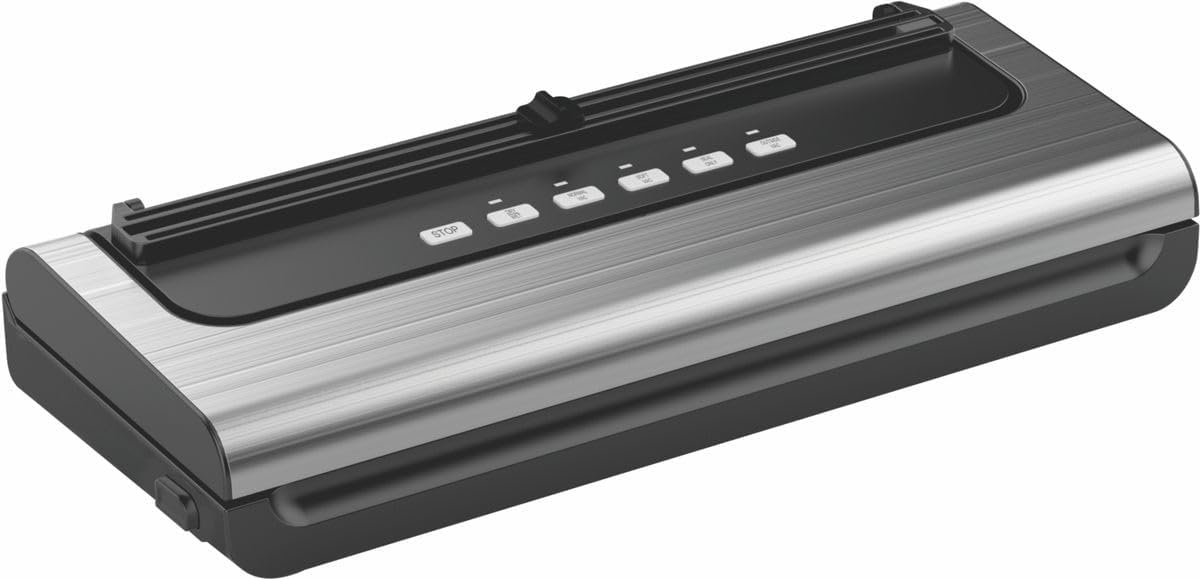
Whakaatu 2.1: Neke Atuview of the Genesis 80GMVS Multi-Functional Vacuum Sealer. This image displays the top view of the vacuum sealer, highlighting its sleek design and the control panel with various function buttons.
3. Tatūnga
- Wewete: Carefully remove the vacuum sealer from its packaging. Retain packaging for future storage or transport.
- Tirotiro: Tirohia te taputapu mo nga tohu o te kino. Kaua e whakamahia mena kua pakaru.
- Turanga: Place the vacuum sealer on a dry, flat, and stable surface, ensuring adequate space around the unit for ventilation.
- Hononga Hiko: Plug the power cord into a standard electrical outlet. The indicator light may illuminate, indicating the unit is ready.
4. Nga Tohutohu Whakahaere
This section details how to use your vacuum sealer for various food types and sealing methods.
4.1 Preparing Bags and Food
- Use only vacuum sealer bags designed for this appliance.
- Ensure the bag is clean and dry inside the sealing area.
- Leave at least 7-10 cm of space between the food and the top of the bag for proper sealing.
- For moist foods, pre-freeze or place a paper towel inside the bag to absorb excess moisture.
4.2 Vacuum Sealing (Dry Mode)
- Place the open end of the bag into the vacuum channel. Ensure it lies flat and smooth over the sealing strip.
- Close the lid firmly until the latches click into place.
- Pehia te NUI button for standard vacuum and seal. The appliance will automatically vacuum the air and then seal the bag.
- Once the process is complete, the indicator light will turn off. Press the lid release buttons (if present) or gently lift the lid to open.
- Remove the sealed bag.
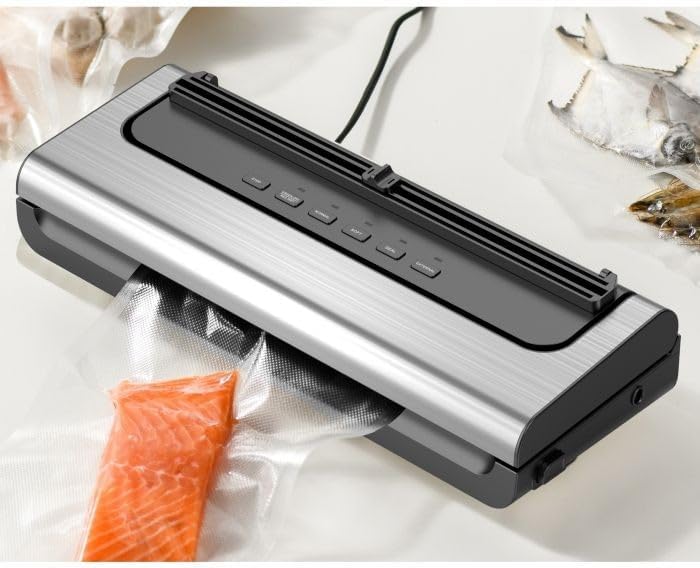
Figure 4.1: The Genesis 80GMVS vacuum sealer in operation, sealing a bag containing salmon. This image demonstrates the appliance actively extracting air from a bag, preparing it for preservation.
4.3 Vacuum Sealing (Wet/Moist Mode)
For foods with moisture, use the MAKU setting (often combined with Normal/Soft depending on model, or indicated by a specific button if available). This mode adjusts the vacuum pressure and sealing time to accommodate liquids, preventing them from being drawn into the vacuum pump.
- Follow steps 1 and 2 from "Vacuum Sealing (Dry Mode)".
- Pehia te MAKU button (if available) or select the appropriate setting for moist food.
- The appliance will proceed with vacuuming and sealing.
- Kia oti, whakatuwheratia te taupoki ka tangohia te putea kua hiritia.
4.4 Soft Vacuum Mode
For delicate items like bread, chips, or pastries, use the NGORANGA mode to prevent crushing. This mode reduces the vacuum pressure.
- Follow steps 1 and 2 from "Vacuum Sealing (Dry Mode)".
- Pehia te NGORANGA pātene.
- Monitor the vacuum process. When the desired air removal is achieved, press the HIRI button immediately to stop vacuuming and initiate sealing.
- Kia oti, whakatuwheratia te taupoki ka tangohia te putea kua hiritia.

Whakaahua 4.2: He tata view of the Genesis 80GMVS control panel and the sealing area with meat inside a bag. This image highlights the various control buttons, including 'STOP', 'NORMAL', 'SOFT', 'SEAL', and 'EXTERNAL', providing a clear view of the user interface during operation.
4.5 Hiri anake te Mahi
Whakamahia te HIRI button to create a seal without vacuuming. This is useful for making custom-sized bags from a roll or for resealing bags of snacks.
- Place the open end of the bag over the sealing strip.
- Katia kia mau te taupoki.
- Pehia te HIRI button. The sealing indicator light will illuminate.
- Once the light turns off, the seal is complete. Open the lid and remove the bag.
4.6 External Vacuum Function
Ko te WAHO function is used with an external vacuum hose (sold separately) to vacuum seal canisters, jars, or wine stoppers.
- Connect one end of the external vacuum hose to the accessory port on the vacuum sealer.
- Connect the other end of the hose to the port on your vacuum-sealable container.
- Pehia te WAHO button. The appliance will begin to extract air.
- The vacuuming will stop automatically or when you press KATI.
- Remove the hose from the container and the appliance.

Whakaahua 4.3: Examples of various food items, including sliced meat, fish, and dried goods, successfully vacuum-sealed in transparent bags. This image illustrates the effectiveness of the vacuum sealer in preserving different types of food.
5. Tiaki me te Whakapai
Regular cleaning and maintenance will extend the life of your vacuum sealer.
- I mua i te horoi: Wewetehia te taputapu mai i te putanga hiko.
- Waho: Horoia te taha o waho o te waahanga me te panuiamp kakahu me te hopi ngawari. Kaua e whakamahi i ngā mea horoi whakakoi, kaua hoki e rumakina te waeine ki te wai.
- Hongere korehau: Clean any food residue or liquids from the vacuum channel using a damp kakahu. Me whakarite kua maroke katoa i mua i te whakamahinga o muri.
- Rihi Hinenga: Gently wipe the sealing strip with a soft, dry cloth. Do not scratch or damage the strip, as this can affect sealing performance.
- Rokiroki: Store the appliance in a clean, dry place with the lid unlatched to prevent compression of the sealing gaskets, which can lead to poor seals over time.
6. Te Raru
Mena ka pa ki a koe nga raru mo to kaihiri hakihaki, tirohia nga raru me nga otinga e whai ake nei:
| Raruraru | Take pea | Rongoā |
|---|---|---|
| Kaore e huri te taputapu. | Kaore i whakauruhia; te kino o te putanga hiko. | Me mohio kua honoa te taura hiko ki tetahi putanga mahi. |
| Karekau te peeke e horoi tika. | Lid not properly closed; bag not positioned correctly; bag is damaged; moisture in vacuum channel. | Ensure lid is latched; reposition bag so opening is flat in vacuum channel; check bag for holes; clean and dry vacuum channel. |
| Kaore te putea e hiri. | Sealing strip is dirty or damaged; bag is wrinkled; too much moisture. | Clean sealing strip; ensure bag is flat; pre-freeze moist foods or use paper towel. |
| Air leaks into bag after sealing. | Improper seal; sharp objects in bag; bag material defect. | Re-seal the bag; ensure no sharp edges on food; use high-quality vacuum bags. |
7. Whakatakotoranga
| Āhuahira | Taipitopito |
|---|---|
| Waitohu | Genesis |
| Tau tauira | 80GMVS |
| Rauemi | Kirihou |
| Aratau Mahi | ā-ringa |
| Hunga Hua | 44L x 18.5W x 10.5H henimita |
| Taumaha Tūemi | 1.4 kg |
| Tae | Tae maha |
8. Pūtāhui me te Tautoko
For warranty information and customer support, please refer to the documentation provided with your purchase or contact Genesis customer service. Keep your proof of purchase for warranty claims.
Kaihanga: Genesis


