Nga Korero Haumaru Nui
Please read and understand all safety information before assembling or using this product. Failure to follow these instructions may result in injury or product damage.
- Ensure all snap joints are securely fixed after every adjustment of the backrest or footrest.
- Do not expose the lounge chair to direct sunlight for extended periods when not in use to prolong its service life.
- Kaua e neke ake i te kaha o te taumaha o te 330 pauna (150 kg).
- Keep children and pets away from the chair during adjustment to prevent pinching.
- Whakamahia te tūru ki runga i tētahi mata pūmau, papatahi hei ārai i te takahuri.
Ka mutu te huaview
The GYMAX Folding Lounge Chair (Model GM1857) is designed for comfortable outdoor and indoor relaxation. It features an adjustable backrest and footrest, a sturdy frame, and a portable folding design.
Āhuatanga matua:
- Tauranga Whakatau me te turanga waewae: 4-level adjustable backrest and 2-level adjustable footrest for customized comfort.
- High Chair Design: 16-inch height for easier sitting and standing.
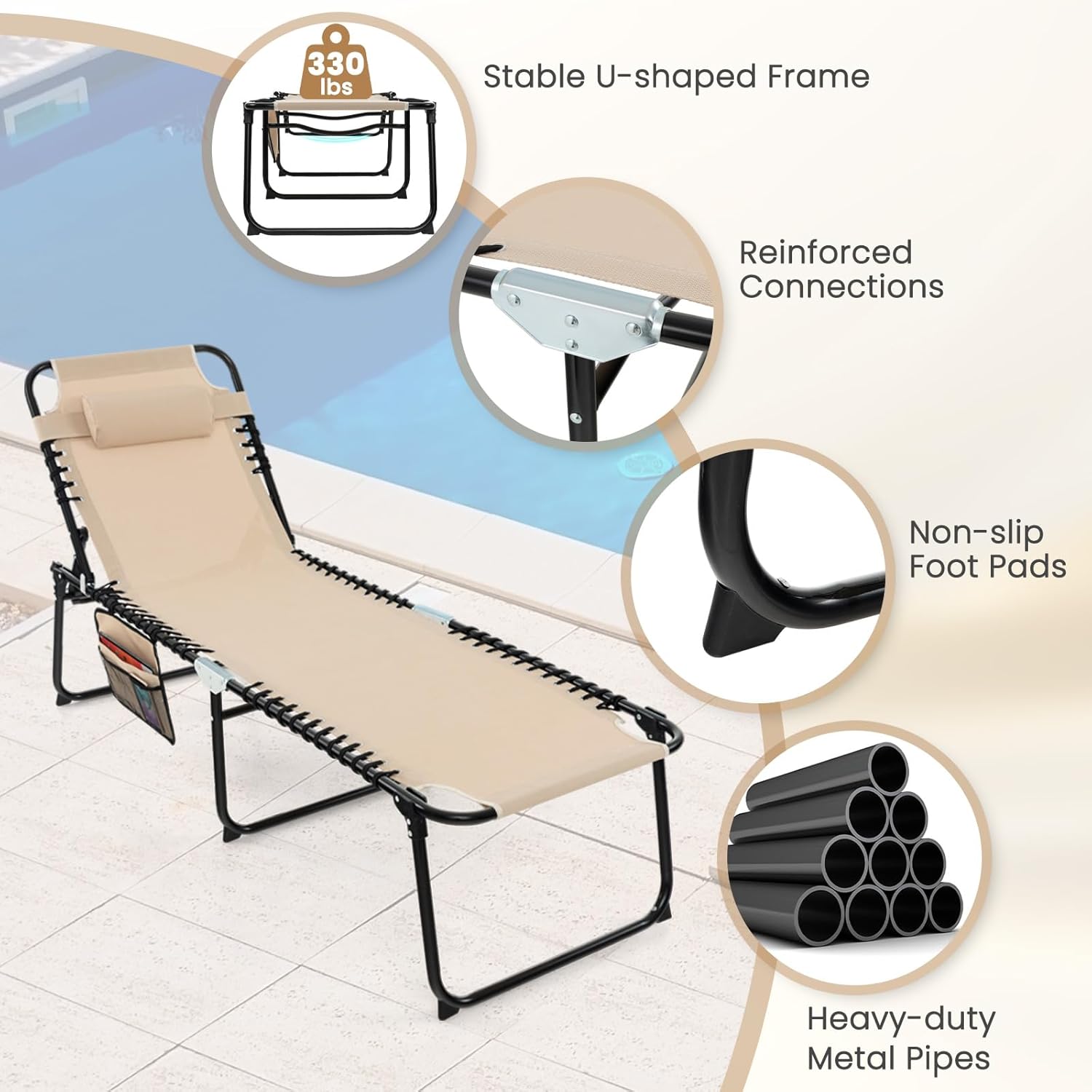
- Hanganga Pumau: U-shaped steel frame with anti-skid and anti-sink foot pads.
- Rauemi Roa: Waterproof, breathable, water-resilient, and wear-resistant fabric.
- Hoahoa Kawe: Folds easily for storage and transportation, weighing only 13 lbs.
- Removable Pillow & Pocket: Includes a padded pillow and a detachable side pocket with 3 compartments.

Image: The GYMAX Folding Lounge Chair in its sand color, showcasing tona hoahoa me ona ahuatanga.
Tohutohu Tatūnga
The GYMAX Folding Lounge Chair comes pre-assembled and requires minimal setup.
- Te whakatuwhera i te nohoanga:
Carefully remove the chair from its packaging. Hold the frame and gently pull the two main sections apart until the chair fully extends and locks into place. Ensure all legs are firmly on the ground.
- Attaching the Pillow:
The padded pillow is typically attached via straps or an elastic band. Secure it to the top of the backrest for head and neck support.
- Attaching the Side Pocket:
If included, attach the detachable side pocket to the armrest or side frame using its integrated fasteners (e.g., Velcro straps or clips).

Image: Illustration showing the lounge chair in its folded and unfolded configurations, highlighting its portability.
Nga Tohutohu Whakahaere
Te Whakatikatika i te Taumuri:
- To adjust the backrest, slightly lift the back of the chair.
- Locate the adjustment mechanism on the side of the chair (usually a series of notches or a lever).
- Select one of the 4 available positions (from upright to fully reclined).
- Ensure the mechanism clicks securely into place before applying full weight.
Whakatikatika i te turanga waewae:
- The footrest can be adjusted to 2 different levels.
- Lift the footrest section and engage the support bars into the desired position.
- Verify that the footrest is stable before resting your feet.
Whakaahua: Taipitopito view of the adjustable backrest and footrest mechanisms, illustrating the various reclining, lying down, and sitting up positions.
Kōpaki mō te Rokiroki:
- Ensure the backrest and footrest are in their lowest, most compact positions.
- Gently push the two main sections of the chair towards each other until it folds flat.
- Secure any locking mechanisms if present to keep the chair folded during transport or storage.
Te tiaki
- Te horoi: Horoia te papanga me te anga ki te panuiamp cloth and mild soap. Rinse thoroughly and allow to air dry completely before folding or storing. Do not use harsh chemicals or abrasive cleaners.
- Rokiroki: When not in use, especially during inclement weather or off-season, store the chair in a dry, protected area to prevent damage and extend its lifespan.
- Tirotiro: Periodically check all bolts, screws, and adjustment mechanisms to ensure they are tight and functioning correctly. Tighten any loose fasteners.

Image: Close-up of the high-quality, water-resistant fabric, demonstrating its texture and durability.
Raparongoā
| Raruraru | Take pea | Rongoā |
|---|---|---|
| Chair does not stay in adjusted position. | Kāore anō kia tino whakamahia te tikanga whakatikatika. | Ensure the backrest/footrest is lifted slightly and the mechanism clicks firmly into the desired notch. Do not force. |
| Ka rere te noho, ka wiri ranei. | Not on a level surface; loose fasteners. | Move the chair to a flat, stable surface. Check and tighten all bolts and screws. |
| Difficulty folding/unfolding the chair. | Mechanism stiff; obstruction. | Apply gentle, even pressure. Check for any debris or obstructions in the folding joints. Lubricate joints if necessary with a silicone-based spray. |
| Fabric appears stretched or worn. | Prolonged exposure to sun; exceeding weight limit. | Avoid prolonged direct sun exposure when not in use. Ensure weight limit is not exceeded. Fabric stretching over time is normal wear. |
Whakatakotoranga
| Āhuahira | Taipitopito |
|---|---|
| Tau tauira | GM1857 |
| Waitohu | GYMAX |
| Ahu Hua (Kua Tuwhera) | 74.5"D x 23.5"W x 16"H |
| Taumaha Tūemi | 13 pauna |
| Tohunga Taumaha Morahi | 330 Pauna |
| Rauemi | Textile (Fabric), Powder Coated Steel (Frame) |
| Nga Turanga Whakamuri | 4 |
| Footrest Positions | 2 |
| Nga waahanga motuhake | Adjustable Backrest, Foot Rest, Lightweight, Portable, Side Pocket, Removable Pillow |
| Mahinga o roto/waho | Roto, Waho |

Image: Diagram illustrating the detailed product dimensions and weight capacity of the lounge chair.
Pūtāhui me te Tautoko
For warranty information or product support, please refer to the documentation included with your purchase or contact GYMAX customer service directly. Keep your purchase receipt for warranty claims.
Kaihanga: GYMAX
Webpae: Tirohia te Toa GYMAX i Amazon


