1. Aratohu Kaiwhakamahi
This manual provides essential information for the proper setup, operation, and maintenance of your Firefly FFLV Solid Body Electric Guitar. Please read it thoroughly to ensure optimal performance and longevity of your instrument.

Whakaahua 1: Mua view of the Firefly FFLV Electric Guitar in Blueberry color.

Whakaahua 2: Mua me muri views of the Firefly FFLV Electric Guitar, illustrating the mahogany body and neck, customized pickups, stainless steel frets, and bone nut.
2. Tatūnga
2.1 Tirotiro Tuatahi
Upon unboxing, carefully inspect the guitar for any signs of damage. Check the neck for straightness, ensure all hardware is securely fastened, and verify that the strings are properly seated in the bridge and nut.
2.2 Whakatere
The guitar may require tuning after shipping. Use an electronic tuner for accuracy. Tune each string to its standard pitch:
- E (thickest string)
- A
- D
- G
- B
- E (thinnest string)
2.3 Te hono atu ki tētahi Ampkaikawe
Connect one end of a standard 1/4-inch instrument cable to the guitar's output jack, located on the side of the body. Connect the other end to the input of your ampkaiwhakaora. Kia tino mohio koe amplifier's volume is set to a low level before turning it on.
3. Te Whakahaere i te Kītā
3.1 Mana Whakahaereview
The Firefly FFLV features a straightforward control layout for shaping your sound:
- Rorohiko Pupuri: Two individual volume knobs, one for each humbucker pickup (neck and bridge). Rotate clockwise to increase volume, counter-clockwise to decrease.
- Ngā Pēhi Oro: Two individual tone knobs, one for each humbucker pickup. Rotate clockwise for a brighter tone, counter-clockwise for a warmer, darker tone.
- Pātene Kōwhiringa Piki-3-Ara: This switch allows you to select different pickup configurations:
- Tūnga Runga: Activates the neck pickup.
- Tūnga Waenganui: Activates both neck and bridge pickups simultaneously.
- Tūnga Raro: Activates the bridge pickup.
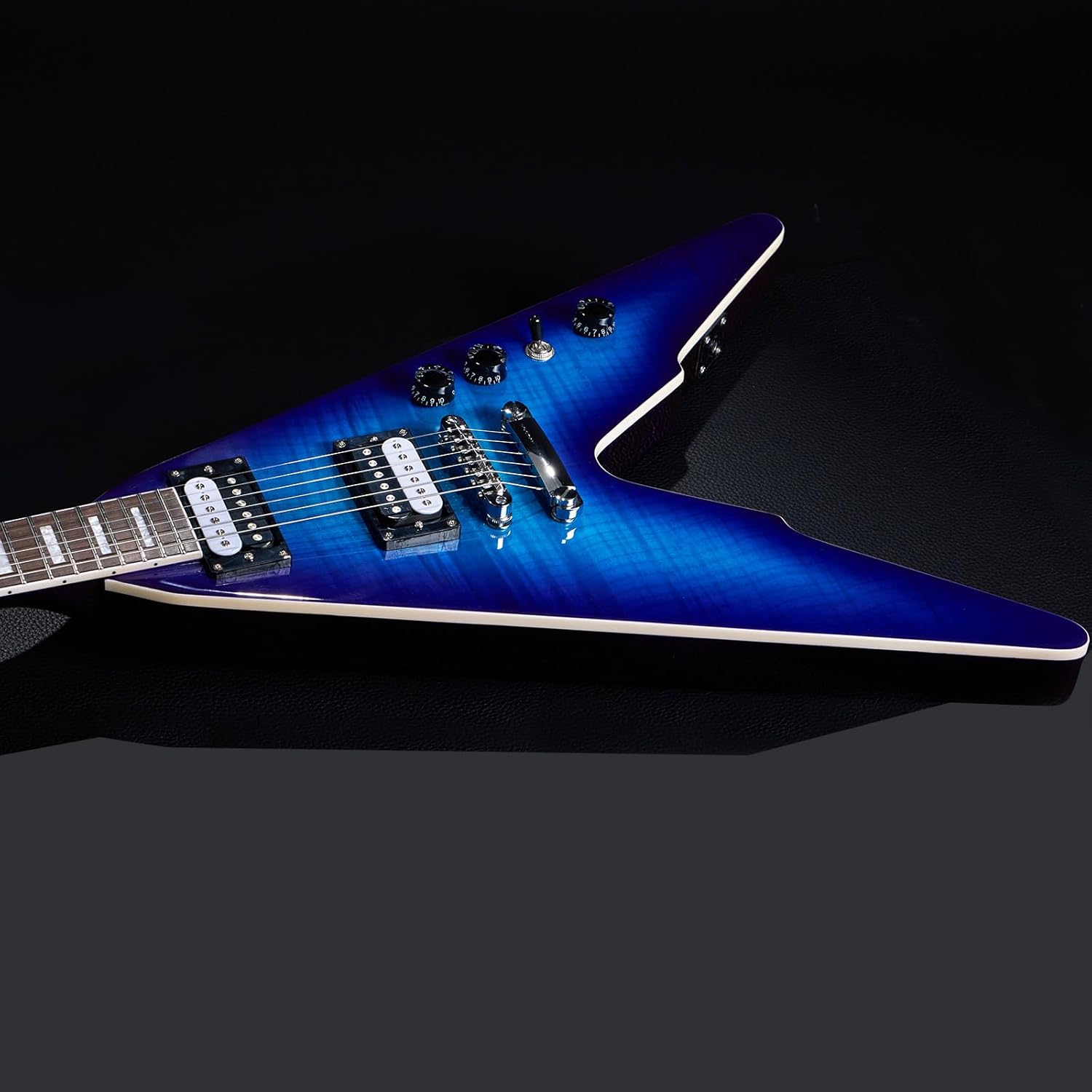
Figure 3: Detail of the guitar's body, highlighting the Alnico humbucker pickups and individual volume/tone controls.
3.2 Ngā Tikanga Tākaro
The FFLV is designed for various playing styles. Experiment with the pickup selector and tone controls to find your desired sound. The stainless steel frets provide a smooth playing surface, and the mahogany body contributes to a rich, resonant tone.
Video 1: Demonstration of the Firefly FFLV Guitar's sound quality and features, including pickup tones and overall playability.
4. Tiaki
4.1 Te horoi
Regularly wipe down the guitar with a soft, lint-free cloth to remove dust and fingerprints. For a deeper clean, use guitar-specific cleaning products. Avoid abrasive cleaners or solvents that could damage the finish.
4.2 Whakakapinga Aho
Replace strings periodically, as worn strings can affect tone and playability. When replacing, change one string at a time to maintain neck tension. Use nickel strings for optimal performance, as the guitar is equipped with a bone nut designed for this material.
4.3 Fretboard Care
The rosewood fretboard benefits from occasional conditioning to prevent drying and cracking. Use a specialized fretboard conditioner or lemon oil (sparingly) to keep it hydrated. Clean the stainless steel frets with a fine-grit polishing cloth if they become dull.
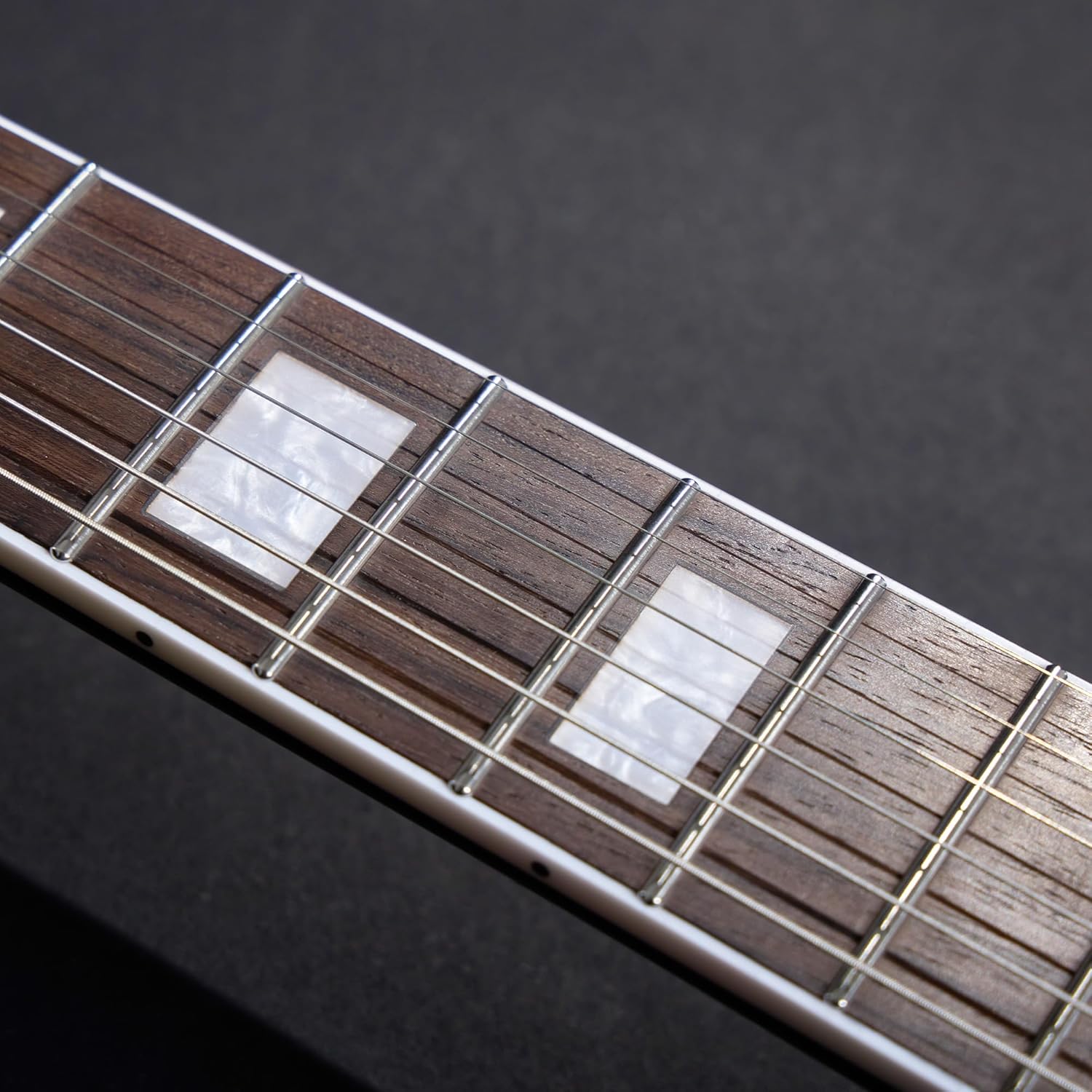
Whakaatu 4: Taipitopito view of the rosewood fretboard and stainless steel frets.
4.4 Rokiroki
Store your guitar in a climate-controlled environment, away from extreme temperature changes or humidity fluctuations. A guitar case or gig bag is recommended for protection during storage and transport.
5. Te Raru
5.1 No Sound from Ampkaikawe
- Ensure the instrument cable is securely connected to both the guitar and the ampkaikawe
- Check that the guitar's volume knobs are turned up.
- Manatokohia te amplifier is powered on and its volume is not at zero.
- Whakamātauria ki tētahi taura rerekē, ki tētahi atu rānei amplifier if available to isolate the issue.
5.2 Buzzing or Fret Noise
- Check your playing technique; ensure proper finger placement and pressure.
- Verify the neck relief is correct. Minor adjustments to the truss rod may be needed, but this is best performed by a qualified technician.
- Ensure string action (height) is appropriate. Adjustments to the Tune-O-Matic bridge can be made, but proceed with caution.
5.3 Te Whakatūnga i te Pūmautanga
- Me whakarite kia tika te totoro o ngā aho i muri i te tāutanga.
- Check that the tuning machine heads are functioning correctly and holding tension.
- Verify the strings are not binding in the bone nut slots.
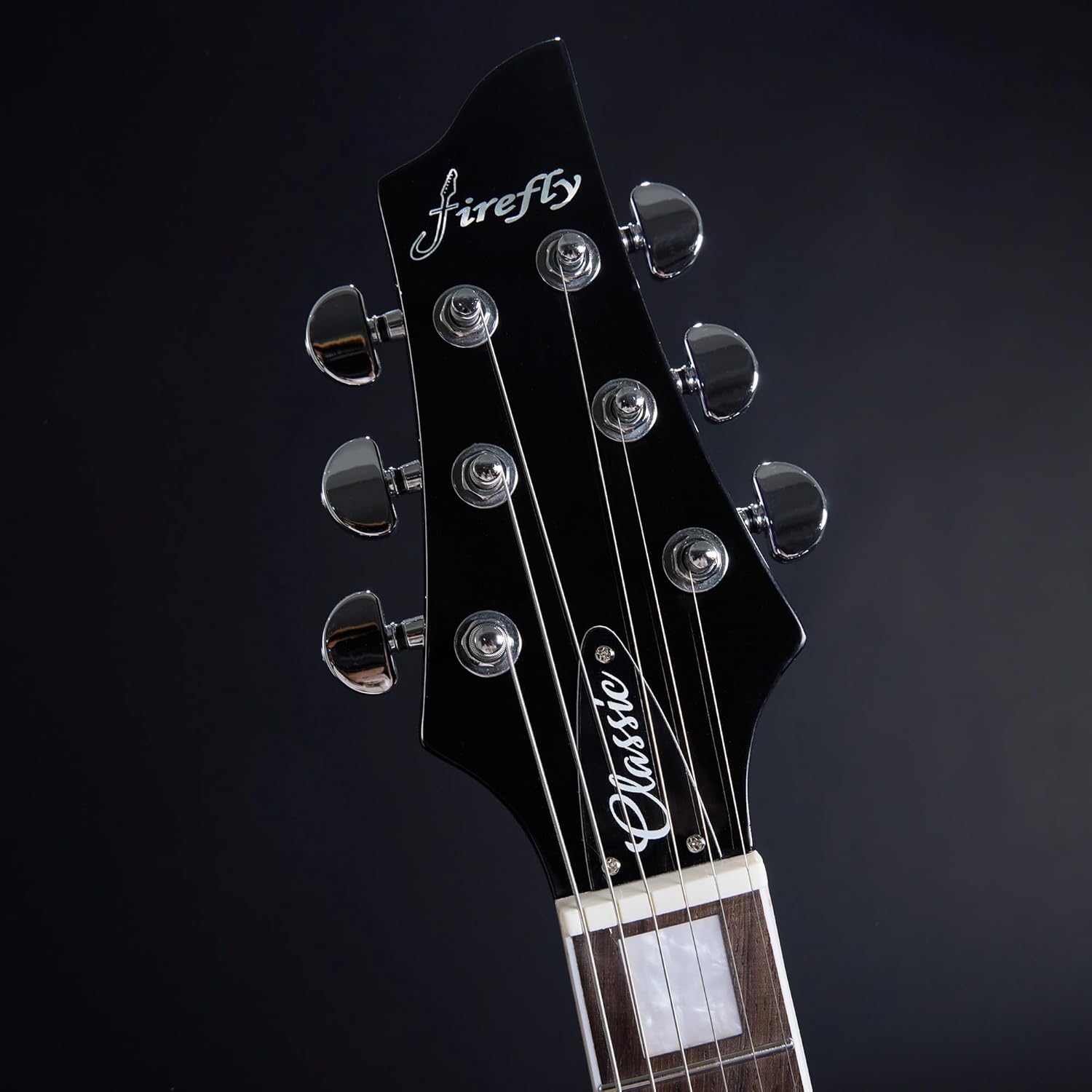
Whakaatu 5: Taipitopito view of the guitar's headstock and tuning machines.
6. Whakatakotoranga
| Āhuahira | Taipitopito |
|---|---|
| Tau tauira | FFLV |
| Rauemi tinana | Mahogany |
| Momo Rauemi kaki | Mapere |
| Rauemi Fretboard | He rakau rohi |
| Fret Type | Stainless Steel, Ball End |
| Rauemi Nati | Koiwi |
| Whirihoranga Tiki | H-H (Humbucker-Humbucker) |
| Pūnaha Piriti | Tune-O-Matic |
| Te maha o nga aho | 6 |
| Rauemi Aho | Nickel |
| Tae | BlueBerry |
| Takotoranga-ringa | Matau |
| Taumaha Tūemi | 10.53 pauna |
| Ahu mōkihi | 46 x 20.3 x 4.6 inihi |
7. Pūtāhui me te Tautoko
For warranty information and customer support, please refer to the documentation included with your purchase or visit the official Firefly webpae. Puritia to tohu hoko mo etahi kereme whakamana.


